Support

Kamares Aqueduct

About

The impressive Kamares Aqueduct is a monumental 18th-century hydraulic structure that has become one of the symbols of Larnaca. Built in a classic Roman style, this historic site is a striking example of engineering mastery from past eras, which modern Cyprus is rightfully proud of.
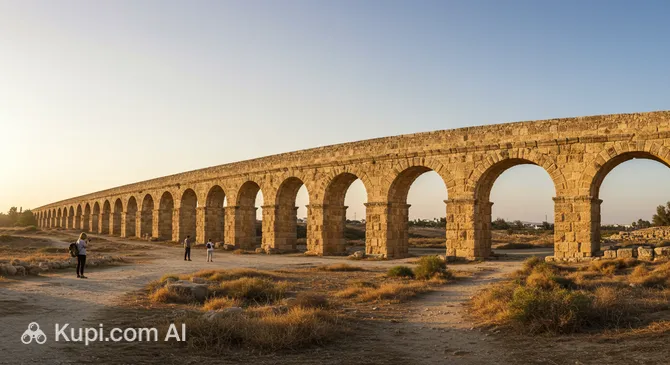
Kamares Aqueduct
Kamares Aqueduct. Иллюстрация. Источник: Kupi.com AI

Its name, which translates from Greek as “arches,” comes from its unique design. In the past, the aqueduct stretched for more than 10 kilometers, providing the city with life-giving water. Today, visitors can see a grand stone system consisting of 75 high arches, divided into three main segments.

This site attracts travelers with its majestic architecture and the opportunity to touch history in the open air. The aqueduct was designed so that the water overcame natural landscape variations while maintaining a constant level, making it an outstanding engineering monument of its time.

Contacts

For more information about visiting this historical site, you can use the details provided below. The aqueduct is managed by the municipal authorities and is open to the general public.

How to contactContact
AddressWJ72+C3Q, Larnaca 6040, Cyprus
Phone+370 699 45718

What to Do

Visiting the Kamares Aqueduct is primarily an opportunity to enjoy grand historical architecture. Visitors can take a leisurely stroll along the stone vaults, examining the masonry details and marveling at how well the structure has been preserved after centuries. This location is ideal for those who appreciate quiet walks away from noisy tourist districts.

Photography enthusiasts will find stunning perspectives here. The rhythmic repetition of the stone arches creates a unique visual sequence, which looks especially striking in the soft light of sunrise or sunset. The area around the monument is gradually being developed into a pedestrian zone, making it comfortable to explore.

It is also interesting to note the building material itself: historians point out that stones from the ruins of ancient Kourion were used during construction. Thus, a walk along the aqueduct turns into a journey through the ages, where 18th-century engineering intertwines with ancient heritage.

Getting There

The historical site is located on the outskirts of the city on the road heading towards Limassol. The exact address of the location is WJ72+C3Q, Larnaca 6040, Cyprus. A landmark for drivers is the roundabout near the Cineplex cinema, right next to which the ancient arches rise.

The most convenient way to reach the site is by taxi or a rental car from the city center; the journey takes about 10–15 minutes. You can also use public transport: city buses run in this direction, stopping within walking distance of Limassol Avenue.

For those who prefer walking, the route to the aqueduct can be planned along the picturesque Salt Lake; however, keep in mind that such a walk can be tiring in hot weather. It is recommended to use a navigator with precise coordinates to easily find parking near the structure.

Ближайший город: Larnaca

History & Facts

The majestic aqueduct was built in 1746–1747. Its construction was made possible by the initiative and personal funds of the city's governor, Abu Bekir Pasha. At that period, the residents of Skala (the old name for Larnaca) faced serious difficulties with access to drinking water, and this project became a salvation for the region, costing the ruler a massive sum of 50,000 kurushes.

Engineers of the time performed a colossal task: they found rich underground springs in the Kalo Chorio area and connected them into a single network. The main channel was about 80 cm deep and stretched for many kilometers, and in places where it crossed ravines and lowlands, the famous arched bridges that we see today were erected.

The structure performed its function faithfully for nearly two centuries. Only in 1938–1939, with the arrival of British engineering technologies and the installation of a modern water system, was the aqueduct decommissioned. Today, it is protected by the state as an important architectural monument.

The significance of this site for cultural heritage is highlighted by an interesting fact: in 1961, an image of the Kamares Aqueduct adorned the reverse side of the one-pound Cypriot banknote. Today, a special municipal committee is responsible for the preservation of this unique monument.

Time Needed

For a quick tour of the Kamares Aqueduct and to take a few striking photos, it usually takes about 30–60 minutes. This is quite enough time to walk along the best-preserved sections and appreciate the grandeur of the old structure.

If you plan to study the engineering features of the construction in detail or want to wait for the "golden hour" for professional photography, you should set aside 1–2 hours. The location is perfect for a quiet end to the day before returning to the city center.

Working Hours

The Kamares Aqueduct is a public open-air monument, so it is Open 24 hours. This means you can visit the attraction at any time of day, 7 days a week.

Visiting the site is completely free, and thanks to the effective night lighting, the arches look impressive even after sunset. You can plan your visit at any time convenient for you without being limited by museum or ticket office schedules.

Круглосуточно

Nearby

A visit to the ancient arches can be perfectly combined with exploring other interesting city locations. Exploring the surrounding area will allow you to dive deeper into the region's history and enjoy a variety of architectural styles and natural beauty.

Many attractions are just a few minutes' drive from the aqueduct. Below are the closest sites that may interest travelers:

NameDistance
Metropolis Mall1.3 km
San Pedro Street Food2.2 km
Pattichion Municipal Park2.4 km
Archaeological Site of Kition3 km
DSTRKT3.1 km
Larnaca District Archaeological Museum3.1 km
Preserve All Day Bar3.1 km

Reached the end of the page?

That means the route is fully explored