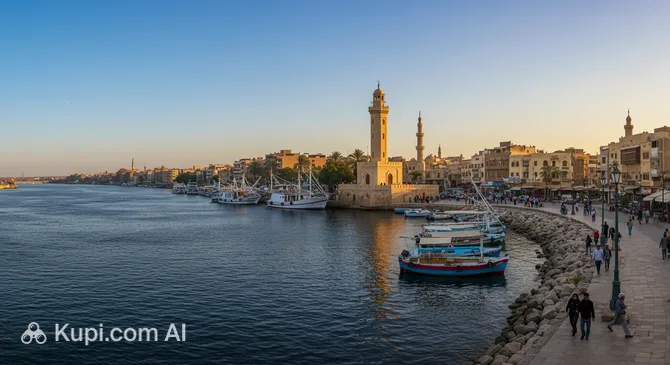
Damietta, located in northern Egypt, is a city with a unique character, where the fresh water of the Nile meets the salty expanses of the Mediterranean Sea. As the administrative center of the governorate of the same name, this port serves as a vital trade and industrial hub for the country. The city does not strive to be a glossy tourist center, allowing travelers to see the real, living Egypt with its daily hustle and sincere hospitality.
Damietta. Illustration.
Source: Kupi.com AI
Geographically, the city stretches along the Damietta branch of the Nile, about 200 kilometers north of Cairo. With a population of about 207,000 people, Damietta is famous for its agricultural land: the renowned Egyptian guava, rice, and cotton are grown here. The city is inextricably linked with its centuries-old history and craft traditions, which have shaped its appearance over the centuries.
The main features of Damietta are its modern port, which has become the country's second maritime gateway, and the famous production of "dimity" fabrics. Visitors are attracted by the opportunity to stroll along the Nile embankments, peek into furniture makers' workshops, or head to the nearby beaches in Ras El Bar. A visit here is an invitation to get acquainted with the industrial power and agricultural wealth of the Nile Delta, away from the classic tourist routes.
Weather Overview
In Damietta, a typical subtropical Mediterranean climate prevails, heavily influenced by the proximity of the sea and the Nile branch. Because of this, the city's climate is milder than in the central regions of the country. Summers here are hot and sunny: in July and August, the average temperature fluctuates between +28–32°C, and high humidity makes the heat felt, although the sea breeze brings long-awaited freshness.
Winter in the city is cool and wet by Egyptian standards. In January and February, the average temperature is around +15°C, and at night it can drop to +11–12°C. Most of the precipitation falls during the winter months, usually in the form of short but intense rains. Spring and autumn are the most comfortable periods for a visit, when the temperature stays around +20–25°C.
For travelers, this means that sunscreen and light clothing made of natural fabrics are mandatory in summer, while a light sweater or windbreaker will be useful in winter for evening walks along the embankment. You should also consider the possibility of river fogs in the early morning hours, especially during the autumn-winter period, which adds a special melancholic atmosphere to the city.
Average monthly temperature
Average monthly precipitation
Interesting Facts
Damietta hides many surprising stories and features that make it an important part of Egyptian heritage. Here are some interesting facts about this city:
In antiquity, the city was called Tamiat (or Tamiatis) and over time became a key port of the Nile Delta, taking the lead from its declining neighbor, Pelusium.
The name of the fine cotton fabric "dimity" is directly derived from the name of the city of Damietta, which for centuries was famous for its textile production of the highest quality.
The New Port of Damietta, opened in 1986, is one of the most technologically advanced in the region and is among the country's main maritime gateways.
Every year on May 8, the province celebrates its National Day, dedicated to the heroic resistance of local residents during the Crusades in 1250.
The region is considered the "breadbasket" of Egypt: local guava plantations and palm groves provide a significant share of the fruits and vegetables found on shelves across the country.
How to Get There
Damietta is conveniently located in the Nile Delta, making it accessible by various modes of transport, although the city does not have its own airport. A journey here usually begins from the country's major logistics hubs. To get to Damietta, tourists usually choose land transport, enjoying views of the farmland along the way.
The nearest international air hubs are in Cairo and Alexandria. From the Egyptian capital, the city can be reached by bus or microbus from the Turgoman (Cairo Gateway) bus station—the journey of about 200 km will take from 3 to 5 hours depending on traffic. You can also use private transport services or book a car transfer.
The railway network connects Damietta with Cairo and other delta cities. Damietta Railway Station receives trains, and the journey takes about 4–5 hours. This is a good option for those who prefer a more relaxed pace and want to avoid road congestion. Trains run several times a day, but it is recommended to check the schedule in advance.
Station
Passenger traffic
Distance
Port Said railway station
5
49 km
El-Marg
4
148 km
El-Marg
4
148 km
Alexandria railway station
8
183 km
Sderot
5
264 km
From neighboring Mansoura, you can reach Damietta in just an hour by microbus. Despite the presence of a large port, regular passenger sea transport is not developed here, so the main reliance is on roads and railways.
Main Attractions
Although Damietta is better known as an industrial and port hub, it possesses a special charm for those seeking an authentic Nile Delta atmosphere. A stroll through the Old City will allow you to see remnants of medieval architecture and meet local artisans whose skills are passed down from generation to generation. Special attention should be paid to the embankment of the Damietta branch of the Nile—it is an ideal place for evening walks where you can watch the movement of boats and enjoy the river breeze.
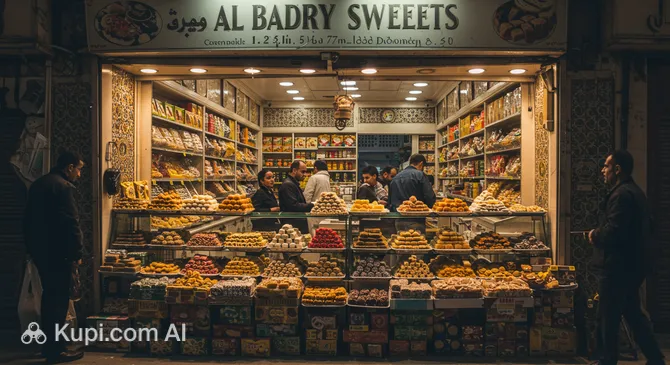
For those with a sweet tooth and lovers of gastronomic discoveries, local confectioneries are true attractions. Be sure to visit El Gamal Sweets - Nile Corner, where you can try traditional Egyptian desserts in a cozy setting. Another iconic spot is Halawat Al-Badri, offering a huge selection of Oriental sweets that make excellent gifts from your trip.
Al Badry Sweets. Illustration.
Source: Kupi.com AI
Traveler photos:
If you are looking for seascapes, it is worth looking into the Port of Damietta. Although it is a working facility, the scale of the terminals and the movement of massive ships make a strong impression. For beach lovers, it is recommended to drive 15–20 kilometers to the resort town of Ras El Bar, where the Nile flows into the Mediterranean, creating a unique natural landscape and excellent conditions for relaxing on the sand.
Local Cuisine
The gastronomy of Damietta is a hymn to freshness and natural ingredients. Thanks to its proximity to the Nile and the Mediterranean Sea, the local menu is based on fish and seafood. Be sure to try fried or stewed fish, which is often served here with okra (bamia) and fragrant rice. Classic Egyptian dishes are also popular: ful medames (mashed fava beans) and hearty koshari, which are prepared with home-cooked flavor in local eateries.
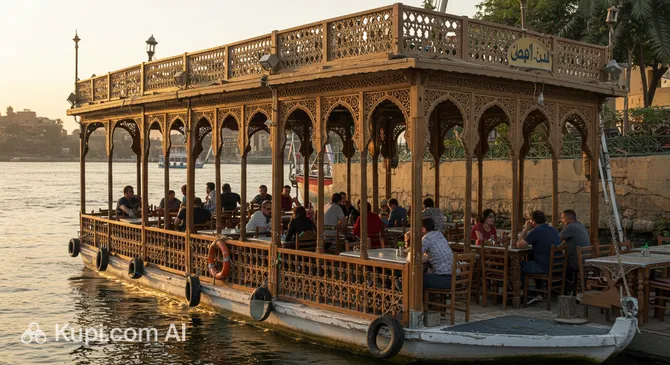
The city is famous for its sweets, which are considered among the best in the country. To see for yourself, stop by El Gamal Sweets - Nile Corner. Here you can taste the most delicate basbousa or kunafa. Another legendary place is Halawat Al-Badri, where shelves groan under the weight of Oriental delicacies. Locals take great pride in their confectionery traditions, and a visit to these shops is a must on any itinerary.
El-Gamal Sweets - Nile Corner. Illustration.
Source: Kupi.com AI
Traveler photos:
For drinks in Damietta, locals prefer strong tea with mint, Egyptian coffee, and freshly squeezed juices. Special attention should be given to guava juice, as local plantations are considered the best in the region. The food culture here is simple and democratic: the best dishes can often be found in small cafes near the port or in markets where the townspeople themselves eat. Street food, such as falafel and shawarma, is always fresh and affordably priced.
Travel Tips
A trip to Damietta will be a pleasant adventure if you consider the specifics of this port and industrial city in advance. These practical tips will help you feel confident and avoid frustrating misunderstandings.
Clothing and Dress Code: Choose modest and conservative clothing, especially when visiting the port areas and the old center. Damietta is a conservative city, so it is better to avoid short shorts and bare shoulders. Be sure to wear comfortable closed-toed shoes for walking.
Transport: Within the city, it is most convenient to move around by taxi or tuk-tuk. If you are planning a trip from Cairo, choose official bus companies or Uber to make the journey as comfortable and predictable as possible.
Finances: The main currency is the Egyptian pound. There are many ATMs in the city, but cards are not accepted everywhere, so always keep a supply of cash in small bills for markets and transport.
Health: Drink only bottled water and use it even for brushing your teeth. Pharmacies are common, but it is better to bring specific medications with you.
Communication: The main language is Arabic. English is not widely spoken, so learn basic phrases or use an offline translator. A local SIM card can be purchased at operator offices in the city center.
Local Etiquette: Greet people politely and use your right hand for passing money or food. Be prepared for increased attention—tourists are still a rarity here.
What to Avoid: It is not recommended to walk alone in industrial zones and on the outskirts late at night. Also, avoid photographing strategic port facilities and government buildings.
Seasonality: Between August and October, Nile flooding is possible, which sometimes leads to flooding in low-lying areas; keep this in mind when planning routes along the embankment.
May your acquaintance with Damietta be filled only with positive discoveries and vivid impressions of this unique city!
Entertainment & Nightlife
Entertainment in Damietta is of a quiet and traditional nature, reflecting the working rhythm of a port city. You won't find noisy nightclubs or large-scale concert halls here, but you can immerse yourself in the cozy atmosphere of Egyptian cafes. In the evening, the Nile embankment becomes the epicenter of life, where locals gather with their families to drink tea, smoke shisha, and discuss the news under the open sky.
Gastronomic delights are one of the main ways to spend an evening. Popular spots include El Gamal Sweets - Nile Corner, where even late at night you can enjoy exquisite desserts. Another landmark for evening relaxation is Halawat Al-Badri. Most establishments close towards midnight, and alcohol is practically non-existent in public places, making the atmosphere very family-oriented and safe.
El-Gamal Sweets - Nile Corner. Illustration.
Source: Kupi.com AI
Traveler photos:
For more active leisure during the day, residents of Damietta prefer boat trips on the river or trips to the markets. If you crave urban glamour, cinemas, or large shopping malls, it is best to head to neighboring Mansoura, located just an hour's drive away. Nevertheless, the peace and authenticity of evening Damietta hold their own unique charm for the seasoned traveler.
Parks & Museums
In Damietta, it is difficult to find classic art galleries or large-scale historical museums, as the city lives in the present and is oriented toward production. Nevertheless, the role of an "open-air museum" is played by the Old City itself, with its traditional workshops and authentic architecture. A walk through its streets gives a deeper understanding of the region's history than many exhibitions.
The city's green zones are represented by small but cozy squares and embankments. The coastal alleys along the Nile are the main places for townspeople to relax, adorned with palm trees. Due to active agriculture, vast plantations of guava and date palms begin just outside the city, creating a unique "green belt" landscape around the urbanized zone.
For a full-fledged park experience, residents and visitors often head to neighboring Ras El Bar. There you will find well-maintained promenade areas by the water and gardens where you can enjoy the silence away from the port's hustle and bustle. Damietta itself attracts not with artificial parks, but with the natural charm of the Nile Delta and the opportunity to see how nature and man harmoniously coexist in one of the most fertile corners of the earth.
Getting Around
The public transport system in Damietta is simple and efficient, although it may seem chaotic to a newcomer. The backbone of transportation is microbuses (microbuses), which run on fixed routes through the entire city and connect the center with the port area. This is the cheapest and most popular way to get around, but be aware that they can be overcrowded during peak hours.
For short-distance travel, tuk-tuks—motorized rickshaws capable of nimbly maneuvering through the narrow streets of the old quarters—are ideal. Taxis also operate everywhere in the city. The cost of a taxi ride is low, but it is better to agree on the price in advance or ensure the driver turns on the meter (if there is one). During peak hours in the morning and evening, traffic on the bridges over the Nile can be difficult due to heavy congestion.
The city is quite compact, so many interesting locations in the center can be explored on foot. There is no bicycle rental or car-sharing in the usual sense, and Uber services may be limited, so local taxis remain the most reliable option for tourists. Tickets for buses and microbuses are paid in cash directly to the driver or conductor upon boarding.
Accommodation
The choice of accommodation in Damietta is largely determined by its status as a major industrial and commercial center. You won't find luxury five-star resorts here, but the city offers decent options for transit travelers and those visiting on business. Most hotels are concentrated in the central district and along the Nile embankment, which is convenient for walking and accessing local cafes.
Typical accommodation ranges from budget 2-3 star hotels to guest houses. For those planning to stay in the city longer, renting an apartment is a popular option—this sector is well-developed due to the large number of foreign specialists working at the port. Housing prices here are significantly lower than in Cairo or popular seaside resorts.
It is recommended to book accommodation in advance, especially if your trip coincides with major business events in the port area. If you are looking for a more traditional tourist holiday with beaches, you should consider options in neighboring Ras El Bar, where the hotel selection is geared specifically towards vacationers. In Damietta itself, it is most convenient to search for housing through international booking services or directly on-site.
Nearby Cities
Damietta serves as an excellent starting point for exploring the northern part of the Nile Delta and the Mediterranean coast. Its convenient geographical location allows travelers to make interesting day trips to neighboring cities, each with its own unique flavor.
Just 10 kilometers away is Ezbet El-Borg—a picturesque town famous for its fishing fleet and an old fort. Another popular destination is the city of Mansoura (50 km away), known for its university, bustling markets, and beautiful mosques. If you want peace and tranquility among gardens, you can head to smaller settlements such as Faraskur or Kafr Saad.
For those ready for a slightly longer journey, the majestic Alexandria, with its ancient heritage and endless beaches, is just a couple of hours away. Exploring the surroundings of Damietta will help you better understand the multifaceted nature of Egyptian life, combining agricultural traditions with industrial progress.
Shopping & Souvenirs
Shopping in Damietta is primarily about getting to know local production and the generous gifts of the land. The city does not have huge Western-style shopping and entertainment centers, but it is famous for its markets and specialized shops. The main things worth coming here for are the famous "dimity" fabrics and the products of local furniture makers, who are considered the best in all of Egypt.
The central markets, located near the port, are the perfect place to buy fresh produce. Here you can find premium rice, Egyptian cotton, and, of course, the famous guava. A walk through the shopping rows will allow you to feel the true taste of the city and purchase everyday goods at local prices, without tourist markups.
For sweet souvenirs, be sure to stop by the Halawat Al-Badri confectionery, where you can buy sets of Oriental sweets in convenient packaging. Traditionally, shops are open from morning until late evening, with a short break during the hottest time of the day. Payment is most often made in cash in local currency, as cards are only accepted in larger establishments.