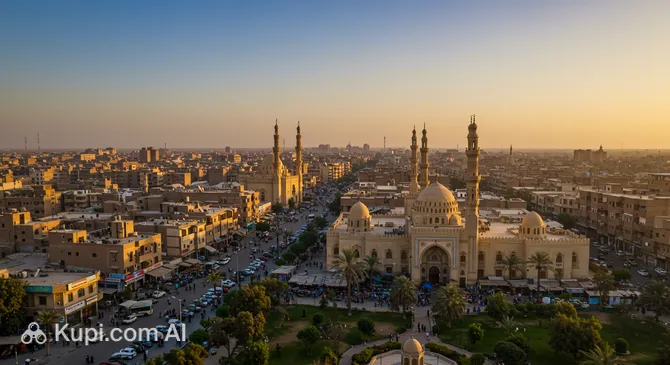
El Mahalla El Kubra is a powerful industrial heart located in the center of the Nile Delta. As the largest city in the Gharbia Governorate and the second most significant in the region, it represents a unique blend of a busy working rhythm and Egypt's deep artisanal traditions. More than half a million people live here, their lives inextricably linked to the production that has made this region famous far beyond its borders.
El Mahalla El Kubra. Illustration.
Source: Kupi.com AI
The city boasts a rich past: its roots go back to the era of the Pharaohs, when it was known as a center for hemp cultivation and weaving. By diving into the city's history, one can trace how the ancient settlement of Didousia transformed into a modern textile metropolis. A turning point came in 1927 with the founding of the Misr Spinning and Weaving company, which turned the city into the country's primary industrial hub.
The atmosphere here is steeped in the spirit of creation and labor. The narrow streets of working-class neighborhoods, lively fabric markets, and monumental factory buildings create the unique flavor of "off-the-beaten-path" Egypt. Although the city is not a typical resort, it attracts those who want to see the authentic life of the Nile Delta and appreciate the scale of Egyptian industry. A visit to this place is an invitation to look behind the scenes of the region's great textile history.
Weather Overview
The climate in El Mahalla El Kubra is classified as subtropical Mediterranean, which is typical for the entire Nile Delta. The city is characterized by very hot, dry summers and mild, moderately rainy winters. High humidity, caused by the proximity of the river and numerous canals, often leads to the formation of dense morning fogs, especially during the autumn and winter periods.
In the summer months, especially in July and August, daytime temperatures often reach +35–36°C, while nights bring only relative coolness with figures around +23°C. Winter in the city is very comfortable for walking: the average maximum in January is about +20°C, although it can be cool at night—down to +10°C. Precipitation is rare, occurring mainly from December to February, and the total amount is small.
When planning a visit, it is worth considering not only the temperature but also the city's climate in the context of its industrial specifics. On windless hot days, air quality can decrease due to emissions from textile factories, so the most favorable times to visit are considered spring (March–April) and autumn (October–November), when the heat subsides and the air becomes cleaner.
Average monthly temperature
Average monthly precipitation
Interesting Facts
El Mahalla El Kubra is not just a city of factories, but a place with fascinating historical and cultural details that reveal it from an unexpected side.
In ancient times, the city was called Didousia, which translates from Greek as "hemp"—direct evidence that textile traditions originated here as far back as the Pharaonic era.
In 1320, Sultan Al-Nasir Muhammad made the city the capital of the entire Gharbia province, and it held this status for over five centuries until the administrative center was moved to Tanta.
The local Misr Spinning and Weaving factory is so large that at its peak, it was considered one of the largest textile enterprises in the world, with its own infrastructure, including schools, hospitals, and sports clubs.
The city is the home of the football club "Baladeyet El Mahalla", whose fans are famous for their loyalty and create an atmosphere in the stands comparable to the matches of the leading capital teams.
How to Get There
There are several ways to reach this industrial center, although the city does not have its own airport. Travelers should plan their travel route in advance, focusing on the country's major transport hubs. The nearest international airports are in Cairo (about 120 km) and Alexandria (about 100 km). From these cities, the journey to the final destination by taxi or rented car will take between 2 to 4 hours, depending on the traffic density in the Nile Delta.
The railway is the most reliable and popular way to travel. El Mahalla El Kubra Railway Station is an important hub connecting the city with key points in the Delta. Trains from Cairo depart from Ramses Station; the journey usually takes 2–3 hours. It is worth noting that during peak hours, trains can be very crowded with workers, so it is better to purchase tickets for first or second-class carriages.
An alternative to the train is buses and microbuses that run regularly from Cairo, Tanta, and Alexandria. Bus service is well-developed, but travel time can increase unpredictably due to traffic jams on the narrow Delta highways, which are often busy with trucks carrying textile products. For maximum comfort, it is recommended to use official carriers or book transfers through mobile apps.
Main Attractions
El Mahalla El Kubra is primarily an industrial city, so its main attractions are related to its textile fame and the daily life of its workers. You won't find ancient pyramids here, but there are impressive monuments of the industrial era. The main site is the massive textile factory complex of the Misr Spinning and Weaving Company. Its 1920s architecture and enormous workshops reflect the scale of the Egyptian industrial revolution and remain the city's core to this day.
For those interested in authentic urban planning, the old workers' quarters are of great interest. The low-rise brick buildings of the early 20th century, with their labyrinths of narrow alleys, allow you to feel the spirit of the past century. Time seems to have stood still here, and the way of life has remained unchanged for decades, creating a special atmosphere for urban explorers.
The city's religious life is concentrated in its many mosques, which, while not world-renowned architectural masterpieces, are important centers of community life. Walking between them, you can reach the central squares where the trade in cotton and fabrics thrives. These "living" locations—markets and industrial zones—make the city interesting for tourists seeking authenticity away from the usual excursion routes.
Local Cuisine
The gastronomic scene in El Mahalla El Kubra offers the honest and rich flavors of traditional Nile Delta food. Since it is a working-class city, the cuisine here is hearty and affordable. You should definitely try the local bolti (tilapia) fish, which is expertly fried with spices or stewed with vegetables. Rice is the basis of most dishes and is often served with flavorful gravies and fresh herbs from the surrounding fields.
Street food is a major part of the local character. At every turn, you can find stalls selling ful (fava bean paste) and crispy ta'ameya (Egyptian falafel). Equally popular is koshary—a unique mix of rice, pasta, lentils, and chickpeas under a spicy tomato sauce with fried onions. These dishes perfectly reflect the dynamic rhythm of the city, where lunch must be quick and nutritious.
Finish your meal with a glass of strong shai (tea) or a cup of Turkish coffee in one of the local coffee shops. In the heat, fresh juice stalls are a lifesaver: depending on the season, they offer sugarcane, mango, or guava juice. Alcohol is extremely hard to find in the city due to conservative traditions, so the focus is on natural drinks and homemade desserts like basbousa or kunafa.
Travel Tips
Visiting a large industrial center requires some preparation. These practical tips will help make your trip to El Mahalla El Kubra comfortable and safe.
Clothing and Dress Code: The city adheres to conservative views. Choose modest clothing that covers shoulders and knees, especially when visiting residential neighborhoods and mosques. Comfortable closed-toe shoes are a must due to dusty streets and heavy traffic.
Getting Around: For transportation, it is best to use official taxis or tuk-tuks for short trips. If you plan to travel to Cairo, prefer the train—it's faster than taking a bus on the congested Delta highways.
Finances: Always carry a supply of cash in Egyptian pounds. Cards are only accepted in large stores; for markets and transport, you will need small bills. ATMs are available in the center, but they do not always work with international cards.
Health and Hygiene: Drink only bottled water and avoid ice in drinks at street cafes. Due to the city's industrial nature, the air can be dusty, so people with respiratory sensitivities should carry necessary medications.
Language Barrier: English is not widely spoken here. Install an offline translator and learn basic phrases in Arabic. Write down the address of your hotel or the factory you need in Arabic for the taxi driver in advance.
Safety: The city is quite safe during the day, but avoid walking in the outskirts and industrial zones after dark. In busy markets, watch your belongings closely due to the risk of pickpocketing.
Local Etiquette: Greetings are very important. A simple "Assalamu Alaikum" will win over the locals. It is best to photograph people, and especially strategic objects (factories, bridges), only after obtaining explicit permission.
What to Avoid: Don't try to navigate the chaotic movement of microbuses during peak hours on your own—it's better to wait it out in a cafe to avoid extra stress.
May your introduction to the industrial heart of the Nile Delta be productive and bring only interesting discoveries. Following simple rules of respect for the local way of life will open the doors to authentic Egyptian hospitality!
Entertainment & Nightlife
Entertainment in El Mahalla El Kubra has a distinct local character, as the city is oriented around factory work schedules. You won't find noisy nightclubs or bars here; evening life is traditionally centered in cozy tea houses and cafes, where locals gather for leisurely conversation over shisha and a game of backgammon. After sunset, the main activity moves to the markets and central squares, which become places for socializing and walking.
The residents' primary passion is football. The stadium of the local club "Baladeyet El Mahalla" is a magnet for thousands of fans. Attending a match is the best way to see the city in a state of genuine emotional excitement. If tourists desire more conventional leisure formats, such as modern cinemas or large shopping malls, they usually head to neighboring Tanta or Cairo, both located within a few hours' drive.
Daytime entertainment is limited to strolling through the colorful market stalls and visiting small park areas near the water. For those planning evening leisure, it is recommended to choose establishments in the center, where life stays busy the longest. For traveling late at night, it is best to use official taxi apps, as public transport runs less frequently and can be overcrowded.
Parks & Museums
Since El Mahalla El Kubra developed as a major industrial center, there are practically no classical museums with ancient artifacts or art galleries here. The industrial zone itself, with its historical factory buildings, serves as an "open-air museum." Those seeking cultural enlightenment most often visit the local ancient mosques, whose interiors and calligraphy serve as a living lesson in Islamic art and history.
The situation with park zones in the city reflects the high density of construction. There are not many green spaces, and they are mainly represented by small squares near mosques or along the canal banks. These locations serve as important rest areas for residents, where one can escape the hustle and bustle of industrial neighborhoods. However, it is worth considering that there is a lack of large-scale greenery in the city center, as priority has always been given to the farmland surrounding the city limits.
For a more complete outdoor experience, residents and visitors often head to the banks of the Nile or to neighboring Tanta, where the park infrastructure is more developed. Nevertheless, a walk on the outskirts, where urban development gives way to the vast fields of the Delta, can offer tourists pleasant views and an understanding of how nature and industry coexist in this densely populated corner of Egypt.
Getting Around
The transport system of El Mahalla El Kubra is typical for large cities of the Nile Delta and is characterized by high traffic intensity. The basis of public transport is microbuses, which run in all major directions. This is the cheapest way to get around, but be prepared for the fact that they are often overcrowded, and the routes are not always obvious to a newcomer—it's better to clarify the direction with the driver or locals.
Within the city, motorized rickshaws (tuk-tuks) are also actively used. They are ideal for moving through the narrow streets of the old quarters where regular cars cannot pass. This is a convenient and affordable option for short distances. For more comfortable trips, it is recommended to call a taxi through official apps such as Uber or Careem, which guarantees a fixed price and eliminates the need to haggle with the driver.
The railway plays a key role in connecting the city with other regions, but it is also used for trips to the nearest suburbs. Payment in municipal transport is made in cash to the driver or conductor. Tourists should remember that during peak hours (morning and evening, when workers are heading to the factories), serious delays occur on the roads due to the abundance of freight transport, so trips around the city are best planned for midday.
Accommodation
The choice of accommodation in El Mahalla El Kubra is specific and primarily aimed at business travelers and specialists visiting the textile plants. There are almost no luxury five-star hotels, but functional mid-range hotels and apartments for long-term rent are widely available. Most accessible accommodation options are concentrated in the central areas and near the railway station, which is convenient for quick navigation around the region.
A typical price range for accommodation varies from $20 to $50 per night. Most properties offer a basic set of amenities: Wi-Fi, air conditioning, and breakfast. For those seeking a higher level of comfort or chain hotels, it is worth considering staying in neighboring Tanta, where the tourist and hotel infrastructure is slightly better developed.
It is recommended to book accommodation in advance, especially if your trip coincides with large industrial exhibitions or religious holidays. To find a place, it is best to use international booking services or negotiate directly with guesthouse owners. If you are planning a one-day visit, it might be more practical to stay in Cairo and take a trip to the city by train or taxi.
Nearby Cities
Thanks to its location in the heart of the Delta, El Mahalla El Kubra serves as a convenient point for exploring neighboring cities, each with its own unique character. Very close by is the ancient Samannud, whose history dates back to the time of the Thirtieth Dynasty of the Pharaohs. This place is perfect for those who want to experience the archaeological heritage of the region away from the crowds of tourists.
Just a half-hour train ride away is Tanta—the administrative center of the province. It is famous for its majestic Mosque of Ahmad al-Badawi, huge markets, and special "hummus" sweets, which have become the city's trademark. Also of interest is the small settlement of Abu Sir Bana, where you can observe the traditional rural Egyptian way of life and enjoy views of endless green fields.
City
Population
Distance
Samanoud
57 177
7 km
Abu Sir Bana
22 214
11 km
Aga
17 580
12 km
Mit Damsis
11 528
17 km
Nabarouh
38 953
19 km
Exploring the surroundings allows you to see the multifaceted Egypt: from busy market squares to quiet agricultural villages. Convenient transport links, including suburban trains and microbuses, make such trips easy and full of impressions. Don't miss the chance to visit Aga or Nabarouh to fully experience the atmosphere of this populous and hospitable region.
Shopping & Souvenirs
Shopping in El Mahalla El Kubra is a unique experience aimed at those who appreciate quality textiles. The city is rightfully considered the country's "cotton capital," so the main goods here are fabrics and clothing. The best deals can be found in factory shops and outlets at large enterprises like Misr Spinning. They sell bed linen, towels, and men's shirts made of famous Egyptian cotton at prices significantly lower than those in the capital.
For lovers of colorful shopping, the central bazaars, located in the area of the railway station and the main mosques, are a must-visit. These are huge commercial labyrinths where you can find everything: from wholesale rolls of fabric to household items. Souvenirs in the usual sense (figurines, papyrus) are rare here, but as a memorable gift, you can bring back a piece of high-quality muslin or traditional clothing—a galabeya.
Shops in the city usually operate from morning until late evening, closing only during the midday heat or Friday prayers. Payment is most often made in cash in the local currency (Egyptian pounds), although large retail outlets are beginning to accept cards. Don't forget that at the markets, a polite ability to bargain is expected and even welcomed—it is an integral part of the local culture of communication.