Support

Corderie Royale

About

Imagine a building of incredible length—a full 374 meters—that for centuries ensured the might of the French Navy. This is the Corderie Royale (Royal Rope Factory), located in the city of Rochefort. Built in 1666, it became one of the most remarkable examples of pre-industrial architecture in France and is today a candidate for inclusion in the UNESCO World Heritage list.
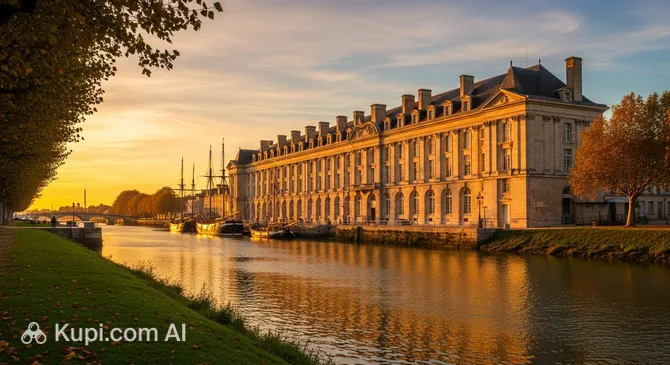
Royal Rope Factory
Royal Rope Factory. Иллюстрация. Источник: Kupi.com AI

This majestic structure, often called the "Versailles of the Seas," was originally designed for the production of complex ropes and cables. Today, it serves as the centerpiece of the International Maritime Centre and is located in the heart of the historic arsenal on the banks of the Charente River. It is a place where 17th-century engineering genius meets modern museum technology.

For travelers, it is more than just a museum; it is an opportunity to touch the era of great geographical discoveries and naval battles. The factory impresses with its elegant symmetry and scale, serving as a rare testament to how an industrial site can be a true work of art.

Contacts

For those planning a visit to this legendary site, we have gathered the essential contact information to help you find your way.

How to contactContact
AddressW2QV+QM, 17300 Рошфор, Франция
Phone+33 5 46 87 01 90
Websitewww.corderie-royale.com

What to Do

Once inside this grand building, you can take a true journey back in time. One of the main highlights of the visit is the chance to see vintage rope-making machinery. Despite their age, many of these machines are in excellent condition, and museum staff frequently demonstrate them in action, turning a standard tour into a fascinating show.

In addition to the permanent maritime displays, the International Maritime Centre regularly hosts temporary exhibitions. Here, you can learn about the great scientific expeditions that once set sail from Rochefort in search of new lands. For architecture enthusiasts, a walk through the arsenal grounds is a pure aesthetic pleasure—every stone here breathes the history of the 17th century.

If you are curious about how the ships of the past were built and rigged, be sure to explore the interactive zones. They vividly demonstrate the journey ordinary hemp took before becoming a reliable support for the masts of a ship of the line. This site is perfect for families, as history is presented in a lively and visual way.

Getting There

Reaching this unique historical site is quite simple. The Corderie Royale is located in the heart of Rochefort, on the picturesque banks of the Charente River. The city is situated in the Charente-Maritime region of western France, approximately 25–27 kilometers from the Atlantic coast and the city of La Rochelle.

If you are traveling by car from La Rochelle, the drive takes about 30 minutes. For navigation, you can use the coordinates 45.9393833°N, -0.9557568°W. For travelers who prefer public transport, Rochefort is well-connected by regular train and bus services to neighboring cities. From the train station, the arsenal building is within walking distance, or you can take a local taxi for a quick ride to the main entrance.

Ближайший город: Rochefort

History & Facts

The history of this ambitious project began by the will of King Louis XIV, who sought to transform France into a great maritime power. The construction of the factory in 1666, under the direction of architect François Blondel, was a true engineering challenge. Because the building was constructed on unstable soil (quicksand) near the Charente River, 700 workers had to build it perfectly symmetrically to ensure the massive foundation remained stable.

For nearly two centuries, this site was the heart of the French Navy. Here, using hemp brought from across the country and the Baltic, enormous ropes were spun for hundreds of warships. Interestingly, during the Rochefort arsenal's years of operation, about 550 vessels were launched from its slipways, each requiring kilometers of reliable rigging.

Unfortunately, the building suffered significant damage during the mid-20th century. In August 1944, a major fire broke out, leaving the monument in ruins for nearly 20 years until a large-scale restoration began in the 1970s. For the restoration of this architectural treasure, the city was honored with the National Heritage Award.

Time Needed

To fully appreciate the scale of the building and immerse yourself in the historical exhibits, we recommend setting aside 1.5 to 2 hours for your visit. This is usually enough time to see the main part of the museum and watch the rope-making demonstration.

However, if you plan on a leisurely stroll across the entire historic arsenal grounds, exploring temporary exhibitions and the banks of the Charente River, you should budget 2.5–3 hours. This site encourages a thoughtful exploration of details, so there is no need to rush through it in half an hour.

Working Hours

To ensure your visit is as comfortable as possible, we recommend keeping the museum's schedule in mind. The Corderie Royale is typically open daily from Monday to Sunday.

The opening hours are split into two blocks: from 10:00 AM to 1:00 PM and from 2:00 PM to 6:00 PM. Please note the lunch break in the middle of the day—this is an excellent time to grab a bite at one of the local cafes and enjoy the views of the Charente River. Before your trip, it is advisable to check the official website for up-to-date information, as the schedule may change on holidays.

10:00–13:00, 14:00–18:00

Nearby

A visit to the rope factory is just the beginning of your journey into the region's maritime history. The surrounding area is filled with monuments and interesting locations that allow you to delve deeper into the "Versailles of the Seas" atmosphere and discover the secrets of French shipbuilding.

NameDistance
International Sea Center0.2 km
Hermione - La Fayette Association0.4 km
Accro-mâts0.5 km
Arsenal of the Seas0.5 km
Museum of Shops of Yesteryear0.5 km
National Museum of the Navy, Rochefort0.5 km
Le Galway0.6 km

Reached the end of the page?

That means the route is fully explored