Support

Porte Saint Vincent

About

Imagine a majestic gateway serving as the border between a bustling harbor and the quiet of cobbled medieval streets. Porte Saint Vincent is the grand entrance to the historical heart of Vannes, located in the picturesque region of Brittany, France. Built in the early 17th century, it is a prominent example of Baroque architecture and an essential part of the city fortifications, whose history dates back over fifteen hundred years.
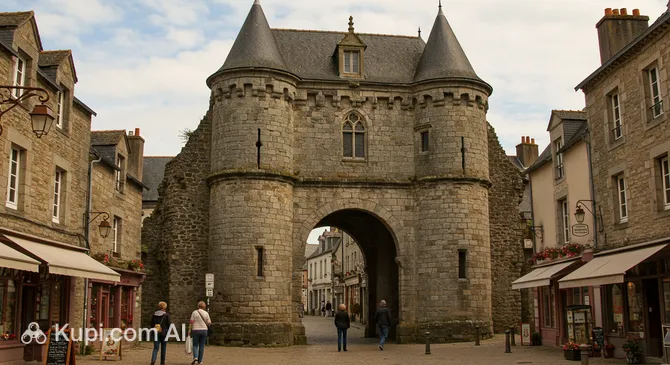
Saint Vincent Gate
Saint Vincent Gate. Иллюстрация. Источник: Kupi.com AI

The gate's facade is adorned with elegant decorative elements, most notably the statue of Saint Vincent Ferrer, the city's patron saint, installed in the late 19th century. The city's official emblem can also be seen above the passageway. These gates are not merely a defensive structure but a true symbol of the port character of Vannes, connecting its maritime past with the rich culture of the old town.

Today, Porte Saint Vincent is among the best-preserved city gates. It blends harmoniously into the ensemble of ramparts and sits alongside charming 15th- and 16th-century half-timbered houses. This is a must-visit spot for anyone wishing to experience the authentic atmosphere of ancient Brittany.

Contacts

To plan your visit to Porte Saint Vincent in Vannes, you can use the official details and map below. The site is located outdoors and is always accessible for viewing.

How to contactContact
AddressPl. Gambetta, 56000 Vannes, France

What to Do

Passing through Porte Saint Vincent is a mandatory ritual for every visitor. Begin your exploration with a detailed look at the Baroque facade: notice the city's coat of arms and the statue of Saint Vincent. This is one of the best photo spots in town, especially when soft light highlights the texture of the ancient stone.

Once on the other side of the gate, you will find yourself in a labyrinth of medieval streets, such as Rue Saint-Salomon, where unique half-timbered houses have been preserved. Right behind the gate is a convenient starting point for a major walk along the ramparts (Remparts). From the heights of the fortifications, magnificent views of the Gulf of Morbihan and manicured French gardens open up. Be sure to walk to the neighboring towers, such as Tour du Connétable, to feel the scale of the defensive system of the past.

If you turn your back to the old town, the lively port of Vannes unfolds before you. It is pleasant to stroll along the tree-lined quays, sit in one of the many cafes overlooking the yachts, and try traditional Breton pancakes (galettes). Evening time is perfect for a leisurely promenade when the gate's illumination creates a truly fairy-tale atmosphere.

Getting There

Porte Saint Vincent is located in the heart of the city at Pl. Gambetta, 56000 Vannes. This spot serves as the link between the city port and the historical center. If you are arriving in Vannes by train, the walk from the railway station (Vannes Gare) will take about 15–20 minutes (approximately 1.5 km). You can walk along a straight road past the prefecture building, which will lead you directly to Place Gambetta.

From Paris, the most convenient way to reach the city is by high-speed TGV trains; the journey takes about 3 hours. If you are traveling from nearby Nantes (100 km) or Rennes (about 1 hour away), you can use regional trains or BreizhGo buses, which stop in the immediate vicinity of the ramparts.

For those who prefer a car, follow the N165 highway. Several parking areas are available around the port and the old town, although spaces fill up quickly during the tourist season. It is also convenient to get around the city by bicycle—specially equipped paths lead to the gate.

Ближайший город: Vannes

History & Facts

The history of Porte Saint Vincent is inextricably linked to the development of the city's defenses, which began as a Gallo-Roman castrum as early as the 1st century AD. The gate acquired its modern appearance between 1620 and 1624. It became an important addition to the southern part of the ramparts, which had already been expanded several times by then, most notably under Duke John IV in the 14th century.

The gate's architecture is designed in the Baroque style, making it stand out against the more austere medieval fortifications. In the 18th century, the structure was seriously damaged by the sea but was carefully restored by the engineer Duchemin. It was then that the unique facade seen by tourists today was preserved.

In 1891, the gate's appearance was enhanced with significant details: a statue of Saint Vincent Ferrer, the patron saint of the city, was installed in the central part along with the coat of arms of Vannes. These elements emphasize the city's status as the former residence of the Dukes of Brittany and an important religious center of the region. Today, Porte Saint Vincent remains one of the six surviving gates, reminding us of the former power of the fortress.

Time Needed

For a simple viewing of Porte Saint Vincent, studying its Baroque facade, and taking souvenir photos, you will need about 30–40 minutes. This is enough time to appreciate the architectural details and the atmosphere of moving from the modern port into the medieval quarter.

However, we recommend setting aside at least 1.5–2 hours for this location. This will allow you not only to examine the gate but also to walk along the adjacent ramparts (Remparts), visit the Promenade de la Rabine, and begin a leisurely exploration of the old town's half-timbered houses. In the evening, when the decorative lighting comes on, a walk here becomes particularly romantic.

Working Hours

Since Porte Saint Vincent is part of the public urban architecture and located in an open square, it is available for viewing 24 hours a day. You can admire it at any time convenient for you, whether it's early morning as the city is just waking up or late at night.

Operating schedule:

  • Monday — Sunday: 24/7.

Entrance to the area is free, making the gate an excellent starting point for a walk at any time of day.

Круглосуточно

Nearby

A walk through Porte Saint Vincent opens the way to the most interesting corners of the old town. Exploring the surroundings will allow you to dive deeper into the atmosphere of medieval Brittany and see how the region's architecture has changed over the centuries.

NameDistance
Château de l'Hermine0.1 km
Vannes Historic Center0.2 km
Molux0.2 km
Crêperie Saint-Guenhaël0.3 km
Vannes Ramparts0.3 km
Saint Peter's Cathedral, Vannes0.3 km
Dan Ewen Crêperie – Breton Crêpes & Galettes0.6 km

Reached the end of the page?

That means the route is fully explored