Support

Vannes Centre Historique

About

The Historic Center of Vannes is the true heart of Brittany, where time seems to have stood still in the Middle Ages. Located in the picturesque city of Vannes, this district is a stunning ensemble of ancient fortifications and vibrant timber-framed houses. France has carefully preserved this corner, which is completely surrounded by mighty fortress walls built on the ruins of Roman forts.
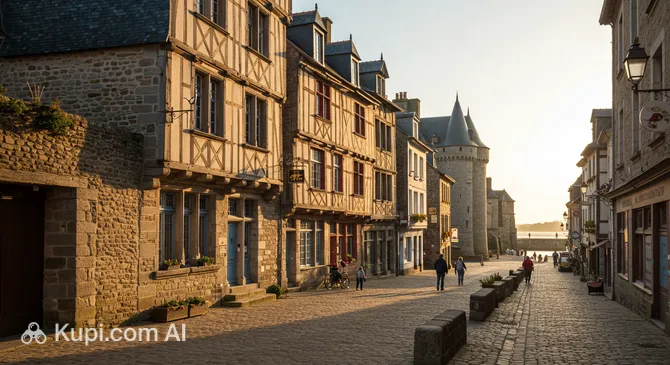
Vannes Historic Center
Vannes Historic Center. Иллюстрация. Источник: Kupi.com AI

Strolling through the narrow cobbled streets, it's impossible to miss the famous sculpture "Vannes and his Wife," which adorns the facade of a 16th-century house on Rue Noé. The entire area is rich with architectural treasures: here you'll find the majestic Constable's Tower, a five-story outpost with casemates, and the historic Château de l'Hermine, which today functions as a museum and cultural space.

The atmosphere of the old city is complemented by the Gothic grandeur of Saint-Pierre Cathedral and cozy squares like Place Henri IV. It is the perfect place to immerse yourself in Breton culture, where every turn reveals a view of the picturesque gardens by the ramparts or the ancient Garenne washhouse located right by the water.

Contacts

To plan your visit to the old part of the city, you can use the official details. The historic district is an open public space, but administrative centers and tourist information are available at the address below.

How to contactContact
Address14 Bis Rue Emile Burgault, 56000 Vannes, France

What to Do

The best way to start exploring the old city is with a leisurely walk along the fortress walls. You can see the massive ancient gates and peek into the Rampart Gardens (Jardin des Remparts)—one of the city's most picturesque spots, ideal for photos. Be sure to find the amusing granite pair on the corner of Rue Noé—the figures of "Vannes and his Wife," considered the unofficial mascot of the area.

Architecture and art enthusiasts should step into Saint-Pierre Cathedral to admire its stained-glass windows or visit the archaeological museum in Château Gaillard. While walking through Place Henri IV, notice the leaning colorful houses that are still used as residences. After sightseeing, it's pleasant to relax in one of the local creperies, trying traditional Breton galettes while overlooking the historic facades.

You can end your route at the port by passing through the grand Saint-Vincent Gate. From here, there is a beautiful view of the canal leading into the Gulf of Morbihan. If you have time left, you can go on a boat trip or simply enjoy the atmosphere of the lively market that regularly takes place in the squares of the old center.

Getting There

Getting to the historic center is easy, as it is located in the very heart of the city. If you arrive by train, the walk from the railway station will take only 10–15 minutes. High-speed TGV trains run regularly to the city from Paris (the journey takes about 3 hours), and there are also excellent connections with Rennes and Nantes. From the nearest airports in Lorient or Nantes, the city can be reached by bus or shuttle service.

For those traveling by car, there are several convenient parking lots around the fortress walls. Driving into the old town itself is restricted, so it is best to leave your vehicle outside and enter on foot through the grand Saint-Vincent Gate (Porte Saint-Vincent) from the port side. Taxis are also readily available within the city, although Vannes is perfect for leisurely walks.

Ближайший город: Vannes

History & Facts

The foundation of this fortress was laid in the 3rd century by the Romans, and the defensive structures have been continuously expanded since then. Most of the current walls and towers were erected between the 14th and 17th centuries, protecting residents and emphasizing the status of Vannes as an important political center of Brittany. The five-story Constable's Tower (Tour du Connétable) is an excellent example of fortification from that era, combining artillery casemates below with comfortable living floors above.

Many of the timber-framed houses seen today date back to the 16th century. In those times, taxes were often based on the footprint of the ground floor, so the upper floors were built protruding forward. This created the characteristic "overhanging" look of medieval streets that photographers love so much. Saint-Pierre Cathedral is also a witness to many eras: its construction began in the 10th century on the site of a Romanesque church and continued until the 19th century, incorporating features of various architectural styles.

Interestingly, the Château de l'Hermine, built in 1410, served as the main residence of the Dukes of Brittany for a long time. Later, in the 19th century, the Garenne washhouse (Lavoirs de la Garenne) with its picturesque roof appeared nearby—a monument to the daily life of townspeople that today looks like a set for a historical film. The entire ensemble of the center reflects the city's evolution from an ancient settlement to a thriving modern cultural hub.

Time Needed

For a quick overview of the main streets and the ramparts, 2–4 hours will be enough. This time is sufficient to see the cathedral, take beautiful photos by the gardens, and find the famous sculpted couple on the house facade.

If you plan to visit the archaeological museum in the castle, study each tower in detail, and have lunch in one of the local creperies, it is better to set aside half a day (about 5–6 hours). For those who enjoy a slower pace and seaside landscapes, spending a whole day here is recommended to have time to reach the port and perhaps take a boat trip around the bay.

Working Hours

The historic quarter itself is an open residential area, so you can walk along its cobbled streets and the fortress walls 24/7 and free of charge. This place is especially charming in the evening when the decorative lighting of the ancient towers and gates is turned on.

However, individual sites such as Saint-Pierre Cathedral or the museums in the castles have their own internal schedules, usually welcoming visitors from 9:00 AM to 6:00 PM or 7:00 PM. It is recommended to check the current schedule on-site or on the official tourist office website before visiting specific exhibitions.

Nearby

Exploring the surroundings of the old town will allow you to feel the spirit of the region more deeply and notice details that often escape the eyes of rushing tourists. Very close to the main fortifications are iconic sites, each preserving a piece of Breton history.

NameDistance
Crêperie Saint-Guenhaël0.1 km
Vannes Ramparts0.1 km
Saint Peter's Cathedral, Vannes0.1 km
Saint Vincent Gate0.2 km
Château de l'Hermine0.2 km
Molux0.4 km
Dan Ewen Crêperie – Breton Crêpes & Galettes0.4 km

Reached the end of the page?

That means the route is fully explored