Support

Rives de la Penfeld

About

In the west of the Brittany peninsula lie the picturesque Banks of the Penfeld, which have become an integral part of the urban landscape of Brest. This area in France represents a unique blend of natural beauty and historical heritage, closely linked to the region's development as a major seaport and fortress.
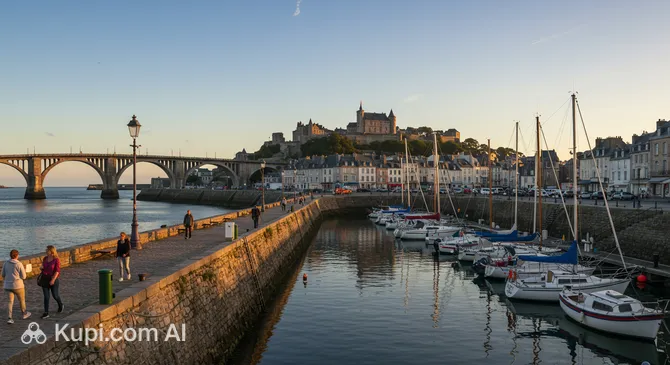
Banks of the Penfeld
Banks of the Penfeld. Иллюстрация. Источник: Kupi.com AI

The Penfeld River, only 16 kilometers long, flows into one of the most convenient and deep-water natural harbors in Europe — the Brest Roadstead. The riverbanks are a true historical zone, offering breathtaking views of the ancient Brest Castle, the arsenal, and the modern naval base. A walk here allows you to feel the rhythm of a maritime city, where rugged cliffs harmoniously coexist with powerful fortifications.

Today, this area is an important part of a tourist route that bridges the past and the present. Visitors note the special atmosphere of the place, where every turn reveals a panorama of bridges and unique architecture that emphasizes the geographical identity of this corner in the northwest of the country.

Contacts

For those planning a walk through this historical zone, it's useful to have key contact details and navigation coordinates at hand.

How to contactContact
AddressRives de la Penfeld 29200, 29820 Brest, France
Websitewww.brest-bellevue.net

What to Do

A walk along the river offers many opportunities for both active and contemplative recreation. You can enjoy views of Brest Castle and the famous Tanguy Tower, which rise impressively above the water. It’s an ideal place for walking and cycling, where every turn of the road reveals new perspectives on the naval base and the massive late 19th-century arsenal walls.

Photography enthusiasts will find plenty of inspiration here: the industrial landscapes of the port contrast with the greenery of the banks and the historical stone of the fortifications. It’s pleasant to simply watch the maritime traffic or have a small picnic in the green areas, soaking up the unique atmosphere of Brittany. The area is great for families thanks to its proximity to interactive museums and iconic structures like the Recouvrance Bridge.

Special mention should be made of the opportunity to combine your promenade with a ride on the city cable car, which glides directly over the river, offering spectacular bird's-eye views. This variety of activities makes a visit to the banks of the Penfeld a rich and memorable experience for tourists of all ages.

Getting There

Getting to this scenic area is easy, as it's located in the heart of the city. If you are in the center, Brest Castle serves as an excellent landmark, from which you can easily walk while enjoying the city views along the way.

For those who prefer public transport, buses and trams run nearby. Of particular interest is the cable car line (Le Téléphérique), located about 2 km away, which is an attraction in its own right. If you are arriving from Brest Bretagne Airport (BES), the trip by bus or shuttle to the city center takes about 20–30 minutes, after which the embankments are just a few minutes' walk away.

For drivers, there are parking zones in the vicinity, and active travelers will appreciate the convenient paths perfect for cyclists. Taking a taxi from the central station is also a quick and comfortable way to reach your destination.

Ближайший город: Brest

History & Facts

The roots of this place go back to antiquity, specifically the Gallo-Roman era. As early as the end of the 3rd century AD, the Romans recognized the strategic importance of this location and built a fortified camp called Gesocribate. These walls became the foundation for the future majestic castle, which has been rebuilt and strengthened many times over 1,700 years.

A significant contribution to the development of the riverbanks was made by the famous Cardinal Richelieu, who in 1631 ordered the establishment of a naval base in the river valley. Later, during the era of Louis XIV, the outstanding engineer Vauban worked on the fortifications, whose engineering ideas turned this area into an impregnable stronghold. In the Middle Ages, Duke John I used these rocky shores as a key defensive point for the entire Duchy of Brittany.

In the 19th century, the landscape was complemented by a sea wall that shaped the modern appearance of the harbor and arsenal. In 1923, the castle overlooking the river was granted national monument status. Today, a walk through these sites allows you to trace centuries of evolution — from an ancient Roman outpost to a key maritime center of modern Europe.

Time Needed

To take a leisurely stroll along the water and take beautiful photos against the backdrop of the castle and the Tanguy Tower, 1–2 hours is usually sufficient. This is enough time to feel the sea breeze and enjoy views of the ships and the arsenal.

However, if you decide to combine your walk with a visit to the National Navy Museum or a detailed tour of the historical fortifications, you should set aside 3–4 hours for your visit. Such an immersion will allow you to study all the architectural details and get acquainted with the rich past of this region without rushing.

Working Hours

Access to the banks as an open walking area is available 24/7; however, official sites and infrastructure within the territory follow a set schedule. Visitors can plan their visit based on the following hours:

Monday — Sunday: from 10:00 AM to 7:00 PM.

During these hours, the main information points are open, ensuring maximum convenience for sightseeing.

10:00 – 19:00

Nearby

Exploring the surroundings of the Penfeld River allows you to dive deeper into the city's atmosphere and see many other iconic sites. Just a few minutes' walk or a short ride away are locations of both historical and entertainment value.

NameDistance
Le Master Bowling3.3 km
La PAM3.4 km
Tanguy Tower3.4 km
Brest Cable Car3.4 km
Recouvrance Bridge3.4 km
Greenwich Café3.5 km
Explorers' Garden3.5 km

Reached the end of the page?

That means the route is fully explored