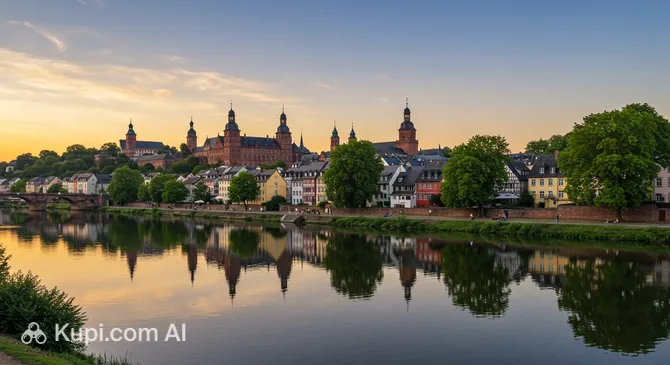
Aschaffenburg is a picturesque and cozy city located in northwestern Bavaria, right where the Main River makes its famous bend. Thanks to its surprisingly mild climate and special atmosphere, King Ludwig I once called it "Bavarian Nice." Today, Germany is proud of this city as an important cultural center of the Lower Main region, which, despite its development, has managed to preserve its old-world charm and closeness to nature.
Aschaffenburg. Illustration.
Source: Kupi.com AI
Geographically, the city occupies a unique position, serving as a "gateway" to the Spessart Nature Park. With a population of about 71,000 people, Aschaffenburg offers the perfect balance between the dynamics of a modern city and provincial tranquility. Aschaffenburg's history is felt at every step: from the majestic castle walls to the narrow cobbled streets where ancient architecture harmoniously coexists with modern life.
The city is ideal for leisurely strolls and cultural discoveries. Tourists are drawn here not only by historical monuments such as Johannisburg Castle but also by magnificent, well-maintained parks and the opportunity to enjoy local gastronomy in cozy cafes. Aschaffenburg is a place where the hospitality of the locals and the beauty of the landscapes create a unique mood, inviting travelers to plunge into a real fairy tale.
Weather Overview
Aschaffenburg's climate is characterized by mildness, making the city pleasant to visit almost year-round. Moderate weather prevails here: expect warm, comfortable summers and cool winters with fairly frequent precipitation distributed throughout the year.
The summer season is the most popular time for a visit. In July and August, the average temperature is about 20°C, and during the day, the air often warms up to 25°C. These are ideal conditions for long walks, but an umbrella may be useful even in summer: on average, 11–12 rainy days per month are recorded here.
Winters in the city are quite mild and rarely harsh. In January, the average temperature stays around 2.6°C, and night frosts are usually minor. December is considered the cloudiest month, when the number of days with precipitation reaches 17. To plan your wardrobe and choose good dates for your trip, we recommend checking the current weather in Aschaffenburg in advance.
Average monthly temperature
Average monthly precipitation
Interesting Facts
Aschaffenburg holds many fascinating stories and cultural treasures beyond its main attractions. This city knows how to surprise, harmoniously combining Bavarian traditions with ancient motifs and English landscapes.
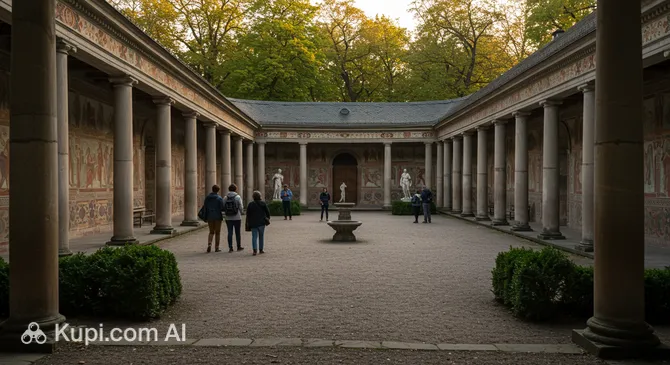
Thanks to King Ludwig I's passion for ancient culture, you can take a journey through time here. The monarch gifted the city the Pompejanum — a unique replica of an ancient Roman villa, created so that residents could enjoy the atmosphere of antiquity without leaving the banks of the Main.
Aschaffenburg boasts an impressive historical heritage dating back over a thousand years: the first mentions of it in chronicles date to the 10th century. A majestic witness to this era is Johannisburg Castle, built of red sandstone and serving as a residence for the Archbishops of Mainz.
The city became the site of one of the first classic English landscape gardens in Bavaria. The picturesque Schönbusch Park, with its winding paths and cozy corners, has inspired artists and poets for centuries to create masterpieces.
Despite its cozy size, the city lives a rich cultural and sporting life. Ancient traditions and modernity coexist harmoniously here: while museums host exhibitions, real football passions boil at the Schönbusch Stadium.
Pompejanum. Illustration.
Source: Kupi.com AI
Traveler photos:
How to Get There
Competent route planning is the key to a successful trip. Aschaffenburg, located in the picturesque region of Bavaria, has excellent accessibility thanks to its proximity to major German hubs. You can find out more about all ways to get to the city on the specialized page, and below we will look at the most convenient arrival options via the nearest airports and stations.
For international tourists, air travel remains the most comfortable way to reach the region. The closest and most convenient option is Frankfurt Airport (IATA: FRA), located in the city of Frankfurt am Main, just 42.1 km from Aschaffenburg. This is one of Europe's largest aviation hubs, receiving flights from all over the world. The journey from there by car or transfer will take just over an hour.
As an alternative, you can consider other air harbors. For example, Stuttgart Airport (IATA: STR) is 143.6 km from the city. A trip from there will require more time, about one and a half to two hours by car. Another option is Nuremberg Airport (IATA: NUE), which is 149.9 km away. Also in the region, there is the small Frankfurt-Hahn Airport, often used by low-cost carriers, but it is located significantly further away.
Summary information on the nearest airports is presented in the table:
If you prefer ground transport, Germany offers an extensive railway network. The nearest major railway hub is Frankfurt (Main) Hauptbahnhof, located approximately 36.6 km from Aschaffenburg. High-speed trains from all over Europe arrive here, and from here it is easy to transfer to a regional express to your final destination.
Also, Mannheim Hauptbahnhof (73.5 km) is considered an important transport hub in the region. Travelers coming from the west or south can use stations in Koblenz or Kaiserslautern as transit points.
Aschaffenburg is often called a city of palaces, parks, and museums. Its architectural appearance has been shaped over centuries, and today you can see an amazing mix of eras: from the German Renaissance to ancient Roman motifs. A walk through the city is a real journey through time that will provide vivid impressions for every tourist.
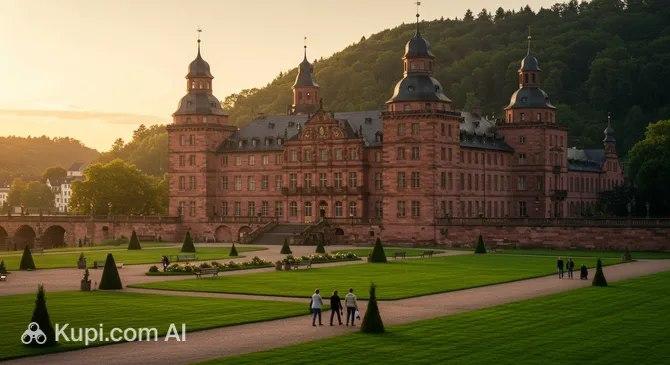
The undisputed landmark and symbol of the city is the majestic Johannisburg Castle. This grand red sandstone palace, built in the early 17th century, is considered one of the most significant Renaissance structures in Germany. Tourists are attracted not only by its powerful appearance with four corner towers but also by its rich internal exhibition. In the castle, you can visit the State Gallery with paintings by Lucas Cranach the Elder, view the living quarters of the Prince-Electors, and see a unique collection of architectural models made of cork — the largest in the world.
Johannisburg Palace. Illustration.
Source: Kupi.com AI
Traveler photos:
Nearby, on the high bank of the Main, is an attraction unusual for Bavarian lands — the Pompejanum. It is an idealized reconstruction of a Roman villa, created in the 19th century by order of King Ludwig I. The building is surrounded by a Mediterranean garden with figs and almonds, creating the perfect illusion of being in Italy. Inside, visitors can admire colorful frescoes, mosaic floors, and ancient art objects from state collections, immersing themselves in the atmosphere of ancient Roman life.
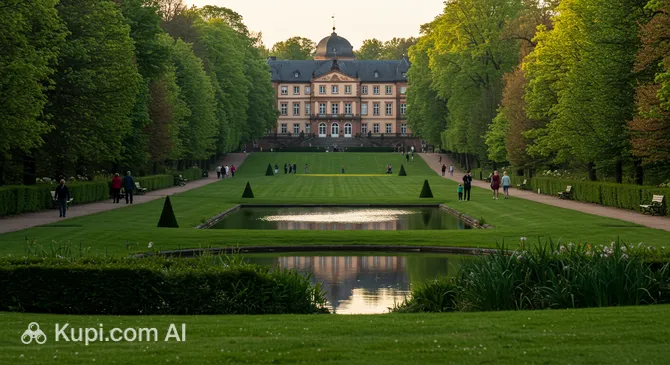
Nature lovers and those fond of long walks should head to Schönbusch Park, located on the outskirts of the city. It is one of the oldest English-style landscape parks in Bavaria. Here, nature is harmoniously combined with architecture: among picturesque lawns and artificial lakes, small classical buildings are hidden, such as the Temple of Friendship or the Philosopher's House. The park is ideal for picnics, boating, and a peaceful rest away from the city bustle.
In the very heart of Aschaffenburg lies another green oasis — Schöntal Park. This place is especially popular in spring when the magnificent magnolia grove blooms, attracting photographers and romantics. The park is steeped in history: while walking along the alleys, you will come across the picturesque ruins of a church of a former Beguine monastery, which give the landscape a mysterious and romantic look.
Local Cuisine
Aschaffenburg is a real paradise for foodies, where the gastronomic traditions of Franconia are harmoniously intertwined with Rhenish culinary arts. Travelers wishing to experience the taste of Bavaria should definitely order hearty meat dishes. The hallmarks of local cuisine are the famous Bavarian sausages and roasted pork knuckle with an appetizing crispy crust, traditionally served with hearty potato dumplings. Those with a sweet tooth will enjoy the aromatic Franconian gingerbread and fresh strudels, which can be found in cozy city confectioneries.
A special place in the city's culture is occupied by drinks. Aschaffenburg is proud of its beer traditions: small family breweries thrive here, offering the freshest beer of unique varieties. However, the real highlight of the region is considered to be apple wine (Apfelwein). This tart and refreshing drink, especially popular in this part of Germany, perfectly quenches thirst and is often served in traditional "bembel" jugs.
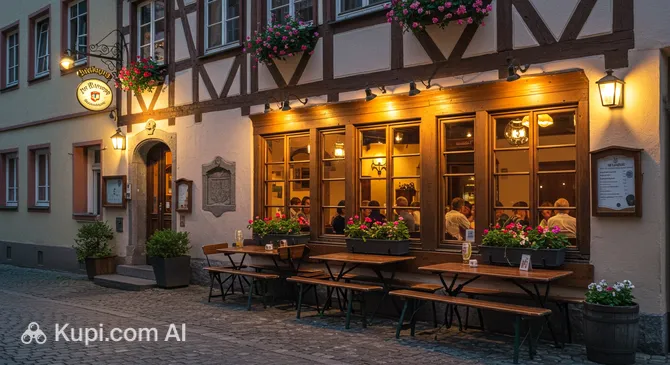
Der Biersepp. Illustration.
Source: Kupi.com AI
Traveler photos:
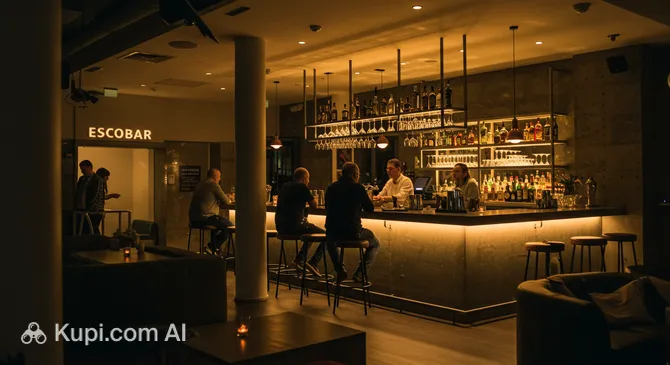
The dining culture in the city is diverse: from bustling farmers' markets with fresh cheeses to elegant establishments. In the warm season, locals and tourists prefer to relax in beer gardens and on open terraces. To get acquainted with the colorful atmosphere and traditional tastes, the Der Biersepp restaurant is perfect, where you can enjoy authentic dishes. And if you are looking for a place for evening relaxation with drinks, it's worth checking out the Escobar bar, popular among the townspeople.
Travel Tips
Aschaffenburg is an incredibly hospitable and comfortable city for travelers, but knowing local nuances will make your trip even more pleasant. We have prepared a list of practical recommendations that will help you easily navigate "Bavarian Nice" and avoid typical tourist mistakes.
Clothing and footwear. Due to its special microclimate, the weather here is often milder and warmer than in the rest of Bavaria, but an umbrella or raincoat should be kept at hand in any season. For walking on the cobblestones of the Old Town and park paths, choose the most comfortable shoes with flat soles. If you plan to visit active churches, such as the Basilica of St. Peter and Alexander, avoid overly revealing clothing.
Transport. The historical city center is compact and best explored on foot. For trips to more distant areas (for example, to Schönbusch Park), it is convenient to use the city bus network; tickets can be bought from the driver or at ticket machines at stops. Taxis are easy to find at special stands or via apps (such as FreeNow). Renting a car only makes sense if you plan trips to the Spessart Nature Park.
Finance and payment. The currency is the Euro. Although Germany is actively implementing cashless payments, Aschaffenburg honors traditions: in small bakeries, snack kiosks, and souvenir shops, cards may not be accepted. Always have cash in small denominations (5–20 euros) with you. Tips (Trinkgeld) are not automatically included in the bill: it is customary to round up the amount or leave the waiter about 5–10%.
Health and safety. The city is very safe for tourists; you can walk around safely even in the evening, following standard precautions. Pharmacies are easily recognized by the red letter "A". Note: on Sundays and holidays, regular pharmacies are closed, only emergency ones (Notdienst) are open; the address of the nearest one is always indicated on the door of any closed pharmacy.
Communication and connectivity. The main language is German. Hotel and museum staff usually speak English, but in small shops, it might not be useful. Locals value politeness very much: learn simple words like "Hallo" (Hello) and "Danke" (Thank you). Free Wi-Fi is available in many cafes and public places, but for stable connection and navigation, it's better to purchase a prepaid SIM card at a supermarket.
Local etiquette. When entering a small shop or sitting at a table in a cafe, it's customary to greet staff and neighbors. The most important rule: Sunday is a day of silence (Ruhetag). Almost all shops, including grocery stores, will be closed, and making noise on the street or in residential areas is considered bad manners. Plan your purchases of souvenirs and groceries for Saturday.
What to avoid. Never walk on dedicated cycle paths (usually red or separated by markings). Cyclists ride fast and expect a clear path; breaking this rule can cause conflict. Also, do not cross the road on a red light, even if there are no cars — this is socially disapproved behavior for which you can receive a remark from locals or a fine from the police.
Additional tip. Don't throw away plastic bottles and tin cans. Germany has a deposit system (Pfand): by returning the container to a special machine in any supermarket, you will receive a receipt that can be exchanged for money or used to pay for purchases at the checkout. This is not only eco-friendly but also allows you to save a little.
By following these simple tips, you can avoid minor troubles and fully focus on the beauty of Aschaffenburg's palaces and parks. We wish you an unforgettable journey full of bright discoveries and pleasant encounters!
Entertainment & Nightlife
Aschaffenburg's nightlife is a pleasant surprise for those who expect only peace and quiet from an old Bavarian city. Thanks to a high density of establishments per capita (one of the highest in Bavaria), the city offers a rich evening program. There are no huge metropolitan techno clubs here, but there is a cozy, friendly atmosphere in numerous pubs, cocktail bars, and music venues where locals and tourists easily find a common language.
The epicenter of evening activity is traditionally the Old Town (Altstadt) and the area around Sandgasse. This is where most of the beer halls and bars are concentrated, where life hums until late at night, especially on Friday and Saturday. The crowd here is diverse: from local university students to respectable couples enjoying a glass of wine. The dress code in most places is casual — it will be appropriate almost everywhere.
If you want to start the evening with a delicious dinner in a pleasant setting, pay attention to the Delphi restaurant. This establishment is popular for its hospitable atmosphere and excellent cuisine, making it a great starting point for a long evening. In the warmer months, many establishments set up tables outside, turning the city center into one large open-air terrace.
Escobar. Illustration.
Source: Kupi.com AI
Traveler photos:
For those who prefer a more dynamic leisure experience with high-quality drinks, it's worth checking out the Escobar bar. This place is known for its stylish interior and wide selection of cocktails. Groups of friends often gather here to discuss news over relaxing music. Prices in Aschaffenburg bars can be described as moderate by German standards: a glass of beer will cost an average of 4–5 euros, and cocktails start from 8–10 euros.
Safety and transport: Aschaffenburg is a very safe city. You can safely walk around the center and return to your hotel on foot even late at night. The street lighting is good, and the crime rate is low. If your hotel is far away, you can call a taxi at special stands near the station or via popular mobile apps. Night buses run less frequently, so a taxi remains the most reliable way to get around after midnight.
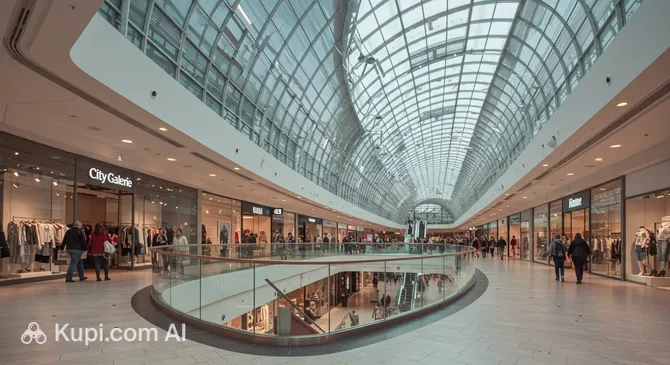
While the city's main focus is on history and walking, active daytime leisure enthusiasts also have plenty to do. If you are traveling with family or just want to move around, visit the Jump'n Fly Trampoline Park in Aschaffenburg — it's a great way to get an adrenaline rush in any weather. And for those who prefer combining relaxation with shopping, the modern City Galerie opens its doors, where you can not only go shopping but also grab a snack at the food court before an evening promenade.
Parks & Museums
Aschaffenburg is not called "Bavarian Nice" for nothing: this city is literally immersed in greenery, and the concentration of cultural objects per square meter here impresses even seasoned travelers. A walk through local parks and a visit to museums is an integral part of getting to know the soul of the city, where nature harmoniously complements art and history.
The city's main natural gem is Schönbusch Park. It is not just a green zone, but one of the oldest English-style landscape parks in Bavaria. A walk here resembles a living painting: winding paths lead to picturesque lakes crossed by romantic bridges. Tourists come here to take a break from the city bustle, go boating, and admire the "Little Palace" (Schlösschen) reflected in the water's surface. This is an ideal place for a leisurely promenade at any time of year.
Schönbusch Park. Illustration.
Source: Kupi.com AI
Traveler photos:
In the very center of the city is another green oasis — Schöntal Park. Originally created as a garden at a residence, today it has become a favorite vacation spot for citizens. The park is famous for its magnificent landscape design and ruins of an old church, which give the place a mysterious look. Schöntal is especially beautiful in spring when the magnolia grove blooms — one of the most photographed places in Aschaffenburg.
The cultural life of the city is concentrated around its historical symbols, which simultaneously serve as the main museum venues. A visit to Johannisburg Castle is a must. Inside the majestic walls are hidden real treasures: the State Gallery with canvases by Lucas Cranach the Elder and a unique museum featuring the world's largest collection of cork architectural models. These miniature replicas of Roman buildings, created in the 18th century, are amazing in their detail.
To immerse yourself in the ancient era, visit the Pompejanum. This open-air (and indoor) museum is an exact reconstruction of a Roman villa from Pompeii. There are no boring stands here: visitors walk through the atrium, examine colorful frescoes and mosaics, feeling like residents of Ancient Rome. The exhibition is complemented by authentic ancient works of art from the state antique collections and the Glyptothek in Munich.
Insider tip: If you have time left, pay attention to the Museum of Church Art in the former Chapter House (Stiftsmuseum). It is less known among mass tourists, but it houses stunning medieval artifacts and treasures related to the history of the Collegiate Church of St. Peter and Alexander.
Getting Around
Aschaffenburg's transport system is organized with German precision and comfort, although the city itself is quite compact, and many attractions in the historical center are easily explored on foot. Public transport here is based on buses and regional trains, as there are no subways or trams in a city of this size. The main transport hub is the Central Bus Station (ROB), located in the immediate vicinity of the main railway station.
The city bus network (Stadtbus) covers all districts of Aschaffenburg and connects them with the center. Buses run regularly, with intervals of 15 to 30 minutes on weekdays, but the frequency of trips decreases in the evenings and on weekends. For tourists, routes from the station to Schönbusch Park or to outlying districts are especially useful if you have chosen a hotel outside the center. It's important to remember that night routes exist, but their schedule is very limited.
Aschaffenburg is part of the VAB transport association (Verkehrsgemeinschaft am Bayerischen Untermain). This means that a unified tariff system applies here. For tourists, two types of tickets will be most advantageous: a single ticket (Einzelkarte), valid for a certain period (usually 60 minutes), and a day pass (Tageskarte), which allows an unlimited number of trips during the day. A day ticket often pays for itself after the third trip.
You can purchase tickets in several ways. The easiest option is to buy a ticket directly from the driver when boarding the bus (unlike in many major metropolises, this is customary here). Have cash ready, preferably coins or small bills, as cards are not always accepted on board. Tickets are also sold in machines at major stops and at the station. For route planning and buying electronic tickets, it is convenient to use the popular DB Navigator app, which works nationwide.
A zonal principle applies in the payment system, but since most tourist sites are within the city limits (City-Zone), you will unlikely have to deal with complicated suburban tariffs. Be sure to validate (stamp) paper tickets bought from machines immediately upon entry, unless they indicate an exact start time. Tickets purchased from the driver are usually already validated.
An excellent alternative to buses is the bicycle. Aschaffenburg is located on flat terrain along the Main River, making it ideal for cycling. There is a developed network of cycle paths in the city, and the route along the river is considered one of the most picturesque. Rental points can be found near the station, or you can use a bike-sharing system if you have the appropriate app (often services from Deutsche Bahn).
Taxis in Aschaffenburg are a reliable but rather expensive way to get around. Cars wait for passengers at special stands near the station and in the city center. It's not customary to hail a taxi by hand on the street here; it's better to order a car by phone or through apps (for example, FreeNow or Uber, if active in the region at the time of your trip). For those who are used to complete freedom, car-sharing services are available, but keep in mind that parking in the historical center is paid and spaces may be limited.
Accommodation
Where to stay:
Aschaffenburg offers travelers a balanced choice of accommodation options that will satisfy both budget-conscious tourists and those who value increased comfort. Since the city is relatively compact, there are no giant resort complexes typical of coastal areas. The basis of the hotel stock is made up of cozy mid-range hotels, modern business hotels, and traditional German guesthouses (Gasthof), where you can experience the authentic atmosphere of Bavarian hospitality.
When choosing a place to stay, you should consider the purpose of your visit. The most attractive area for tourists is the Old Town (Altstadt) and the central pedestrian zone. By staying here, you will be within a few minutes' walk of the main attractions and the picturesque Main embankment. This is especially convenient in the evening: you can enjoy dinner at local restaurants without worrying about a long return to the hotel.
The second popular area is the vicinity of the Main Railway Station. This option is ideal for those who use Aschaffenburg as a base for trips around the region (for example, to Frankfurt or Würzburg) or arrive late in the evening. Housing here is generally more modern and functional, and the walk to the historical center takes no more than 10–15 minutes.
The pricing policy in the city is moderate, especially compared to neighboring Frankfurt am Main.
Budget segment: Small guesthouses or simple rooms can cost from 60 to 80 euros per night.
Middle class: A comfortable room in a 3-4 star hotel with breakfast will cost an average of 90–130 euros.
Luxury and apartments: More expensive options and spacious apartments for families start from 140 euros.
Booking tip: Aschaffenburg is a popular destination for domestic tourism and business trips. During the summer season (from May to September) and during major city festivals, the best options are taken quickly. It is recommended to book accommodation at least 3–4 weeks before the trip. For searching, it is convenient to use major international online platforms; however, some small family hotels may offer better terms or nice bonuses (for example, free parking) when booking directly through their own websites.
Nearby Cities
For those who want to explore the surroundings, Aschaffenburg serves as an excellent starting point for day trips to several interesting nearby places:
Just 14 kilometers from the city is picturesque Seligenstadt. It is one of the oldest cities in Germany, which charms tourists with its half-timbered houses and cozy atmosphere. The main attraction here is the former Benedictine abbey with a magnificent monastery garden and the Einhard Basilica. A walk through the historical center will give you the feeling of a real fairy tale.
History and literature enthusiasts will be interested in Hanau, known as the birthplace of the Brothers Grimm. This is where the famous "German Fairy Tale Route" begins. In the city, you should visit the majestic Baroque Philippsruhe Palace, located right on the banks of the Main, and walk through its surrounding park. This is a wonderful place for cultural recreation for the whole family.
For lovers of wine and beautiful landscapes, Groß-Umstadt, often called the "Wine Island of the Odenwald," is an excellent choice. The city is famous for its vineyards and traditional wine festivals. The historical market square with its Renaissance town hall and numerous wine cellars create a unique atmosphere, ideal for a relaxed day.
City
Population
Distance
Goldbach
10 171
4 km
Mainaschaff
8 936
4 km
Hosbach
13 212
5 km
Grossostheim
16 419
8 km
Moembris
11 507
10 km
These nearby destinations allow you to get an idea of the diverse culture and landscapes of the region.
Shopping & Souvenirs
Aschaffenburg is deservedly considered the main shopping center in the Bavarian Lower Main region. The city offers an amazing variety: there are more than 700 stores located in the compact center, allowing you to comfortably combine shopping with sightseeing. Tourists will find here a harmonious combination of well-known international brands, large department stores, and charming family boutiques hidden in the alleys of the Old Town.
The heart of commercial life is the pedestrian zone, which is always bustling. The main shopping artery is Herstallstraße, connecting the station area with the historical center. Popular clothing, shoe, and cosmetic stores are concentrated here. If you are looking for something more exclusive, turn into Sandgasse or Steingasse in the Old Town. In these colorful alleys are small designer boutiques, antique shops, and specialized stores where you can find unique goods.
For lovers of comfortable shopping under one roof, the main place of attraction is the City Galerie. It is the largest shopping center in Northern Bavaria, located in the very heart of the city. Under its glass dome are more than 70 stores for fashion, electronics, and accessories, as well as numerous cafes. This is an ideal place for shopping in any weather, featuring both budget-friendly marks and premium brands.
City Galerie. Illustration.
Source: Kupi.com AI
Traveler photos:
The markets create a special shopping atmosphere in Aschaffenburg. Be sure to visit the traditional Weekly Market (Wochenmarkt), which unfolds on Schlossplatz square, right at the foot of the castle, on Wednesdays and Saturdays. Here, local farmers offer the freshest vegetables, fruits, flowers, and regional delicacies. This is not just a place for shopping, but a real cultural tradition where you can try local cheeses and sausages while enjoying a magnificent view of Johannisburg Castle.
As souvenirs from Aschaffenburg, it is worth bringing products from local winemakers. The region is famous for its Franconian wine, which is often bottled in characteristic flat bottles — Bocksbeutels. Also popular gifts are traditional ceramic jugs for apple wine ("bembel") or sweets from local confectioneries. History buffs can purchase high-quality replicas of ancient jewelry or souvenirs with Pompejanum symbols.
Shops in the city center are usually open Monday through Saturday from 10:00 to 19:00 or 20:00. Large shopping centers generally work until 20:00. It is worth remembering that Sunday in Germany is a day of rest, and all shops, including grocery supermarkets, are closed (with the exception of some small kiosks at the station). Visa and Mastercard are widely accepted, but in small bakeries, at the market, or in souvenir shops, cash euros are still preferred.
Tourists who permanently reside outside the European Union can take advantage of the Tax Free system and get a partial VAT refund when leaving the country. Look for "Global Blue" stickers in shop windows or ask sellers for a Tax Free Form when making purchases over the established minimum (usually from 50 euros).