Support

Johannisburg Palace

About

Majestically overlooking a bend in the River Main, Johannisburg Castle is a true architectural treasure that graces the city of Aschaffenburg. Built in the early 17th century from striking dark red sandstone, this castle is recognized as one of the most significant monuments of the Late Renaissance in Northern Europe.
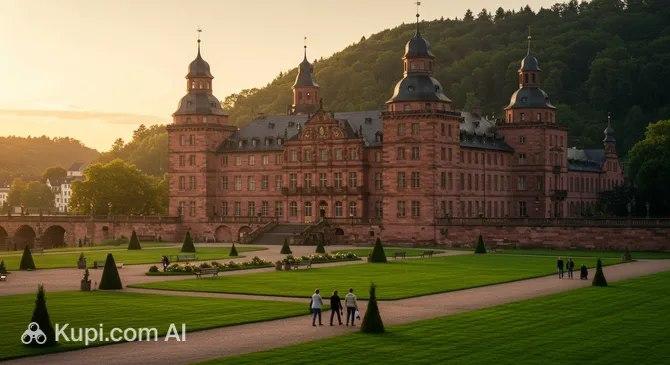
Johannisburg Palace. Illustration.
Source: Kupi.com AI

Traveler photos:

For nearly two centuries, this grand structure served as the ceremonial eastern residence of the influential Prince-Electors and Archbishops of Mainz. Today, Germany is rightfully proud of the preservation of this site, which impresses with its strict symmetry, four massive corner towers, and the harmonious proportions characteristic of the palace architecture of that era.

Inside, the castle hides equally fascinating treasures: its interiors, later redesigned in the Classical style, have been transformed into a rich museum complex. Visitors can see not only the state apartments but also unique art collections, making Johannisburg Castle a must-visit for every lover of history and art.

Contacts

To clarify details before your visit or to book group tours, you can use the official contact information of the administration.

How to contactContact
AddressSchloßpl. 4, 63739 Aschaffenburg, Germany
Phone+49 6021 386570
Websitewww.schloesser.bayern.de

What to Do

Inside the walls of Johannisburg Castle, a rich cultural program awaits visitors. Be sure to stop by the State Gallery, which features an impressive collection of paintings by Lucas Cranach the Elder. Lovers of decorative arts will enjoy the rooms filled with antique furniture, delicate porcelain, and old tapestries that recreate the atmosphere of 18th-century court life.

One of the castle's most unusual attractions is the world's largest collection of cork architectural models. These highly detailed copies of famous monuments from Ancient Rome, created at the end of the 18th century, allow you to take a unique journey through time without leaving Bavaria.

After touring the interior rooms, it is worth stepping out into the castle garden. A walk along its paths offers magnificent panoramic views of the River Main. Very close by is the Pompejanum—an idealized reconstruction of an ancient Roman villa surrounded by a garden of fig and almond trees, creating a wonderful Mediterranean resort feel in the heart of Europe.

Getting There

Johannisburg Castle is located in the very heart of the city, on an elevation by the banks of the Main River, so it is easy to find. The most popular way to get here from other regions is by rail. Trains run regularly from Frankfurt am Main, with a journey time of only about 40 minutes.

From Aschaffenburg's main railway station, the castle gates are a pleasant 10–15 minute walk away. If you prefer not to walk, you can take local buses that stop in the immediate vicinity of Schlossplatz. It is also convenient to call a taxi from the city center, which will take you right to the main entrance in a matter of minutes.

For those traveling by private or rental car, there are paid parking zones available around the castle. Please note that on weekends, the number of available spaces may be limited due to the site's popularity with tourists.

Nearest city: Aschaffenburg

History & Facts

The history of this site dates back to the early Middle Ages. As early as the 14th century, a fortress stood here, serving as the second residence for the powerful Archbishops of Mainz. During that time, the city was an important political center: it hosted princely assemblies and church synods attended by kings such as Louis the Bavarian and Wenceslaus IV.

The majestic appearance we see today was acquired in the early 17th century. In 1604, Archbishop Johann Schweikhard von Kronberg commissioned the architect Georg Ridinger for a grand reconstruction. The master preserved only the central Gothic tower of the old fortress, surrounding it with a magnificent Renaissance ensemble. Construction was completed in 1614, turning the castle into one of the most modern and luxurious palaces of its time.

In the 19th century, following major political shifts in Europe, the residence passed into the possession of the Bavarian crown. King Ludwig I grew deeply fond of the location, famously calling Aschaffenburg his "Bavarian Nice." It was during his reign that the castle was further improved, and the remarkable Pompejanum—an architectural fantasy inspired by ancient Rome—was built on the adjacent grounds.

Time Needed

To explore the castle halls, browse the museum collections, and stroll along the terraces overlooking the Main without rushing, most travelers need about 2–3 hours. This is enough time to appreciate the architectural scale of the building and see the most interesting parts of the exhibits.

If you plan to study the unique collection of cork architectural models in detail, visit the nearby Pompejanum, and relax in the Mediterranean garden, we recommend setting aside half a day for your visit. The cozy atmosphere of the city encourages leisurely contemplation, so there is no need to hurry.

Working Hours

The castle is open to visitors throughout the week, except for Mondays. Please note that the opening hours are the same on both weekdays and weekends, which is very convenient for planning a weekend trip.

Opening Hours:
Monday: Closed;
Tuesday: 09:00 – 18:00;
Wednesday: 09:00 – 18:00;
Thursday: 09:00 – 18:00;
Friday: 09:00 – 18:00;
Saturday: 09:00 – 18:00;
Sunday: 09:00 – 18:00.

DayWorking hours
MondayClosed
Tuesday9:00 – 18:00
Wednesday9:00 – 18:00
Thursday9:00 – 18:00
Friday9:00 – 18:00
Saturday9:00 – 18:00
Sunday9:00 – 18:00

Nearby

Aschaffenburg is a city steeped in history, and exploring the areas surrounding the castle will help you fully experience this "Bavarian Nice." A stroll through the nearby quarters will reveal both medieval towers and modern parklands.

NameDistance
Der Biersepp0.3 km
Tanzparadies Aschaffenburg0.3 km
Pompejanum0.4 km
Herstall Tower0.5 km
Escobar0.7 km
Delphi0.7 km
City Galerie0.7 km

Reached the end of the page?

That means the route is fully explored