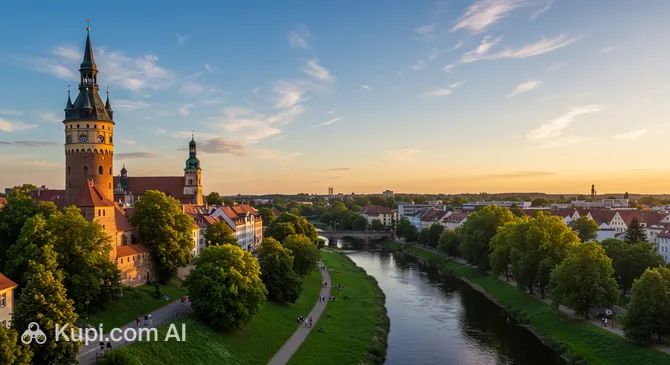
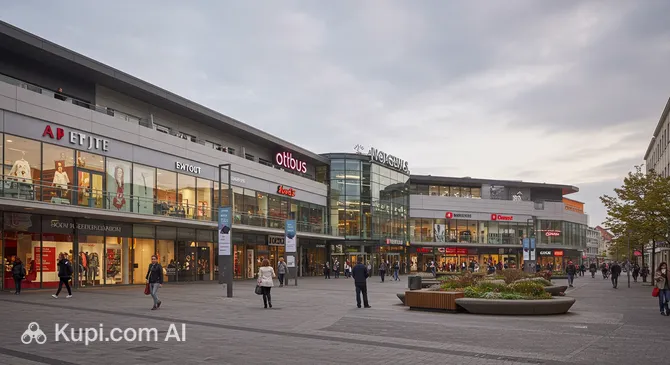
Cottbus is a city where modernity and tradition go hand in hand, creating a unique atmosphere of comfort and harmony. Located on the picturesque banks of the Spree River, it is the second-largest center of the state of Brandenburg. For many travelers, it is right here in the southeast that the real Germany reveals itself with its unique regional character.
Cottbus. Illustration.
Source: Kupi.com AI
With a population of about 99,000, Cottbus is considered the cultural gateway to the Lusatia region. Here, German punctuality and Slavic soulfulness meet in a wonderful way, a connection rooted in the heritage of the Lusatian Sorbs. The rich history of Cottbus is captured in the city's architectural appearance: from majestic medieval towers and churches to the cozy cobbled streets of the Old Town.
The city is famous not only for its universities and theaters but also for its magnificent green zones. Cottbus is often called the city of parks, where you can take a break from the hustle and bustle and enjoy nature. Be sure to stroll through the luxurious gardens and stop by local cafes to feel the hospitality of this place. Cottbus is an ideal destination for those seeking inspiration in the harmony of architecture and nature.
Weather Overview
The climate in this region is temperate, with clearly defined seasons, making travel interesting at any time of year. Summer in the city is usually warm and comfortable: in the hottest months, July and August, the average temperature stays around 20°C, and during the day, the air often warms up to 25°C. This is a wonderful time for long walks, although an umbrella might come in handy, as it rains an average of 10–12 days per month.
Winters here are cool but, as a rule, without extreme frosts. In January and December, average figures range from 2°C to 3°C, and night temperatures rarely drop significantly below zero. The cloudiest month is considered to be January, when up to 15 days with precipitation are recorded. If you are planning a trip and want to know up-to-date information, the detailed weather in Cottbus will help you pack your suitcase correctly.
The transitional seasons delight with mild shifts and pleasant freshness. As early as May, daily highs reach 19°C, and September often gives a "golden autumn" with an average temperature of about 16°C and fewer rainy days. Expect a warm summer with occasional rain and cool, rather damp winters.
Average monthly temperature
Average monthly precipitation
Interesting Facts
In addition to its main attractions, Cottbus holds many fascinating secrets and unique traditions that make it a special city on the map of Germany. Here are a few facts that will help you look at this place from a new perspective:
Living Bilingualism. Cottbus is the cultural center of the Lusatian Sorbs (Wends), a small Slavic people. It is one of the few cities in Germany where signs and street names are officially duplicated in the Lower Sorbian language. Here, you can not only hear a rare language but also see vibrant national costumes during local festivals.
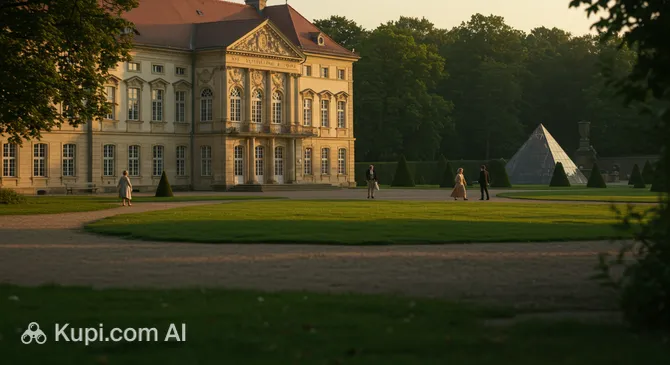
German Pyramids. The famous Branitz Park and Castle of Prince Pückler hides true exoticism — two earth pyramids. One of them, the Tumulus, rises in the middle of a lake and serves as the burial place of its creator, the eccentric Prince Hermann von Pückler-Muskau. These are the only pyramids of their kind in the country, giving the park a mystical atmosphere.
The Gossip Tower. The symbol of the city, the Spremberger Turm, has an amusing history. According to city legend, in olden times it served not only for defense but also as a meeting place for guards who, watching the city from above, were the first to learn and discuss all the local news and rumors. Today, it is the best observation deck in Cottbus.
Architectural Masterpiece. The State Theater of Cottbus is recognized as one of the most beautiful Art Nouveau (Jugendstil) theater buildings in Europe. The theater's uniqueness lies not only in its architecture but also in its repertoire: plays are regularly staged in both German and Sorbian, preserving the cultural heritage of the region.
Prince Pückler Museum Park and Branitz Palace. Illustration.
Source: Kupi.com AI
Traveler photos:
How to Get There
When planning a trip to this cozy corner of Brandenburg, it is important to think about logistics in advance. The city is conveniently located relative to Germany's major transport hubs. You can find out more about how to get to Cottbus by considering all available options, and below we will tell you about the most popular methods.
Cottbus itself does not have its own passenger airport, so travelers usually fly into nearby large cities. The most convenient option is Berlin Brandenburg Airport (IATA: BER), located in Berlin. This is a major international hub situated about 88 km from Cottbus. The journey from there by taxi or rental car will take about 1 hour and 15 minutes, and there is also a convenient rail connection.
Another excellent alternative is Dresden International Airport (IATA: DRS). It is located in the city of Dresden, about 80 km from your destination. This is a regional airport that handles many flights. The drive from here to Cottbus will take about 1 hour and 10 minutes. Both airports offer excellent service and transport accessibility.
For clarity, here is a summary of the main airports:
The railway is one of the most comfortable ways to travel around Germany. If you are coming from afar, your route will most likely pass through key transport hubs in the region. One of the main transfer points is Berlin Hauptbahnhof, located about 108 km from Cottbus. This is Europe's largest station, with regular regional trains departing toward Brandenburg.
It is also convenient to travel via Dresden Hauptbahnhof, which is located in the city of Dresden (about 80 km from Cottbus). Arriving at these stations by high-speed train, you can easily transfer to a regional express or take a taxi to cover the remaining distance in about 1–1.5 hours.
Below is information about the nearest major railway hubs:
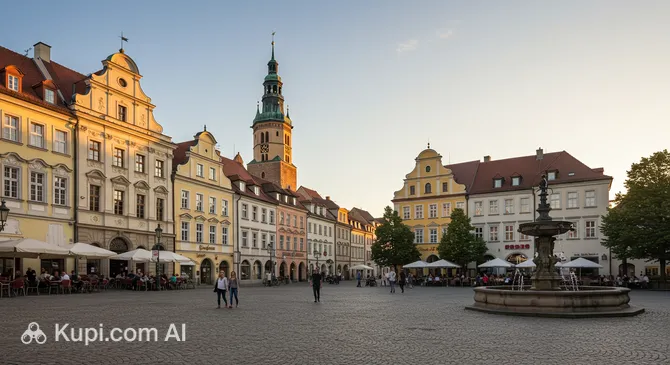
Cottbus can surprise even the most sophisticated tourist with its variety. Here, historical heritage is harmoniously intertwined with magnificent landscape parks, creating ideal conditions for a rich journey. You should start your acquaintance with the city at its heart, where the Old Market Square of Cottbus is located. This picturesque spot, surrounded by restored Baroque burgher houses, is where life buzzes from morning until evening. Guests of the city love this square for its atmospheric outdoor cafes and the ancient fountain, where it's pleasant to relax and watch the rhythm of life.
Old Market Square Cottbus. Illustration.
Source: Kupi.com AI
Traveler photos:
The absolute jewel of the region is the Branitz Park and Castle of Prince Pückler. This masterpiece of landscape gardening was created by the famous Prince Hermann von Pückler-Muskau and is considered one of the most beautiful landscape parks in Germany. Visitors are drawn not only to the luxurious palace with its reconstructed 19th-century interiors but also to the unique layout of the grounds with its famous earth pyramids and water canals steeped in romance.
For nature lovers and families, the Cottbus Zoo is a must-see. Located in the picturesque floodplains of the Spree River, it is the largest zoological garden in the state of Brandenburg. The zoo is known far beyond the city limits thanks to its successful elephant breeding program and extensive collection of waterfowl. Spacious enclosures surrounded by greenery allow for observing animals in conditions as close to natural as possible.
To see the city from an unusual perspective and travel comfortably between green zones, it's worth taking a ride on the unique Cottbus Park Railway. This narrow-gauge train has been running between the main parks and attractions for over 60 years. A trip in the retro carriages is an exciting adventure that will bring plenty of positive emotions and allow you to quickly get from the city center to Branitz Park or the zoo.
Local Cuisine
The gastronomic scene in Cottbus is a wonderful blend of classic German culinary traditions and the original heritage of the Lusatian Sorbs. Local cuisine is hearty and homey, based on simple but high-quality ingredients: potatoes, cabbage, and pork. A special place on the table is held by the famous Lusatian sausages, whose aroma is unmistakable. Travelers wishing to experience authentic flavors should definitely try these meat delicacies, which are often served with homemade pickles and freshly baked bread.
Among the city's main sweet signatures are the delicate "Plinse" pancakes. This dish is prepared here with special love and served in various versions: from savory with cottage cheese to dessert versions with wild berries and honey. Another culinary symbol is the "Cottbus Tree Cake" (Cottbuser Baumkuchen). This complex layered dessert is baked according to ancient recipes in the best confectioneries and has become a true brand of the region, which tourists often take home as a tasty souvenir.
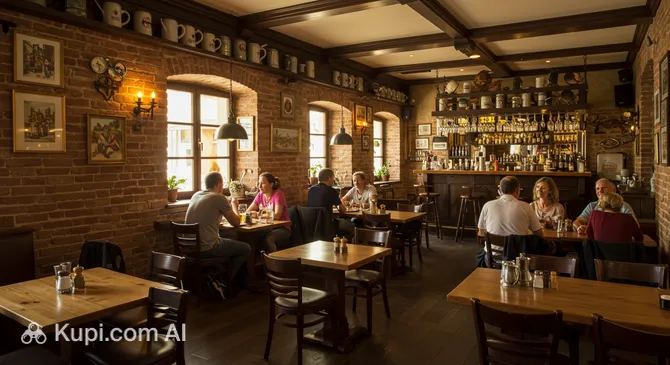
Stadtwächter. Illustration.
Source: Kupi.com AI
Traveler photos:
As for drinks, Cottbus is proud of its brewing traditions. Local beer varieties are brewed here that are rarely found outside of Lusatia, and seasonal beer festivals become true celebrations for residents and guests. To immerse yourself in the atmosphere of the old town and taste traditional dishes in a historical setting, you can visit the Stadtwächter restaurant, which is popular for its local color.
The food culture in the city is diverse: from cozy street stalls with sausages to lively farmers' markets operating on weekends. If you're hungry after long walks and looking for a place with truly large portions, it's worth checking out REDO XXL Cottbus. And for those who prefer a more informal setting and modern flavors, Burgerbüro Cottbus is an excellent choice, where you can sample the local take on popular street food.
Travel Tips
Preparing for your trip to Cottbus will make your journey not only exciting but also as comfortable as possible, saving you from unnecessary hassle on the spot. We have gathered a list of proven recommendations to help you easily navigate the city and feel confident in any situation.
Clothing and Footwear. Since the historical city center is paved with old cobblestones, be sure to bring comfortable flat shoes — heels will be impractical here. The weather in Brandenburg is changeable, so the best strategy is to dress in layers (the "onion principle") to easily adapt to temperature changes. An umbrella or a light raincoat will be your faithful companions in any season.
Transport. The center of Cottbus is compact and pleasant to explore on foot. For trips to further distances (for example, to Branitz Park), use the trams and buses of the local Cottbusverkehr network. Tickets can be bought at machines at stops or inside the transport (they take coins and cards), but most importantly — don't forget to validate your ticket immediately after entering, otherwise it is considered invalid. For route planning, the VBB "Bus & Bahn" app is convenient.
Finances. The official currency is the Euro (€). Although Germany is a modern country, cash is still very much preferred in Cottbus (especially in small bakeries, kiosks, and souvenir shops). Always carry small bills and coins. It is customary to leave tips here, either by rounding up the bill or adding about 5-10% for good service.
Health and Safety. Cottbus is a quiet and safe city where you can walk without fear even in the evening. Pharmacies are marked with a red letter "A" (Apotheke); if you need medicine at night or on Sunday, look on any pharmacy door for the address of the duty pharmacy. The emergency number is 112.
Communication. The main language is German, but many young people and tourism sector workers speak English. Don't be surprised to see signs in two languages: German and Lower Sorbian — this is a tribute to the local Sorbian people. For mobile internet, it's easiest to buy a prepaid SIM card at large supermarkets or mobile shops; a passport is required for registration.
Local Etiquette. When entering a small shop or cafe, it's customary to greet the staff (the phrase "Hallo" or "Guten Tag" is appropriate). On Sunday, Germany observes "Ruhetag" (day of rest): most shops and supermarkets are closed, and only cafes, bakeries, and duty pharmacies work, so it's better to buy groceries in advance.
What to Avoid. Never walk on bicycle paths (they are often marked with a different color or markings on the sidewalk). Local cyclists ride fast and expect a clear path, so this is a matter of your safety. Also, do not cross the road on a red light, even if there are no cars — this is considered bad form and can lead to a fine.
Useful Life Hack. Don't throw away plastic bottles and tin cans! Germany has a deposit system (Pfand). In almost every supermarket, there are special machines where you can return containers and receive a voucher (usually 25 cents per bottle), which can be used to pay for purchases at the checkout.
By following these simple tips, you can avoid typical tourist mistakes and focus on the main thing — enjoying the beauty and comfort of Cottbus. May your acquaintance with this hospitable German city leave only the warmest memories!
Entertainment & Nightlife
The nightlife in Cottbus can be a pleasant discovery for travelers. Thanks to its status as a university city, there is a lively and laid-back atmosphere here. Evening entertainment in the city is concentrated mainly in the historical center and around the Brandenburg University of Technology campus. You won't find the pretentiousness of major metropolises here, but rather comfort, quality drinks, and the chance to have a great time in the company of locals and students.
The epicenter of evening activity is rightfully considered the area around the Old Market Square (Altmarkt). As dusk falls, the historical facades are illuminated, and numerous venues fill with people. If you're looking for a place to start your evening, Burgerbüro Cottbus is an excellent option. This establishment, which combines a bar and a burger joint, is popular for its relaxed atmosphere and wide selection of drinks, making it an ideal meeting point for friends before a long night out.
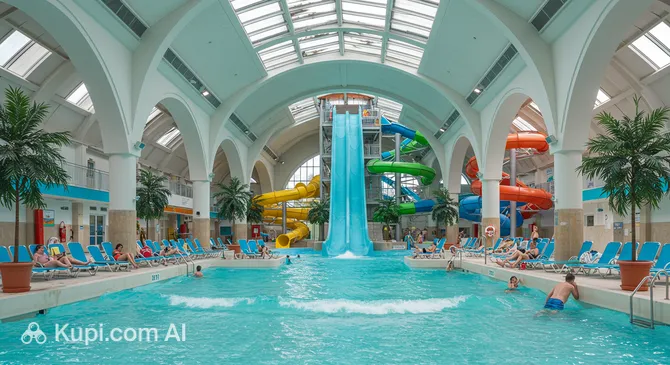
For those who prefer a more tranquil or wellness-oriented break, Cottbus offers a great alternative to noisy parties. The Lagune Cottbus sports and entertainment complex is open until late evening. Here, you can relax in the extensive sauna area or swim in the pools, washing away the fatigue after a busy day of sightseeing. It is a popular spot for those who value relaxation and a healthy lifestyle.
Lagune Cottbus. Illustration.
Source: Kupi.com AI
Traveler photos:
Shopping and cinema fans should check out the Blechen Carré shopping center. This modern complex in the very heart of the city is a place where you can not only do some evening shopping but also visit the cinema to watch world premieres. Several cafes are also located around the center, perfect for grabbing a coffee and discussing plans for tomorrow.
Practical tips for tourists:
Opening hours: Most bars are open until 1:00–2:00 AM on weekdays and until morning on Fridays and Saturdays. Restaurant kitchens often close around 10:00 PM, so it's better to have dinner earlier.
Dress code: Casual style is common in Cottbus. Most clubs and bars do not have a strict dress code; the main thing is to look neat and behave appropriately.
Safety and transport: The city center is well-lit and considered safe for night walks. However, as elsewhere, it's best to avoid dark alleys when alone. Special night buses run at night, but a taxi remains the most convenient way to get to your hotel. You can order a ride via an app or by phone; the average cost around the city is 10–15 euros.
Speaking of entertainment, we must also mention the daytime cultural program, which smoothly transitions into the evening. Cottbus is famous for its State Theater — the only theater in Brandenburg that combines opera, drama, and ballet. It's also worth visiting local museums, such as the museum of modern art in the building of a former diesel power station, which often hosts interesting exhibitions and performances.
Parks & Museums
Cottbus is often called one of the "greenest" cities in Germany, and it rightfully earns this title. An abundance of parks, squares, and alleys makes it an ideal place for leisurely strolls, while various museums allow for a deeper understanding of the region's rich history and technical achievements. Here, nature and culture complement each other, offering tourists a balanced and rich itinerary.
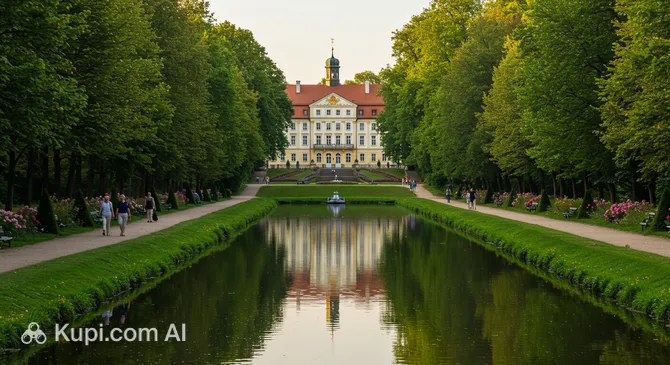
One of the favorite vacation spots for residents is Spreeauenpark. This extensive landscape was created for the 1995 Federal Horticultural Show and stretches along the picturesque banks of the Spree River. Here you can walk along well-kept alleys, see themed gardens, and even a unique grove with fossilized trees from the Tertiary period. The park is perfect for picnics and family leisure, offering peace and tranquility just a few minutes from the city's hustle and bustle.
Spreeauen Park. Illustration.
Source: Kupi.com AI
Traveler photos:
In addition, the city is permeated by "green arteries" along the river that connect the historical center with the outskirts. Although the famous Branitz Park remains the main gem of landscape art, it's also worth paying attention to more intimate places like Goethepark or Puschkinpark, located in the very center. They serve as an excellent refuge from the summer heat and are popular with locals for evening walks.
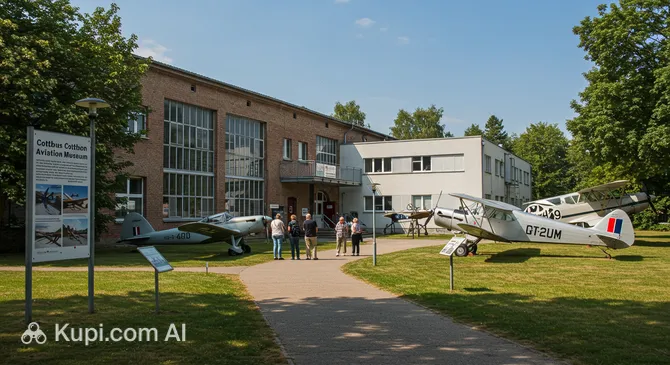
Fans of technology and history should definitely visit the Cottbus Air Museum. Located on the territory of a former military airfield, it presents an impressive collection of aircraft — from helicopters to Cold War-era fighter jets. This place allows you to literally touch the history of aviation, see rare engineering solutions, and learn about the development of aeronautics in the region.
Cottbus Aviation Museum. Illustration.
Source: Kupi.com AI
Traveler photos:
For those interested in art, the Dieselkraftwerk Art Museum opens its doors. The building of the former power station is itself a monument of industrial architecture, and inside is a collection of modern art including photography, posters, and paintings. No less important is the Wendish Museum, dedicated to the culture and life of the Sorbs — the indigenous Slavic population of these lands. The exhibition helps in understanding the unique bilingual atmosphere of the city and its ethnographic roots.
Insider Tip: If you want to find a secluded spot with a special atmosphere, look into the Brandenburg Pharmacy Museum on the Old Market Square. This is not just an exhibition, but the fully preserved historical interior of the "Lion" pharmacy, where you can smell the herbs and see how people were treated in past centuries. This is a small but very colorful detail that tourists often overlook in a hurry.
Getting Around
The public transport system in Cottbus is characterized by German punctuality and convenience, allowing tourists to easily reach any point in the city without needing to rent a car. The main transport operator is the company Cottbusverkehr, and the network itself is integrated into the Berlin-Brandenburg Transport Association (VBB). This means that standardized fares and rules apply here, familiar to those who have already visited the capital region.
The main means of getting around the city center and primary districts is the tram. The tram network covers key routes, connecting the station, the university, the old town, and residential quarters. Trams run frequently, with intervals of 10–20 minutes depending on the time of day. Rail transport is complemented by an extensive network of buses, which serve more remote areas and suburbs. At night, when the main traffic stops, special night buses (Nachtbus) operate, providing a connection between the center and the outskirts.
For fare payment, unified VBB tickets are used. It is most advantageous for tourists to purchase a day ticket (Tageskarte), which allows for unlimited trips throughout the day. If you only need to travel a couple of stops, a single ticket (Einzelfahrausweis) or a short-trip ticket (Kurzstrecke) will do. The approximate cost of a single trip around the city is about 2 euros, and a day pass will cost around 4–5 euros. Children under 6 usually travel for free.
Tickets can be purchased at machines at major stops, inside trams (note that older machines may only take coins), or from the bus driver. The most modern and convenient way is using the VBB "Bus & Bahn" mobile app, where you can buy an electronic ticket and plan your route. Important: paper tickets bought from machines or ticket offices must be validated immediately upon entering the transport. Validators are usually brightly colored and located near the doors. The fine for fare evasion or an unvalidated ticket in Germany is quite high.
Given the flat terrain and compactness of Cottbus, a bicycle is an excellent alternative to public transport. The city is permeated by a network of bike lanes, and many locals prefer this mode of travel. Rental points can be found near the railway station and in the center. Taxi services also operate in the city, which can be called by phone or found at special stands; popular international ride-hailing apps may have limited availability here, so it is more reliable to rely on official local services.
A special transport "highlight" of the city is the Park Railway (Parkeisenbahn). Although perceived more as an attraction, it is a fully functional narrow-gauge transport link connecting the city center with the zoo and Branitz Park. A trip on the retro train takes about 15–20 minutes and is the most romantic way to reach Cottbus's main green zones.
Accommodation
The choice of accommodation in Cottbus, while not boasting the metropolitan scale of Berlin, is quite capable of satisfying the requests of most travelers. The city offers a balanced range of accommodation options: from budget youth hostels and cozy private guest houses (Pensionen) to comfortable business hotels and spacious apartments for family vacations. There are practically no luxury five-star complexes here, but local 3 and 4-star hotels are famous for quality German service, cleanliness, and attention to detail.
When choosing a place to stay, you should be guided by the purpose of your trip. The most attractive area for tourists remains the Old Town (Altstadt). By staying here, you will find yourself in the epicenter of cultural life, within walking distance of the Market Square, cafes, and main attractions. Another convenient location is the area around the Main Railway Station. This is a strategically advantageous choice for those who plan to use Cottbus as a base for radial trips around the Lusatia region or to the Spreewald biosphere reserve.
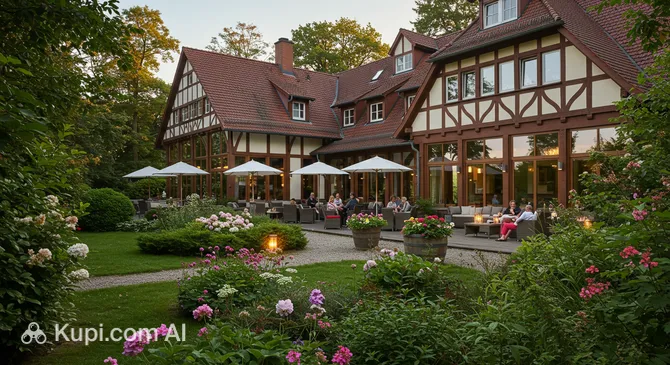
Among the specific accommodation examples worth noting is Hotel Cottbus. Such hotels often offer guests not only comfortable rooms but also additional amenities needed for a full rest after a busy day.
Hotel Cottbus. Illustration.
Source: Kupi.com AI
Traveler photos:
The pricing policy in the city is very democratic. The cost of living here is significantly lower than in Germany's major tourist centers, making Cottbus an excellent option for budget travel. The average check ranges from moderate to medium. You can book accommodation through popular international online platforms or directly on hotel websites.
Booking tip: Despite the sufficient number of rooms, during the peak tourist season (from May to September) and during major city festivals, the best options are snapped up quickly. Therefore, it is recommended to search for and book a room in advance, preferably 3–4 weeks before your planned arrival date, to guarantee yourself the best value for money.
Nearby Cities
For those who want to explore the surrounding area, Cottbus serves as an excellent starting point for day trips to several interesting nearby places:
Just a few dozen kilometers away is Spremberg, often called the "Pearl of Lusatia." The historic center of this cozy town is located on an island washed by the branches of the Spree River, creating a special romantic atmosphere for walks. A little further, about an hour's drive away, you will find Bautzen — the famous "city of towers." It impresses with its beautifully preserved medieval silhouette and ancient fortifications and, like Cottbus, is an important center of Sorbian culture. History buffs should visit the border town of Frankfurt (Oder), where you can stroll along the embankment, admiring views of neighboring Poland, and visit the museum of the writer Heinrich von Kleist.
These nearby destinations offer a glimpse into the diverse culture and landscapes of the region.
Shopping & Souvenirs
Shopping:
Shopping in Cottbus is a pleasant and relaxed activity, devoid of the hustle and bustle of huge metropolises. The city offers a balanced combination of modern shopping galleries and charming little shops in the historical center. Here you can find both popular international clothing and electronics brands and unique regional goods that will serve as an excellent reminder of your trip to Lusatia.
The main shopping artery of the city is rightfully Spremberger Straße, which locals affectionately call "Sprem." This pedestrian street stretches from Brandenburger Platz to the heart of the Old Town. Strolling along it, you will find many fashion boutiques, bookstores, jewelry salons, and cozy cafes. It is an ideal place for a leisurely promenade, where shopping can be combined with viewing beautiful architecture.
If you prefer to do your shopping in one place, look at the large shopping complexes. In the very center is the modern Blechen Carré shopping center. This is a popular location that combines dozens of clothing, shoe, and cosmetic stores under one roof, as well as a cinema and a food court. Its convenient location makes it an excellent starting point for a shopping route.
Blechen Carré. Illustration.
Source: Kupi.com AI
Traveler photos:
Another significant place for shopping is the TKC Shopping Center. This complex offers a wide range of household goods, groceries, and everyday items. There are often fewer tourists here, allowing for shopping in a more relaxed atmosphere while enjoying a wide selection and affordable prices.
For those looking for fresh local products and an authentic atmosphere, the city markets are a real find. Weekly fairs often take place on Oberkirchplatz. Here, farmers from surrounding villages sell seasonal vegetables, fruits, fresh pastries, and flowers. During the pre-Christmas period, the city transforms, and festive markets open on the squares, where you can buy handmade items and try traditional treats.
From Cottbus, it is worth bringing back souvenirs that reflect the unique culture of the region. First and foremost is the famous Cottbus Baumkuchen (layered cake), sold in beautiful gift boxes. Items related to the traditions of the Lusatian Sorbs, such as intricately painted Easter eggs or textiles with folk ornaments, are also popular. Don't forget gastronomic souvenirs from the neighboring Spreewald — the famous pickled gherkins and horseradish make a great gift for gourmets.
Shops in Cottbus usually operate Monday through Saturday from 09:30 or 10:00 to 20:00. Large shopping centers may be open longer, while small shops in the center often close as early as 18:00–19:00. It is important to remember that Sunday is a day off, and practically all shops, including supermarkets, are closed. As for payment, Visa and Mastercard are accepted in most places, but cash euros are still preferred in small cafes, kiosks, and at markets.
Tourists residing permanently outside the European Union can use the Tax Free system to return part of the value-added tax (VAT) on purchases. To do this, you need to make a purchase above a set minimum (usually 50 euros) in a store that supports the system (look for the Global Blue sticker or similar) and ask for a special tax-free form. You can receive your refund when flying out of the country at the airport.