Support

Gera

About

Gera is a charming city located in the eastern part of the federal state of Thuringia. This destination attracts travelers with its unique blend of historical heritage and vibrant modernity. If you want to see the real, off-the-beaten-path Germany and enjoy a peaceful atmosphere away from bustling metropolises, Gera will be a wonderful discovery for you.

The city is nestled in the picturesque valley of the White Elster River, surrounded by dense forests and rolling hills, which creates excellent conditions for walking and outdoor recreation. With a population of about 94,000 people, Gera is the third-largest city in the region after Erfurt and Jena. Due to its status as an independent city, it plays an important role as a cultural and economic center of Eastern Thuringia.
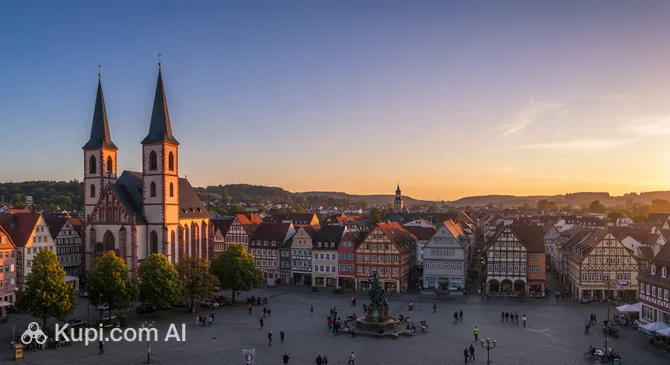
Gera. Illustration.
Source: Kupi.com AI

The city's architectural appearance deserves special attention. Strolling through the streets, you will see magnificently preserved villas and public buildings in the Art Nouveau and Jugendstil styles. Gera's rich history is closely linked to the development of the textile industry, which is reflected in the majestic buildings of past centuries. Culture lovers will appreciate local theaters and museums, including the birthplace museum of the artist Otto Dix, a native of these parts.

Gera is an ideal destination for those who value authenticity and comfort. Its convenient location, just 60 km from Leipzig and 80 km from Erfurt, makes the city an excellent starting point for traveling through Central Europe. Be sure to include Gera in your itinerary to enjoy its green parks, cozy pedestrian zones, and the hospitality of the local residents.
Weather Overview

The climate in Gera is temperate, typical of Central Europe, making the city accessible for visits all year round. The seasons are clearly defined, but sharp temperature fluctuations are rare. To plan your wardrobe for the trip, we recommend checking what weather in Gera is expected for the dates of your visit.

Summer here is usually mild and comfortable, without exhausting heat. The warmest months are July and August, when the average temperature is around 19.5°C, and during the day, the air often warms up to 24°C. This is the best time for long walks along the White Elster valley.

Winters in the region are cool but not harsh. In January and February, average temperatures stay in the range of 0°C to +3°C, occasionally dropping slightly below zero at night. Keep in mind that December and January are the "wettest" months, with up to 15–16 days of precipitation recorded, so waterproof shoes will come in handy.

Precipitation is distributed fairly evenly throughout the year. Expect a warm summer with occasional rain and cool, often cloudy winters. Spring and autumn serve as pleasant transition periods, with temperatures gradually shifting from 5°C in March to 11°C in October.

Average monthly temperature

Average monthly precipitation

Interesting Facts

In addition to its main attractions, Gera holds many fascinating secrets that reveal themselves only to the most attentive travelers. Here are a few facts that will help you see this Thuringian city from a new perspective:

  • Birthplace of Expressionism. Gera is inextricably linked with the name of Otto Dix, one of the most influential German artists of the 20th century. He was born here in 1891, and it was the atmosphere of his hometown that shaped his unique perspective on the "New Objectivity" art movement, which is admired worldwide today.

  • Baroque luxury with a simple name. One of the city's main gems is the Kitchen Garden. Despite its utilitarian name, it is not a vegetable garden at all, but a magnificent Baroque park complex. It is home to the famous 18th-century Orangerie—a former greenhouse for exotic plants that has become a center of cultural life.

  • Tram history. Gera is proud of having one of the oldest tram networks in Germany. Electric trams began running here as early as 1892. This transport tradition is still alive today: vintage tram cars can often be seen on the streets during city festivals, giving the city a special nostalgic charm.

  • The city's green lungs. Nature lovers will be amazed by the Gera City Forest—a vast green area located right within the city limits. It is the perfect place for those who want to combine urban comfort with walks in the fresh air among centuries-old trees.

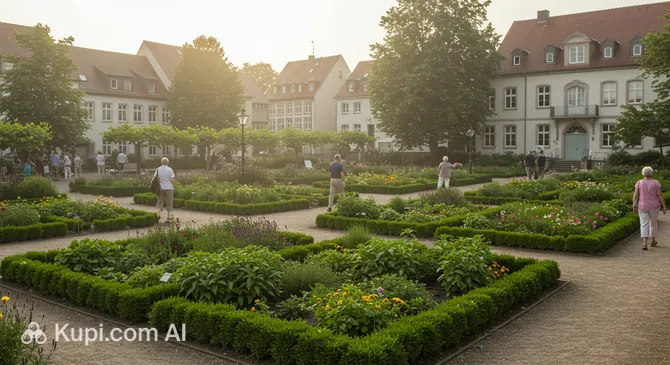
Kitchen Garden. Illustration.
Source: Kupi.com AI

Traveler photos:

How to Get There

When planning a trip to Thuringia, it is important to think through the logistics in advance, as there may not be direct flights specifically to the city. You can learn more about how to get to Gera by various modes of transport to choose the optimal route.

Gera itself does not have an airport, but you can fly into Leipzig/Halle Airport (LEJ) in Leipzig, which is approximately 60.5 km from Gera. This is one of the most convenient options for arrival. The journey by taxi or bus will take approximately 110 minutes. The airport serves many flights and is an important transport hub for the region.

An alternative option is Erfurt Airport (ERF), located in Erfurt, about 80 km from the destination. Travel time will be approximately 140 minutes. Also, for international flights, travelers often choose Dresden International Airport (DRS) in Dresden (121.5 km), from where Gera can be reached in a little over 3 hours.

For clarity, here is a summary of the main airports:

AirportPassenger trafficDistance
Leipzig/Halle Airport2.2 mln60 km
Erfurt Airport138 00280 km
Karlovy Vary Airport37 90096 km
Dresden International Airport929 928122 km
Nuremberg Airport4.0 mln170 km

Traveling by rail is also popular among tourists. Gera does not have a large international railway hub, but you can arrive at Leipzig Hauptbahnhof in Leipzig, which is about 61 km from Gera. From there, you can continue by taxi or regional train.

Another convenient hub is Erfurt Hauptbahnhof in Erfurt, located 74 km away. Thanks to Germany's well-developed railway network, transferring to local transport to Gera is usually quick and comfortable.

Below is information about the nearest major railway stations:

StationPassenger trafficDistance
Leipzig Hauptbahnhof43.8 mln61 km
Erfurt Hauptbahnhof16.8 mln74 km
Dresden Hauptbahnhof21.9 mln122 km
Eisenach Hauptbahnhof1.8 mln123 km
Halle (Saale) Railway Station12.8 mln132 km

Main Attractions

Gera offers guests a surprising variety of places to visit, from historical parks to modern shopping centers. To get to know the city, it's worth starting with locations that allow you to feel its rhythm and see how harmoniously nature and the urban environment intertwine here.

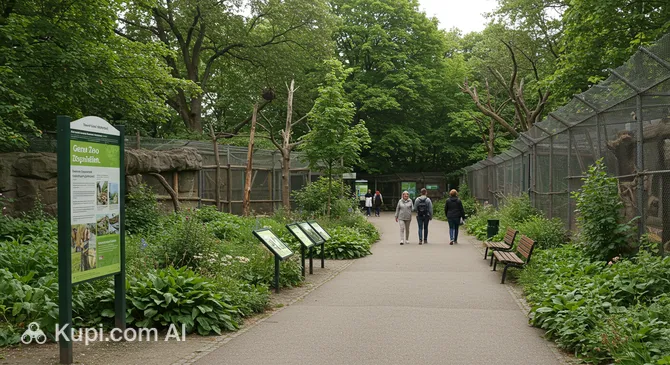
One of the favorite vacation spots for both tourists and locals is the Gera Zoo. It is located in the picturesque Martinsgrund forest area and is the largest zoo in Eastern Thuringia. It is home to more than 500 animals, including lions, leopards, and monkeys. A special feature of the park is a miniature railway that will take you through the territory, bringing joy to both children and adults.

Gera Zoo. Illustration.
Source: Kupi.com AI

Traveler photos:

For those who prefer cultural leisure in the fresh air, the Kitchen Garden (Küchengarten) is a must-see. This Baroque park ensemble in the Untermhaus district is considered one of the most beautiful in the region. The centerpiece here is the Orangerie, which today serves as an exhibition hall for the Gera Art Collection. A walk along the geometrically precise alleys of the garden will provide aesthetic pleasure and tranquility.

Active travelers and fans of long walks should head to the Gera City Forest. This is a vast green zone that surrounds the city and offers many marked trails for hiking and cycling. The forest is called the "green lungs" of Gera, and here you can easily forget the city bustle, enjoying clean air and birdsong just a few minutes from residential areas.

If you are interested in shopping and the modern life of the city, stop by Gera Arcaden. This large shopping center is located in the heart of the city and is a point of attraction for shopping enthusiasts. Here you will find many brand-name stores, cafes, and restaurants, making it a great place to take a break after sightseeing.

We also recommend paying attention to the famous "Gera Caves" (Geraer Höhler)—a system of historical beer cellars under the old town. Although they are hidden from view underground, a tour of these labyrinths will tell you about the rich brewing traditions for which this Thuringian city is famous.

Local Cuisine

Gera's gastronomic scene is inextricably linked to the rich culinary traditions of Thuringia, a region famous for its hearty and incredibly delicious dishes. If you want to understand the soul of this land, you should start your acquaintance with the main local delicacy—Thuringian dumplings (Thüringer Klöße). These are large potato balls with crispy croutons inside, traditionally served with juicy roasted meat and thick gravy. For locals, this is not just food, but a true symbol of Sunday lunch and hospitality.

Another signature item of the city, the aroma of which can often be smelled on the streets, is the famous Thuringian sausage (Thüringer Rostbratwurst). Made from pork with a secret blend of spices (often including marjoram and caraway), they are grilled over an open fire until golden brown. It is best to try them as street food: hot, in a bun with spicy mustard. This is the perfect snack while walking through the historical center.

For those with a sweet tooth, Gera has a special dessert—Schmandkuchen. This is a traditional cake with a delicate sour cream or curd filling, often topped with seasonal fruits like apples or cherries. It pairs perfectly with a cup of coffee in cozy local pastry shops where time seems to slow down.

As for drinks, ancient brewing traditions dating back to the Middle Ages are honored here. However, the region is also known for its fruit wines and liqueurs made from local varieties of apples and pears. You can sample these drinks and buy fresh farm products at seasonal fairs, such as the Harvest Festival, or at city markets where a lively atmosphere always prevails.

In Gera, you will find establishments for every taste: from authentic German taverns to modern food courts in the Gera Arcaden shopping center. If you want variety and a break from German classics, the city offers a decent selection of international cuisine. An example of such a cozy place is Greek Restaurant Thessalia, where you can enjoy Mediterranean dishes in a pleasant setting.

Travel Tips

Welcome to Gera! To make your acquaintance with this cozy corner of Thuringia as comfortable and worry-free as possible, we have prepared a list of useful recommendations to help you feel confident in any situation.

  1. Clothing and Essentials: The weather in the region can be changeable, so the best strategy is layering. Even in summer, bring a light jacket or sweater for the evenings. Since the historical center is paved with cobblestones, skip the heels in favor of comfortable sneakers or flat shoes. In winter and autumn, an umbrella or raincoat is a must. There is no strict dress code, but modest clothing is recommended when visiting churches.

  2. Transport: Gera's historical center is compact and pleasant to explore on foot. For trips to outlying areas (like the zoo), the GVB public transport system, including trams and buses, is excellent. Tickets should be bought from machines at stops and must be validated upon entry. Taxis can be called via apps (like FreeNow) or found at ranks; a car rental is only necessary if you plan excursions deep into the Thuringian Forest.

  3. Finance: The official currency is the Euro (€). Although Visa and Mastercard are accepted in supermarkets and hotels, Germany, and especially smaller cities like Gera, remains a land of cash. Always have small bills and coins for paying in bakeries, kiosks, and small cafes. It is customary to leave a tip by rounding up the bill or adding 5–10% for good service.

  4. Health and Safety: Gera is a quiet and safe city. However, as elsewhere, you should keep an eye on your belongings in crowded places. Pharmacies (Apotheke) are easily recognized by the red letter "A"; on-duty pharmacies work around the clock, and information about them can be found on the door of any closed pharmacy. Tap water here is of excellent quality and can be drunk without concern.

  5. Communication: The primary language is German. Young people often speak English, but the older generation may only speak their native language. Learn a few phrases like "Guten Tag" (Good day) and "Danke" (Thank you)—this will win over the locals. For mobile internet, you can buy a prepaid SIM card at supermarkets (Aldi, Lidl) or mobile shops, but a passport is required for activation. Free Wi-Fi is not everywhere, so we recommend downloading offline maps in advance.

  6. Local Etiquette: In Germany, order and quiet are valued. Sunday (Sonntag) is a day of rest: almost all shops, including grocery stores, are closed, so stock up in advance. It is customary to greet the shopkeeper when entering a small store. Stand on the right and walk on the left on escalators.

  7. What to Avoid: Never walk on bike paths (they are usually marked by color or lines on the sidewalk). Cyclists in Germany ride fast and expect their lane to be clear; violating this rule can cause quite some frustration. Also, avoid making noise in residential areas after 10:00 PM—observing the "night peace" is sacred here.

  8. Culinary Tip: If you ordered the famous Thuringian dumplings, never cut them with a knife! Locals believe that a proper, tender dumpling should be broken apart with a fork. Using a knife might be taken as a hint to the chef that the dish turned out tough.

Following these simple rules will help you avoid awkward situations and allow you to focus on the main thing—enjoying the Art Nouveau architecture, green parks, and unique atmosphere of Gera. We wish you a pleasant journey!

Entertainment & Nightlife

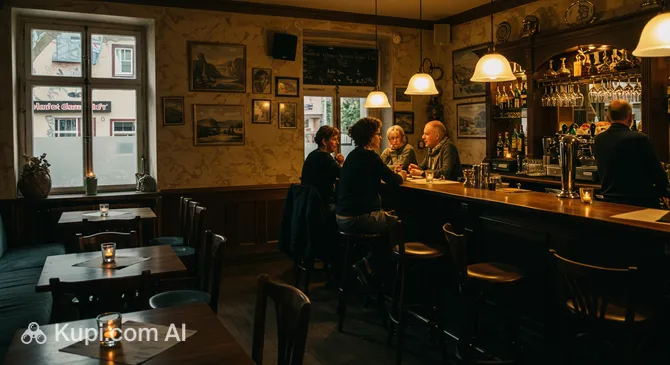
Gera's nightlife differs from that of bustling metropolises: you won't find the endless raves until dawn characteristic of Berlin, but the city offers a cozy and relaxed atmosphere for evening relaxation. The main activity is concentrated in the historical center (Zentrum) and the picturesque Untermhaus district. Evenings here are traditionally spent in the company of friends in colorful pubs, bars, or restaurants, enjoying slow conversations and local drinks.

The Market Square (Markt) and its adjacent streets, such as Sorge and Große Kirchstraße, become the center of attraction in the evening. Popular establishments are located here, where students, locals, and tourists mix. The atmosphere in most places is democratic and friendly; a strict dress code (face control) is extremely rare, except perhaps in a few night clubs. A casual style of clothing will be appropriate almost everywhere.

Thessalia Greek Restaurant. Illustration.
Source: Kupi.com AI

Traveler photos:

If you are looking for a place to start the evening with good food and drinks, you should pay attention to establishments with a Mediterranean flair, which are very popular in the city. For example, Greek Restaurant Thessalia offers guests not only a hearty dinner but also an excellent selection of wines and cocktails in its bar section, making it a wonderful location for long gatherings. Another worthy option is Greek Restaurant Hellas, known for its hospitality and cozy atmosphere, perfect for a quiet end to a busy day.

For those who prefer more active nocturnal leisure, it's worth knowing that most bars are open until midnight or 1:00 AM on weekdays, and until 2:00 or 3:00 AM on weekends (Friday and Saturday). Prices in Gera will be a pleasant surprise: the average check for a cocktail or a glass of beer here is noticeably lower than in major German tourist centers. For those who want to dance, there are several small clubs and music bars in the city playing everything from 80s hits to modern electronic music.

From a safety perspective, Gera is a quiet city. Walking through the center and the Untermhaus district at night is considered safe, as the streets are well-lit. Nevertheless, as in any city, it is worth staying vigilant. Public transport runs less frequently at night, so if you stay out late, a taxi is the most convenient way to get to your hotel. You can call a car by phone or find one at special ranks at the station and in the center.

During the day, the city also offers many leisure options to recharge before the next evening. You can visit the Gera Theater (Theater Altenburg Gera), stroll through museums, or stop by Gera Arcaden for shopping and entertainment. This combination of daytime cultural programming and cozy evenings makes a trip to Gera harmonious and memorable.

Parks & Museums

Gera often surprises travelers with how green and culturally rich this formerly industrial city turns out to be. Well-kept park ensembles inherited from aristocratic times harmoniously coexist with world-class museums that tell the story of Thuringia's rich history of art and architecture.

One of the city's main green gems is Hofwiesenpark. This extensive landscape park, stretching along the banks of the White Elster River, became a favorite relaxation spot for citizens after the Federal Garden Show was held here in 2007. Spacious lawns, themed gardens, and modern playgrounds make it an ideal place for picnics and family outings on a sunny day.

Lovers of classical park architecture should visit the Kitchen Garden. Despite its prosaic name, it is a magnificent example of Baroque garden art. It used to supply the kitchen of the local castle with fresh produce, but today it is an aesthetic space with geometrically correct alleys, fountains, and flower beds surrounding the Orangerie building. This place breathes history and tranquility, allowing you to forget city noise for a while.

Gera City Forest. Illustration.
Source: Kupi.com AI

Traveler photos:

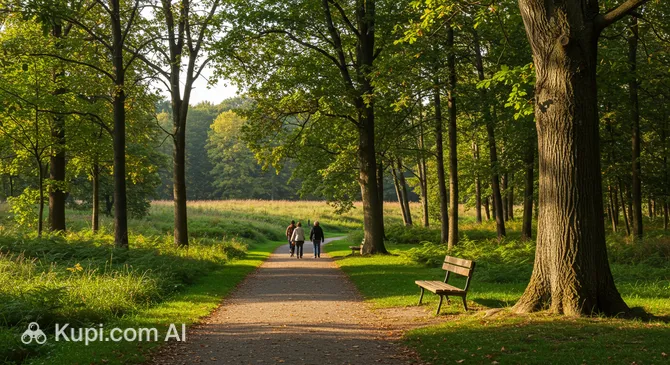
For those who prefer wild nature to manicured flower beds, the Gera City Forest will be a true discovery. This is not just a park, but a huge forest massif permeated with a network of walking and cycling routes. You can spend an entire day here, enjoying fresh air and the silence of centuries-old trees, without leaving the city limits.

The cultural landscape of Gera is unthinkable without mentioning the name of Otto Dix. The Otto Dix House, located in the historical building where the famous artist was born, is a must-visit. The exhibition immerses you in the atmosphere of the early 20th century and presents a significant collection of works by the master of Expressionism and "New Objectivity," whose work changed world art forever.

Another important point on the cultural map is Haus Schulenburg. Designed by the famous architect Henry van de Velde, this mansion is a museum exhibit in its own right. Inside is a museum dedicated to the work of van de Velde, featuring a unique collection of furniture, books, and architectural projects demonstrating the transition from Art Nouveau to Functionalism.

Among the architectural landmarks, Gera Town Hall on the Market Square stands out. Its Renaissance portal and high tower serve as symbols of the city. Climb to the tower's observation deck to see a panorama of the old town from a bird's-eye view. It is also worth paying attention to the numerous villas from the Gründerzeit era that shape the unique look of the city streets.

If you find yourself in Gera in late summer or autumn, we recommend stopping by the Dahliengarten (Dahlia Garden). This intimate and incredibly colorful place houses thousands of varieties of these flowers. The garden is the oldest of its kind in Germany and offers fantastic photo opportunities.

Getting Around

Getting around Gera is convenient and simple thanks to the city's compactness and the well-organized public transport system managed by GVB. Trams form the basis of the transport network and are not just a means of travel but a point of city pride. Gera's tram network is one of the oldest in the country (operating since 1892), and three main lines connect the historical center with the residential districts of Lusan, Bieblach, and Zwötzen. The network is complemented by numerous bus routes that run to areas where the rails don't reach, as well as connecting the city with the picturesque surroundings.

Gera is part of the VMT transport association (Verkehrsverbund Mittelthüringen), which significantly simplifies life for tourists: a unified tariff system applies here. This means that the same ticket is valid for the tram, the bus, and even regional trains within the paid zone. For short trips, a single ticket (Einzelfahrt) is suitable, but if you plan to actively explore the city during the day, it is more profitable to purchase a day pass (Tageskarte), which pays for itself after just the third trip. There are also group tickets, ideal for families or groups of friends.

Tickets can be purchased at special machines at stops (most accept coins and cards), at the GVB service center on Heinrichstraße, or from bus drivers (though the choice of tickets there may be limited). For tech-savvy travelers, mobile apps like "VMT" or "FAIRTIQ" are the most convenient option, allowing you to pay for your journey directly from your smartphone, automatically calculating the best fare. An important detail: if you bought a paper ticket from a machine without a time stamp, it must be validated (punched) immediately upon entering the tram or bus. Fines for fare dodging are quite substantial, so it's better not to risk it.

Public transport runs strictly according to a schedule, which can be found at every stop or on online maps. Service usually begins around 4:30 AM and ends around midnight. At night, intervals between services increase and the number of routes is reduced, so for late returns to the hotel, you should consider alternatives. Taxis in Gera can be found at special ranks at the station and in the center or called by phone; popular international taxi apps don't always work reliably here, so it's better to have the number of a local dispatcher handy.

For fans of an active lifestyle, Gera offers great opportunities for cycling. High-quality bike paths are laid out along the White Elster River, and the terrain in the central part of the city is quite flat. Bicycle rental points can be found in the center, or you can check for this service at your hotel. Additionally, the historical city center is so compact that many attractions, shops, and restaurants are within walking distance of each other, allowing you to enjoy the Art Nouveau architecture without the rush and waiting for transport.

Accommodation

Gera offers travelers a decent selection of accommodation options to satisfy both budget-conscious tourists and those used to a high level of comfort. The city is dominated by cozy mid-range hotels and small private guesthouses where you can experience genuine Thuringian hospitality. For those who prefer independence, a wide selection of apartments and flats for short-term rent is available, which is particularly convenient for longer stays.

If you want to be in the center of the action and have quick access to transport hubs, choose accommodation in the central district (Zentrum). Here, you will be within walking distance of the main attractions, the train station, and major shopping spots like Gera Arcaden. Staying in the center will allow you to easily plan your day, go shopping, and enjoy evening strolls along pedestrian zones without wasting time on long commutes.

For lovers of quiet and picturesque views, the Untermhaus district is an ideal choice. This is the historical part of the city, located on the riverbank near the famous Kitchen Garden. Hotels here are often housed in beautiful old buildings and villas, which adds a special romantic charm to the trip. This is a great option for couples and families wishing to relax from the city bustle surrounded by greenery.

The pricing policy in Gera compares favorably with major tourist centers in Germany: the cost of accommodation here is generally lower, allowing you to choose a higher-quality room for a reasonable price. Budget options are available year-round, while 3-4 star hotels offer an excellent price-to-service ratio. It is recommended to book accommodation in advance, especially if your trip falls during the summer months or a holiday period, using popular online platforms or hotel websites.

Nearby Cities

For those who want to explore the surrounding area, Gera serves as an excellent starting point for day trips to several interesting nearby locations. Thanks to the developed transport network and favorable location, you can easily reach neighboring cultural centers, each of which has its own unique character.

Just a half-hour drive away is Jena—a lively university city known worldwide for its optical industry and the legacy of Carl Zeiss. It is an ideal place for those who want to visit the oldest operating planetarium in the world or stroll through a picturesque botanical garden.

Fans of history and aristocratic architecture should visit Altenburg. This city is often called the "capital of playing cards," as it was here that the popular German game Skat was invented. The majestic Altenburg Residential Castle, towering over the city, is a must-see for any traveler.

No less interesting is Naumburg, located in the Saale-Unstrut wine region. Its main jewel is Naumburg Cathedral of St. Peter and St. Paul—a masterpiece of medieval architecture and a UNESCO World Heritage site. It is a wonderful place for peaceful walks and discovering German Gothic architecture.

CityPopulationDistance
Eisenberg10 88516 km
Zeitz27 95518 km
Schmolln13 74119 km
Meuselwitz10 06523 km
Crimmitschau18 54523 km

These nearby destinations provide insight into the diverse culture and landscapes of the region, making your trip even more rich and memorable.

Shopping & Souvenirs

Shopping in Gera is a calm and pleasant activity, free from the hustle and bustle of huge metropolises. The city offers a balanced mix of modern shopping galleries and cozy little shops in the historical center. Here you can find both popular international brands and unique regional products, making a stroll through the stores an excellent addition to your sightseeing program.

The heart of the city's commercial life is the pedestrian zone, particularly Sorge Street. This is Gera's main shopping artery, home to many clothing boutiques, shoe salons, bookstores, and perfume shops. Walking here, you can combine shopping with architectural sightseeing, as the street is surrounded by beautiful historical buildings. It is also worth exploring the adjacent alleys and Heinrichstraße, where small specialized shops are often found.

If you prefer comfort and variety under one roof, then Gera Arcaden will be your center of attraction. It is the largest and most popular shopping center in the city, located in the immediate vicinity of the central square. The complex brings together dozens of fashion, technology, and accessory stores, and also offers a large food court for relaxation.

City markets deserve special attention. A traditional weekly market (Wochenmarkt) regularly takes place on the Market Square (Marktplatz). This is the best place to buy fresh farm products: vegetables, fruits, cheeses, and, of course, Thuringian meat delicacies. During the pre-Christmas period, a magical fair opens here, where you can buy handmade crafts and local sweets.

As souvenirs from Gera, tourists most often bring home the gastronomic symbols of the region. Be sure to look for authentic Thuringian mustard (Thüringer Senf) and local herbal liqueurs. Art fans will appreciate souvenir products related to the artist Otto Dix: albums, reproductions, and postcards, which can be found in museum shops. Ceramics by local craftsmen are also popular.

Shops in Gera generally operate from Monday to Saturday. Large shopping centers are open until 8:00 PM, while smaller boutiques in the center may close as early as 6:00 PM or 7:00 PM, and work shorter hours on Saturdays (until 2:00 PM or 4:00 PM). Sunday is an official day off when everything is closed except for some bakeries and shops at gas stations or the train station.

Regarding payment, major supermarkets and shopping centers accept Visa and Mastercard without problems. However, in small private shops, cafes, and at the market, a "cash only" (Nur Bares) rule often applies, so we recommend always having small banknotes on hand. Tourists from non-EU countries can use the Tax Free system when purchasing goods above a certain threshold at partner stores (look for the Global Blue sticker in the window) to claim a VAT refund upon leaving the country.

Nearby cities

Reached the end of the page?

That means the route is fully explored