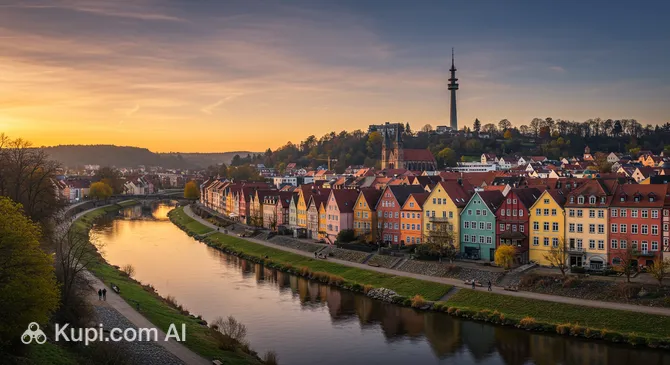
Jena is a true gem of Thuringia, nestled in the picturesque Saale River valley and surrounded by green hills and forests. Located about 250 kilometers south of Berlin, this city harmoniously combines old-world charm with the dynamic energy of a modern scientific center. Situated in the heart of Germany, Jena attracts travelers with its unique atmosphere where tradition and innovation intertwine.
Jena. Illustration.
Source: Kupi.com AI
With a population of about 111,000 people, the city feels compact yet incredibly lively and friendly. A significant portion of the residents are students at one of the country's oldest universities—Friedrich Schiller University Jena—which fills the streets with energy and youthfulness. The climate here is mild and comfortable for walking, allowing visitors to enjoy the architecture and nature at any time of year.
Strolling through the center, it is impossible not to notice how different eras overlap. The rich history of Jena is reflected in its Gothic churches and cozy squares, which peacefully coexist with symbols of technological progress. Among the main landmarks, the JenTower stands out, offering a breathtaking panorama of the city and its surroundings, as does the famous Zeiss Planetarium—the oldest operating planetarium in the world, a reminder of Jena's status as a center of the optical industry.
This city is a must-visit for anyone who appreciates a balance between cultural leisure and nature. Here, you can go on a bike ride along the Saale River, visit interesting museums, or simply relax in one of the many cafes. Jena enchants with its openness and hospitality, inviting guests to discover its amazing world.
Weather Overview
The climate in Jena can be described as moderate and favorable for tourism, without extreme temperature fluctuations. Summer in the city is usually mild and comfortable: in the warmest months, July and August, the average temperature is about 19–20°C, and during the day the air often warms up to a pleasant 24.5°C. This is a wonderful time for hiking in the picturesque hills surrounding the city.
The winter period here is cool but not harsh. In December and January, average thermometer readings stay around 2–3°C, and night frosts, although they occur, rarely drop below -1°C. Spring and early autumn are great times to visit: as early as May, daytime maximums reach 17°C, and September delights with a "velvet season" with temperatures up to 20°C.
Expect warm summers and cool winters, accompanied by frequent but generally not heavy precipitation throughout the year (from 9 to 15 rainy days per month). Due to this stable humidity, an umbrella can come in handy in any season. To accurately plan your wardrobe for the trip, we recommend checking the current weather in Jena before departure.
Average monthly temperature
Average monthly precipitation
Interesting Facts
In addition to the main attractions and picturesque views, Jena holds many fascinating stories and features that make this city truly unique.
The Cradle of Optics. Jena is rightfully considered the birthplace of the German optical industry. It was here in the 19th century that Ernst Abbe and Carl Zeiss founded the famous company whose instruments are known worldwide. Thanks to this heritage, Jena received the beautiful nickname "City of Light" (Lichtstadt).
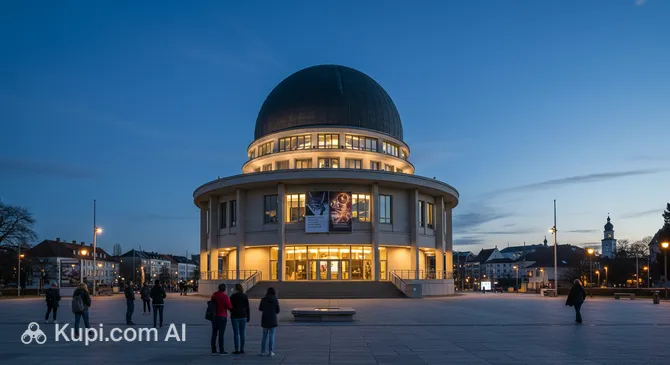
Stars Under the Dome. The city is home to the oldest operating Jena Planetarium in Germany, which opened its doors back in 1926. It is not just a historical site but also a modern cultural venue hosting spectacular multimedia shows and concerts.
City of Poets and Thinkers. The streets of Jena remember the steps of some of the greatest minds of the era: Friedrich Schiller gave lectures here, and Johann Wolfgang von Goethe was a frequent guest, finding inspiration in the local nature. In memory of this literary heritage, Schiller’s garden house has been preserved and is open to the public.
An Ever-Young City. Despite its venerable history, Jena has a youthful soul: every fourth resident here is a student. This gives the city a special dynamic, filling it with the spirit of innovative startups and fresh ideas.
Jena Planetarium. Illustration.
Source: Kupi.com AI
Traveler photos:
How to Get There
When planning a trip to this university city, it is important to think about logistics in advance, as there are no direct flights to the city itself. To choose the best route, we recommend studying more details on how to get to Jena, where all available options are collected. The main flow of tourists arrives through the major transport hubs of neighboring cities, from where it is easy to reach the destination by train or car.
There is no airport in the city of Jena itself, so it is most convenient for travelers to use the air gateways of neighboring regions. The closest is Erfurt Airport (IATA: ERF) in the city of Erfurt, located just 45 km away; the journey from there by taxi or transfer will take about 50 minutes. A larger and more popular option is Leipzig/Halle Airport (IATA: LEJ), located in Leipzig about 70 km from Jena (about 1 hour 10 minutes away). For international flights, travelers most often choose Berlin Brandenburg (IATA: BER)—the region's main aviation hub. It is located in Berlin, about 207 km away, and the car trip from there will take approximately 2–2.5 hours.
For clarity, here is a summary of the main airports:
The railway is one of the most convenient ways to reach Thuringia. Although Jena has its own stations, many tourists use large hub stations nearby to transfer to regional trains. An important transport hub is Erfurt Hauptbahnhof in the city of Erfurt (about 39 km from Jena), where high-speed trains from all over Germany arrive; the journey from there to Jena takes about 40 minutes. Also significant is the Leipzig main station in Leipzig (about 71 km away), which is one of the largest stations in Europe.
Below is information about the nearest major railway hubs:
Jena is a city where the history of science is intertwined with architectural experiments and natural beauty. A tour of local attractions will allow you to see the world through the prism of optical illusions, rise above the rooftops of Thuringia, and relax in an oasis of exotic plants. Here are a few iconic places that are definitely worth including in your itinerary.
The undisputed dominant feature of the cityscape is JenTower (JenTower). This skyscraper, which locals affectionately call the "biscuit roll" due to its cylindrical shape, is visible from almost anywhere in the city. After ascending to the observation deck located at a height of 128 meters, you can enjoy a breathtaking 360-degree panorama of Jena and the picturesque Saale River valley. It is the perfect place to start your acquaintance with the city and appreciate its scale from a bird's-eye view.
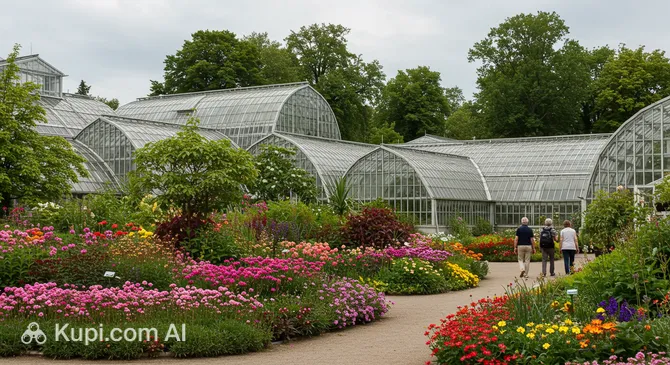
Botanical Garden of Jena. Illustration.
Source: Kupi.com AI
Traveler photos:
For lovers of nature and tranquility, the Jena Botanical Garden is a true gift. It is one of the oldest botanical gardens in Germany, founded back in the 16th century. Johann Wolfgang von Goethe made a special contribution to its development, as he not only conducted scientific research here but also drew inspiration from the beauty of the plants. Today, you can stroll among thousands of species of flora, from Alpine flowers to tropical giants in the greenhouses, enjoying an atmosphere of peace in the very center of the city.
If you are traveling with children or simply love solving physics riddles, stop by the Imaginata Experimentarium. This unique space, located in a former transformer station, turns science into an exciting game. There are no boring display cases here: exhibits are meant to be touched, turned, and tested. Optical illusions and experiments with sound and mechanics allow you to literally touch the laws of nature and feel like a researcher in the "City of Light."
Local Cuisine
Jena's cuisine is a reflection of Thuringia's rich gastronomic traditions—hearty, simple, and incredibly tasty. The main culinary symbol you will encounter literally at every turn is the famous Thuringian sausage (Thüringer Rostbratwurst). Locals insist that the true taste of this dish can only be experienced at street grills, where the sausages are cooked over an open fire according to old recipes. They are traditionally served in a fresh bun with a generous portion of mustard—the perfect snack during a walk.
For a more substantial meal, visit one of the traditional restaurants and order Thuringian dumplings (Thüringer Klöße). These large, fluffy potato dough balls are usually served with succulent roasted meat, red cabbage, and a thick gravy. For residents of the region, this dish is a symbol of home comfort and an essential part of a classic Sunday lunch. The city's gastronomic scene harmoniously combines such authentic establishments with modern venues offering international cuisine, such as the popular Trattoria Italia.
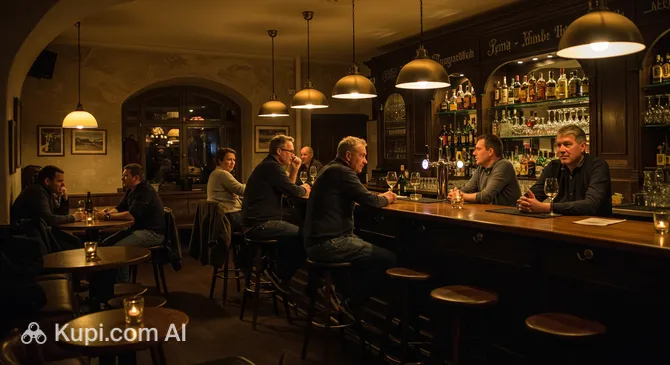
Gastraum Weintanne – Institute for Drink Culture. Illustration.
Source: Kupi.com AI
Traveler photos:
For those with a sweet tooth, Jena offers magnificent sheet cakes (Blechkuchen); plum or blueberry versions, which can be found in local bakeries, are especially popular. In the historical center, there are also cozy confectioneries selling handmade chocolates and desserts prepared with attention to detail. This is a great excuse to take a break and enjoy a cup of coffee while soaking in the atmosphere of the old town.
As for drinks, the cult of quality beer prevails here, as it does throughout Germany. In the summer, Jena hosts food and beer festivals that gather foodies from all over. If you want to get closer to the city's bar culture, look out for Gastraum Weintanne – Institute for Drinking Culture. This atmospheric spot is perfect for those who appreciate not only the taste of drinks but also the special aesthetics of evening relaxation.
The farmers' markets of Jena also deserve special attention. Here, you can buy the freshest seasonal vegetables, homemade cheeses, and meat delicacies from regional producers. A stroll through the market will allow you not only to taste local products but also to feel the vibrant, non-touristic rhythm of this hospitable city.
Travel Tips
Welcome to Jena! To ensure your acquaintance with this university city and "optical capital" goes as smoothly as possible, we have prepared a list of useful recommendations. These practical tips will help you avoid minor inconveniences and feel like a local in the rhythm of local life.
Clothing and footwear. Jena is located in a valley surrounded by limestone hills, and the city center is paved with cobblestones. Leave your heels at home and opt for comfortable flat shoes or sneakers—you will likely want to climb up to the observation decks. The weather in Thuringia is changeable, so use the layering principle: even in summer, it's worth having a light windbreaker or raincoat with you.
Transport. The historical center is compact and best explored on foot. For trips to more distant areas (for example, Lobeda), the local tram and bus network Jenaer Nahverkehr is excellent. Tickets must be purchased at machines at stops or inside the transport (and be sure to validate them!). We recommend downloading the MeinJena or DB Navigator app for route planning.
Finance. The official currency is the Euro. It is important to remember that Germany remains a country where people love cash (Bargeld). Although supermarkets accept cards, in small cafes, Thuringian sausage stalls, or souvenir shops, there may be no terminal. Always carry 20–50 euros in small bills. Tipping is not mandatory here but is welcome: usually, the amount is just rounded up or you can leave 5–10%.
Health and safety. Jena is a safe and peaceful city. Pharmacies are easily recognized by the red Gothic letter "A". They operate during normal shop hours, but in each district, there is always one on-duty pharmacy (Notdienst) open 24 hours—information about it can be found on the doors of any closed pharmacy. Tap water is safe to drink and is of high quality here.
Communication. Since Jena is a student city with a large university and international companies, the level of English proficiency here is higher than the national average. Young people and staff in the city center readily switch to English. However, a few words in German, such as "Guten Tag" (Good day) or "Danke" (Thank you), will always bring a smile and help build rapport.
Local etiquette. Germans value peace and order. On Sunday ("Ruhetag"), almost all shops and supermarkets are closed; only bakeries (in the morning), cafes, and small shops at gas stations or the train station are open. Plan your shopping in advance. Also, it is customary to greet those present when entering small shops or an elevator.
What to avoid. The biggest mistake a tourist can make is walking on bike paths. There is a very active cycling movement in Jena, and paths are often marked with color or markings on the sidewalk. Never stand or walk on them—it not only irritates the locals but can also be dangerous. Also, avoid crossing the road on a red light, even if there are no cars—you could be fined for this.
Extra tip. Use the city's landscape! Jena is unique in that nature is within walking distance. Do as the local students do: buy some takeaway food and climb up the Landgrafen hill or take a walk in Paradies-Park along the Saale River. This is the best way to feel the true atmosphere of the city.
Jena is a city with an open soul and a young heart, where it is easy to feel comfortable. By following these simple rules, you can focus on the main thing—enjoying the architecture, nature, and unique history of this amazing place. Have a great trip!
Entertainment & Nightlife
Jena is a city with a young soul, and this is felt especially strongly after sunset. Thanks to the huge number of students, the nightlife here is buzzing even on weekdays, while maintaining a cozy and friendly atmosphere free of big-city pretension. The epicenter of evening fun is Wagnergasse. This paved street in the historical center is often called the "pub mile": dozens of bars, cafes, and small restaurants are located here literally door-to-door. In the summer, the fun spills out onto the street, where lively groups gather at wooden tables.
If you are looking for a place to dance until dawn, check out legendary clubs like Kassablanca near the West station or the historical student club Rosenkeller, located in authentic medieval cellars. The musical repertoire here ranges from techno and indie rock to themed 80s parties. The crowd in Jena is democratic: there is practically no strict dress code anywhere, the face control is relaxed, and the style is casual. The main rule is to have cash with you, as cards are not accepted in all bars.
For those who prefer large-scale spectacles and live concerts, the main point of attraction is Jena Arena. This multifunctional complex regularly hosts German and international stars, sports matches, and major shows. It is worth checking the schedule in advance: your visit might coincide with a performance by your favorite band or an exciting basketball game by the local team.
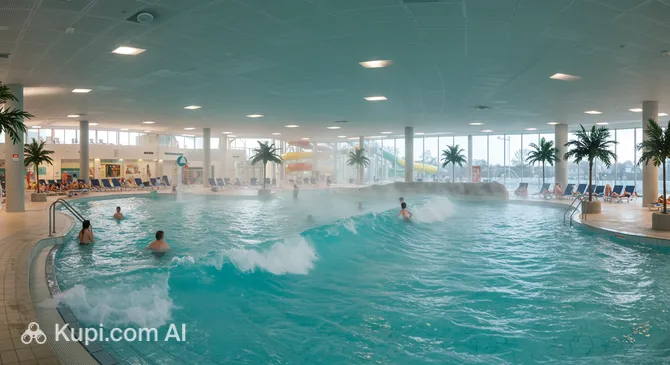
GalaxSea Leisure Pool Jena. Illustration.
Source: Kupi.com AI
Traveler photos:
Entertainment in Jena is not limited to nightclubs. During the day or early evening, a great option for family leisure or relaxation is the GalaxSea Swimming Pool Jena. This modern water complex features pools, slides, and an extensive sauna area where you can recharge after long walks around the city. Shopping enthusiasts should visit Goethe Galerie—a large shopping center in the heart of the city that brings together international brand stores and cozy coffee shops under one glass roof.
Safety and Transport: Jena is one of the safest cities in Germany, and night walks here are not a cause for concern even for solo travelers. Public transport works excellently: night buses and trams run on main routes, connecting the center with more distant districts. If you stay out late, taxis are easy to find at designated stands in the center or can be called by phone; a trip within the city costs an average of 15–20 euros.
Parks & Museums
Jena surprisingly combines an urban rhythm with the serenity of nature. The city is literally shrouded in greenery: it is surrounded by a ring of wooded hills, and picturesque park zones stretch along the river, which locals consider their "green living room." The cultural life here is equally rich and closely intertwined with scientific achievements and literary heritage.
The heart of green Jena is rightfully Paradies-Park (Paradies-Park), or simply "Paradies." This extensive landscape park, stretching along the banks of the Saale River, is a favorite spot for students and families. There are no strict alleys here—only spacious lawns where you can have a picnic, play frisbee, or just read a book to the rustle of the trees. On warm days, life here buzzes until late evening, creating a unique atmosphere of freedom and comfort.
For those who prefer active recreation by the water, Südbad Jena (Südbad) is an excellent choice. This is a popular open-air recreation area with manicured lawns and pools, which turns into a real resort within the city in summer. From here, you have a beautiful view of the surrounding mountains, making swimming and sunbathing particularly pleasant.
Jena's museum map reflects its status as a "city of sciences." A must-visit is the Optical Museum (Optisches Museum), which houses a unique collection of glasses, microscopes, and telescopes, telling the story of the development of optics over five centuries. Here you can learn all about the life and work of Carl Zeiss and Ernst Abbe, whose names are inextricably linked with the city.
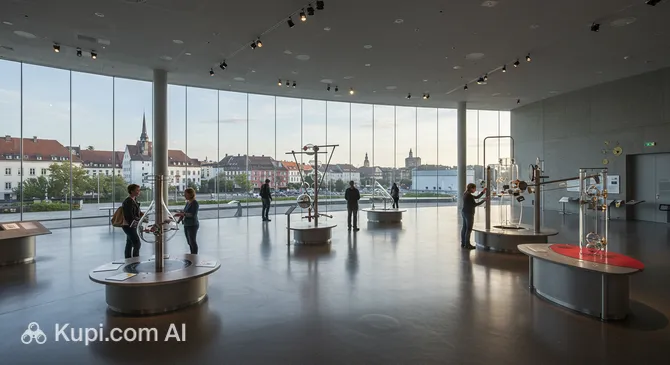
Imaginata Experimentarium. Illustration.
Source: Kupi.com AI
Traveler photos:
The Phyletic Museum (Phyletisches Museum), founded by the famous biologist Ernst Haeckel, is equally interesting. This place is dedicated to the evolution of life on Earth and impresses not only with its exhibits but also with the Art Nouveau building itself. And if you want to see science in action, it's worth visiting the Imaginata Experimentarium—a space where physical laws become clear and exciting through interactive experiments.
History buffs should pay attention to the preserved fragments of medieval fortifications, such as the Johannistor gate and the Powder Tower. These architectural monuments serve as a reminder of the times when Jena was an important trading hub and create a picturesque contrast with modern buildings.
Insider Tip: If you want to enjoy the best view of the city while surrounded by nature, climb "Jena's Balcony"—the Landgrafen mountain. An easy hiking trail leads there, and at the top, a panoramic restaurant and a breathtaking view of the valley await you, which is especially beautiful at sunset.
Getting Around
The public transport system in Jena is characterized by German punctuality and careful planning, making it comfortable to move around the city even for first-time visitors. Since the city is stretched along the Saale River valley, the basis of the transport network is the trams (Straßenbahn). Five main lines connect the center with the main residential areas, the university, and the train stations, running at intervals of 10–15 minutes on weekdays. This is the fastest way to get from north to south, avoiding traffic jams.
The tram network is supplemented by buses, which are indispensable for trips to districts located on the hillsides where rail transport cannot climb. All of Jena's public transport is part of the unified VMT (Verkehrsverbund Mittelthüringen) transport association. This means that the same ticket is valid for the tram, the bus, and even regional trains within the city zone (Cityzone Jena, zone 30). This is very convenient: once you buy a ticket, you can transfer between different types of transport within its validity period.
Various ticket options are available for paying fares. For a single trip, an Einzelfahrt (valid for 60 minutes) is suitable, but if you plan to move around a lot during the day, it is more profitable to purchase a Tageskarte (day pass). Tickets can be bought at yellow machines at stops (accepting cash and cards), in machines inside trams (often coins or cards only), or via mobile apps such as MeinJena or DB Navigator. The approximate cost of a single trip is around 2.50 euros.
An important nuance for tourists: a paper ticket bought from a machine must be validated (entwerten) immediately upon entering the bus or tram. Validators are usually small orange or red boxes. Without a date and time stamp, the ticket is considered invalid, and fines for fare evasion (Schwarzfahren) are quite substantial. Doors on transport do not open automatically—to enter or exit, you need to press a button on the door or handrail.
As an alternative to public transport, bicycles are popular in Jena. Thanks to the scenic bike path along the Saale River, two-wheeled transport here is not just a sport but a full-fledged means of travel. However, it's worth keeping the landscape in mind: a ride to the center will be easy, but returning to districts on the hills will require good physical preparation or an e-bike. Taxis in the city are reliable but quite expensive; they are easiest to find at stands near stations or called via an app. Car sharing and electric scooter rentals are also available but are used less frequently than in megacities due to the compactness of the city itself.
Accommodation
The choice of accommodation in Jena fully corresponds to its status as a university and scientific center. While there aren't many luxury five-star resorts, the city offers an excellent range of comfortable mid-range hotels, modern business hotels, and cozy family guesthouses (Gasthof). For those who prefer a home-like atmosphere or are planning a long visit, a wide selection of apartments and flats—often rented out by locals—is available.
The most convenient area for tourists to stay is the historical center (Zentrum). By staying here, you will be within walking distance of the main attractions, restaurants, and transport hubs. An excellent landmark for finding accommodation is the Goethe Galerie shopping mall: hotels located within a few blocks of it guarantee you'll be in the heart of the action. Also popular are the districts along the Saale River—it's quieter, greener, and offers beautiful views of the hills, yet you can still reach the center on foot in 10–15 minutes.
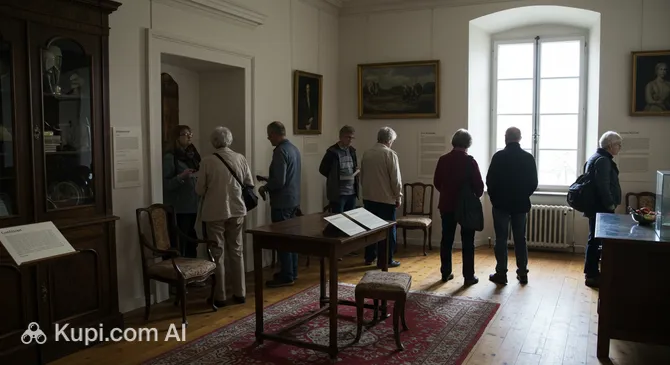
Goethe Gallery. Illustration.
Source: Kupi.com AI
Traveler photos:
Booking Tip: Jena is a city of business and students. Prices and availability can heavily depend on the calendar of conferences, scientific congresses, and the start of academic semesters (October and April). During these periods, the demand for housing rises sharply, so we strongly recommend booking your room in advance, at least several weeks before your trip.
The price range in the city can be described as average by Germany's standards. A night in a standard double room at a good hotel will cost less than in Munich or Frankfurt, but slightly more than in the rural areas of Thuringia. Booking is most convenient through popular international online platforms, although many small guesthouses also accept reservations directly through their websites or via email.
Nearby Cities
For those who want to explore the surroundings, Jena serves as an excellent starting point for day trips to several interesting nearby locations. Literally next door is Weimar—a UNESCO World Heritage city steeped in the spirit of German classicism, where Goethe and Schiller lived and worked. The state capital, Erfurt, attracts tourists with one of the best-preserved medieval centers in Germany and the unique Krämerbrücke bridge, which is lined with inhabited houses. Also worth mentioning is Naumburg, famous for its majestic cathedral and the wine traditions of the Saale-Unstrut region.
These nearby destinations provide an insight into the diverse culture and landscapes of the region, harmoniously complementing the experience of visiting Jena.
Shopping & Souvenirs
General Overview: Shopping in Jena is a pleasant and relaxed activity, free from the bustle of huge metropolises. While all of Germany is known for its large-scale shopping streets, Jena wins you over with its coziness and compactness: most of the interesting shops are within walking distance of each other. The city does not claim the title of a high-fashion capital, but it offers an excellent balance between well-known international brands, high-quality local labels, and small boutiques. Special attention should be paid to products related to optics and glass, as Jena is famous for its industrial heritage.
Main Shopping Areas: The heart of shopping life beats in the historical center. The main pedestrian routes pass through the Market Square (Markt) and its adjacent streets, such as Johannisstraße and Löbderstraße. Here, among beautiful architecture, you'll find clothing stores, bookstores, perfumeries, and cozy cafes. A stroll through these streets allows you to harmoniously combine shopping with sightseeing.
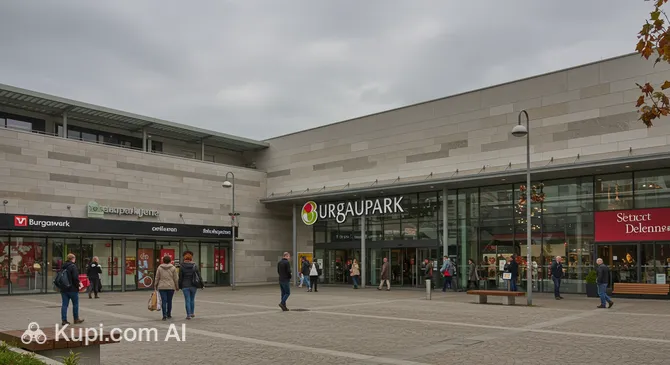
Shopping Centers: The central point of attraction for shopping enthusiasts is Goethe Galerie. This modern shopping arcade with a glass roof is located in the very center and houses dozens of clothing, electronics, and cosmetics stores. It is the perfect place for shopping in any weather. If you are interested in large hypermarkets and a wider choice of household goods, you should visit Burgaupark Jena, located in the Burgau district. It is easily reachable by tram, and you can find everything here from groceries to home appliances.
Burgaupark Jena. Illustration.
Source: Kupi.com AI
Traveler photos:
Markets: To immerse yourself in an authentic atmosphere, be sure to stop by the weekly market on the Market Square (Jenaer Wochenmarkt). It operates on Tuesdays, Thursdays, Fridays, and Saturdays. Here, local farmers sell fresh vegetables, fruits, cheeses, honey, and, of course, the famous Thuringian sausages, which are grilled right on the spot. In the pre-Christmas period, this square transforms, becoming home to one of the coziest Christmas markets in Thuringia.
Souvenirs: From Jena, it is worth bringing back something that reflects the spirit of the region. First and foremost, this means products related to the legendary Carl Zeiss brand—high-quality optics or souvenirs with the logo. Heat-resistant glass from the Schott company is also popular. Gastronomic souvenirs include wines from the Saale-Unstrut region, authentic Thuringian mustard, and gingerbread. In souvenir shops, you can also find figures of the "Jena Weirdo" (Schnapphans)—one of the symbols of the city.
Opening Hours and Payment: Most large stores and shopping centers are open from Monday to Saturday from 10:00 to 20:00. Small boutiques in the center may close earlier, around 18:00 or 19:00. It is important to remember that Sunday is a day of rest, and all shops (except some bakeries and kiosks at the station) are closed. As for payment, large centers accept Visa and Mastercard without problems, but in small shops, at the market, or in cafes, it is strongly recommended to have cash Euros on hand.
Tax Free: Tourists residing permanently outside the European Union can take advantage of the tax refund system (Tax Free) for purchases over a certain threshold (usually 50 euros) on a single receipt. Look for the "Global Blue" logo or similar systems in windows or at checkouts, and don't forget to ask for the special form to process the refund when paying for the goods.