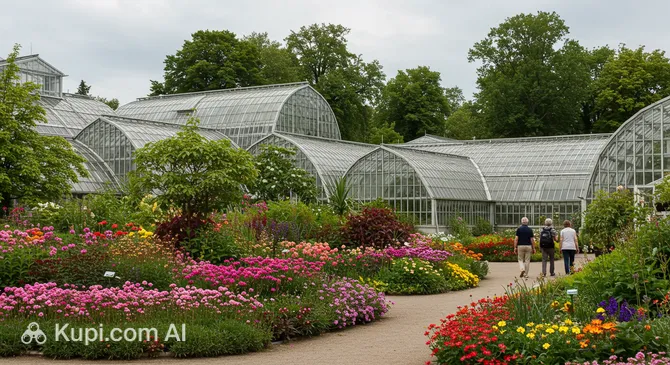
Imagine a quiet green corner where time seems to slow down among exotic flowers and centuries-old trees. The Jena Botanical Garden is not just a park, but one of the oldest scientific gardens that Germany is proud of. Founded back in 1580, it has remained the pride of the Friedrich Schiller University in the city of Jena for centuries.
Botanical Garden of Jena. Illustration.
Source: Kupi.com AI
Traveler photos:
Spanning an area of approximately 4.5 hectares, the garden serves as a living museum of nature. It houses thousands of plant species from all continents: from the hardy inhabitants of high altitudes to fragile tropical orchids hidden in cozy greenhouses. This place harmoniously combines rigorous scientific taxonomy with picturesque landscape design, featuring shaded alleys and decorative ponds.
The garden's status as a teaching and research facility where work on the conservation of rare species is conducted gives it special significance. For tourists, it is an ideal place to escape the city bustle, enjoy seasonal blooms of rhododendrons or chrysanthemums, and learn much about the amazing world of plants.
Contacts
To inquire about special exhibitions or to book group tours, you can contact the garden administration directly. Below are the current contact details to help you plan your visit and ensure you don't miss any important events on the Jena Botanical Garden calendar.
A visit to the garden offers many options for peaceful and educational leisure. Be sure to stop by the tropical greenhouses, where even in cool weather you can feel the breath of the jungle while admiring collections of orchids and the giant leaves of water lilies in the ponds. These are perfect locations for photography thanks to the unusual lighting and exotic plant forms.
For those interested in science, it will be fascinating to explore the systematic garden and the medicinal plants section. Here, you can clearly see how flora is used in medicine and industry. In spring, the garden turns into a true kaleidoscope of color thanks to the blooming rhododendrons, while in summer, visitors are delighted by the fragrant rose garden.
If you come with the whole family, a stroll along the winding paths past the rock gardens will be a great adventure for children, while numerous benches in shaded areas allow for a short rest or meditation to the sound of birdsong. The garden often hosts themed guided tours that reveal the secrets of plant survival in various climatic conditions.
Getting There
The Jena Botanical Garden is exceptionally well-located in the heart of the city at Fürstengraben 26. If you are already exploring the center, it is easily accessible on foot: a walk from the famous JenTower or the main university campus takes only 10–15 minutes.
For those who prefer public transport, the "Fürstengraben" and "Universität" stops are right next to the garden. You can reach them via trams No. 1, 2, 3, 4, and 6 or by city buses. If you arrive at Jena West or Jena Stadtmitte railway stations, the trip to the garden by transport will take no more than 10 minutes.
Travelers arriving by car should note that the garden is in a central zone, and parking on Fürstengraben and adjacent side streets is paid. Cyclists will also find the location convenient, as well-maintained city bike paths lead directly to the entrance.
Nearest city: Jena
History & Facts
The history of this green oasis began in 1580, when it was established as an apothecary garden for the university. This makes it the second oldest botanical garden in Germany, surpassed in age only by the garden in Leipzig. In those days, its primary mission was to cultivate medicinal herbs for training future doctors and pharmacists.
In the 18th and 19th centuries, the garden experienced a period of rapid development. Professor Johann Hedwig, a prominent specialist in mosses, made a significant contribution to its growth. Johann Wolfgang von Goethe also showed immense interest in the garden; he was not only a poet but also a passionate naturalist. It was under his influence that the garden became an important center for natural science research at the time.
In the 20th century, the garden's territory was integrated into modern scientific projects of the Friedrich Schiller University. Today, ancient greenhouses and centuries-old trees sit alongside cutting-edge laboratories studying plant genetics and biodiversity conservation, carefully preserving the legacy of past centuries.
Time Needed
To leisurely walk through all the themed zones and visit the greenhouses, it usually takes between 1.5 to 2.5 hours. About an hour should be set aside for exploring the outdoor areas—the rock garden, the rose garden, and the systematic section, where plants are grouped by family.
Fans of tropical flora will need at least another 45–60 minutes to tour the greenhouses featuring orchids and water lilies. If you plan your visit during the peak of the spring bloom or wish to have a photo session among the exotic plants, your stay could extend up to 3 hours.
Working Hours
The Jena Botanical Garden is hospitably open to visitors daily, including weekends and public holidays. According to the current schedule, you can stroll through its alleys and visit the greenhouses from 10:00 to 19:00.
Please note that during the winter period or in extreme weather conditions, operating hours may be reduced, so it is recommended to check the official website before your visit. There is an entrance fee for the garden, and the ticket offices usually stop operating half an hour before the official closing time.
10:00 – 19:00
Nearby
A visit to the botanical garden is just one part of what the historic city center has to offer. The surrounding area is home to numerous architectural monuments and interesting locations that allow for a deeper dive into the atmosphere of old Europe and the region's rich heritage.
Just a few steps from the garden, you will find medieval towers and cozy squares that can be reached in mere minutes. Here is a list of nearby sites to include in your itinerary: