Support

Weimar

About

Weimar is a wonderful city that enchants with its cozy atmosphere and rich cultural heritage. Located in the heart of Germany, in the federal state of Thuringia, it is nestled on the picturesque banks of the Ilm River at the foot of the Ettersberg hill. Weimar is unlike a bustling metropolis; it is dominated by neat 18th and 19th-century houses, cobbled streets, and an abundance of greenery, creating the feeling of being immersed in an old-fashioned fairy tale.

With a population of about 65,000 people, Weimar remains compact while being the most important cultural center of the region. The city is famous for its history, closely intertwined with the names of great German poets, artists, and philosophers. The historical center of Weimar has remained virtually unchanged since the Middle Ages, where the old Town Hall still graces the Market Square.
Weimar. Illustration.
Source: Kupi.com AI

The main attraction of Weimar is its unique spirit of creativity and inspiration. This is the city where geniuses such as Johann Wolfgang von Goethe and Friedrich Schiller lived and worked, and their legacy is felt at every step. Another unique feature is that since the 18th century, by decree of Duke Karl August, the construction of factories has been prohibited in Weimar, and this ban remains in effect to this day, preserving the clean air and tranquility.

Weimar is a place for those who appreciate leisurely walks, historical discoveries, and immersion in the atmosphere of a European cultural capital. If you are looking for a harmony of history, art, and nature, be sure to include Weimar in your travel itinerary – this city will not leave you indifferent.

You can find more interesting facts on the history of Weimar page.
Weather Overview

The weather in Weimar is characterized by a temperate climate. Expect warm summers with occasional rain and cool winters, also with precipitation. In the summer months, such as July and August, the average temperature stays around 19-19.5°C, while the maximum can reach 24.5°C. In winter, for example in January, the average temperature is about 2.1°C, with minimum values around -0.1°C. The amount of precipitation throughout the year is small, usually 1-2 mm per month; however, the number of days with precipitation varies from 9 to 15 per month, indicating frequent but light rain or snow. For more detailed information on climatic conditions and the forecast, please visit the weather in Weimar page.

Average monthly temperature

Average monthly precipitation

Interesting Facts

In addition to its world-famous connections to Goethe, Schiller, and the Bauhaus movement, Weimar hides many surprising stories and little-known details that make it even more attractive to curious travelers.

Duchess Anna Amalia Library. Illustration.
Source: Kupi.com AI

Traveler photos:

  • In the 18th century, Duke Karl August issued a unique decree banning the construction of industrial enterprises within the city limits. Thanks to this, Weimar has preserved its historical appearance and the charming atmosphere of an old garden city, which remains one of its main highlights today.

  • Weimar is home to one of the most beautiful libraries in Europe — the Duchess Anna Amalia Library. Its famous oval Rococo hall with elegant galleries and antique books is considered a true gem of world culture and is included in the UNESCO World Heritage list.

  • According to city legends, unusual quests and themed excursions are popular in Weimar. Among them, you can find a "Treasure Hunt" through the old town or even a mysterious "Illuminati" game, offering to uncover secrets related to Goethe and suspected Masonic societies.

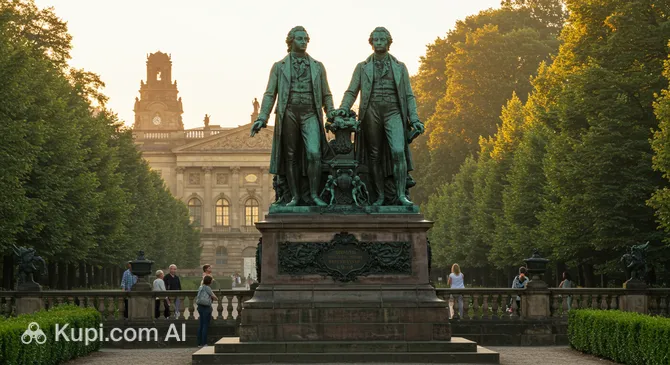
  • It's not just the residence of Goethe and Schiller: it was in Weimar that these two titans of German literature created many of their greatest works. Their close creative union and friendship are commemorated by the famous Goethe-Schiller Monument erected in front of the German National Theater.

How to Get There

You can reach Weimar in various ways, as the city is conveniently located in the central part of Germany and has good transport links with neighboring regions. If you are planning a trip, we recommend studying all routes in advance and choosing the most convenient one. You can find out more about how to get to Weimar on a dedicated page of our guide.

Weimar does not have its own airport, so travelers usually fly into neighboring cities and then reach their destination by train, bus, or taxi. The nearest air hub is Erfurt Airport (ERF), located in the city of Erfurt, just 25.7 km from Weimar. This is a small regional airport, and the journey from there by car or taxi will take about 40–50 minutes. Despite its modest size, it is convenient for those who value proximity to their final destination.

For international flights, travelers often choose Leipzig/Halle Airport (LEJ). It is located in the city of Leipzig, approximately 80 km from Weimar. This is a larger transport hub with a developed route network. Travel time by ground transport is about 1.5–2 hours. You can also consider Nuremberg Airport (NUE) in Nuremberg (166 km from Weimar) or Hanover Airport (HAJ) in Hanover (about 200 km) if you plan to combine your trip with visits to other regions.

For clarity, here is summary information on the main airports:

AirportPassenger trafficDistance
Erfurt Airport138 00226 km
Leipzig/Halle Airport2.2 mln80 km
Karlovy Vary Airport37 900142 km
Kassel-Calden Airport107 615144 km
Nuremberg Airport4.0 mln166 km

Railway communication in Germany is excellently developed, making a train journey one of the most comfortable options. Although Weimar itself has a railway station, major hub stations nearby are often used for long-distance high-speed travel. A key transit point is Erfurt Hauptbahnhof, located in Erfurt, just 20.1 km from the center of Weimar. This is a large station with huge passenger traffic, where high-speed ICE trains arrive. From there, you can reach Weimar by regional train in 15–20 minutes or by taxi in about half an hour.

Another important hub is Leipzig Main Station in Leipzig, located at a distance of 80 km. It is one of the largest stations in Europe, receiving trains from all directions. If you arrive there, transferring to a train to Weimar will take about an hour. Using these large stations allows you to easily plan a route from almost anywhere in Europe.

Below is information about the nearest major railway hubs:

StationPassenger trafficDistance
Erfurt Hauptbahnhof16.8 mln20 km
Eisenach Hauptbahnhof1.8 mln70 km
Leipzig Hauptbahnhof43.8 mln80 km
Halle (Saale) Railway Station12.8 mln129 km
Kassel-Wilhelmshöhe Station10.9 mln136 km

Main Attractions

Weimar is a city with a rich cultural heritage, and its attractions reflect the golden age of German literature and art. Here, every corner breathes history, and the names of Goethe and Schiller resonate at every step.

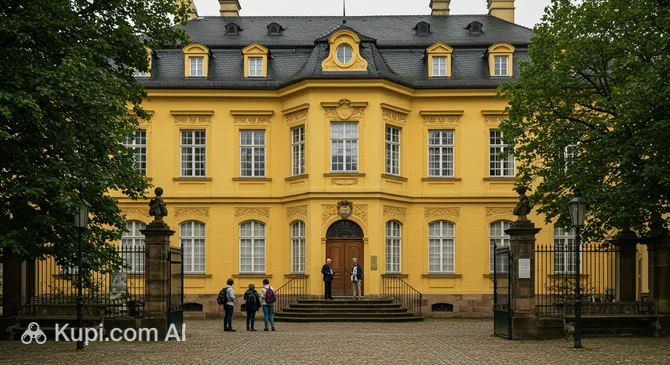
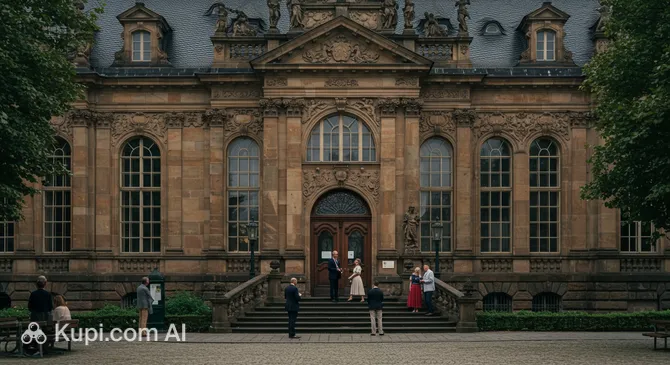
One of the main gems of Weimar is undoubtedly the Goethe House. The great poet lived in this building for almost 50 years, and today it has been converted into a museum where visitors can see the original interiors, personal belongings, and the extensive collection of artworks gathered by Goethe. This place allows you to literally touch the era of Weimar Classicism and gain a deeper understanding of the genius's work.

Goethe House. Illustration.
Source: Kupi.com AI

Traveler photos:

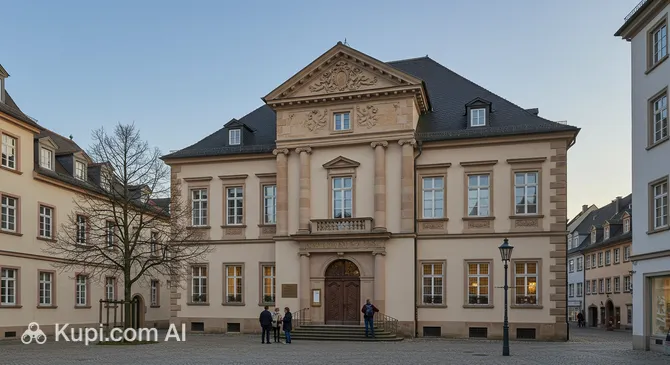
Nearby is the Schiller House, where another great playwright spent the last years of his life. Visiting this house-museum provides insight into the life and work of Friedrich Schiller, completing the picture of literary Weimar.

Schiller's House. Illustration.
Source: Kupi.com AI

Traveler photos:

It is impossible to imagine Weimar without the Duchess Anna Amalia Library. It is not just a repository of priceless books and manuscripts, but also an architectural masterpiece, famous for its magnificent Rococo hall. The library is part of the "Classical Weimar" ensemble, which is included in the UNESCO World Heritage list, and attracts book and art lovers from all over the world.

Duchess Anna Amalia Library. Illustration.
Source: Kupi.com AI

Traveler photos:

A symbol of the city and its literary fame is the Goethe-Schiller Monument, erected in front of the German National Theater on Theaterplatz. This bronze double statue of the two great friends and collaborators is one of the most photographed objects in Weimar and serves as a reminder of the flowering period of German culture.

Goethe–Schiller Monument. Illustration.
Source: Kupi.com AI

Traveler photos:

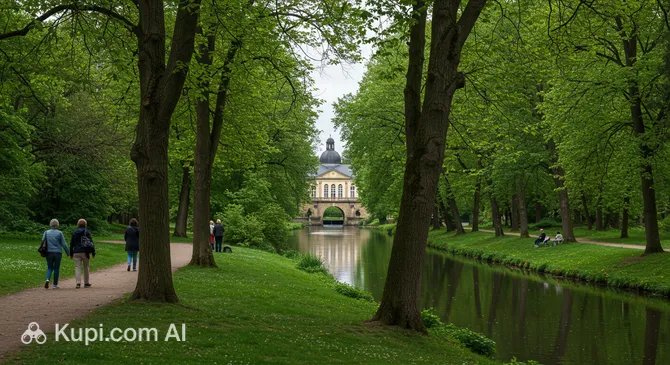
For those who want to take a break from the city bustle and enjoy nature, the Park on the Ilm (Park an der Ilm) is the perfect place. This extensive landscape park, in the creation of which Goethe himself participated, offers picturesque alleys, romantic corners, and the famous Goethe's Garden House – the poet's first home of his own in Weimar. A stroll through the park is an opportunity not only to enjoy the beauty of nature but also to feel the spirit of the Enlightenment era.

Park on the Ilm. Illustration.
Source: Kupi.com AI

Traveler photos:

Local Cuisine

The cuisine of Weimar is an appetizing combination of classic Thuringian traditions and refined urban gastronomy that can surprise any gourmet. The absolute stars of the local menu are the famous Thuringian sausages (Thüringer Rostbratwurst). They are grilled over an open fire, often right on the streets, and served with mustard and fresh bread — a simple but incredibly delicious specialty. Another dish you should definitely try in Weimar is Thuringian dumplings (Thüringer Klöße), fluffy potato balls that serve as the perfect side dish for roast meat and thick, aromatic gravies.

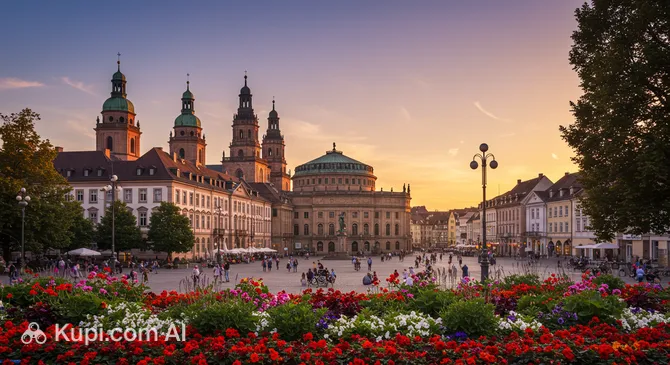
In addition to main dishes, Weimar is famous for its delicious cakes, especially apple and plum cakes prepared according to old recipes. For the freshest local products, such as farm cheeses, homemade sausages, aromatic honey, as well as seasonal vegetables and fruits, you should head to the city markets. These often take place on the Market Square, creating a special atmosphere.

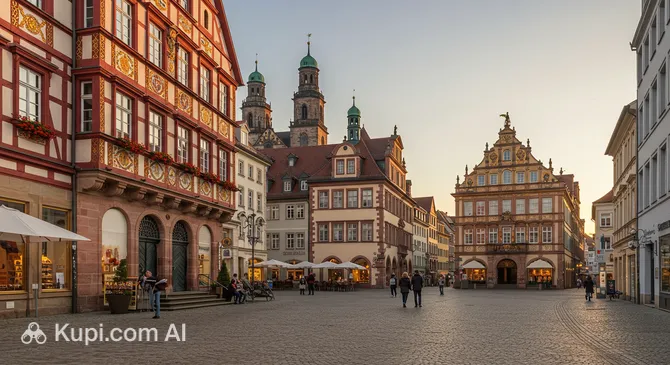
Market Square. Illustration.
Source: Kupi.com AI

Traveler photos:

As for drinks, Weimar and its surroundings produce decent local wines. Various fruit infusions and liqueurs are also popular. Beer lovers will appreciate the variety of traditional German beers, while a cup of aromatic coffee in one of the cozy coffee shops will be a wonderful addition to a dessert or just a pleasant moment of relaxation. Among non-alcoholic drinks, locally produced juices and lemonades are popular.

The dining culture in Weimar is diverse. Locals and tourists alike enjoy visiting both traditional restaurants offering hearty Thuringian dishes and establishments with modern European cuisine. Coffee shops and patisseries hold a special place, where you can enjoy fresh pastries and desserts, for example, by dropping into Lilly’s Waffelbar and Cafe. Throughout the year, various gastronomic festivals take place in Weimar, and during the Christmas season, the Market Square transforms into a magical fair with mulled wine, roasted chestnuts, and all sorts of sweets.

Travel Tips

Welcome to Weimar, a city with a rich cultural heritage! To ensure your journey through this charming corner of Thuringia goes smoothly and leaves only pleasant impressions, we have prepared some practical tips.

  1. Clothing and items for the season: The climate in Weimar is temperate, with four distinct seasons. In summer (June-August), the weather is usually warm, ideal for walking – take light clothing, but don't forget a sweater or a light jacket for the evening. Spring and autumn can be cool and rainy, so layering and a waterproof jacket will come in handy. In winter (December-February), frosts and snow are possible, so warm clothes, a hat, gloves, and a scarf are mandatory. The key point is comfortable shoes for long walks on cobblestones. Don't forget a power adapter (type F).
  2. Getting around the city: Weimar is a compact city, and its historical center is easily explored on foot. Public transport consists of buses that connect different parts of the city. Tickets can be bought at machines at stops or from the driver. Taxis are available but can be an expensive pleasure. Car rental is not a necessity for moving around Weimar itself but might be useful if you plan to explore the Thuringian surroundings.
  3. Financial matters: The official currency in Germany is the Euro (EUR). You can exchange money at banks or exchange offices, but bank rates are usually more favorable. Credit and debit cards (Visa, Mastercard) are accepted in most shops, restaurants, and hotels. ATMs (Geldautomat) are widely available. International cards usually work without problems, but it's better to check with your bank before the trip. Tipping in Germany is not mandatory but appreciated (usually 5-10% of the bill or rounding up the amount for good service).
  4. Health and safety: Weimar is a very safe city. However, standard precautions, such as watching your personal belongings in crowded places, are recommended. Pharmacies (Apotheke) are easy to find by the red "A" sign; some of them operate 24/7 on a rotation schedule (Notdienst), information about which can be found on the doors of any pharmacy. To receive medical assistance, tourists are recommended to have travel insurance. In emergencies, call 112.
  5. Communication and language: The official language is German. In tourist areas, hotels, and among young people, many speak English. However, knowing a few basic German phrases like "Hallo" (Hello), "Danke" (Thank you), "Bitte" (Please/You're welcome), and "Entschuldigung" (Excuse me) will be appreciated by the locals. SIM cards from local operators can be purchased in mobile phone shops or supermarkets. Free Wi-Fi is often available in hotels, cafes, and some public zones.
  6. Local etiquette: Germans value punctuality, so try not to be late for meetings. When meeting, it is customary to shake hands. Maintain a moderate volume level in public places. When addressing strangers, especially older people, use the formal "Sie" (You) and their surname (e.g., Herr Schmidt/Frau Meier) until you are invited to use "du" (the informal you).
  7. What to avoid: In Germany, rules are taken very seriously, so avoid crossing the street in the wrong place – this can lead to a fine and disapproval from locals. Also, try not to make noise in public places and residential areas, especially on Sundays and at night, as Germans value peace and order.
  8. A useful tip for Weimar: Consider purchasing the Weimar Card. This card often offers free or discounted entry to many museums and attractions and may include the use of public transport. This is a great way to save money if you plan a busy cultural program.

We hope these tips help you plan an unforgettable trip to Weimar and fully enjoy its unique atmosphere, history, and culture. Have a nice trip!

Entertainment & Nightlife

Weimar, known for its rich cultural heritage, offers guests not only daytime excursions but also various opportunities for evening leisure. Although it is not a metropolis with a bustling 24-hour life, you can find cozy spots here to spend a pleasant evening and soak in the nighttime atmosphere. The main points of interest for evening entertainment are usually concentrated in the city center and in areas popular with students.

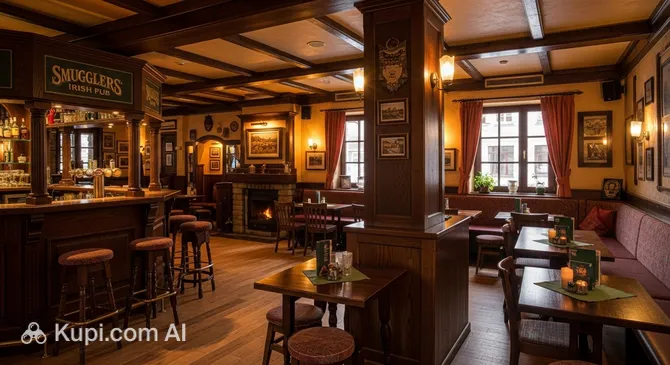
Fans of a relaxed atmosphere will appreciate the local bars and pubs. Here you can enjoy a glass of local beer or wine in the company of friends. One popular spot is Smugglers Irish Pub, where a friendly atmosphere prevails and live music is often played. You can also drop by Lilly’s Waffelbar and Cafe, which offers a more tranquil experience. The atmosphere in most establishments is casual, and there is usually no dress code.

Smugglers Irish Pub. Illustration.
Source: Kupi.com AI

Traveler photos:

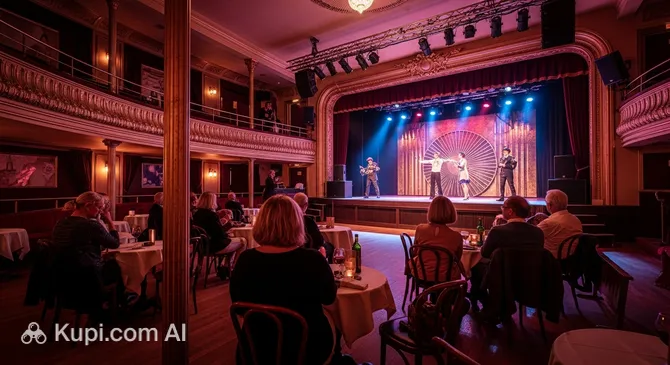
If you are looking for something more lively, check out the local clubs and concert venues. Weimar boasts unique establishments, such as the Weimarer Kabarett, where you can see interesting performances and shows. Nightlife here usually comes alive closer to the weekend. Most clubs open late in the evening and work until the early morning. The crowd here is mostly young and student-oriented, creating a democratic and fun atmosphere.

Weimar Cabaret. Illustration.
Source: Kupi.com AI

Traveler photos:

For dinner in the evening, Weimar has many restaurants to suit every taste, ranging from traditional German cuisine to international dishes. For example, the Cielo Weimar restaurant offers a pleasant setting for dinner. Many restaurants in the city center stay open until late evening, especially during the tourist season.

When planning an evening out, keep in mind that bars and clubs are most active on Fridays and Saturdays. Prices in Weimar's establishments are generally moderate, typical of a German university town. Getting around the city center at night is easy on foot, as it is quite compact. For longer trips, taxis are available and can be called by phone or found at designated stands.

Weimar is considered quite a safe city, including at night. However, as elsewhere, it is worth taking basic precautions: do not leave personal belongings unattended and avoid poorly lit and deserted places. The central streets are usually well-lit and patrolled.

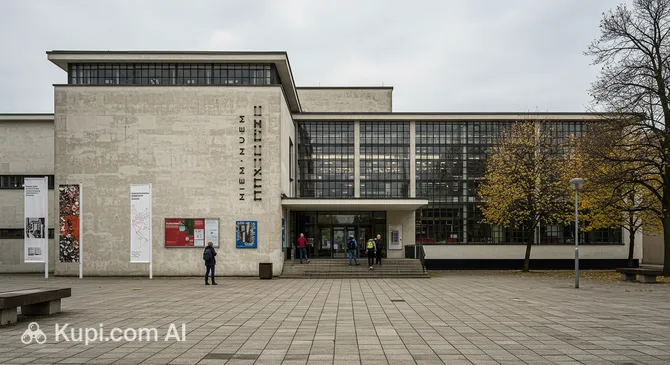
During the day, Weimar offers a rich cultural program. Be sure to visit iconic sites such as the Goethe House, explore the exhibitions at the Neues Museum Weimar, or stroll through the picturesque Park on the Ilm. The city's historical center with its Market Square and Theaterplatz is also well worth your attention.

In short, Weimar offers a harmonious combination of cultural leisure during the day and pleasant entertainment in the evening. Here, everyone will find something to their liking, whether it's a quiet dinner, a casual evening in a bar, or a visit to an original cabaret.

Parks & Museums

Weimar is not only a city of great poets and thinkers but also a place where history and culture harmoniously combine with picturesque green oases. Here, everyone will find something for their soul: from quiet parks for leisurely strolls to museums holding priceless evidence of the past.

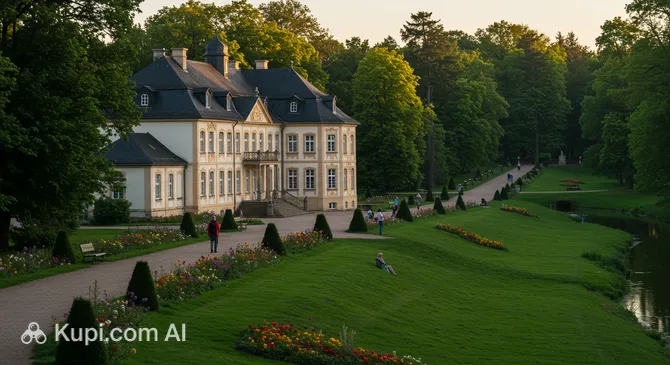
Among the city's green gems, the Park on the Ilm (Park an der Ilm) stands out. This is an extensive landscape park laid out back in Goethe's time, who himself took an active part in its creation. Here you can wander for hours along winding paths, admiring old bridges, pavilions, and, of course, the famous Goethe's Garden House. Another beautiful place for relaxation is the Tiefurt Mansion and Park, the former summer residence of Duchess Anna Amalia, located a bit away from the center. This park enchants with its seclusion and romantic atmosphere. Closer to the city center lies the more modern Weimarhallenpark, an ideal spot for a picnic or just relaxing on the grass.

Tiefurt Mansion and Park. Illustration.
Source: Kupi.com AI

Traveler photos:

Weimar is rightfully considered a treasure trove of museums. A must-see for any tourist is a visit to the Goethe House, where the great poet lived for many years. The authentic setting has been preserved here, allowing you to immerse yourself in the atmosphere of that era. No less interesting is the Schiller House, where you can learn about the life and work of another great German literary figure. For art lovers, it is worth visiting the Neues Museum Weimar, which features collections of 19th and 20th-century artworks as well as exhibitions dedicated to the Bauhaus. And, of course, you cannot overlook the world-famous Duchess Anna Amalia Library with its magnificent Rococo hall, which houses unique book collections.

Neues Museum Weimar. Illustration.
Source: Kupi.com AI

Traveler photos:

Besides these iconic sites, Weimar is rich in other historical and architectural attractions. Stroll across the Market Square with its Town Hall and the Cranach House, and admire the Goethe-Schiller Monument in front of the German National Theater. Take a look at the Church of St. Peter and Paul (Herderkirche), home to a famous altar painted by Lucas Cranach the Elder.

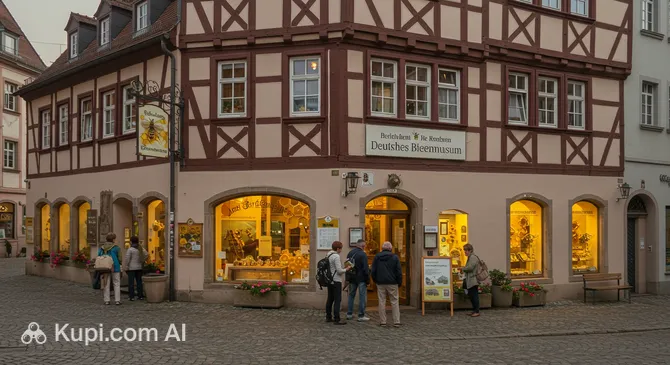
For those seeking less famous but authentic experiences, we recommend visiting the German Bee Museum, where you can learn many interesting facts about these amazing insects and their role in the ecosystem. And if you are interested in recent history, the House of the Weimar Republic – Forum for Democracy offers a deep dive into the period of the formation of the first German democracy.

German Bee Museum. Illustration.
Source: Kupi.com AI

Traveler photos:

Getting Around

Getting around Weimar is quite convenient thanks to a well-thought-out public transport system. The main mode of transport here is buses, which cover the entire city and its surroundings. The route network is well-developed, allowing you to easily reach most attractions and key points in the city.

The fare payment system in Weimar is quite standard for German cities. You can purchase single tickets (Einzelfahrschein), tickets for short trips (Kurzstrecke), day passes (Tageskarte), which can be advantageous if you plan to move around a lot, as well as weekly or monthly passes. Tickets can be bought at special machines at stops, directly from the bus driver (usually they accept cash, sometimes cards), or via mobile apps of local transport companies. Prices vary depending on the ticket type and zone, but overall they remain affordable.

Tourists should pay attention to a few points. Before boarding the bus or immediately after entering, you must validate your ticket in a special device if it was not bought with a specified start time (for example, from the driver). Fines for fare evasion are significant. Buses run according to a schedule, which is usually posted at each stop. On weekdays and during the day, the intervals are shorter; in the evenings and on weekends, they are longer. As a rule, transport starts working early in the morning and finishes late in the evening, but night routes may be limited or absent.

In addition to public transport, other ways to get around are available in Weimar. You can always use taxi services, with stands located at the station and in other busy parts of the city. Bicycle rentals are also popular – Weimar and its surroundings are perfectly suited for cycling, especially in the warmer months. This is a great way not only to get to your destination but also to enjoy the views of the city at your own pace.

Accommodation

Weimar offers tourists a variety of accommodation options to suit different preferences and budgets. You can find everything from cozy guesthouses and budget hostels to comfortable mid-range hotels and elegant apartments for short-term rental. Whether you are looking for simple and affordable lodging or more luxurious conditions, Weimar can offer a suitable option.

The most popular area for staying among tourists is undoubtedly the historical city center. Staying here provides easy access to many iconic attractions, such as the Goethe House, the Duchess Anna Amalia Library, and the Market Square. Staying in the center is also convenient due to the proximity to cafes, restaurants, and shops. Other areas adjacent to the center can also offer good options, often at a more relaxed price, while remaining within walking distance or a short public transport ride from the main tourist spots.

Market Square. Illustration.
Source: Kupi.com AI

Traveler photos:

The price range for accommodation in Weimar varies from budget to mid-range and high, depending on the type of accommodation, its location, and the season. As in many popular tourist destinations, it is recommended to book accommodation in advance, especially if your trip falls during the peak tourist season or during major cultural events for which Weimar is famous. The most common booking methods are popular online platforms and travel aggregators, as well as direct booking through hotel websites.

Nearby Cities

For those who want to explore the surrounding area, Weimar serves as an excellent starting point for day trips to several interesting nearby locations:

CityPopulationDistance
Apolda22 23214 km
Jena111 40720 km
Erfurt213 83521 km
Sömmerda19 03425 km
Rudolstadt25 11529 km

Erfurt, the capital of Thuringia, enchants with its beautifully preserved medieval center, the famous Merchants' Bridge (Krämerbrücke), and the majestic cathedral. It is an ideal place for immersing yourself in history and strolling through ancient streets.

Jena, a university city with a rich intellectual history, attracts with its connection to great minds like Goethe and Schiller, as well as Carl Zeiss's legacy in the field of optics. Here you can visit the Zeiss Planetarium and the Botanical Garden.

These nearby destinations offer insight into the diverse culture and landscapes of the Thuringia region. A trip to any of these cities will give you new impressions and complement your journey through Germany.

Shopping & Souvenirs

Weimar offers its guests pleasant shopping opportunities, combining the charm of a historical city with modern stores. Although Weimar is not a major fashion center, you can find high-quality goods, unique souvenirs, and local delicacies here. The city is especially known for products related to its rich cultural heritage, particularly with the names of Goethe and Schiller, as well as products by local artisans.

The main shopping activity is concentrated in the city center. The pedestrian zone extending along Schillerstraße and its adjacent alleys is the main place for shopping. Here you will find a variety of shops: from clothing and shoe boutiques to bookstores and home goods stores. Walking along these streets is a pleasure in itself thanks to the beautiful architecture and cozy atmosphere.

If you prefer shopping in malls, you should pay attention to the Weimar Atrium. This is a modern shopping complex where shops of famous brands, a supermarket, cafes, and restaurants are gathered under one roof. You can spend several hours here, combining shopping with relaxation.

Weimar Atrium. Illustration.
Source: Kupi.com AI

Traveler photos:

A special place in the shopping life of Weimar is occupied by the Market Square (Marktplatz). Markets are regularly held here, where you can buy fresh local products, flowers, as well as handmade items and souvenirs. The Christmas market is especially colorful, attracting many visitors with its festive atmosphere and traditional goods. Visiting the market is a great opportunity to immerse yourself in local life and try regional specialties.

Market Square. Illustration.
Source: Kupi.com AI

Traveler photos:

As souvenirs from Weimar, tourists often bring back items related to the great poets Goethe and Schiller: books, postcards, busts, magnets. Thuringian porcelain and glass items, local liqueurs, and confectionery, such as the famous Thuringian sausages (though they are best enjoyed fresh) or marzipan, are also popular. In souvenir shops, you can find other interesting little things reflecting the spirit of the city.

Shops in Weimar generally operate from Monday to Saturday, roughly from 10:00 AM to 6:00 PM or 7:00 PM. Large supermarkets and shopping centers may have longer opening hours. Sunday is typically a day off for most shops, except for some souvenir shops and stores at the railway station. Cash (Euros) and bank cards (Visa, Mastercard are most common) are accepted for payment. In small shops and markets, it is preferable to have cash with you.

For tourists from countries outside the European Union, a Tax Free system operates in Germany. This means that when buying goods for a certain amount in shops participating in this system, you can get a VAT refund. To do this, you need to ask for a special Tax Free check at the time of purchase, and when leaving the EU, present it along with the goods at customs to receive a stamp, after which you can receive a tax refund.

Nearby cities

Reached the end of the page?

That means the route is fully explored