Support

Gotha

About

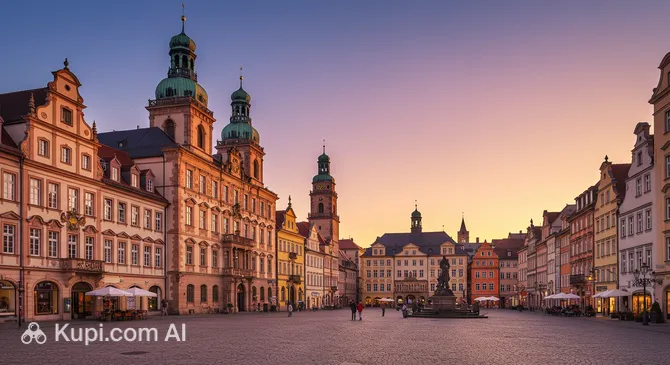
Gotha is a true gem of Thuringia, nestled among picturesque hills and dense forests. Located just a short drive from Erfurt, this city reveals to travelers the authentic and cozy atmosphere for which Germany is famous. Here, on the doorstep of the mysterious Thuringian Forest, provincial intimacy is wonderfully intertwined with the grandeur of old Europe.

Gotha. Illustration.
Source: Kupi.com AI

Despite its relatively small size — with a population of about 45,000 — the city possesses a truly aristocratic character. As the former residence of the Dukes of Saxe-Coburg and Gotha, it holds many secrets of the past. The rich history of Gotha is literally in the air: from the monumental walls of Friedenstein Castle to the ancient cobbled streets where every house seems to be a witness to the era of great dynasties.

Travelers can expect a harmonious combination of Baroque architecture, lush green parks, and cozy cafes. The city is ideal for those who appreciate leisurely walks and seek inspiration away from noisy tourist routes. Here, you can not only enjoy the beauty of the architecture but also feel the measured rhythm of life characteristic of the country's aristocratic corners.

Gotha is a city you'll want to return to for new discoveries and peace of mind. Be sure to include it in your itinerary to personally touch the secrets of the ducal palaces and enjoy the picturesque nature surrounding the city on all sides.

Weather Overview

The climate in this region is temperate, with mild transitions between seasons, making the city accessible for visits all year round. If you are interested in the current weather in Gotha for wardrobe planning, remember that there are no extreme heats or severe Siberian frosts here, but an umbrella can come in handy in any month.

Summer here is comfortable and perfect for long walks in the parks. The warmest months are July and August, when daytime temperatures reach an average of 23°C. This is an ideal time for sightseeing, although sunny days often alternate with cloudy ones: about 11–13 days with precipitation are recorded monthly during the summer period.

Winters in Gotha are cool and quite humid. In January and February, the average temperature stays around 1-3°C, and light frosts down to -1°C are possible at night. Snow or rain are frequent visitors at this time of year, especially in December and January, when the number of "wet" days reaches its peak (up to 16 days per month).

Expect a moderately warm summer without exhausting heat and a cool, cloudy winter with frequent precipitation. The shoulder seasons, especially May and September, often please travelers with a pleasant coolness and temperatures ranging from 12–15°C.

Average monthly temperature

Average monthly precipitation

Interesting Facts

In addition to its famous architectural monuments, Gotha holds many fascinating secrets that reveal the city from an unexpected side. The fates of great European monarchs, important scientific discoveries, and ancient traditions are wonderfully intertwined here.
Friedenstein Castle. Illustration.
Source: Kupi.com AI

Traveler photos:

  • The city is known as the cradle of the Saxe-Coburg and Gotha dynasty — one of the most influential families in European history. Its representatives occupied the thrones of Great Britain, Belgium, Portugal, and Bulgaria, linking this Thuringian corner to the royal courts of the entire continent.

  • Majestic Friedenstein Castle, built in the 17th century, is one of the first and largest Baroque palaces in Germany. In addition to luxurious interiors, it hides an extensive network of casemates underneath, which can be explored during special tours.

  • For a long time, Gotha was considered the capital of European genealogy. The famous "Gotha Almanac" was published here — a detailed encyclopedia of noble families, and being included in it served as official confirmation of high aristocratic status.

  • The local Gotha Zoo is proud of its rich history, being one of the oldest in Thuringia. Founded in the 19th century, it remains a favorite vacation spot for citizens and an important center for the conservation of rare animal species today.

  • The city also left its mark on the history of astronomy. The outstanding scientist Franz Xaver von Zach worked here, and through his efforts, one of the first observatories on German soil was founded in Gotha.

How to Get There

When planning a trip to this picturesque corner of Thuringia, it is important to map out your route in advance. The city is conveniently located relative to German autobahns and transport hubs. You can learn more about how to get to Gotha by studying all possible methods, but most tourists prefer to combine a flight with a train or car journey.

There is no airport in Gotha itself, so travelers arrive in neighboring cities. The closest and most convenient option is Erfurt Airport (ERF). It is located just 17.8 km from the destination. Thanks to this location, a taxi or transfer will take very little time — approximately 25–30 minutes, making the trip as untiring as possible.

For those looking for larger international hubs, Leipzig/Halle Airport (LEJ), located 118 km from the city, is an excellent choice. Thanks to high-speed German autobahns, the journey by car from here will take about 1 hour 15 minutes to 1 hour 30 minutes. Another popular option is Nuremberg Airport (NUE) (about 164 km). The road from Nuremberg is also quite comfortable and takes about 2 hours.

Below is a summary of the nearest airports for comparison:

AirportPassenger trafficDistance
Erfurt Airport138 00218 km
Kassel-Calden Airport107 615106 km
Leipzig/Halle Airport2.2 mln118 km
Nuremberg Airport4.0 mln164 km
Paderborn Lippstadt Airport818 378164 km

Rail connections are another excellent way to reach the region. Although Gotha has its own station, many use larger nearby hubs to transfer to high-speed ICE trains. A key point is Erfurt Hauptbahnhof station, located just 23.2 km away. This is an important transport hub where trains arrive from all over Germany. A car trip from Erfurt station to the center of Gotha takes about 30–35 minutes.

An alternative, especially when traveling from the west, is Eisenach main station (26.7 km from the city). A transfer from here also won't take much time — count on about 30–40 minutes by car.

List of nearest major railway stations:

StationPassenger trafficDistance
Erfurt Hauptbahnhof16.8 mln23 km
Eisenach Hauptbahnhof1.8 mln27 km
Kassel-Wilhelmshöhe Station10.9 mln97 km
Leipzig Hauptbahnhof43.8 mln118 km
Halle (Saale) Railway Station12.8 mln152 km

Main Attractions

Gotha is a city best explored slowly, enjoying every corner of its historical center. The main treasures here are concentrated around the legacy of the dukes, creating a unique architectural ensemble, but the city also has places for nature lovers and family holidays.

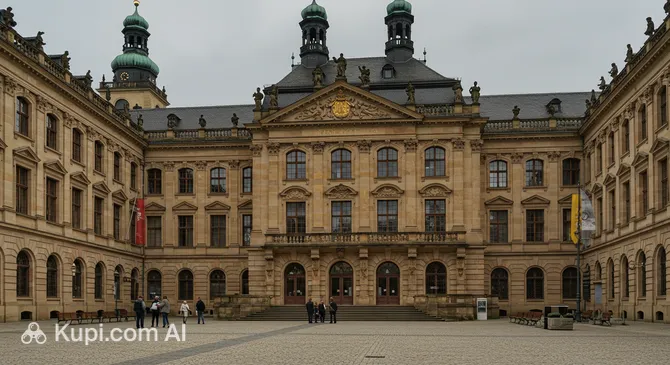
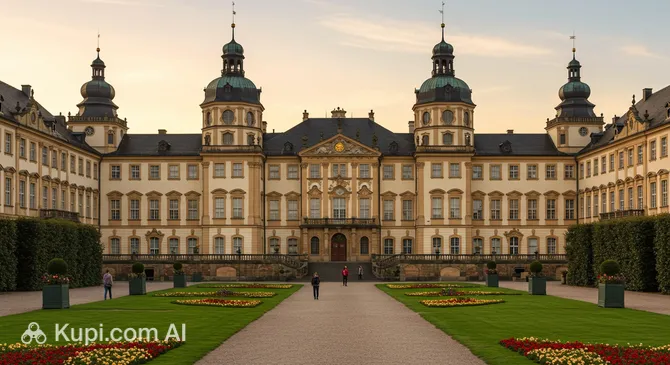
The absolute dominant feature of the city is Friedenstein Castle. This majestic Early Baroque structure rises above the city and is visible from almost any point. For tourists, the castle is interesting not only for its scale but also for its contents: inside are historical apartments, museums, and the famous Ekhof Theatre — one of the oldest in the world with preserved wooden stage machinery. You can spend an entire day here, immersing yourself in the Baroque era.

Friedenstein Castle. Illustration.
Source: Kupi.com AI

Traveler photos:

Directly opposite the castle, forming a single architectural complex, is the Ducal Museum. The Neo-Renaissance building itself is a masterpiece, but the main riches are hidden inside. This place is a must-visit for art lovers: it houses magnificent collections of paintings, ancient ceramics, porcelain, and even Egyptian antiquities. The museum allows you to appreciate the breadth of interests and the taste of the rulers of the Saxe-Coburg and Gotha dynasty.

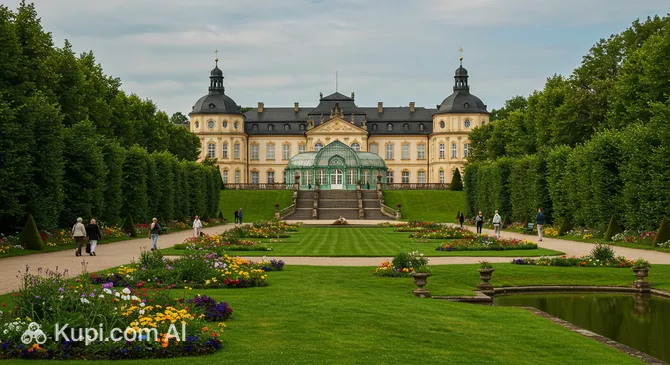
The link between the castle and the museum is the picturesque Gotha Palace Park. This is one of the oldest English landscape parks on the continent, perfect for quiet strolls. Walking along its alleys, you will certainly come across the Orangery in Gotha. This Baroque garden complex, consisting of two buildings, is surrounded by beautiful flower beds. Today, exhibitions and cultural events are often held here, and the "blooming garden" atmosphere is maintained year-round.

Gotha Orangery. Illustration.
Source: Kupi.com AI

Traveler photos:

For those who want a break from history and architecture, the Gotha Zoo, located at the foot of Mount Seeberg, is an excellent choice. It is a small but very cozy zoo that specializes in the conservation of rare and endangered species. Visitors note the spacious enclosures and proximity to nature, making it a wonderful place to visit with children. Here you can see Amur tigers, wolves, and many species of birds in a calm setting.

Local Cuisine

The cuisine of Gotha is a gastronomic mirror of all Thuringia, where centuries-old peasant traditions are harmoniously combined with the refinement worthy of a ducal table. Local food is characterized by heartiness, simplicity, and incredibly rich flavor. The main culinary symbol is, of course, the famous Thuringian sausages (Thüringer Rostbratwurst). They are grilled over an open fire until crispy and served in a fresh bun with local mustard — the perfect option for a quick and tasty snack during a walk.

For a more substantial lunch, it is worth ordering potato dishes, which are prepared masterfully here. The king of the table is Thuringian dumplings (Thüringer Klöße) — large balls of potato dough, often served as a side dish for meat. In local establishments, you should definitely try the venison roast with cranberry sauce: the proximity of the forests ensures restaurants have the freshest game. Fragrant potato soups with herbs, warming in cool weather, are also popular.

For those with a sweet tooth, Gotha offers its own special treats. The region is famous for sheet cakes with seasonal berries and fruits, as well as traditional Thuringian gingerbread, the recipes for which are passed down from generation to generation. The best place to get acquainted with these delicacies is the morning market on the central square, where farmers sell fresh honey, cheeses, and home-baked goods.

As for drinks, the classic German beer culture reigns here, but locals also love herbal liqueurs infused with forest treasures. In the evening, tourists and citizens often gather in cozy spots to discuss news over a glass of beer. One of the popular places for such relaxation is the The Limerick bar, where a relaxed atmosphere prevails, perfect for a pleasant end to a busy day.

Travel Tips

Gotha is an incredibly hospitable city, but like any journey, a little preparation will make your vacation much more comfortable and save you from unnecessary trouble. We have compiled a list of practical recommendations to help you feel confident and at ease in this corner of Thuringia.

  1. Clothing and Essentials. The weather in the region can be changeable, so the principle of layering clothes is the best solution. Even in summer, it's worth taking a light windbreaker or sweater for evening walks. Since the historical center is paved with ancient cobblestones, be sure to bring comfortable flat shoes — heels would be inappropriate here. Also, don't forget a plug adapter (European standard Type F) if your devices have different types of plugs.

  2. Transport. The center of Gotha is compact and best explored on foot. For trips to outlying areas, the tram is excellent — the local tram network has a rich history and is very convenient. Taxis can be called by phone or via apps (for example, Uber or local equivalents if available, but classic calls are more common). Renting a car only makes sense for trips to the Thuringian Forest; within the city, a car can become a burden due to paid parking.

  3. Finances. The official currency is the Euro (€). While large supermarkets and hotels accept cards without problems, Germany is famous for its love of cash. Small bakeries, souvenir shops, or kiosks may not accept cards, so always keep small denomination bills and coins with you. Tipping in restaurants is welcome (around 5–10%); it is usually not left on the table but added to the amount when paying.

  4. Health and Safety. Gotha is a calm and safe city. Pharmacies are easily recognized by the red letter "A" (Apotheke). They work during regular hours, but there is always a duty pharmacy in the city for emergencies (information about it is usually posted on the doors of closed pharmacies). The number for emergency services (police, ambulance, fire) is 112.

  5. Communication. The primary language is German. Staff at museums and major hotels generally speak English, but it might not help in everyday situations. Download an offline translator and learn a few polite phrases: "Guten Tag" (Good day) and "Danke" (Thank you) — this will instantly win over the locals. A SIM card can be bought at supermarkets (Aldi, Lidl) or mobile shops, but a passport is required for activation.

  6. Local Etiquette. Germans value order and politeness. It is customary to greet the staff when entering a shop or cafe. On Sunday (Ruhetag), most shops are closed and the city is quiet — try not to make noise in public places on this day, respecting the locals' rest.

  7. What to Avoid. Strictly follow traffic rules even on foot: crossing the road at a red light or in the wrong place can result in a fine and disapproval from others. Also, never walk on bike lanes — cyclists are full participants in traffic here and ride fast.

  8. Bonus: Forest Tram. A unique feature of Gotha is the Thüringer Waldbahn (Thuringian Forest Railway). This is an intercity tram (line No. 4) that you can take directly from the city center into the picturesque forest, to caves, or to the nearby resort town of Tabarz. This is a great and inexpensive way to combine urban tourism with outdoor recreation.

By following these simple tips, you can avoid minor mishaps and focus entirely on the majestic architecture and cozy atmosphere of Gotha. We wish you a pleasant and worry-free journey!

Entertainment & Nightlife

The nightlife in Gotha differs from bustling metropolises like Berlin or Hamburg by its calm and cozy character. You won't find huge techno clubs operating until dawn here, but the city is famous for its atmospheric pubs, wine bars, and restaurants where you can spend a great evening with friends. The main evening activity is concentrated in the historical center (Altstadt), especially around the Hauptmarkt and Buttermarkt squares, where ancient architecture creates a romantic backdrop for night walks.

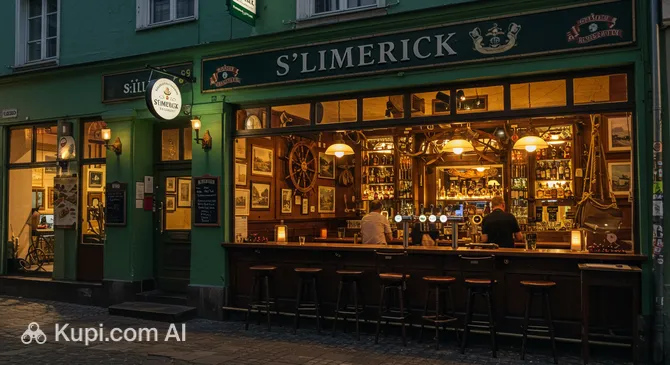
Local bar culture focuses on socializing and quality drinks. One of the most popular spots among locals and tourists is the The Limerick. This traditional Irish-style pub attracts visitors with its relaxed atmosphere, a wide selection of beer and whiskey, and regular sports broadcasts. Live music is often played here, and it can get quite crowded on weekends, so it's better to reserve a table in advance.

S'Limerick. Illustration.
Source: Kupi.com AI

Traveler photos:

For those who prefer to start the evening with an exotic dinner in a relaxed setting, Ganesha Restaurant is an excellent choice. The interior, steeped in Indian flavor, and spicy aromas create a warm atmosphere ideal for long conversations. After dinner, many guests move to nearby bars or go for a walk through the lit streets of the old town.

Culture enthusiasts should pay attention to the evening program at Friedenstein Castle. During the summer, the famous Ekhof Festival (Ekhof-Festival) takes place, when the historical theater comes to life with productions in Baroque-era settings. This is a unique opportunity to combine an evening out with an immersion into high culture.

Practical tips for night owls:

  • Opening hours: Most bars are open until 1:00 AM or 2:00 AM on weekends, but restaurant kitchens often close by 9:30 PM–10:00 PM. Plan your dinner in advance.
  • Dress code: Gotha has a casual style. You can safely go to pubs and bars in jeans and comfortable shoes; evening attire is more appropriate for the theater or formal dinners.
  • Safety and transport: Gotha's historical center is very safe for night walks. The streets are well-lit, and serious incidents are rare. Night buses are scarce, so it's most convenient to use a taxi to return to your hotel after midnight. Taxis can be found at stands near the station or called by phone.

As for daytime entertainment, the city offers an equally rich program. Families with children should definitely visit the Gotha Zoo to escape the city bustle. Numerous museums and exhibition halls are also open during the day, giving way to the cozy lights of cafes and bars by evening.

Parks & Museums

Gotha is a city where majestic architecture harmoniously dissolves into the greenery of ancient gardens, and museum collections can rival those of European capitals. For travelers, this is a unique opportunity to combine walks in the fresh air with a deep immersion into the history of art and science, as the heritage of the dukes is carefully preserved and accessible to everyone here.

The main green artery of the city is the magnificent Gotha Palace Park. Spanning over 30 hectares, it is considered one of the earliest and most beautiful examples of English landscape design on the continent. It is an ideal place for a leisurely promenade: winding paths lead past ancient trees and the picturesque Great Pond, revealing unexpected views of the castle. The park is interesting not only for its nature but also for its small architectural forms, such as the Temple of Mercury, which create an atmosphere of romantic seclusion.

In the eastern part of the park complex is the Orangery in Gotha — a bright example of Baroque garden art. Unlike the landscape park, strict geometry and a riot of colors reign here. Originally created for storing exotic plants, today the Orangery delights the eye with well-kept flower beds and serves as a venue for exhibitions. This is a wonderful location for photo shoots, especially during the blooming period when the garden turns into a living carpet of flowers.

The cultural heart of the city beats within the walls of the residences. The dominant feature of the museum landscape is Friedenstein Castle. This is not just a historical building, but an entire "museum island." Within its powerful walls are hidden luxurious Baroque halls, the Art Chamber, and the Museum of Nature. Tourists are drawn here by the opportunity to see the life of monarchs and unique collections gathered over centuries — from jewelry to rare fossils.

Ducal Museum. Illustration.
Source: Kupi.com AI

Traveler photos:

Opposite the castle, completing the architectural ensemble, stands the Ducal Museum. The Neo-Renaissance building was built specifically to house the rich ducal collections. Visitors come here to enjoy paintings by Old Masters, including works by Lucas Cranach and Rubens, as well as one of the oldest Egyptian collections in Europe and a collection of ancient vases. This place is a must-visit for all lovers of classical art.

For family recreation and getting to know the fauna, it is worth looking into the Gotha Zoo. Located at the foot of Mount Seeberg, it offers a cozy atmosphere and encounters with animals in conditions as close as possible to their natural ones. This is a great alternative to museums, allowing you to switch focus and relax in nature.

Insider tip: If you want to see something unusual, pay attention to the casemates of Friedenstein Castle. These underground passages and defensive structures, hidden from the eyes of casual passers-by, can be visited with a guided tour. A walk through the dark but exciting tunnels will give you a completely different impression and allow you to feel the power of ancient fortifications.

Getting Around

The public transport system in Gotha is compact, efficient, and intuitive even for those who are here for the first time. The basis of urban mobility is the tram network, which connects the railway station, the historical center, and outlying residential areas. Trams run regularly and punctually, being the most reliable way to get around the city. Bus routes complement the trams, providing links to those corners where tracks are not laid, as well as to suburban areas.

A real highlight of the transport system is route No. 4, known as the Thuringian Forest Railway (Thüringer Waldbahn). This is a unique hybrid of a city tram and a suburban train that departs directly from the city center and takes passengers into picturesque forests, to the Marienglashöhle caves, and the resort of Bad Tabarz. A trip on this route is not just a transfer, but a full-fledged excursion for the price of a regular ticket, allowing you to enjoy the views of nature from the carriage window.

Gotha is part of the VMT transport association (Verkehrsverbund Mittelthüringen), which makes the payment system unified and convenient. For trips within the city, you will need a ticket for the "Gotha" tariff zone (usually zone 60). The cost of a single trip is about 2.40 euros, but if you plan to make several trips in a day, it is more profitable to purchase a day ticket (Tageskarte). There are also group tickets, which are great for families or groups of friends.

Tickets can be purchased at machines at major stops, inside trams (note that many machines inside accept only coins or cards, but not bills), or through mobile applications such as VMT-App or DB Navigator. Important detail: a paper ticket purchased from a machine or kiosk must be validated immediately upon entering the vehicle. Special orange or red validators are usually located by the doors. A ticket without a time stamp is considered invalid and can result in a hefty fine.

The historical center of the city is best explored on foot, as many streets are pedestrian zones. If you need to get somewhere at night when public transport runs less frequently, or you are in a hurry with luggage, it is wise to use a taxi. In Gotha, it is not customary to hail a car by waving your hand on the street; it is better to find a taxi stand (for example, at the station or on the main squares) or order a ride by phone. Car-sharing and bike rentals are less common here than in metropolises, but the city's compactness makes the bicycle a great alternative for rides in warm weather.

Accommodation

Gotha offers travelers a cozy and quiet choice of accommodation that perfectly matches the atmosphere of an old residential city. You are unlikely to find huge glass-and-concrete chain skyscrapers here; instead, the city is rich in small family hotels, historical inns, and traditional guesthouses (Gasthof), where you can feel the true German flavor. Apartment rentals are also becoming very popular, which is especially convenient for families with children or those planning a longer stay in Thuringia.

The most attractive area for tourists is undoubtedly the Historical Center (Altstadt). By staying here, you will be at the epicenter of cultural life, within walking distance of the main architectural monuments, such as Friedenstein Castle and picturesque market squares. This is an ideal choice for those who want to enjoy evening walks on ancient cobblestones and dinners in local restaurants without spending time on transport.

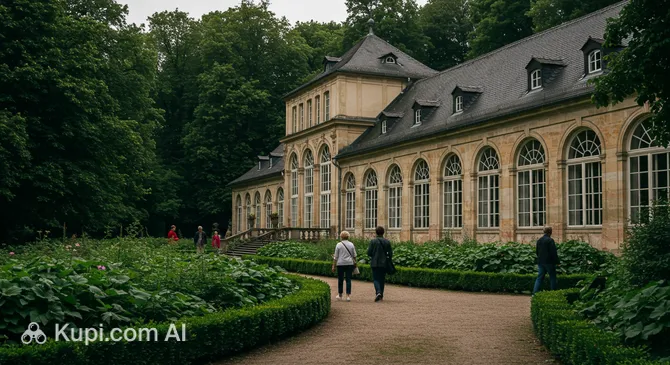
Gotha Castle Park. Illustration.
Source: Kupi.com AI

Traveler photos:

For lovers of peace and nature, staying near the green zone where Gotha Palace Park is located is a wonderful option. Hotels and pensions in this part of the city offer a relaxing holiday with views of ancient trees while remaining close to the center. If your goal is to use Gotha as a base for traveling around the region (for example, to Erfurt or Eisenach), it makes sense to consider options near the railway station. This will save time on morning departures for trains.

The price policy in the city is quite democratic compared to Germany's large metropolises. The base of the offer is the middle price segment, offering excellent value for money. Budget travelers can find inexpensive pensions, while comfort lovers can find boutique hotels in renovated historical buildings. It is recommended to book accommodation in advance, especially if your trip coincides with the summer festival season or the December Christmas markets, when demand increases significantly. For booking, you can use both large international aggregators and the hotels' own websites — often special offers can be found when contacting them directly.

Nearby Cities

For those who want to explore the surrounding area, Gotha serves as an excellent starting point for day trips to several interesting nearby places. Thanks to its fortunate location in the heart of Thuringia, it is easy to reach the region's key cultural and historical centers from here.

Just 20 minutes away is Erfurt — the capital of Thuringia. This city charms with its beautifully preserved medieval center. The main magnets for tourists are the majestic Erfurt Cathedral, where Martin Luther was ordained, and the unique Krämerbrücke (Merchants' Bridge), which is completely lined with half-timbered houses — the only one of its kind north of the Alps.

Slightly further away is the famous Weimar, a city often called the cultural capital of Germany. This place is inextricably linked with the names of great poets Goethe and Schiller, and is also the birthplace of the Bauhaus architectural school. A walk through Weimar is a true journey through eras, from Classicism to Modernism, with visits to numerous UNESCO World Heritage sites.

History and music buffs should head to Eisenach. The city is famous for Wartburg Castle, perched on a mountain, where Luther translated the New Testament into German. In addition, Eisenach is the birthplace of the great composer Johann Sebastian Bach, and you can visit the house-museum dedicated to his life and work.

CityPopulationDistance
Waltershausen12 97312 km
Ohrdruf9 78413 km
Bad Langensalza17 44119 km
Arnstadt27 33021 km
Erfurt213 83523 km

These nearby destinations provide insight into the diverse culture and landscapes of the region, making your trip through Thuringia even more rich and memorable.

Shopping & Souvenirs

Shopping:

Shopping in Gotha is a pleasant and relaxed activity that perfectly complements walks through the historical center. You won't find the hustle and bustle of huge metropolises or endless rows of luxury boutiques here; instead, the city charms with its cozy atmosphere and the presence of small shops with a personal touch. Trade here is concentrated in pedestrian zones, where modern shop windows sit alongside ancient facades, creating a special character.

The heart of the city's commercial life is the Historical Center (Altstadt). The main shopping arteries are Marktstraße and the area around Neumarkt and Hauptmarkt squares. These pedestrian zones are ideal for a leisurely promenade: here you can find clothing and shoe stores, bookstores, perfume shops, and cozy cafes. Walking here, you can find both well-known European mass-market brands and small family-run shops.

If you prefer to do your shopping all in one place under one roof, it's worth checking out the "Altstadtforum" shopping center, located on Gartenstraße. This is a modern complex featuring electronics stores, fashion clothing, drugstores, and supermarkets. It is located in close proximity to the central part of the city, making it a convenient point for tourists who want to quickly buy everything they need.

Special attention should be paid to the local markets. The weekly market (Wochenmarkt) usually unfolds in Neumarkt square. This is the best place to feel the true taste of the region: farmers sell fresh vegetables, fruits, cheeses, honey, and, of course, meat delicacies. In the run-up to Christmas, the city's squares are transformed, filled with the aromas of mulled wine and roasted almonds at traditional fairs where you can buy unique handmade items.

As souvenirs from Gotha, tourists most often bring back gastronomic symbols of Thuringia. Be sure to look for local mustard (Born Senf) and sets for making authentic Thuringian dumplings. Art lovers should visit the museum shop located at Friedenstein Castle. There you can purchase high-quality replicas of historical jewelry, books about the Saxe-Coburg and Gotha dynasty, and elegant porcelain. Glass and ceramic items from local craftsmen are also popular.

Opening hours for stores in Gotha follow general German standards. Large department stores and supermarkets are usually open from Monday to Saturday from 09:00 to 20:00. Small boutiques in the center may close earlier — around 18:00 or 19:00, and on Saturdays work on a reduced schedule (until 14:00 or 16:00). It is important to remember that Sunday is a day off for all stores, except for duty bakeries and kiosks at the station.

Regarding payment, Germany remains a country where people love cash. In large shopping centers and supermarkets, Visa and Mastercard are accepted without problems, but in small souvenir shops, cafes, or at the market, there may not be a terminal. Always keep a small supply of Euro cash with you.

Tourists residing outside the European Union can take advantage of the Tax Free system (VAT refund) for purchases over 50 euros on one receipt. Look for the "Global Blue" logo in windows or ask sellers for the tax refund form (Ausfuhrkassenzettel), which you will need to present at customs when leaving the EU.
Reached the end of the page?

That means the route is fully explored