Support

Suhl

About

Suhl is a cozy and picturesque corner located in the heart of the federal state of Thuringia. This city, home to about 37,000 people, attracts travelers with its intimate atmosphere and surprising proximity to nature. It is Germany that is famous for such places, where urban comfort harmoniously combines with forest silence and scenic landscapes.

Suhl. Illustration.
Source: Kupi.com AI

Its geographical position makes Suhl an ideal starting point for exploring the region. The city lies at the foot of the famous Thuringian Forest, which turns it into a true paradise for hikers and outdoor enthusiasts. Thanks to convenient transport interchanges and proximity to autobahns, it is easy to get here from neighboring major centers such as Erfurt or Nuremberg. Suhl's rich history has left its mark on the city's appearance, giving walks through its streets a special charm.

Tourists appreciate this place for its lack of big-city bustle and its relaxed pace of life. Here you can enjoy clean air, walk through well-maintained parks, or sit in cozy cafes while watching local provincial life. Suhl is an excellent choice for those seeking peace, inspiration, and wanting to see the authentic side of the country.

Weather Overview

The climate of Suhl can be described as moderate, with a noticeable influence from the nearby Thuringian Forest. Summer here is usually mild and comfortable, without exhausting heat: in the warmest months, July and August, the average temperature is about 17–18°C, and daytime highs rarely exceed 23°C. This is a wonderful time for hiking, although you should be prepared for the fickleness of the weather office.

Winters in the region are cool but not extremely frosty. In January and December, the average temperature stays around +0.6°C...+1.5°C, periodically dropping below zero at night. Precipitation falls quite regularly throughout the year: even in dry months, there are 11–12 days with rain, and in winter, the number of days with precipitation can reach 17. To choose a good time for a visit and pack your suitcase correctly, we recommend checking the detailed weather in Suhl in advance.

Expect a comfortable, mild summer and a cool winter with a high probability of precipitation in any season.

Average monthly temperature

Average monthly precipitation

Interesting Facts

Suhl is a city that knows how to surprise even seasoned travelers. Behind the calm facade of provincial life lie centuries-old traditions of master craftsmen, unique technical collections, and curious urban legends.

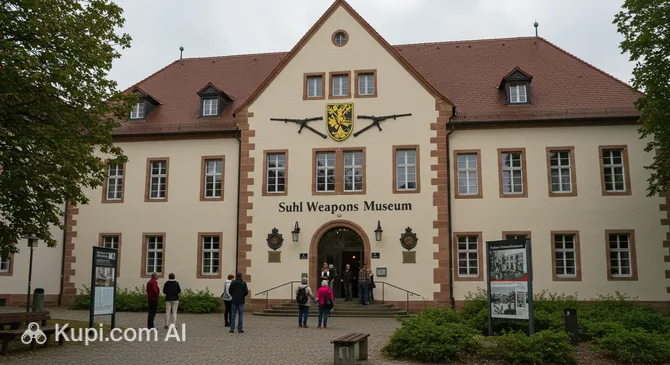
Suhl Weapons Museum. Illustration.
Source: Kupi.com AI

Traveler photos:

  • The Capital of Arms. For centuries, the city was famous for its master gunsmiths, whose products were valued throughout Europe. You can learn about this grand history by visiting the Suhl Weapons Museum. At the entrance, guests are greeted by a colorful statue of "the man with a gun," which has become one of the city's unofficial symbols, while inside are unique exhibits demonstrating the evolution of the craft.

  • A Mecca for Bikers. Suhl attracts technology enthusiasts from all over Germany not only for its history but also for the famous "Simson." The Suhl Vehicle Museum possesses an impressive collection of retro cars and motorcycles. The area in front of the museum often turns into a meeting place for enthusiasts on their "iron steeds," creating a special atmosphere of brotherhood and celebration.

  • Reborn Beauty. The city's main church, St. Mary's (Marienkirche), is a true monument to resilience. The building has suffered from fires several times, but was restored each time. Today, tourists can admire its majestic Baroque facade and exquisite Rococo interior, as well as listen to an organ that is over 250 years old.

  • City of Legends and Festivals. Local folklore is rich with tales of craftsmen, hunters, and mysterious inhabitants of the city lake. These traditions come to life during regular fairs and festivals held in the central square by the artificial pond, blending history with modern fun.

How to Get There

When planning a trip to Thuringia, it is important to think about logistics in advance. The city is well-located relative to major transport arteries, making a trip here comfortable despite the lack of its own airport. You can find out more about how to get to Suhl by studying various routes, and below we will look at the key transport hubs that serve as convenient starting points.

For international travelers, Frankfurt Airport (IATA: FRA), located in Frankfurt am Main, often serves as the main "gateway" to the region. This is one of Europe's largest aviation hubs, receiving flights from all over the world. The distance to Suhl is about 164 km, and a trip by taxi or transfer will take approximately 2 hours.

If you prefer to fly closer to your destination, Erfurt Airport (IATA: ERF) is an excellent option. It is located only 45 km from the city, so the drive by car will take only 45–50 minutes. Another convenient alternative is Nuremberg Airport (IATA: NUE). It is located 126 km away, and the journey from there will take about 1.5–2 hours.

Below is summary information on the nearest airports:

AirportPassenger trafficDistance
Erfurt Airport138 00246 km
Nuremberg Airport4.0 mln127 km
Kassel-Calden Airport107 615128 km
Leipzig/Halle Airport2.2 mln141 km
Frankfurt Egelsbach Airport80 000163 km

Traveling by rail is another popular way to reach this picturesque region. Although there is no high-speed express stop in Suhl itself, you can travel to the Erfurt Hauptbahnhof station. This is a major railway hub located 47.5 km from the city. From there, it is easy to continue the journey by regional train or taxi.

Another convenient transfer option could be Eisenach main station, which is about 48 km away. This is a quieter but strategically important transport point in the region.

List of the nearest major railway stations:

StationPassenger trafficDistance
Erfurt Hauptbahnhof16.8 mln47 km
Eisenach Hauptbahnhof1.8 mln48 km
Kassel-Wilhelmshöhe Station10.9 mln117 km
Nuremberg Hauptbahnhof76.7 mln132 km
Leipzig Hauptbahnhof43.8 mln141 km

Main Attractions

Despite its modest size, Suhl offers guests a rich cultural program. The city harmoniously combines technical heritage, historical architecture, and natural beauty, creating a unique route for travelers. Everyone will find something to their liking here: from unique engineering collections to peaceful walks among forest inhabitants.

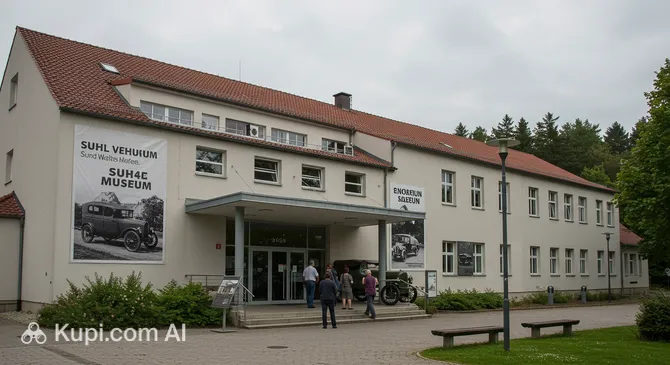
One of the most visited locations is the Suhl Vehicle Museum. Located in the modern Congress Center, it is a true mecca for technology enthusiasts. The exhibition is dedicated to the rich history of local automobile and motorcycle manufacturing, particularly the legendary Simson brand. Visitors can see rare models of motorcycles, mopeds, and cars that once traveled the roads throughout Europe. This place is interesting not only for fans of retro technology but for anyone wanting to learn about the region's industrial past.

Suhl Vehicle Museum. Illustration.
Source: Kupi.com AI

Traveler photos:

It is impossible to imagine a visit to this city without visiting the place that gave it the nickname "armory forge." The famous Suhl Weapons Museum occupies the historical half-timbered "Malzhaus" building, built back in the mid-17th century. Inside is an impressive collection spanning almost six centuries of weapons craftsmanship. Handcrafted masterpieces, hunting, and sporting weapons are on display, demonstrating the incredible precision and art of Thuringian masters. Tourists are attracted by the opportunity to see the evolution of technology and the aesthetics of ancient mechanisms.

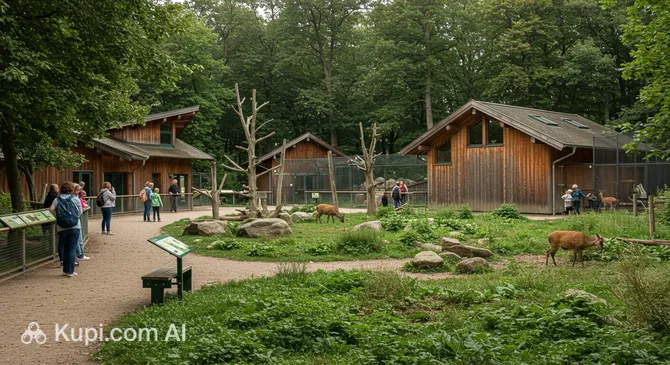
For those who prefer outdoor recreation, the Suhl Zoo is an ideal choice. It is located in a picturesque area on the slope of Mount Karl-Fiedler and specializes in European animal species living in their natural environment. Here you can find lynxes, wolves, bears, and rare species of owls. A special feature of the zoo is its spacious enclosures that closely mimic wild nature, along with contact zones for children. It is a wonderful place for a family walk, allowing a break from the city bustle.

Suhl Zoo. Illustration.
Source: Kupi.com AI

Traveler photos:

Fans of modern architecture and shopping should check out Lauterbogen. This shopping and entertainment center is interesting for its bold architectural design, which contrasts with historical buildings. The complex, resembling a huge crystal or a ship in shape, has become a new symbol of urban modernization. Here you can not only shop but also have a snack while enjoying the atmosphere of the busy city center.

Local Cuisine

The gastronomic soul of Suhl is the simple, hearty, and incredibly soulful cuisine of Thuringia. The true hallmark of the city is the famous Thuringian sausages (Thüringer Rostbratwurst). They are grilled over an open fire until golden brown and served in a crispy bun with local mustard. This dish with a centuries-old history can be found at almost every step, and leaving without trying it would be a real oversight.

For a more substantial lunch, it is worth ordering the meat delicacies for which the region is famous. The menus of local establishments often feature venison or wild boar roast, prepared according to old hunting recipes, as well as fresh river fish from nearby waters. The ideal side dish for meat dishes is Thuringian dumplings (Thüringer Klöße)—tender potato balls that perfectly absorb sauces and create a feeling of home comfort.

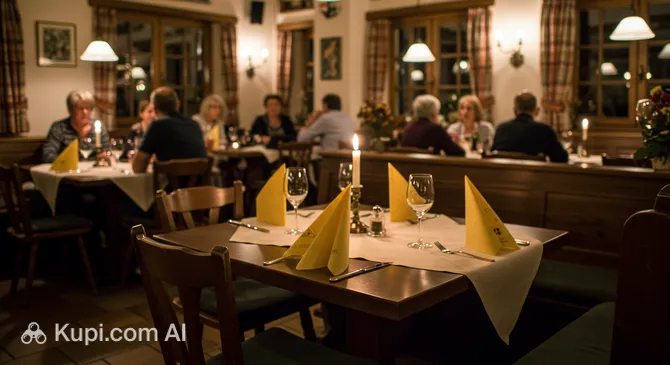
Gambrinus. Illustration.
Source: Kupi.com AI

Traveler photos:

For those with a sweet tooth, Suhl offers magnificent pastries: fragrant strudels, plum or apple cakes, which are usually enjoyed with a cup of strong coffee. In winter, when the Christmas markets open, the city is filled with the spicy aromas of mulled wine, gingerbread, and roasted chestnuts. In summer, at market squares and food festivals, you can taste farm cheeses, fresh bread, and forest honey.

You can get acquainted with culinary traditions and relax after a walk in the city's cozy establishments. For example, the Gambrinus restaurant offers guests an opportunity to immerse themselves in the atmosphere of German hospitality. Another popular spot is the Naturheilgarten Guesthouse, where local gastronomic customs are also honored. Here, food is not just about satisfying hunger, but an opportunity to feel like part of the large, friendly Thuringian family.

Travel Tips

A trip to Suhl promises to be calm and fulfilling if you consider a few local peculiarities in advance. We have gathered practical recommendations for you to help you feel confident in this cozy corner of Thuringia and avoid typical tourist mishaps.

  1. Clothing and Essentials. Since the city is located at the foot of the mountains, the weather here can be changeable. Use the "onion principle": take layered clothing that is easy to take off or put on. Be sure to pack a waterproof windbreaker and comfortable trekking shoes, as the best views open up during forest walks. For electrical appliances, you may need an adapter (Type F socket standard).
  2. Transport. Suhl's historical center is compact and best explored on foot. For trips to outlying districts or neighboring cities, it is convenient to use regional buses and trains—the public transport system here works strictly according to schedule. If you plan a deep dive into the Thuringian Forest, it makes sense to rent a car, as public transport to some natural attractions runs infrequently.
  3. Finance. The official currency is the Euro. It is important to remember that in small towns, for which Germany is famous, the cult of cash (Bargeld) is still strong. In small bakeries, souvenir shops, or local museums, cards may not be accepted, so always carry small denomination bills. ATMs are available in the city center. Tipping in restaurants is customary at 5–10%, simply by rounding up the bill.
  4. Health and Safety. Suhl is a safe city where you can walk calmly even in the evening. Pharmacies (Apotheke) are easily recognized by the red letter "A"; duty pharmacies are open 24/7 (addresses are on the doors of any closed pharmacy). An important nuance for nature lovers: ticks are active in the Thuringian forests during the warm season, so use repellents and inspect your clothing after walks.
  5. Communication. The main language is German. Young people and hotel staff usually speak English, but the older generation may not know it. Learn a couple of phrases: "Guten Tag" (Good day) and "Danke" (Thank you)—this will endear you to the locals. For navigation and transport schedules, download the DB Navigator app; it is indispensable for traveling around the country.
  6. Local Etiquette. Germans value order and silence. On Sunday (Ruhetag), most shops and pharmacies are closed, and making noise on the street or in an apartment is considered bad manners. When entering a small shop or cafe, it is customary to greet the staff and other visitors.
  7. What to Avoid. Never walk on bicycle paths—this is a high-danger zone and a source of irritation for local cyclists. Also, do not cross the road on a red light, even if there are no cars: this may cause a remark from passers-by, especially if there are children nearby for whom you are setting an example.
  8. Additional Tip. When checking into a hotel, ask about the "Guest Card" (Gästekarte) or "Rennsteig-Ticket." It is often included in the tourist tax and gives the right to free travel on buses in the region, as well as discounts on visiting museums and swimming pools.

Suhl is a city that reveals itself to those who respect its relaxed rhythm and traditions. We hope these tips help you organize the perfect trip, leaving only warm memories of Thuringian hospitality and the beauty of local landscapes.

Entertainment & Nightlife

Nightlife in Suhl has its own unique, mellow character. Don't look for noisy nightclubs open until dawn or massive raves here—this city offers an alternative in the form of cozy evenings, heartfelt conversations, and gastronomic pleasures. Most activity is concentrated in the historical center, where old architecture is illuminated by the soft lights of lanterns, creating a romantic atmosphere for strolls.

The heart of evening leisure is the pedestrian zone around Steinweg street. This is where locals and tourists gather after the workday. One of the key points of attraction is the Am Steinweg Shopping Center. Although shops close according to the standard German schedule (usually by 20:00), cafes and eateries in the area may stay open longer, offering guests a chance to grab a bite and watch the city life. This is a great place to start an evening before heading to a bar or restaurant.

Those who enjoy traditional German relaxation should pay attention to the local gasthauses and small bars. A culture of "Gemütlichkeit" (coziness) reigns here: wooden furniture, dim lighting, and excellent beer. For example, the Naturheilgarten Guesthouse offers a peaceful setting, perfect for dinner with friends or family. The crowd in such establishments is usually mixed—from young people to elderly couples—and the dress code is completely casual. The main rule is to behave politely and not disturb the peace of other guests.

In terms of safety, Suhl is one of the quietest cities in the region. Evening walks here pose no threat; however, as elsewhere, it is best to stick to well-lit streets. Public transport runs rarely at night, so if you stay out late, it is better to call a taxi. It is recommended to save the numbers of local taxi services in your phone in advance, as it is practically impossible to hail a car on the street here.

In addition to evening entertainment, the city offers a rich daytime cultural program. The Suhl Congress Center (CCS) regularly hosts concerts, theatrical productions, and exhibitions, serving as the city's main stage. For those who prefer active recreation, picturesque parks and routes into the Thuringian Forest start literally on the edge of town, allowing you to combine cultural leisure with nature.

Parks & Museums

Suhl is rightfully considered one of the "greenest" cities in the region, where industrial history is closely intertwined with the natural splendor of the Thuringian Forest. For travelers, this means a unique opportunity to combine educational museum excursions with relaxing walks in the fresh air without leaving the city limits.

The main natural oasis for guests and locals is the Suhl Zoo. This is not just a place to display animals, but a vast landscape spread across the mountain slopes. Here, the focus is on preserving endangered domestic animal breeds and European fauna. A walk along its trails resembles a short forest hike where you can encounter bison, lynxes, and otters in conditions very close to their natural ones. This is an ideal spot for those who want to escape the city bustle and enjoy the silence of nature.

In addition to the zoo, the city is surrounded by picturesque green areas, as it is located in the immediate vicinity of a biosphere reserve. The City Park (Stadtpark) offers well-kept alleys and flower beds for a leisurely promenade. And for lovers of wilder nature, hiking trails leading to the peaks of the Thuringian Forest begin just minutes from the center, making the city an excellent base for trekking.

The cultural landscape of the city is impossible to imagine without immersion in its craft traditions. A key institution preserving the memory of centuries-old craftsmanship is the Suhl Weapons Museum. The exhibition here goes beyond simply displaying objects; it tells the story of the development of technology, engraving, and design that made local craftsmen famous worldwide. A visit to the museum allows you to understand how a small town became an important European production center and to appreciate the artistic value of antique items.

Another important milestone in the city's history is car manufacturing, which is the focus of the Suhl Vehicle Museum. This space is filled with nostalgia and engineering genius: legendary Simson mopeds and motorcycles, which became cult objects for several generations, are collected here. The exhibition will be interesting not only for technology fans but for anyone interested in 20th-century design and lifestyle, as the vehicles vividly reflect the spirit of their era.

Among the architectural monuments, the historical center stands out with its half-timbered houses and majestic churches. Particular attention is drawn to the Holy Cross Church (Kreuzkirche)—a Baroque jewel that harmoniously complements the cityscape. Walking through the streets is like flipping through an architectural history textbook, where each building has its own unique character.

For those seeking special experiences and the best panoramic views, we recommend climbing the Domberg mountain to the Ottilia Chapel (Ottilienkapelle). This place is less known among mass tourists, but it is from here that a breathtaking view of the entire city lying in the valley opens up, especially beautiful in the rays of the setting sun.

Getting Around

The public transport system in Suhl is compact and straightforward, making it convenient even for first-time visitors. Unlike in metropolises, there are no metro or tram lines here. The backbone of the transport network is city buses, which connect the historical center with outlying districts, the railway station, and the neighboring town of Zella-Mehlis. Buses run regularly, providing reliable connections to key tourist spots and residential areas.

Paying for travel in Suhl is quite simple. The most common method for tourists is buying a ticket directly from the driver upon boarding. It is important to remember that most often only cash Euros are accepted for payment, so it is worth preparing small bills or coins in advance. There are single tickets (Einzelfahrt) for one trip and day passes (Tageskarte), which are cost-effective if you plan to move around a lot during the day. Validating a ticket bought from the driver is usually not required—it is already timestamped at the time of purchase.

For tourists staying in the city's hotels and guest houses, there is a pleasant bonus. Upon check-in, be sure to ask about the "Rennsteig-Ticket". This guest card is often issued free of charge after paying the spa tax and gives the right to unlimited travel on city buses and some regional routes. This is the most economical way to get around, allowing you to significantly reduce transport costs.

When planning trips, consider the transport schedule. On weekdays, buses run frequently, but on weekends and in the evening, intervals increase. Current schedules can always be found at stops (yellow or white signs) or in the DB Navigator app, which builds routes excellently even for city buses. Boarding the bus is only through the front door so the driver can check or sell a ticket. To get off at the desired stop, you must press the "Stop" button on the handrail in advance.

As an alternative to public transport, you can use a taxi. Cars rarely stop on the street with a wave of the hand, so it's better to look for them at special stands (for example, at the station or in the center on the square) or call by phone. The trip will not be cheap, but it is a convenient option for a late return. Car-sharing and bike rentals are poorly developed in the city due to the hilly terrain, but for trips around the picturesque surroundings of the Thuringian Forest, many tourists prefer to rent a car or an e-bike from specialized rental points.

Accommodation

Accommodation in Suhl is primarily about comfort, hospitality, and proximity to nature. Unlike in large metropolises, you are unlikely to find huge glass skyscrapers of international hotel chains here. The core of the housing stock consists of traditional German mid-range hotels, family guest houses (Gasthäuser), and numerous vacation rentals (Ferienwohnungen) that allow you to feel right at home.

For tourists, two main areas for staying can be highlighted, each with its own advantages:

  • Historical Center (Innenstadt). An ideal option for those traveling without a car or who want to be within walking distance of cultural life. By staying here, you will be close to museums, the congress center, and shops. This is convenient for business travelers and those who plan to use public transport actively.
  • Outskirts and Forest Area. Since the city is stretched along valleys, many hotels and guest houses are located literally on the edge of the forest. This is the best choice for lovers of silence, hiking, and panoramic views. Staying here often feels like a mountain resort holiday, where the morning begins with birdsong and views of green slopes.

The price range in Suhl can be described as moderate and affordable compared to popular tourist centers in Bavaria or Berlin. Most offers belong to the budget and mid-range segment. For a reasonable price, you can get a spacious room with breakfast including local delicacies. Luxury five-star hotels are practically non-existent in the city, but the level of service in four- and three-star establishments is traditionally high and meets German quality standards.

Booking Tips:

Although Suhl is not overcrowded with tourists year-round, seasonality should be considered. The Thuringian Forest is popular both in summer (for hiking) and in winter (for skiing). If your trip falls during the Christmas holidays, July, or August, we recommend booking accommodation in advance—about 2–3 months out. Also note that many private apartments may request payment in cash or by transfer, while hotels accept cards and are available through major online booking systems.

Nearby Cities

For those wanting to explore the surroundings, Suhl serves as an excellent starting point for day trips to several interesting nearby places. Its location in central Thuringia allows for quick access to cities rich in history and architectural masterpieces.

Just a half-hour drive away is Arnstadt—the oldest city in the region, steeped in an atmosphere of Baroque and classical music. It was here that the young Johann Sebastian Bach received his first position as an organist, making the city particularly interesting for culture lovers. A walk through its beautifully preserved historical center with half-timbered houses provides a sense of traveling through time.

A little further away is the city of Gotha, a former ducal residence. The city's main landmark is the majestic Friedenstein Castle, surrounded by an extensive park. This place is ideal for those who want to immerse themselves in Germany's aristocratic past and visit world-class museums. It is also worth paying attention to Coburg, overlooked by the "Crown of Franconia"—the powerful Veste Coburg fortress. The city attracts tourists with its medieval charm and impressive art collections.

CityPopulationDistance
Zella-Mehlis12 8636 km
Schleusingen10 96012 km
Steinbach-Hallenberg9 68113 km
Meiningen24 53819 km
Ilmenau39 01719 km

These nearby destinations provide an idea of the region's diverse culture and landscapes, harmoniously complementing the experience of visiting Suhl.

Shopping & Souvenirs

Shopping in Suhl is a quiet and leisurely activity, free from the bustle of huge metropolises. The city does not claim to be a high-fashion capital, but here you can find everything necessary for a comfortable holiday and life: from high-quality clothing and footwear from well-known German brands to unique regional products. The compactness of the center allows you to visit the main shopping points on foot, combining purchases with architectural sightseeing.

The main shopping artery of the city is the pedestrian zone of Steinweg street. This is where the city's business life is concentrated: small boutiques, bookstores, pharmacies, and cozy cafes line this street. A walk along Steinweg allows you to feel the rhythm of local life, peer into the windows of family shops, and purchase everyday goods in a pleasant atmosphere.

For those who prefer modern shopping spaces, two major complexes operate in Suhl. Lauterbogen deserves special attention. This shopping center stands out for its unusual architecture and wide selection of clothing, electronics, and cosmetics stores. Another important attraction is the Am Steinweg Shopping Center, located in the heart of the pedestrian zone. It is convenient for family shopping as supermarkets, fashion stores, and service centers are gathered under one roof.

Lovers of fresh products and local flavor should visit the market days on the central square. Here, farmers from surrounding Thuringian villages offer seasonal vegetables, fruits, homemade cheeses, forest honey, and meat delicacies. Before the winter holidays, the square is transformed, filling with Christmas market stalls featuring mulled wine, gingerbread, and handmade crafts, creating a fairytale atmosphere.

When choosing souvenirs, pay attention to items reflecting the history and nature of the region. Worth bringing back from Suhl are:

  • Glass Christmas ornaments — Thuringia is famous for its glassblowers, and you can find beautiful handmade examples in local shops.
  • Thuringian herbal liqueurs — strong, aromatic infusions made from forest herbs make an excellent souvenir for gourmets.
  • Simson-themed souvenirs — model motorcycles, t-shirts, or mugs with the legendary brand's logo will delight technology fans.
  • Ceramics and wood — products from local artisans, often decorated with traditional forest motifs.

Shops in the city usually operate from Monday to Saturday from 09:00 or 10:00 to 18:00–20:00. Sunday in Germany is an official day off (Ruhetag), when almost all retail outlets are closed, except for duty pharmacies or kiosks at the station. Regarding payment, major centers and supermarkets accept international cards without problems, but in small souvenir shops, bakeries, and at the market, preference is often given to cash in Euros.

Tourists residing permanently outside the European Union can use the Tax Free system. When buying goods over 50 euros in one store, look for the Global Blue logo or similar operators in the window and don't forget to ask for a special receipt (Tax Free Form) to arrange a VAT refund when leaving the country.
Reached the end of the page?

That means the route is fully explored