Support

Quedlinburg

About

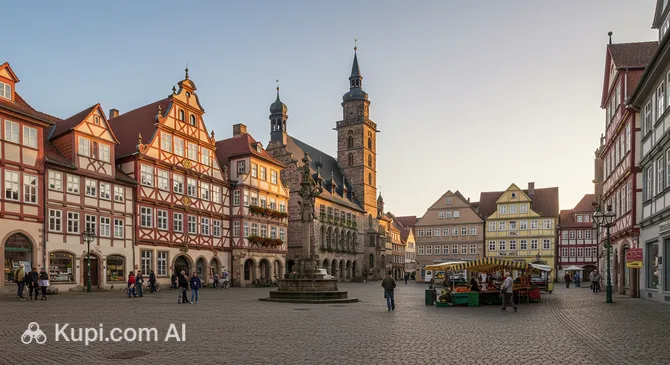
Quedlinburg is a true architectural masterpiece, nestled comfortably at the foot of the northern Harz foothills in the heart of Germany. The town looks like it stepped right out of a fairy tale: narrow cobbled streets, countless rows of half-timbered houses frozen in time, and a majestic castle rising proudly over the historic center. Quedlinburg's unique atmosphere charms at first sight.

Thanks to its exceptionally well-preserved medieval appearance, Quedlinburg is included in the UNESCO World Heritage list. There are more than 1,200 half-timbered buildings here — an absolute record for the country! With a population of just under 24,000, this small town in the state of Saxony-Anhalt is a real gem where every stone breathes history.
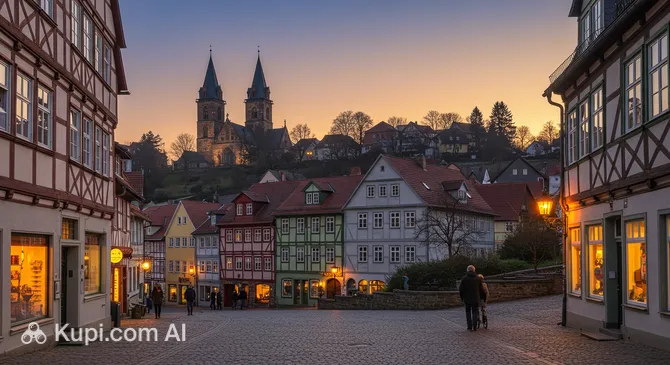
Quedlinburg. Illustration.
Source: Kupi.com AI

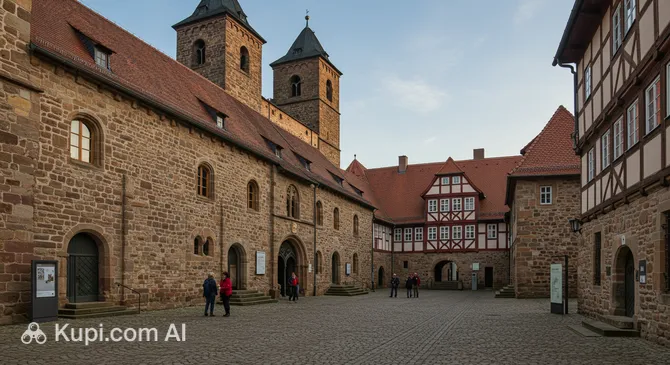
The main treasures of Quedlinburg are its historic center with its labyrinth of streets and, of course, Castle Hill (Schlossberg), home to the famous Collegiate Church of St. Servatius and Quedlinburg Castle. The town is perfect for leisurely walks: in the mornings, the air is filled with the aroma of fresh pastries, and in the evening, ancient lanterns cast mysterious shadows on the house facades, creating a unique mood.

Quedlinburg is the ideal destination for romantics, lovers of medieval architecture, and anyone seeking authentic experiences. A visit to this fairytale town, where history comes alive at every step, will undoubtedly give you many bright emotions and the desire to return again.

You can find more interesting facts on the history of Quedlinburg page.
Weather Overview

The weather in Quedlinburg is characterized by a temperate climate. Summer here is warm, with average temperatures in July and August around 18-19°C, while maximum values can reach 23-24°C. Winters are cool, with the average temperature in January being around 2.2°C, and minimum temperatures dropping to 0°C. Expect warm summers with occasional light precipitation and cool winters, also with a small amount of precipitation despite its relatively frequent occurrence. The amount of precipitation remains low throughout the year, about 2 mm per month, but the number of days with precipitation varies from 10 to 16 per month.

For more detailed information on weather conditions, you can check the detailed forecast: Climate of Quedlinburg.

Average monthly temperature

Average monthly precipitation

Interesting Facts

Beyond its famous half-timbered streets and majestic castle, Quedlinburg holds many fascinating secrets and lesser-known details that make it even more attractive to travelers.

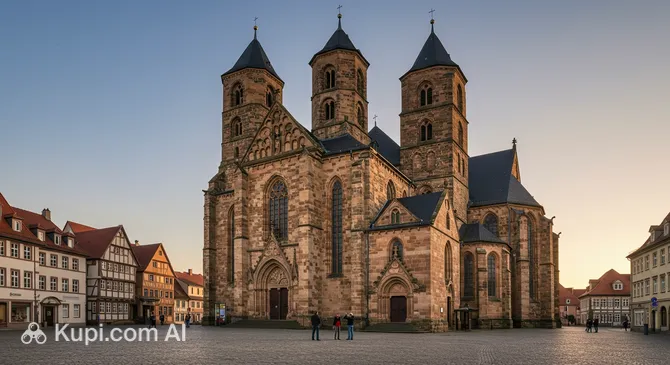
Collegiate Church of St. Servatius. Illustration.
Source: Kupi.com AI

Traveler photos:

  • Quedlinburg is a real record-breaker in Germany for the number of half-timbered houses. There are more than 1,200 of them, many of which were built in the 14th–16th centuries, and some buildings even date back to the 13th century. One of the oldest half-timbered houses in the country is located in this very city.

  • The city played a key role in the formation of German statehood. According to historical legends, it was here in 919 that Henry I the Fowler was elected the first King of Germany. This event was a turning point in the country's history, and Quedlinburg itself became an important political center for a long time. Echoes of that era can be felt by visiting the Quedlinburg Castle Museum and the majestic Collegiate Church of St. Servatius.

  • In Quedlinburg, there is a street with a rather intriguing name – Hölle, which translates from German as "Hell." Contrary to its name, this street is one of the most picturesque and cozy in the city, attracting tourists with its ancient houses and atmosphere.

  • The city is the birthplace of the outstanding German poet Friedrich Gottlieb Klopstock, one of the key representatives of the Enlightenment era and a precursor to the "Sturm und Drang" literary movement. The house where the poet was born has been preserved in Quedlinburg, and today it houses a memorial museum dedicated to him.

How to Get There

Getting to Quedlinburg is possible in various ways using Germany's well-developed transport network. Since the city itself does not have a major international airport, travelers usually fly into one of the nearby transport hubs and then continue their journey by train, bus, or rental car. You can find more details on how to get to Quedlinburg to plan your route as conveniently as possible.

The nearest major air hub is Leipzig/Halle Airport (IATA: LEJ), located in the city of Leipzig, about 85 km from Quedlinburg. This is a convenient option for domestic and some European flights. The trip from the airport to the city by taxi or transfer now takes only about 1 hour. Another popular option is Hannover Airport (IATA: HAJ), located in Hanover (about 124 km). Travel time by car from here is approximately 1.5 hours.

For those who prefer a wide choice of international flights, Berlin Brandenburg Airport (IATA: BER) is an excellent solution. Although this airport is in Berlin, at a distance of about 174 km, it offers the largest number of routes. The journey to Quedlinburg via modern autobahns will take from 2 to 2.5 hours by road transport.

For clarity, here is a summary of information on the main airports:

AirportPassenger trafficDistance
Leipzig/Halle Airport2.2 mln85 km
Erfurt Airport138 00291 km
Hannover Airport5.3 mln124 km
Kassel-Calden Airport107 615129 km
Berlin Brandenburg25.5 mln174 km

Railway communication is also a popular way to reach the region. There is no major long-distance hub station in Quedlinburg itself, so tourists often change to regional trains in nearby large cities. One of the key transit points is Leipzig Central Station in the city of Leipzig, located 85 km away. From there, you can reach Quedlinburg by car in about 1 hour, or change to a local regional train, which will take a little longer.

Another important hub is Hanover Central Station in Hanover (116 km from Quedlinburg). This is a large transport hub with high passenger traffic, receiving trains from all over Europe. Travel time by car from the station to the destination is about 1.5 hours. Using the railway allows you to enjoy the scenic views of Saxony-Anhalt on the way to your destination.

Below is a table with information on the nearest major railway stations:

StationPassenger trafficDistance
Halle (Saale) Railway Station12.8 mln65 km
Leipzig Hauptbahnhof43.8 mln85 km
Erfurt Hauptbahnhof16.8 mln91 km
Eisenach Hauptbahnhof1.8 mln107 km
Hanover Main Station91.3 mln116 km

Main Attractions

Quedlinburg, with its rich history and perfectly preserved medieval architecture, offers tourists many fascinating places. This town, listed as a UNESCO World Heritage site, is like a living illustration of the German Middle Ages. Walking through its narrow streets is an adventure in itself, but there are several landmarks that deserve special attention.

Collegiate Church of St. Servatius. Illustration.
Source: Kupi.com AI

Traveler photos:

One of the city's main gems is the Collegiate Church of St. Servatius. It is an outstanding example of Romanesque architecture, towering on Castle Hill. The church houses priceless treasures, including the famous Quedlinburg Cathedral Treasury. Its majestic appearance and rich history attract pilgrims and art lovers from all over the world. Inside, you can see ancient frescoes, sculptures, and unique artifacts that tell the centuries-old history of this place.

Quedlinburg Market Square. Illustration.
Source: Kupi.com AI

Traveler photos:

The heart of the old town is Quedlinburg Market Square. Surrounded by half-timbered houses several centuries old, the square has preserved its authentic atmosphere. Here stands the town hall with its Renaissance facade and the statue of Roland – a symbol of municipal freedoms. The square has always been the center of public life, and today it is a pleasant place to stroll, have a coffee in one of the cozy cafes, or simply admire the architecture.

Quedlinburg Castle Museum. Illustration.
Source: Kupi.com AI

Traveler photos:

For those who want to dive deeper into the history of the region, the Quedlinburg Castle Museum is a must-visit. Located within the walls of the ancient castle, the museum offers an extensive exhibition covering the history of the city and its surroundings from prehistoric times to the present day. Here you can see archaeological finds, everyday objects, works of art, and learn about the role of Quedlinburg in German history. The museum's exhibits allow for a better understanding of the unique heritage of this amazing city.

Local Cuisine

The gastronomy of Quedlinburg is a true immersion into the culinary traditions of the Harz region, where hearty dishes made from simple but high-quality local products are valued. The city's cuisine is famous for its robustness and the use of nature's gifts, offering tourists an authentic taste experience. Here you will find both ancient recipes passed down from generation to generation and modern interpretations of classic dishes.

Among the dishes that you should definitely try in Quedlinburg, the famous Harzer cheese (Harzer Käse) stands out – a low-fat sour milk cheese with a characteristic aroma, often served with rye bread, onions, and lard (schmalz). Another local pride is Harzer sausage (Harzer Wurst), distinguished by its rich flavor and light smoky aroma. Meat lovers will enjoy the hearty stews and braised meats, especially game or pork dishes prepared with apples, onions, and fragrant spices. Don't forget to try the freshly baked local bread, which perfectly complements any dish.

Among the drinks in Quedlinburg, as throughout Germany, various types of beer are popular. In the cold season, especially at Christmas markets, fragrant glühwein warms you up. For non-alcoholic drinks, you should pay attention to juices made from local berries and fruits, as well as herbal teas. You can finish your meal with traditional pastries: in local pastry shops and cafes, you will be offered aromatic buns, pies with seasonal fruits, and during the Christmas period – the famous stollen. Nut and marzipan pastries are especially popular and pair perfectly with a cup of coffee.

Münzenberger Klause. Illustration.
Source: Kupi.com AI

Traveler photos:

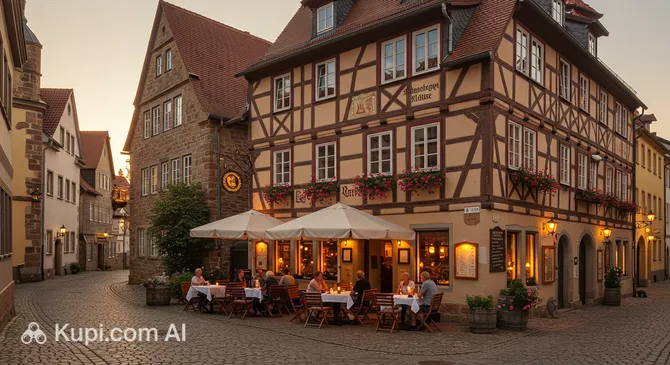
The food culture in Quedlinburg is diverse. Locals and tourists love to visit cozy restaurants and traditional taverns where you can sample regional dishes in an authentic atmosphere, for example, by dropping into Münzenberger Klause. Farmers' markets hold a special place and are often located on historic squares like Quedlinburg Market Square. Here you can buy fresh local products: cheeses, sausages, honey, wild berry jams, and, of course, fresh bread. During city festivals, such as the Harvest Festival or the Christmas Market, the streets are filled with stalls selling street food, offering fried sausages, sweets, and hot drinks, creating a unique festive atmosphere.

Travel Tips

Welcome to Quedlinburg! To make your journey to this charming medieval city even more pleasant and worry-free, we have prepared some practical tips.

  1. Clothing and Essentials:

    The climate in Quedlinburg is temperate, similar to most of Germany. In summer (June-August), bring light clothing, but don't forget a sweater or light jacket for cool evenings. In spring and autumn, it's better to dress in layers. In winter, warm clothing will be needed, including a hat, scarf, and gloves. A key element of your wardrobe is comfortable shoes, as the historic center is paved with cobblestones. Don't forget a universal adapter (type F sockets are used in Germany). For visiting churches, such as St. Servatius Cathedral, modest clothing covering shoulders and knees is desirable, although there are usually no strict rules.

  2. Transport:

    Quedlinburg is a small city, and its historic center is ideal for walking. Public transport consists of local buses, which may be useful for trips to the surroundings, but you'll hardly need them for seeing the main sights. Taxis are available but can be expensive. Car rental is not necessary for staying within the city itself but can be useful if you plan to explore the Harz region. Note that parking in the old town is limited and may be paid.

  3. Finance:

    The local currency is the Euro (€). It is better to exchange money at banks or official exchange offices before arriving in a small town like Quedlinburg, or withdraw cash from ATMs (Geldautomat). Credit and debit cards (Visa, Mastercard) are widely accepted in hotels, large restaurants, and shops. However, in small cafes or markets, they may prefer cash, so always have some cash on you. International cards usually work without problems, but it's worth notifying your bank of your trip. An approximate daily budget is 50-100 euros per person (excluding accommodation). Tipping (Trinkgeld) is common: in restaurants, it is customary to round up the bill or leave 5-10% for good service.

  4. Health and Safety:

    Pharmacies (Apotheke) are easy to find by the red "A" sign. Information about duty pharmacies (Notdienst) operating at night and on weekends is usually posted on the doors. For emergency medical assistance, call 112. It is highly recommended to take out travel insurance. Quedlinburg is a very safe city. Follow standard precautions: keep an eye on your belongings, especially in crowded places. Tap water is safe to drink.

  5. Communication:

    The main language is German. English is quite common in tourist areas, hotels, and among young people. Nevertheless, knowing a few basic phrases in German will be appreciated: "Hallo" (Hello), "Guten Tag" (Good day), "Danke" (Thank you), "Bitte" (Please/You're welcome), "Sprechen Sie Englisch?" (Do you speak English?). A SIM card can be purchased in mobile stores or supermarkets in larger cities. Wi-Fi is available in most hotels and many cafes (look for "WLAN" or "Wi-Fi" signs).

  6. Local Etiquette:

    When entering shops or communicating with people, it is customary to say hello ("Guten Tag" or "Hallo") and goodbye ("Auf Wiedersehen"). Germans value punctuality and order. Try not to make noise in public transport and residential areas, especially at night. In shops and at attractions, it is customary to wait in line. Sunday is traditionally a quiet day, and many shops are closed.

  7. What to Avoid:

    Try not to behave too loudly or provocatively in public places, especially in restaurants or on quiet streets. Also respect "Ruhezeit" (quiet time), which usually lasts from 10:00 PM to 6:00 AM and is also often observed on Sunday afternoons – avoid excessive noise during these periods.

  8. Additional Advice:

    Don't limit yourself to seeing the main market square. Be sure to stroll through the winding cobblestone streets to discover hidden courtyards and charming half-timbered houses – there are more than two thousand of them in Quedlinburg! Consider taking a guided tour to learn more about their history. Also find out about local festivals or markets; the Christmas market is especially famous if you plan a winter visit.

Quedlinburg is a true gem waiting for its explorers. Armed with these tips, you are ready for an unforgettable dive into its medieval past and charming present. Enjoy your trip to Quedlinburg!

Entertainment & Nightlife

Quedlinburg, with its medieval charm, offers cozy and atmospheric evenings rather than a wild club scene. However, you can still find pleasant places to relax after a busy day of sightseeing. The city's nightlife is centered around traditional German restaurants, beer halls, and wine bars where you can enjoy local cuisine and drinks in a peaceful setting.

Evening entertainment in Quedlinburg often starts with dinner at one of the many restaurants, many of which are located in historic half-timbered houses. The atmosphere is usually relaxed and welcoming. While there aren't many loud nightclubs in town, some bars stay open until late, especially on weekends. The main activity is concentrated in the Old Town area, particularly around Quedlinburg Market Square. Here you can find establishments for every taste, from traditional German "kneipe" to more modern bars.

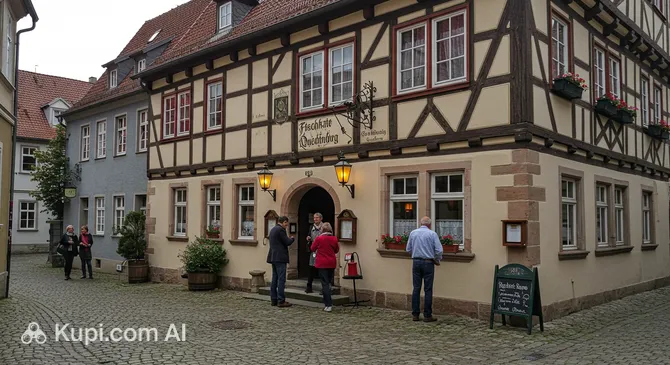
For a pleasant dinner and evening out, you might consider places like the Münzenberger Klause restaurant, known for its atmosphere, or Fischkate Quedlinburg, where you can sample local cuisine. Usually, establishments start filling up toward the evening, especially between 7:00 PM and 9:00 PM. The dress code in most places is casual, but smart-casual may be appropriate for some higher-end restaurants.

Fischkate Quedlinburg. Illustration.
Source: Kupi.com AI

Traveler photos:

As for practical tips, the best time to visit bars is Friday and Saturday evenings when the atmosphere is most lively. Prices in Quedlinburg's establishments are generally moderate. You can get around the city center at night on foot, as it is quite compact. For longer distances or returning to your hotel late at night, it's recommended to use a taxi, which can be ordered by phone or found at designated stands. Quedlinburg is considered a safe city, but as everywhere, usual precautions should be taken at night.

During the day, Quedlinburg offers many cultural activities. Be sure to visit the majestic Collegiate Church of St. Servatius, which is a UNESCO World Heritage site, and the Quedlinburg Castle Museum to delve deeper into the region's history. A stroll through the narrow streets of the Old Town with its numerous half-timbered houses is an unforgettable experience in itself.

Parks & Museums

Quedlinburg is not only a treasury of medieval architecture but also a city that offers its guests charming green corners for relaxation and a rich cultural program. It harmoniously combines historical heritage, reflected in numerous museums, and the peaceful atmosphere of parks.

For those seeking relaxation in nature, Brühl Park is a wonderful choice. This historic park, located south of the Old Town, offers picturesque alleys for walking and quiet contemplation. In addition, the surroundings of Quedlinburg, part of the Harz foothills, open up opportunities for longer hiking and cycling routes through forests and hills, allowing you to enjoy the beauty of Saxon nature.

Quedlinburg Castle Museum. Illustration.
Source: Kupi.com AI

Traveler photos:

Quedlinburg's cultural life is centered around its unique museums. One of the primary ones is the Quedlinburg Castle Museum (Stiftsmuseum Quedlinburg), located on Castle Hill. Here, visitors can immerse themselves in the city's history, learn about its royal past, and see valuable artifacts. No less interesting is the Fachwerkmuseum im Ständerbau (Museum of Half-Timbered Architecture), located in one of Germany's oldest half-timbered houses, which clearly demonstrates the features of this traditional building style. Art lovers should visit the Lyonel-Feininger-Galerie, which presents an extensive collection of works by this famous modernist artist.

Collegiate Church of St. Servatius. Illustration.
Source: Kupi.com AI

Traveler photos:

The historic heart of the city is undoubtedly its Old Town, a UNESCO World Heritage site with more than two thousand half-timbered houses. The central spot here is Quedlinburg Market Square with the town hall and colorful buildings. Towering majestically over the city is the Collegiate Church of St. Servatius – a masterpiece of Romanesque architecture that houses a famous treasury.

Quedlinburg Market Square. Illustration.
Source: Kupi.com AI

Traveler photos:

For a more authentic experience, stroll through the narrow streets of the Münzenberg district, which was once a separate settlement. Here, among the small houses, you can feel the spirit of old Quedlinburg and enjoy panoramic views of the city. In this area, you can find cozy places like the Münzenberger Klause restaurant, where you can rest and feel the local atmosphere.

Getting Around

Quedlinburg is a charming city where most of the historic center is best explored on foot. Thanks to its compact size, many attractions are within walking distance of each other. However, for longer distances or trips to the suburbs, there is a public transport system.

The main form of public transport in Quedlinburg and its surroundings is buses. The route network is managed, as a rule, by regional transport companies such as Harzer Verkehrsbetriebe (HVB), and connects the city with other towns in the Harz region. Within the city itself, bus routes cover key areas, providing access to the station, residential quarters, and some tourist sites located away from the center.

The fare system usually includes the possibility of buying single tickets (Einzelfahrschein) directly from the bus driver. Day passes (Tageskarte) may also be available, which are beneficial when planning several trips during the day. For longer stays or frequent trips, it's worth checking for weekly or monthly passes. Prices vary depending on the tariff zone and travel distance. Information on fares and schedules is best checked on the official websites of the transport companies or at tourist information centers.

Tourists are recommended to always carry small change for buying tickets from the driver. Tickets are usually validated upon purchase or when boarding the bus. Pay attention to the schedule, especially on weekends and holidays, when intervals may be longer and some routes may operate on a reduced schedule. Bus stops are usually clearly marked.

In addition to buses, a popular alternative for getting around, especially for exploring the picturesque surroundings, is the bicycle. Bicycle rental points can be found in the city. For more comfortable short-distance trips, taxi services are available, with stands usually located at the station and in central points of the city. Car sharing is less common in smaller cities like Quedlinburg.

The Harz Narrow Gauge Railways (HSB) deserves special mention, with a station located in Quedlinburg. Although it is more of a tourist attraction than urban public transport, HSB steam trains offer a unique opportunity to take a scenic journey through the Harz Mountains, for example, to Mount Brocken or other historic towns in the region. This is a great way to combine transport needs with unforgettable experiences.

Accommodation

In Quedlinburg, travelers will find various accommodation options to suit different preferences and budgets. The city offers cozy guesthouses (pensions), traditional hotels, many of which are located in charming historic buildings, as well as apartments for those who prefer more independence. For budget travelers, hostels or more economical lodging options may also be available.

The most popular area to stay is undoubtedly the Old Town (Altstadt). Staying here allows you to be within walking distance of the main attractions, such as the famous Quedlinburg Market Square and the majestic Collegiate Church of St. Servatius. Living in this part of the city immerses you in its unique medieval atmosphere. Other areas may offer more modern hotels that are convenient in terms of transport accessibility.

Quedlinburg Market Square. Illustration.
Source: Kupi.com AI

Traveler photos:

While specific famous hotels are not listed in the provided data, Quedlinburg has many options, from small family-run establishments to larger hotels. It is recommended to book your accommodation in advance, especially if your trip coincides with the peak tourist season (summer, Christmas markets) or during local festivals, as the best options can be snapped up quickly.

The price range for accommodation in Quedlinburg varies from budget options to mid-range and high-end offers, allowing every traveler to find the optimal choice. You can book your stay through popular online booking platforms or by contacting hotels or guesthouses directly through their websites or by phone.

Nearby Cities

For those who want to explore the surroundings, Quedlinburg serves as an excellent starting point for day trips to several interesting nearby places:

CityPopulationDistance
Thale17 4428 km
Ballenstedt8 94010 km
Blankenburg19 81712 km
Halberstadt40 25613 km
Aschersleben27 22022 km

These nearby destinations offer insight into the diverse culture and landscapes of the region. Each of these towns has its own unique charm and history, offering interesting sights and opportunities for relaxation.

Shopping & Souvenirs

Shopping in Quedlinburg is a charming dive into the atmosphere of a historic city, where modern shops neighbor stores that preserve the spirit of antiquity. The city is not famous for huge shopping malls of international brands, but here you can find unique souvenirs, products from local craftsmen, and regional delicacies. The main focus is on small, cozy shops that fit perfectly into the medieval setting.

The main shopping area of Quedlinburg is undoubtedly its historic center (Altstadt). Stroll through the narrow streets leading off from Quedlinburg Market Square, such as Breite Straße and Marktstraße. Here you will find many independent boutiques, souvenir shops, bookstores, and stores offering local handicrafts. The old town atmosphere makes the shopping process particularly pleasant.

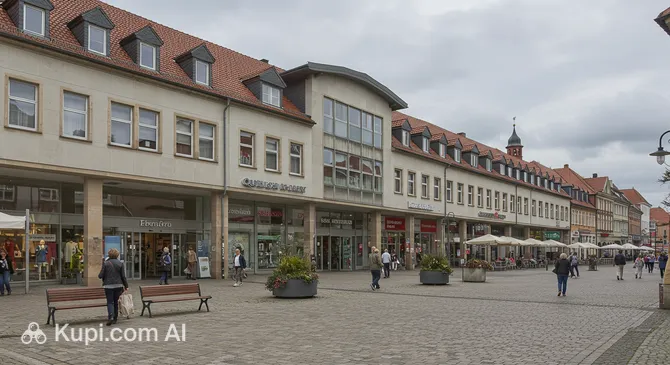
If you are looking for a more modern shopping format, Quedlinburg has a small shopping center called Mettehof. Here you can find clothing stores, household goods, and other necessary retail outlets offering a more standard range of products.

Mettehof. Illustration.
Source: Kupi.com AI

Traveler photos:

The heart of the city's trading life is Quedlinburg Market Square. Markets are regularly held here where you can buy fresh local products, flowers, as well as handicrafts and souvenirs. The seasonal fairs are particularly colorful, such as the Christmas market, which attracts many visitors with its festive atmosphere and unique goods.

As souvenirs from Quedlinburg, it's worth bringing items that reflect its rich history and UNESCO World Heritage status. These could be miniature half-timbered houses, handmade ceramics, textiles with local patterns, books on the city's history, and items related to its famous landmarks, such as the Collegiate Church of St. Servatius. Don't forget local gastronomic specialties if transportation allows.

Shops in Quedlinburg usually operate from Monday to Saturday. Standard opening hours are approximately from 10:00 AM to 6:00 PM, though small private shops may have their own schedules. On Saturdays, many shops close earlier, and on Sundays, most are closed, with the exception of some souvenir shops in tourist zones. Regarding payment, while credit and debit cards (especially Girocard) are accepted in many places, it's always useful to have some cash with you, especially for purchases at markets or in small shops.

Tourists from countries outside the European Union can use the Tax Free system. To do this, you need to make a purchase for a certain amount in a participating store, ask for a special Tax Free check, and then present it together with the goods at customs when leaving the EU to receive a stamp and a subsequent VAT refund.

Reached the end of the page?

That means the route is fully explored