Support

Magdeburg

About

Magdeburg is a city that seems to have stepped right out of the pages of European chronicles, coming to life on the banks of the mighty Elbe. Nestled in the heart of the continent, it serves as the capital of the federal state of Saxony-Anhalt and is one of the oldest settlements that Germany is proud of. Thanks to its fortunate location at the crossroads of important trade routes, this city has for centuries served as a meeting point for different cultures, ideas, and travelers.
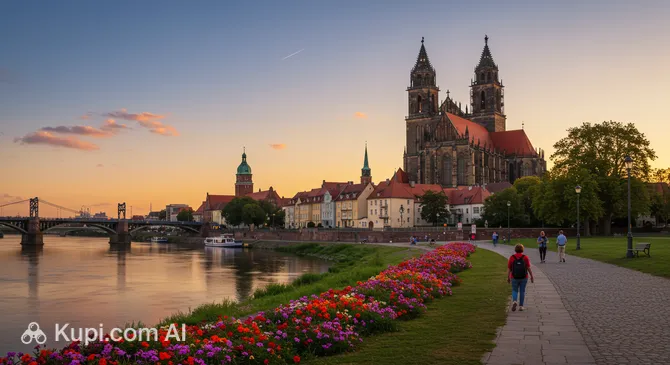
Magdeburg. Illustration.
Source: Kupi.com AI

Today, home to about 236,000 people, Magdeburg remains a major regional center while managing to avoid the frantic pace of overcrowded metropolises. The city harmoniously combines the features of an important administrative hub with the charm of a cozy place to live and relax. The climate here is temperate, perfect for long walks through numerous parks and along embankments, where it is particularly pleasant to watch the slow flow of the river.

The city's architectural face is striking in its contrasts. Here, austere Gothic spires stand alongside bright and bold modern buildings, and the narrow streets of the old center suddenly open up into spacious squares. The eventful history of Magdeburg has left its mark at every turn, creating a unique atmosphere where the past is interwoven with the present.

Among the main attractions drawing tourists is the majestic Magdeburg Cathedral—the first Gothic cathedral on German soil. Its complete opposite is the "Green Citadel," an extravagant pink complex designed by the famous artist Friedensreich Hundertwasser. This is a place where a traveler will always find something to their taste: from immersion in ancient history to exploring avant-garde art and local gastronomy. Magdeburg is definitely worth making part of your itinerary.
Weather Overview

When planning your trip, it is important to consider that the climate in this region is temperate and fairly mild, without sharp temperature fluctuations. The current weather in Magdeburg is conducive to tourism year-round, but each season has its own characteristics to keep in mind when packing.

The summer months are the warmest and most popular time to visit. In July and August, the average temperature is around 19°C, with daytime highs reaching a comfortable 24.6°C. This is a wonderful period for long walks, although you won't want to leave your umbrella at home: even in the height of summer, there are about 10 to 11 rainy days per month.

Winter here is cool rather than freezing. In January and February, average figures stay around 3-4°C, with average night temperatures around 1°C. The "wettest" month is considered December, when up to 15 days with precipitation are recorded. Expect a warm summer with occasional rain and a cool winter with high humidity.

Average monthly temperature

Average monthly precipitation

Interesting Facts

Beyond its main attractions, Magdeburg holds many fascinating secrets and historical achievements that make it special. This city knows how to surprise with its combination of ancient heritage and bold scientific discoveries.

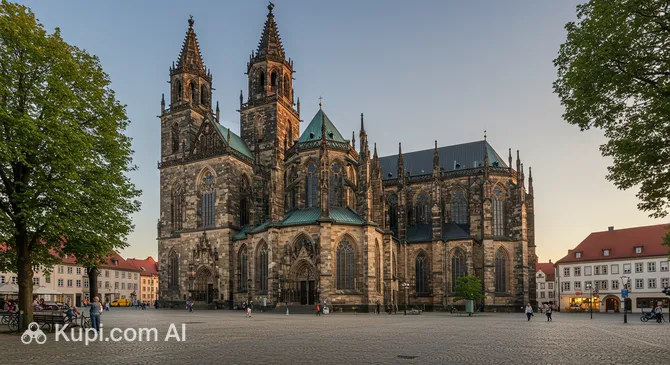
Magdeburg Cathedral. Illustration.
Source: Kupi.com AI

Traveler photos:

  • The majestic Magdeburg Cathedral is famous not only as the first Gothic church on German soil, whose construction spanned over three centuries. It is also the final resting place of Emperor Otto I the Great, who unified the German lands and founded the Holy Roman Empire.

  • Inside the walls of the same cathedral hides a unique artistic treasure—the sculpture of St. Maurice. Art historians consider it one of the oldest realistic depictions of a person of African descent in European culture, making the statue a significant monument of art history.

  • The city was the birthplace of the famous physicist Otto von Guericke, who conducted the legendary "Magdeburg hemispheres" experiment here. This experiment vividly demonstrated the force of atmospheric pressure and became a true city legend; today, a university and a museum are named after the scientist.

  • A striking contrast to the medieval architecture is the Green Citadel of Magdeburg—the final creation of the eccentric architect Friedensreich Hundertwasser. This pink building with wavy walls and trees growing right on the roof symbolizes creative freedom and an ecological approach to living.

How to Get There

Magdeburg boasts excellent transport accessibility thanks to the developed network of autobahns and railways that Germany is famous for. Although there is no major international airport within the city itself, reaching it is easy via neighboring metropolises. If you want to know all the details and plan your route, we recommend reading more about how to get to Magdeburg by various means of transport.

For travelers choosing to fly, the most convenient option is often Leipzig/Halle Airport (IATA: LEJ). It is located in the city of Leipzig, about 88 km from Magdeburg. A taxi or transfer from here takes about 1.5 hours. This modern transport hub with a medium passenger flow handles many European flights, ensuring a comfortable arrival in the region.

Another popular option is Berlin Brandenburg Airport (IATA: BER), the capital's main international airport. It is located in Berlin, approximately 132 km from Magdeburg. As a very large aviation hub, it receives significantly more flights from all over the world. Travel time by car from Berlin to Magdeburg is approximately 1 hour and 40 minutes.

For your convenience, here is a summary of the main airports:

AirportPassenger trafficDistance
Leipzig/Halle Airport2.2 mln88 km
Berlin Brandenburg25.5 mln132 km
Erfurt Airport138 002134 km
Hannover Airport5.3 mln136 km
Kassel-Calden Airport107 615173 km

Rail service in the country is known for its high reliability and speed. The closest major railway hub to Magdeburg is Leipzig Central Station (Leipzig Hauptbahnhof), located in the city of Leipzig (about 87.7 km from the center of Magdeburg). This is one of Europe's largest stations by floor area, with dozens of high-speed routes passing through. From here, you can quickly reach your destination by regional train.

Also worth noting is Berlin Hauptbahnhof, which is 128.5 km from Magdeburg. This is the capital's central station with a massive passenger flow, connecting many cities and countries. Upon arrival here, tourists can easily transfer to a direct train to Magdeburg, enjoying a comfortable journey.

Below is information about key railway stations in the vicinity:

StationPassenger trafficDistance
Halle (Saale) Railway Station12.8 mln25 km
Leipzig Hauptbahnhof43.8 mln88 km
Berlin Zoologischer Garten Station36.5 mln125 km
Berlin Hauptbahnhof127.8 mln128 km
Hanover Main Station91.3 mln131 km

Main Attractions

Magdeburg offers travelers a rich program: from walks through picturesque islands on the Elbe to diving into the depths of medieval history. The city has managed to preserve and restore iconic monuments that now sit alongside modern cultural spaces.

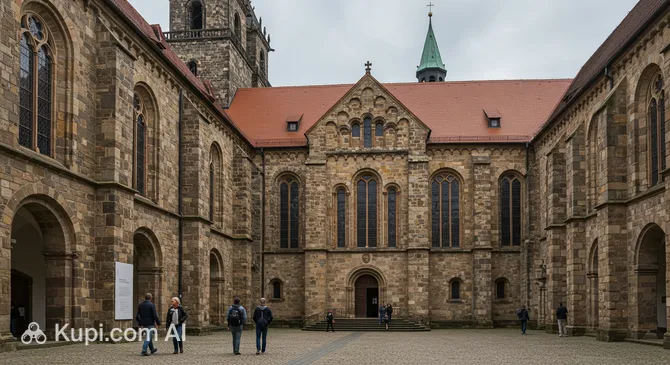
One of the gems of Romanesque architecture is the Kunstmuseum Magdeburg – Monastery of Our Lady. This is the oldest surviving building in the city, dating back to the 11th century. Today, its ancient walls house a museum of contemporary art, where bold installations and sculptures create a surprising contrast with the austere medieval vaults. Visitors are drawn here not only by the exhibitions but also by the special atmosphere of tranquility in the monastery courtyard.

Kunstmuseum Magdeburg – Monastery of Our Lady. Illustration.
Source: Kupi.com AI

Traveler photos:

If you want to see the city from above, be sure to visit the place where Martin Luther once preached—St. John's Church. The building has had a complex fate: it was destroyed and rebuilt several times, and now serves as a concert hall and cultural center. A viewing platform on the south tower is open to tourists, offering perhaps the best panorama of Magdeburg’s center and the Elbe River.

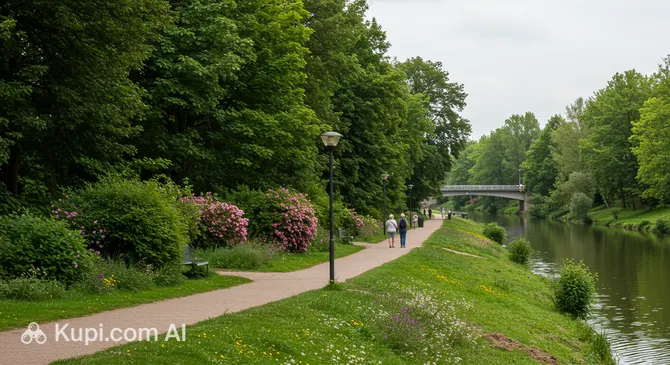
Outdoor enthusiasts should head to Rotehorn City Park. This green oasis is located on an island in the middle of the Elbe and is considered one of Germany's most beautiful landscape parks. Here, you can not only stroll through shady alleys but also go boating or climb the Albinmüller Tower to enjoy views of the river and the surroundings.

Rotehorn City Park. Illustration.
Source: Kupi.com AI

Traveler photos:

For those who want to better understand the region's past, the Magdeburg Museum of Cultural History opens its doors. The main exhibit here is the original "Magdeburg Horseman"—an early Gothic equestrian statue, a copy of which adorns the Market Square. The museum's collection covers a vast period, from archaeological finds to modern-day household items, detailing the city's role in European history.

Local Cuisine

The city's gastronomic scene is a reflection of its character: hearty, solid, and welcoming. Magdeburg's cuisine harmoniously combines the best traditions of Saxon and Anhalt culinary arts. It is not customary to skimp on portions here, and local dishes are perfect for restoring strength after long walks through ancient streets and along the waterfront.

The main culinary symbol of the region is rightfully considered the "Magdeburg Dumpling" (Magdeburger Klöße). These are tender potato balls traditionally served with thick meat gravy, roasted duck, or pork. Meat lovers should also look out for spicy sausages prepared according to old recipes and fragrant roasts with braised cabbage.

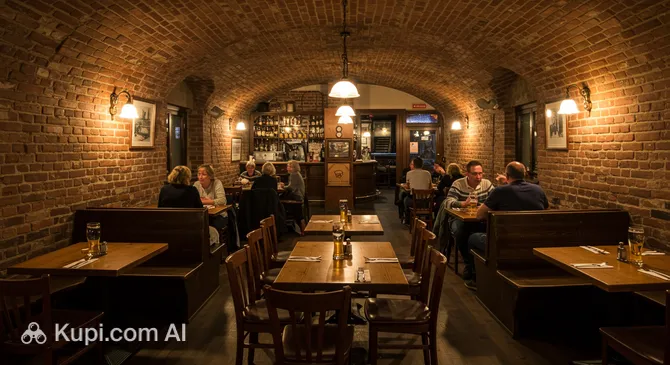
Datsche. Illustration.
Source: Kupi.com AI

Traveler photos:

Since the city sits on the Elbe, river fish takes a place of honor on the menus of local establishments. Gourmets come here specifically to try smoked eel or rich fish soups. For those who prefer to end their meal with something sweet, the famous Magdeburg marzipan and homemade apple or plum cakes baked on large trays will be a real discovery.

The food culture in Magdeburg is diverse: from quick snacks at farmers' markets selling fresh cheeses and smoked meats to cozy sit-downs in local eateries. If you are looking for a place for a pleasant evening, you can stop by the Dacha restaurant, which is popular with residents and guests alike. In autumn, gastronomic life is particularly vibrant during the harvest festival, when the streets are filled with the aromas of fresh pastries and young wine.

Travel Tips

Magdeburg welcomes guests with a blend of medieval grandeur and modern comfort. To ensure your trip to this corner that Germany is proud of goes perfectly, we have prepared a list of practical recommendations considering local specifics and the city's rhythm of life.

  1. Clothing and Essentials: The weather in Saxony-Anhalt is changeable, so the best strategy is to dress in layers (the "onion principle"). Even in summer, a light windbreaker or raincoat won't hurt, as winds from the Elbe can be cool. Be sure to bring comfortable flat shoes: the historical center is partially paved with cobblestones, and long walks in heels will be a challenge. For electrical appliances, you will need adapters for standard European sockets (Type F) if your devices have a different plug format.
  2. Transport: The public transport system (MVB) works excellently here and includes trams and buses. For tourists, it is most profitable to buy a day pass (Tageskarte), which pays for itself after just a couple of trips. The historical center is compact and pleasant to explore on foot. Taxis can be called via popular apps (like FreeNow) or found at stands, but renting a car for moving within the city is not necessary—parking in the center can be difficult.
  3. Finances: The official currency is the Euro (€). While Visa and Mastercard are accepted in supermarkets and major restaurants, many small cafes, bakeries (Bäckerei), and souvenir shops prefer cash. Always carry some small bills and coins. Tips are not automatically included in the bill: it is good manners to round up the amount or leave 5–10% of the total if you enjoyed the service.
  4. Health and Safety: Magdeburg is a safe city, but as everywhere, you should watch your belongings in crowded places. Pharmacies (Apotheke) are easily recognized by a red stylized letter "A"; the address of the nearest 24-hour on-duty pharmacy is always posted on the door of any closed one. The emergency services number is 112. The tap water here is of excellent quality and perfectly safe to drink.
  5. Communication: The primary language is German. Hotel staff and young people usually speak English well, but the older generation may not be as proficient. Learn a few polite phrases: "Guten Tag" (Good day) and "Danke" (Thank you)—this will immediately endear you to the locals. Free Wi-Fi is available in many cafes and at the station, but for stable connectivity, it's better to buy a local SIM card (passport required for registration). The DB Navigator app will be useful for transport schedules.
  6. Local Etiquette: Germans value punctuality, so try not to be late for tours or booked appointments. It is customary to greet the shopkeeper when entering a store. Remember that Sunday is a day of silence and rest (Ruhetag): most shops are closed, and making loud noise on the street or in residential areas is frowned upon.
  7. What to Avoid: The most common mistake tourists make is walking on bicycle lanes. Magdeburg has active cycling traffic, and lanes are often marked with color or markings on the sidewalk. Walking in them is dangerous and considered disrespectful. Also, do not cross the road on a red light, even if there are no cars—this may draw disapproval from those around you, especially if children are nearby.
  8. Local Tip: If you want to see the "non-touristy" Magdeburg and dive into the nightlife, head to Hasselbachplatz in the evening. This is the hub for young people with a huge number of bars, pubs, and cafes where you can try local drinks and feel the city's pulse.

We hope these tips help you feel confident and comfortable in the capital of Saxony-Anhalt. Magdeburg reveals itself to those ready to explore it slowly, with respect for traditions and an open heart—have a great journey!

Entertainment & Nightlife

Magdeburg's nightlife can be a pleasant surprise for travelers. Despite its reputation as a quiet historical city, it pulses with energy, largely thanks to the large number of students from the local university. After sunset, the ancient streets fill with the sounds of music, and the doors of numerous establishments open for guests looking to unwind after a busy day.

The epicenter of evening entertainment is undoubtedly Hasselbachplatz and its surrounding streets. Locals affectionately call this area "Hassel." The concentration of bars, pubs, and cozy cafes per square meter here is perhaps the highest in the city. It is the perfect spot for bar hopping: you can start the evening with a craft beer in a traditional kneipe and continue by tasting signature cocktails in the next establishment just across the road.

If you are looking for a place with a relaxed atmosphere and quality drinks, it is worth checking out Bar Culinaria Magdeburg. This establishment is valued for its stylish interior and extensive drink menu, making it an excellent starting point for an evening with friends. The crowd here is diverse but invariably friendly, and the dress code is casual to smart casual.

For those who plan to dance until morning, the Greenline Nightclub opens its doors. This is a popular location among young people, regularly hosting themed parties and DJ sets across various genres. It can get quite crowded on weekends, so it is better to arrive a bit before midnight to avoid queues at the entrance. Prices for entry and drinks in Magdeburg's clubs remain reasonable, which favorably distinguishes them from venues in Berlin.

Fans of large-scale entertainment and live performances should check the schedule at the GETEC Arena Magdeburg. This is the city's main venue for major concerts by international stars, sports shows, and handball matches, which are incredibly popular here. Attending such an event provides a completely different set of emotions and lets you feel the true spirit of the city.

In terms of safety, nighttime Magdeburg is quite calm, especially in the center and the Hasselbachplatz area, where life stays busy until the early hours. Getting home is easy: there is a taxi stand on the square, and night trams and buses also run through. However, as in any city, it is wise to stick to well-lit streets and keep an eye on your personal belongings.

By day, the city offers an equally engaging program. If you want to take a break from the night's festivities and immerse yourself in culture, visit the Magdeburg Museum of Technology, where you can learn about the region's industrial past. For leisurely strolls and shopping, the Green Citadel of Magdeburg is perfect—this vibrant complex houses not only shops and cafes but also a theater offering interesting daytime and evening performances.

Parks & Museums

Magdeburg is rightfully considered one of the greenest cities that Germany is proud of. Here, the urban environment is harmoniously interwoven with natural landscapes, creating ideal conditions for relaxation. After exploring architectural masterpieces, travelers should immerse themselves in the quiet of park alleys or broaden their horizons in unique museum spaces.

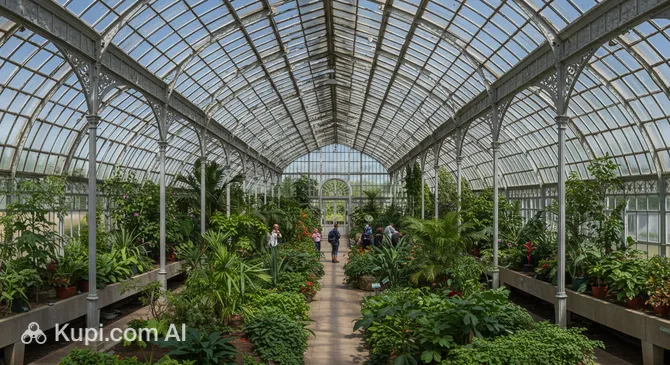
For those who want to swap city views for a tropical atmosphere, the Gruson Greenhouses are a true discovery. This botanical complex, founded in the 19th century by industrialist and philanthropist Hermann Gruson, houses thousands of plant species from all continents under its glass domes. Here, you can stroll among palm trees, see rare cacti, and observe exotic fish and caimans in aquariums. This place offers a feeling of eternal summer in any weather.

Gruson Greenhouses. Illustration.
Source: Kupi.com AI

Traveler photos:

In addition to its famous parks, the city is proud of its access to the water. A special place in the hearts of locals is held by the Magdeburg Elbe Steps. This modern architectural space on the waterfront serves not just as a descent to the river, but as a true open-air amphitheater. People come here to watch the sunset, have a picnic, or simply enjoy the panoramic view of the Elbe and the passing ships.

The city's cultural landscape would be incomplete without mentioning its rich industrial heritage. The Magdeburg Museum of Technology, located in a historical factory hall, tells the story of the region's engineering prowess. Visitors can see ancient machines, transport vehicles, and mechanisms that once drove the European economy. Many exhibits are interactive, making the visit engaging for tourists of all ages.

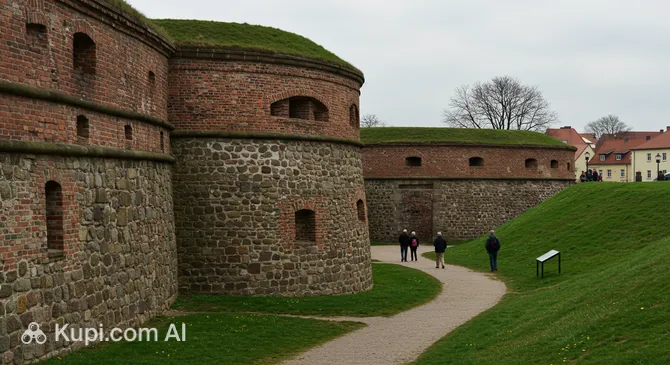
Fans of military history and fortification art should pay attention to Ravelin II. This is a preserved part of what was once the powerful Prussian fortress of Magdeburg, considered one of the most impregnable in Europe. The restored complex allows you to descend into the casemates, learn about the life of 19th-century soldiers, and see exhibitions dedicated to the fortress's history.

Ravelin II. Illustration.
Source: Kupi.com AI

Traveler photos:

Insider Tip: If you find yourself at the Elbe Steps, take a walk along the embankment toward the old port. In this area, hidden from the main tourist routes, you can find interesting examples of street art and cozy pop-up cafes, creating the unique atmosphere of a living, changing city.

Getting Around

Magdeburg's public transport is a reliable and well-organized network that makes it easy to reach any point in the city without needing to rent a car. The main operator is MVB, and the primary transport arteries are the tram lines that crisscross the entire city. Trams run frequently and cover both the historical center and residential areas. They are complemented by bus routes connecting remote corners to main transfer hubs, and for quick trips between districts, the S-Bahn suburban rail is convenient.

The city is part of the marego tariff union, which means a single ticket is valid for all types of transport, including S-Bahn trains within the city limits. All of Magdeburg belongs to tariff zone 010. For tourists, the most economical solution is often buying a day ticket (Tageskarte). It costs only slightly more than two single trips but grants unlimited travel until 4 AM the following day. If you are traveling in a group, look into the group day ticket, which offers significant savings.

Tickets can be purchased at machines at stops (accepting cash and cards), at special MVB kiosks, or directly inside trams and buses via mobile machines. The most modern and convenient way is to use mobile apps like INSA, marego, or DB Navigator. It is important to remember: if you bought a paper ticket without a printed date and time, you must validate it immediately upon entering the vehicle. Fines for fare dodging in Germany are high, so do not forget to validate.

A unique feature of Magdeburg's transport system is the organization of nighttime traffic. At night, the main tram and bus routes meet at Hasselbachplatz. They arrive simultaneously, wait for passengers to transfer, and then depart in their respective directions. This ensures that even late at night, you can get home or back to your hotel with minimal waiting.

Interesting alternatives include the ferry crossings over the Elbe (for example, in the Buckau and Westerhüsen districts). Ferries are also part of the public transport system, so regular MVB tickets are valid on them. This is not only a way to cross to the other bank but also a chance to take a small river cruise. Additionally, bike-sharing services (like nextbike) and e-scooters are popular in the city, and taxi services are always available via apps for comfortable rides.

Accommodation

Magdeburg offers travelers a decent choice of accommodation that will satisfy both budget tourists and those accustomed to a high level of comfort. The city's hotel industry harmoniously combines modern business hotels, cozy family pensions, and affordable hostels. In recent years, renting private apartments has also gained popularity, which is particularly convenient for long stays or group trips.

When choosing a place to stay, you should be guided by the purpose of your visit. Most tourists prefer to stay in the historical center (Altstadt), where main attractions like the cathedral and the "Green Citadel" are within walking distance. If you plan to travel around the surrounding area, the district around the main railway station is a convenient option. For lovers of peace and beautiful scenery, hotels on the banks of the Elbe are ideal, offering picturesque views of the river and Rotehorn Park.

Among the specific accommodation options worth noting is the Hotel Ratswaage Magdeburg. This establishment, with unique architecture reflecting the city's rich history, offers guests a high level of service and comfort. The hotel is well-located, allowing easy access to major cultural sites without spending much time on travel.

Pricing in Magdeburg is generally more affordable compared to major metropolises like Berlin or Munich. You can find budget options as well as mid-range and premium offers. It is recommended to book accommodation in advance, especially if your trip coincides with the summer months or periods of major city festivals and fairs. For searching and reserving, international online platforms are most convenient, though many hotels accept bookings directly through their websites.

Nearby Cities

For those who want to explore the surrounding area, Magdeburg serves as an excellent starting point for day trips to several interesting nearby locations:

Just a few dozen kilometers from the city, you can find real regional gems. For example, Halberstadt, often called the "Gateway to the Harz," is famous for its magnificent cathedral and unique treasury housing medieval relics. It is an ideal spot for history buffs and fans of sacred architecture.

For a more relaxed break, Schönebeck (Elbe), located very close by, is a great choice. Here you will find the Bad Salzelmen district—Germany's oldest brine spa. A walk along the majestic graduation tower will help you recharge and enjoy the healing microclimate.

Also worth noting is Bernburg with its impressive Renaissance castle towering over the Saale River. This is a picturesque city where you can spend time exploring the legacy of the Princes of Anhalt-Bernburg and enjoying views of the river valley.

CityPopulationDistance
Barleben9 33010 km
Wanzleben-Börde13 90313 km
Schönebeck (Elbe)30 72015 km
Wolmirstedt11 53616 km
Gommern10 54316 km

These nearby destinations provide a great overview of the region's diverse culture and landscapes.

Shopping & Souvenirs

Shopping in Magdeburg is a pleasant mix of modernity and tradition, allowing you to browse without the hustle and bustle typical of major metropolises. The city offers a balanced choice: from large shopping galleries with well-known international brands to cozy shops with local handicrafts. Here, it is easy to find both fashionable clothing and unique interior items while strolling along wide avenues or exploring historical quarters.

The heart of the city's commercial life is Breiter Weg. Once one of Europe's most beautiful Baroque streets, today it is a busy thoroughfare with many shops, cafes, and department stores. Walking from here toward Ulrichplatz, tourists enter a pedestrian shopping zone with a high concentration of clothing, shoe, and accessory boutiques.

For those who prefer the comfort of large complexes, the main draw is Allee-Center Magdeburg. Located in the very center, it brings together over 150 shops under one roof, offering everything from electronics to cosmetics. If you are looking for large-scale shopping with convenient parking on the outskirts, it is worth visiting Börde Park—a major retail park featuring hypermarkets and specialized stores for home and family.

The markets give the city a special flavor. The traditional market at Alter Markt is the place to buy the freshest regional products, fruits, and flowers. Seasonal fairs are also frequently held here, including the famous Christmas Market, which fills the center with the aromas of mulled wine and roasted almonds. Antique lovers should look for information about flea markets that occasionally take place at the exhibition center or university grounds.

When choosing souvenirs, look out for the famous "Magdeburg Hemispheres" (Magdeburger Halbkugeln) candies. These chocolate treats are named after Otto von Guericke's historic physics experiment and are a sweet symbol of the city. You can also find interesting gifts and artistic items in the shops located inside the Green Citadel of Magdeburg architectural complex—their range is known for its originality and Hundertwasser style.

When planning your shopping trip, keep in mind that most shopping centers and large department stores are open Monday to Saturday from 10:00 to 20:00. Small private shops may close earlier, around 18:00. Sunday in Germany is a day of rest, and almost all shops will be closed, except for some bakeries and shops at the train station. Cards are widely accepted, but it is better to have some cash in Euros for market purchases or small kiosks.

Tourists residing outside the European Union can take advantage of the Tax Free system. Look for shops with the "Global Blue" or "Tax Free Shopping" logo in the window. When making a purchase over 50 Euros, ask for a special form that will allow you to claim back a portion of the value-added tax when leaving the country.

Reached the end of the page?

That means the route is fully explored