Support

Dessau-Rosslau

About

Dessau-Roßlau is a true treasure trove for lovers of architecture, nature, and art, cozily nestled in the heart of the federal state of Saxony-Anhalt. The city is located in a picturesque spot on the banks of the majestic Elbe, roughly midway between Berlin and Leipzig, making it a convenient stop for travelers exploring Germany. With a population of about 81,000, it maintains a small-town charm and coziness while holding the status of an important cultural center in the region.

Dessau-Rosslau. Illustration.
Source: Kupi.com AI

The city gained worldwide fame through the Bauhaus school—a legendary movement in design and architecture that changed the face of the modern world forever. However, the rich history of Dessau-Roßlau is not limited to the 20th-century avant-garde. Here, the strict lines of functionalism and the romance of vast landscape parks blend in a surprising way, creating a unique atmosphere of creativity and serenity.

Dessau-Roßlau is worth visiting for its unique symbiosis of eras. Guests can enjoy tours of the famous Bauhaus buildings, listed as UNESCO World Heritage sites, and stroll through the magnificent gardens of the Garden Kingdom of Dessau-Wörlitz. It is an ideal destination for those seeking inspiration, who appreciate aesthetics and want to take a break from the hustle and bustle of metropolises surrounded by greenery and architectural masterpieces.

Weather Overview

The climate in Dessau-Roßlau can be described as temperate, with clearly defined seasons, which makes the city attractive to visit at any time of year, though each season has its own characteristics. Summer here is usually warm and pleasant: in July and August, the average temperature stays around 20°C, and during the day, the air often warms up to a comfortable 24–25°C. This is the best time for exploring architectural monuments and walking in nature.

Winters in the region are cool but, as a rule, without severe frosts. In January and December, the thermometer rarely drops below zero during the day, remaining in the range of +1...+5°C. However, one should be prepared for high humidity: the highest number of rainy days is recorded in winter—up to 15 per month. Expect a warm summer with occasional rain and cool, fairly damp winters.

The shoulder seasons can also offer excellent travel conditions. May delights with daytime temperatures around 18–19°C, while September retains the remnants of summer warmth. To make your trip as comfortable as possible, we recommend checking what weather in Dessau-Roßlau is expected in the coming days before packing.

Average monthly temperature

Average monthly precipitation

Interesting Facts

In addition to its world-famous architecture, Dessau-Roßlau holds many fascinating stories and details that make it a truly special place. Here are a few facts that will help you look at this city from a new perspective:
  • The city is considered the cradle of modern aviation, as it was here that the legendary designer Hugo Junkers lived and worked. His famous aircraft were created in Dessau, and today the Hugo Junkers Technical Museum allows you to see authentic aviation masterpieces and appreciate the engineer's contribution to global progress.

  • Dessau became a real magnet for the creative elite after the Higher School of Construction and Artistic Design moved here in 1925. The Bauhaus Dessau complex and the famous Masters' Houses are now UNESCO World Heritage sites, serving as a reminder of the time when the city was the center of the global avant-garde.

  • Nature lovers will be surprised by the diversity of local fauna: the Dessau Zoological and Botanical Garden is home to more than 500 animals. On one territory, 120 species coexist harmoniously—from fluffy alpacas to graceful jaguars.

  • The old corners of the city are shrouded in mystery and legends. Locals say that in the castle on the banks of the Elbe, you can sometimes encounter the ghost of a medieval knight who still guards his domain.

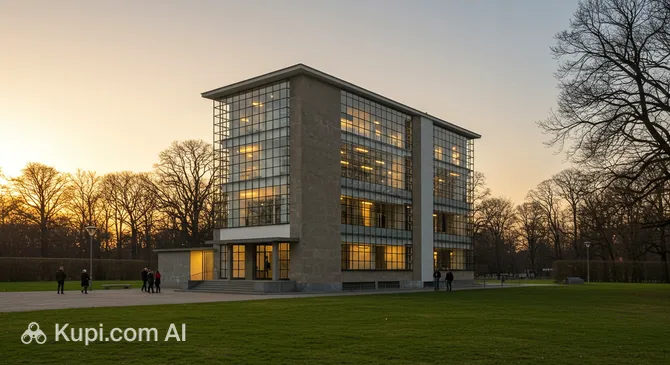
Bauhaus Dessau. Illustration.
Source: Kupi.com AI

Traveler photos:

How to Get There

When planning a trip to this region of Germany, it is worth thinking about logistics in advance. The city is conveniently located between major transport hubs, so getting here is easy. You can find out more details on how to get to Dessau-Roßlau to choose the optimal route; below, we will look at the main options for flights and rail travel.

Dessau-Roßlau itself does not have its own airport, so travelers usually fly into neighboring large cities. The closest and most convenient option is Leipzig/Halle Airport (LEJ), located in the city of Leipzig, just 47 km from the destination. The journey from there by taxi or rental car takes about 45–50 minutes. This is an excellent choice for those who want to minimize ground transfer time.

For international flights, Berlin Brandenburg (BER) is often chosen. This large air hub is located in Berlin, approximately 105 km from Dessau-Roßlau. Thanks to excellent transport links, the drive from the airport takes about 1 hour and 20 minutes. You could also consider flying into Dresden International Airport (DRS), but it is further away—133 km—and the transfer will take about 2 hours.

For clarity, here is a summary of the main airports:

AirportPassenger trafficDistance
Leipzig/Halle Airport2.2 mln47 km
Berlin Brandenburg25.5 mln105 km
Erfurt Airport138 002131 km
Dresden International Airport929 928133 km
Hannover Airport5.3 mln187 km

The rail network in Germany is excellently developed, making the train a convenient alternative to the car. Dessau-Roßlau has its own railway station where regional trains arrive. However, if you are traveling from afar, you will likely have a transfer at one of the major hub stations in neighboring metropolises.

A key transfer point is Leipzig Central Station. It is located in the city of Leipzig, about 47 km from Dessau-Roßlau. This is one of the largest stations in Europe, receiving many high-speed trains. From here, Dessau can be reached by regional express in less than an hour. Another important point is Berlin Hauptbahnhof in Berlin (about 109 km). Trains from all over Europe arrive here, and from here it is easy to continue the journey towards Saxony-Anhalt.

Below are the nearest major railway stations through which it is convenient to plan a route:

StationPassenger trafficDistance
Halle (Saale) Railway Station12.8 mln31 km
Leipzig Hauptbahnhof43.8 mln47 km
Berlin Zoologischer Garten Station36.5 mln106 km
Berlin Hauptbahnhof127.8 mln109 km
Berlin Ostbahnhof Station36.5 mln111 km

Main Attractions

Dessau-Roßlau is a city where architectural history intertwines with picturesque landscapes. Here, in just one day, you can travel from the era of Classicism to the era of the avant-garde while enjoying walks through magnificent parks. The city's main attractions are associated with the names of great creators and engineers, whose heritage is carefully preserved and open to everyone.

The absolute symbol of the city is the famous Bauhaus Dessau. This building, designed by Walter Gropius, became a manifesto for modern architecture and design. Tourists come here to see the famous glass facade with their own eyes and visit the former workshops where ideas that changed the face of the 20th century were born. A walk through the school's corridors allows you to feel the atmosphere of innovation and creative freedom.

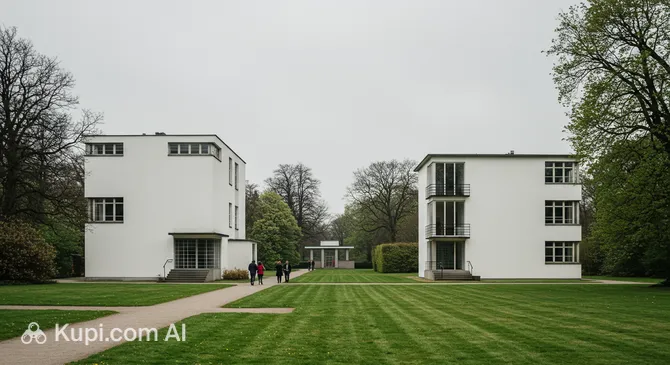
Right next to the school building is another UNESCO World Heritage site—the Masters' Houses. This is a complex of several villas built for Bauhaus teachers. Art legends such as Wassily Kandinsky and Paul Klee lived and worked here. Visitors can explore the restored interiors, which are striking in their functionality and bold color schemes.

Masters' Houses. Illustration.
Source: Kupi.com AI

Traveler photos:

For those who prefer the romance of past centuries, the Luisium is an ideal spot. This elegant country house, surrounded by an English landscape park, was created as the private residence of Princess Louise. A stroll here offers a sense of peace: shady alleys, pastoral views, and Classicist architecture create a wonderfully harmonious ensemble that is part of the Garden Kingdom of Dessau-Wörlitz.

Engineering and aviation enthusiasts should definitely visit the Hugo Junkers Technical Museum. The exhibition is dedicated to the life and achievements of the outstanding designer who worked in Dessau. The main exhibit is the legendary Ju 52 transport aircraft, which can be examined in great detail. The museum tells the story not only of aviation but also of Junkers' other inventions, from gas water heaters to metal houses.

If you are traveling with family or simply want to relax in nature, visit the Dessau Zoological and Botanical Garden. This is a cozy place where you can get acquainted with the flora and fauna of the region. The park is distinguished by its educational focus and well-kept grounds, making it a wonderful location for leisurely walks away from the city bustle.

Local Cuisine

The gastronomic scene of Dessau-Roßlau harmoniously combines the culinary traditions of Saxony-Anhalt with modern trends. Travelers should definitely try the region's main dish—Saxony-Anhalt potato soup. This is a thick and hearty treat, usually prepared with a large amount of vegetables and aromatic smoked meats. Due to the city's location on the Elbe, fresh river fish dishes often appear on local menus, as well as excellent game roast.

It is impossible to imagine a German meal without quality baked goods. Fresh rye bread with a crispy crust and various sweet pies with fruit fillings, which are perfect for afternoon coffee, are particularly appreciated here. Among drinks, local beer from small private breweries holds the top spot. It features a mild taste and perfectly complements traditional meat snacks or cheese platters.

Street food and markets play an important role in the city's food culture. At city festivals and fairs, you can always find classic German sausages, salted pretzels, and, in season, roasted chestnuts. If you are looking for a place for a hearty lunch or dinner in a relaxed setting, you can drop into Kebabas, where popular flavors of modern Germany are represented.

Gourmet discovery enthusiasts should plan their trip around local events. In autumn, colorful harvest festivals take place in Dessau-Roßlau, where farmers present their best products: from homemade cheeses to honey and jam. In summer, street food festivals take over, offering guests not only German classics but also a variety of international dishes right under the open sky.

Travel Tips

Welcome to Dessau-Roßlau—a city where revolutionary architecture stands alongside pastoral landscapes. To ensure your introduction to the home of Bauhaus and the Garden Kingdom goes as smoothly as possible and leaves only pleasant impressions, we have prepared a list of useful practical recommendations.

  1. Clothing and belongings. The weather in the region is moderate but changeable. The principle of layering is your best friend: even in summer, it's worth having a light windbreaker or cardigan for evening strolls along the Elbe. Since sightseeing (especially the Wörlitz park) involves long walks, be sure to bring comfortable flat shoes. For visiting museums and restaurants, casual style is appropriate.
  2. Transport. The city center is compact, and many sites are within walking distance. For trips to outlying areas, it's convenient to use trams and buses from the local company DVG. Tickets can be bought from machines or from the driver (have change ready). However, the best way to feel the atmosphere of the city is to rent a bicycle. There are excellent bike paths here connecting architectural monuments with natural zones.
  3. Finances. The official currency is the Euro. In Germany, cash still plays an important role, especially in smaller towns. While hotels and major museums accept cards without problems, small bakeries, kiosks, or souvenir shops may ask for cash (Bargeld). ATMs are available everywhere. Tipping in restaurants is welcomed: it is customary to round up the bill amount or leave 5–10% for good service.
  4. Health and safety. Dessau-Roßlau is a quiet and safe city. Pharmacies are easily recognized by the red letter "A," and duty branches operate around the clock. The tap water here is of excellent quality and can be drunk without concern. Observe standard precautions in crowded places, although the crime rate here is low.
  5. Communication. In tourist centers and Bauhaus museums, staff generally speak English. However, in everyday situations (on transport or in a shop), local residents may not speak foreign languages. Download an offline translator and learn a few polite phrases in German, for example, "Guten Tag" (good day) and "Danke" (thank you)—this always encourages communication. Wi-Fi is available in hotels and many cafes, but for stable connectivity, it's better to buy a local SIM card at a supermarket.
  6. Local etiquette. Germans value order and personal space. When entering a small shop, it is customary to greet the salesperson. In public places, try not to make noise. An important rule: never walk on designated bicycle paths—this is a high-risk zone and can cause justified dissatisfaction among cyclists.
  7. What to avoid. Do not cross the street on a red light, even if the road is empty. In Germany, this is considered poor etiquette, especially if children are around, for whom adults should serve as examples. Also avoid making noise on Sunday (Ruhetag)—on this day most shops are closed, and it is customary to observe silence.
  8. Additional tip. If you plan an intensive cultural program, look into the "WelterbeCard" (World Heritage Card). It is valid in the Anhalt-Dessau-Wittenberg region and provides free entry or discounts to many palaces, parks, and museums, which will help save significantly on your travel budget.

We hope these tips help you easily navigate Dessau-Roßlau and feel confident in any situation. Enjoy the harmony of history and modernity as you discover this amazing corner of Saxony-Anhalt!

Entertainment & Nightlife

The nightlife in Dessau-Roßlau is characterized by a calm and measured rhythm, which perfectly matches the spirit of this cozy city. You won't find noisy metropolitan raves thumping until morning here; however, the city offers many pleasant places to relax after a busy day of sightseeing. Evening leisure here primarily consists of cozy pubs, classic German beer gardens, and restaurants with a warm atmosphere where locals gather for leisurely conversations.

The epicenter of evening activity is considered the city center, especially the area around Zerbster Straße and the market square. Most gastronomic establishments and bars are concentrated here. In summer, life spills out onto the streets: numerous terraces and beer gardens open up, where you can enjoy a cool drink under the open sky. The crowd here is diverse: from dignified couples to Bauhaus school students, who bring notes of creative freedom and youth to the city's atmosphere.

If you are looking for a place for a sophisticated evening, it is worth paying attention to the bar or restaurant located in the Hotel Fürst Leopold Dessau. This establishment is popular not only with guests but also with city residents who appreciate a high level of service and elegant interiors. Here you can order signature cocktails or a glass of fine wine in a quiet setting, perfect for a romantic date or a business meeting.

For shopping lovers and more mainstream entertainment, the Rathaus-Center is a point of attraction. Although the shops close in the evening (usually around 20:00), this complex remains an important landmark in the city center, around which life buzzes. City events often take place in the immediate vicinity, and cafes in the surrounding area stay open late. During the day, besides architectural sightseeing, you can drop into the Wagner Passage shopping gallery, which also offers leisure opportunities.

The city's cultural life also doesn't stop after sunset. A vital role is played by the Anhalt Theatre—one of the largest stages in Europe. Opera productions, ballets, drama performances, and symphonic concerts are held here regularly. This is an excellent option for those who prefer a classic "night out."

Dessau-Roßlau is a safe city, and night walks along the illuminated central streets do not cause concern. However, as elsewhere, it is worth exercising reasonable caution and avoiding unlit outskirts late at night. Most bars are open until midnight or 1:00 AM, and slightly later on weekends. Public transport runs less frequently at night, so if you stay out late, it is most convenient to call a taxi.

Parks & Museums

Dessau-Roßlau rightfully prides itself on its status as a city where nature and culture weave into a single whole. For tourists, this means the opportunity to alternate visits to world-class museums with relaxing walks through magnificent landscape parks, which are part of the famous Garden Kingdom of Dessau-Wörlitz.

One of the city's most charming green oases is the Luisium. This park complex, created in the 18th century, is an ideal example of an English garden in miniature. Here, winding paths lead through shady groves to picturesque meadows, with an elegant classicist palace at the center of the composition. A visit to the Luisium park will provide a sense of solitude and peace, allowing you to relax from the city bustle in scenery worthy of a painter's brush.

For those who prefer more active outdoor recreation, the Dessau Zoological and Botanical Garden is perfectly suited. This is not just a zoo, but a vast natural area of 11 hectares where you can get acquainted with the region's flora and fauna. A walk here is interesting because the animals live in spacious enclosures that closely resemble their natural environment, and the arboretum delights with a variety of rare trees and shrubs.

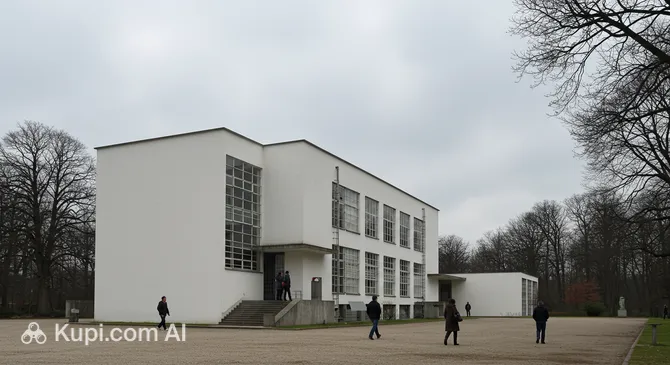
The cultural program in Dessau-Roßlau is inextricably linked with the heritage of modernism. The main point of attraction for art connoisseurs is the modern Bauhaus Museum Dessau, opened for the centenary of the school's founding. Within its walls is the world's second-largest collection of Bauhaus exhibits: from furniture and lamps to graphics and textiles. The exhibition clearly shows how ideas born in this city shaped the design of our everyday lives.

The complex of historical buildings itself serves as an equally impressive open-air museum. The famous Bauhaus Dessau school building and the nearby Masters' Houses allow tourists to immerse themselves in the atmosphere of the 1920s. Visitors can go inside to appreciate Walter Gropius's interiors and architectural solutions, which were revolutionary for that time.

Technique enthusiasts should definitely check out the Hugo Junkers Technical Museum. It is located on the site of a former airfield and is dedicated to the history of aircraft construction in the region. Here you can see a restored Ju 52 aircraft, learn about engineer Junkers' innovative developments, and understand why Dessau was called the "city of flight." This place will be interesting for both adults and children fascinated by mechanics and the sky.

Insider tip: If you have time, rent a bicycle and ride the route connecting the Georgium and Luisium parks. The road passes through the picturesque flood meadows of the Elbe, which are particularly beautiful in the morning mist or at sunset, offering a view of the city from a completely unexpected, pastoral side.

Getting Around

Public transport in Dessau-Roßlau is organized efficiently and conveniently, allowing for easy travel between historical attractions and parks. The main operator is the company Dessauer Verkehrsgesellschaft (DVG). The network consists of tram lines, which run along key routes in the central and southern parts of the city, and an extensive system of buses connecting distant areas and the Roßlau district, located on the other bank of the Elbe.

A unified tariff system applies for fare payment. For tourists, it is most convenient to purchase a day ticket (Tageskarte), which allows for unlimited travel within 24 hours. Tickets can be bought from machines at stops, inside trams (often accepting only coins), or from bus drivers. Mobile apps such as DB Navigator or MOOVME, where tickets can be bought online without the need to find change, are becoming increasingly popular. A standard single ticket costs about 2.50 Euros, though prices may change slightly.

An important nuance for travelers: a purchased paper ticket must be validated immediately upon entering the vehicle; otherwise, it will be considered invalid, which risks a fine. Transport runs strictly according to the schedule posted at every stop. In the evening and on weekends, intervals increase and night routes are limited, so plan your return to the hotel in advance.

The Dessau-Wörlitz Railway (Dessau-Wörlitzer Eisenbahn) deserves special attention. This is not just transport, but a real tourist attraction. Seasonal trains depart from Dessau main station and take passengers through picturesque landscapes directly to the famous parks of Wörlitz. A ride on such a train is a great way to combine a transfer with an excursion.

As an alternative to public transport, bicycles are very popular in the city. Dessau-Roßlau has flat terrain and wide bike paths, making two-wheeled transport ideal for visiting Bauhaus sites and riding along the Elbe. Rental points can be found in the center and at the station. Taxis are also available (stands are at the railway station and in the center), but for short trips around the city, they will be a less budget-friendly option compared to the tram.

Accommodation

Dessau-Roßlau, being a popular tourist destination, has a sufficient number of places to stay, although the choice here is not as vast as in major cities. The mainstay of the accommodation stock consists of mid-range hotels (3–4 stars), offering a decent level of comfort at reasonable prices. Small private guesthouses and apartments are also widely represented, which are great for families or long stays. For budget travelers and young people, there are hostels operating in the city.

Most tourists prefer to stay in the city center or in the immediate vicinity of the railway station. This is a strategically convenient solution: from here, it is easy to walk to both the famous Bauhaus buildings and the Georgium Park. If you are looking for peace and want to be closer to nature, you could consider accommodation options on the other side of the Elbe, in the Roßlau district, or on the outskirts bordering the Garden Kingdom.

Among the well-known places to stay is the Hotel Fürst Leopold Dessau. This establishment is located in the very heart of the city, opposite the Anhalt Theatre. The hotel combines modern amenities with elegant style, offering guests not only comfortable rooms but also a spa area, making it a popular choice for those who value a high level of service during their trip.

Pricing policy in Dessau-Roßlau is generally more democratic than in larger cities in Germany. The cost of living varies from budget to mid-range. It is recommended to book accommodation through popular online platforms or directly on hotel websites. Important tip: if your trip falls during the summer season or the time of major architectural festivals, take care of booking several weeks in advance, as the best options are quickly snapped up.

Nearby Cities

For those who want to explore the surroundings, Dessau-Roßlau serves as an excellent starting point for day trips to several interesting nearby places. Its convenient location in the state of Saxony-Anhalt allows for quick access to cities rich in history and culture.

Just 28 km away is the famous Wittenberg (Lutherstadt), the cradle of the Reformation. Here, tourists can visit the Castle Church, on whose doors Martin Luther nailed his 95 theses, and immerse themselves in the atmosphere of the 16th century. If you are interested in grander architecture and musical history, head to Halle. This city, the birthplace of composer George Frideric Handel, is famous for its beautifully preserved old center and unique market square. Palace aesthetics lovers should visit Mosigkau, home to a magnificent Rococo castle often called "Little Sanssouci."

CityPopulationDistance
Mosigkau78 7317 km
Osternienburg8 54915 km
Zerbst21 65717 km
Bitterfeld-Wolfen38 47518 km
Kothen25 91120 km

These nearby destinations provide an insight into the diverse culture and landscapes of the region, making your trip even more fulfilling.

Shopping & Souvenirs

Shopping in Dessau-Roßlau is a calm and pleasant activity, free from the bustle of huge metropolises. The city offers a balanced combination of modern shopping centers and cozy shops located in the compact center. Here you can find popular international clothing and electronics brands, as well as unique regional goods. Special attention should be paid to the museum shops, which sell designer items related to the Bauhaus heritage, making shopping here not just a purchase of things, but part of the cultural program.

The heart of the city's commercial life is the pedestrian zone in the area of Zerbster Straße and the Market Square. This is the main artery for strolling, along which numerous boutiques, bookstores, pharmacies, and shoe stores are lined up. In warm weather, shopping here smoothly flows into relaxing in outdoor cafes. It is also worth visiting the nearby Kavalierstraße, which has become even more attractive for pedestrians and shoppers after reconstruction.

For those who prefer to do all their shopping in one place, the Rathaus-Center is an ideal choice. This large shopping complex is located in the very heart of the city, right opposite the town hall. About 90 shops offering fashion, cosmetics, sports goods, and decor are gathered under one roof here. It is the main magnet for shopaholics in the region.

Another important shopping point is the Wagner Passage. This shopping center, located slightly away from the main square, offers a good selection of convenience stores, a supermarket, and services. The atmosphere here is more intimate, allowing you to shop without any unnecessary rush.

Fresh produce and local flavor lovers should definitely visit the Weekly Market (Wochenmarkt) on the Market Square in front of the Town Hall. It usually operates on Tuesdays, Thursdays, and Saturdays. Here, farmers from around Saxony-Anhalt sell seasonal vegetables, fruits, fresh bread, honey, and meat delicacies. This is the best place to "taste" the region and chat with locals.

As souvenirs from Dessau-Roßlau, tourists most often bring home items related to the Bauhaus style. Museum shops sell stylish stationery, posters, architecture books, and replicas of famous designer lamps or tableware. Gastronomic souvenirs are also popular: local liqueurs, wines from the Saale-Unstrut region, or sweets. Don't forget traditional German Christmas decorations if your trip falls during the winter period.

Shops in the city are usually open from Monday to Saturday. Large shopping centers are open from 09:30 or 10:00 to 20:00. Small boutiques in the center may close earlier, around 18:00 or 19:00, and on Saturdays operate on a reduced schedule (until 14:00 or 16:00). Sunday is an official day off (Ruhetag), when almost all shops are closed except for bakeries and kiosks at the station. Visa and Mastercard are widely accepted, but small shops, markets, or cafes may still ask for cash Euros, so it is recommended to carry a small amount of banknotes and coins.

Tourists residing permanently outside the European Union can use the Tax Free system (VAT refund) when purchasing goods for a certain amount on one receipt (usually from 50 Euros). Look for Global Blue or other operator logos in windows or at checkouts. Don't forget to ask for a special form when paying and present your passport to process the tax refund when flying out of the EU.
Reached the end of the page?

That means the route is fully explored