Support

Bauhaus Dessau

About

Imagine a building that forever changed our perception of what the modern world should look like. Bauhaus Dessau is not just an architectural monument, but a living legend of modernism located in Dessau-Roßlau. Designed by Walter Gropius in 1926, this complex in Germany became a benchmark of functionality, bringing together art, craft, and the cutting-edge technology of its time under one roof.
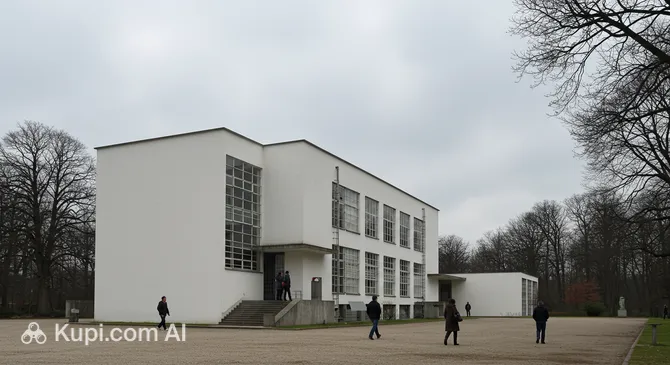
Bauhaus Dessau
Bauhaus Dessau. Иллюстрация. Источник: Kupi.com AI

The school building is instantly recognizable thanks to its asymmetrical facade and massive glass curtain wall, which creates a sense of transparency and lightness. Today, the site is listed as a UNESCO World Heritage site and functions as a museum, archive, and research center. Visitors can see original interiors, teaching workshops, and even student dormitories, which have now been converted into a cozy apartment hotel.

In addition to the main building, the ensemble includes the famous Masters' Houses—elegant villas built for the school's faculty, such as Wassily Kandinsky and Paul Klee. This site attracts thousands of travelers from all over the world who wish to experience the origins of industrial design and see the cradle of ideas that still define the look of our homes and offices.

Contacts

For information about special exhibitions or to book a guided tour, you can use the contact details for the complex provided below:

How to contactContact
AddressGropiusallee 38, 06846 Dessau-Roßlau, Germany
Phone+49 340 6508250
Websitewww.bauhaus-dessau.de

What to Do

A visit to Bauhaus Dessau offers guests a unique experience of interacting with space. Begin your journey by exploring the main building: here, you can study the museum exhibitions dedicated to the school's history and its prominent students. Be sure to notice the color-coded rooms and the functional layout, which was revolutionary for the 1920s. A particular highlight is stepping out onto the flat roof terrace to enjoy the panoramic view that inspired the young masters of the last century.

Continue your walk toward the pine grove where the Masters' Houses are located. Exploring these villas provides a glimpse into the private lives of the geniuses of modernism and shows how the ideas of functionalism were applied in daily life. For those interested in the social aspects of architecture, the Törten Estate is a must-visit. There, you will see examples of mass housing, including the famous Steel House (Stahlhaus) and the balcony access houses, which clearly demonstrate the principles of rational space use.

For a deeper immersion, it is worth signing up for one of the themed tours or lectures regularly held at the design center. Bauhaus often hosts temporary exhibitions of contemporary design, where you can see the work of the school's modern-day followers. Creative enthusiasts will appreciate the experimental workshops, which allow for a practical understanding of the form-making methods established by Gropius and his colleagues.

Getting There

The landmark is located in Germany at Gropiusallee 38, which is very close to the center of Dessau-Roßlau. If you are planning a trip from Berlin, it is most convenient to take a regional train or an ICE express—the journey takes between an hour and a half to two hours. From Leipzig or Magdeburg, the train ride takes about one hour.

From the Dessau Hauptbahnhof (main railway station), the complex can be easily reached by public transport in 10–15 minutes. You can take buses or trams (lines 3, 4, or 10) to the Bauhaus stop. For those who enjoy walking, the stroll from the station takes about 15–20 minutes. Taxis are also readily available at the station exit.

If traveling by personal or rental car, follow the A9 or A14 autobahns; there is convenient parking available near the complex. To explore the more distant parts of the Bauhaus ensemble, such as the Törten Estate, many tourists prefer to rent a bicycle, as the city has excellent bike paths.

Ближайший город: Dessau-Rosslau

History & Facts

The history of this unique site began with the school's move from Weimar to Dessau-Roßlau in 1925. It was here, under the direction of Walter Gropius, that the Bauhaus experienced its most productive period. The school building, erected in record time, became a true manifesto of modernism, embodying the motto: "Art and Technology – A New Unity." It marked a shift away from ornamentation in favor of functionality and industrial aesthetics.

Within the walls of the complex, some of the 20th century's most prominent artists worked and taught, including Wassily Kandinsky, Paul Klee, and Mies van der Rohe. In the 1930s, the school was forced to close due to political pressure, and the building itself was seriously damaged during World War II. For a long time, it was used for other purposes until a large-scale restoration began in the 1970s for the 50th anniversary of its opening.

In 1996, the Bauhaus sites in Dessau were officially recognized as a UNESCO World Heritage Site. This decision cemented the complex's status as a major monument of European modernism. Today, the Bauhaus is not just a historic building but a living research center that continues to inspire designers and architects worldwide with its revolutionary ideas.

Time Needed

For a basic introduction to the architecture of the main building and a tour of the primary museum exhibits, 2 hours is sufficient for most visitors. This is enough time to appreciate the famous glass facade and walk through the key halls.

However, to fully experience the school's heritage, we recommend allocating 3–4 hours (half a day) for your visit. This will allow you to take a leisurely walk to the Masters' Houses, view the villas of famous artists, and perhaps travel to the Törten housing estate. If you plan to attend a themed tour or workshop, set aside about 5–6 hours.

Working Hours

The doors of the legendary complex are open to guests throughout the week. You can visit the Bauhaus from Monday to Sunday, with operating hours remaining the same—from 10:00 AM to 5:00 PM. The schedule is consistent year-round, making it easy to plan a visit at any time, regardless of the season.

10:00 – 17:00

Nearby

Exploring the area around the Bauhaus will allow you to dive deeper into the region's cultural atmosphere and see how classical architecture coexists with modernist experiments. Many interesting sites are within walking distance or a short bike ride away.

NameDistance
Masters' Houses0.6 km
Fürst Leopold Hotel Dessau0.7 km
Dessau Educational Park for Animal and Plant Studies0.8 km
Kebabas1 km
Bauhaus Museum Dessau1.1 km
Milano Restaurant1.2 km
Antik Pub Dessau1.2 km

Reached the end of the page?

That means the route is fully explored