Support

Underground Stettin Routes

About

Hidden deep beneath the bustling streets of Szczecin, the Underground Routes offer tourists a fascinating journey into the past. This unique site in Poland is the country's largest air-raid shelter preserved from World War II. The scale of the structure is impressive: five underground levels with an extensive network of tunnels run directly under the railway station building.
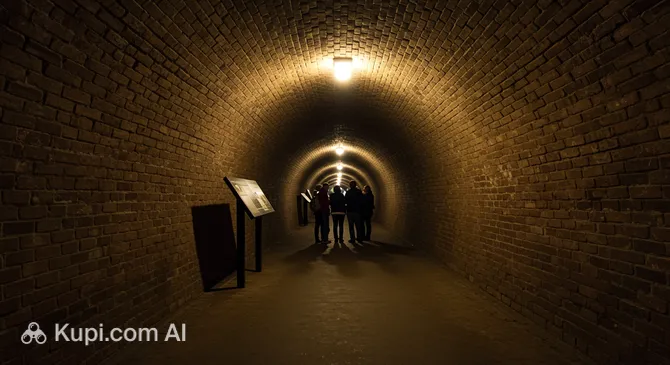
Underground Szczecin Routes
Underground Szczecin Routes. Иллюстрация. Источник: Kupi.com AI

Built in 1941, this complex could shelter over 2,000 people during air raids. Today, the tunnels function as an interactive museum where history comes alive within concrete corridors. The site is divided into two main parts: one dedicated to the dramatic events of the war years, and the second to the Cold War era, when the bunker was modernized to protect against nuclear threats.

Visitors can see original life-support systems, including water supply, heating, and even preserved everyday items like children's beds. It’s not just an excursion, but a deep immersion into the atmosphere of the 20th century, allowing you to see firsthand how the city prepared for history's toughest challenges.

Contacts

To plan your visit and check the details, you can use the following contact information:

How to contactContact
AddressKrzysztofa Kolumba 2, 70-035 Szczecin, Poland
Phone+48 605 433 433
Websiteschron.szczecin.pl

What to Do

The main activity here is exploring thematic routes accompanied by an audio guide or a tour guide. The first route is dedicated to World War II: you will walk through compartments where people hid from bombings, see original toilets, ventilation systems, and hospital wards. Mannequins in authentic clothing and lighting effects help recreate the somber yet significant atmosphere of that time.

The second route takes guests into the Cold War era. Here, the focus is on preparations for a nuclear conflict. You will see airtight doors, civil defense posters, and decontamination equipment. The feeling of complete isolation from the outside world in these concrete corridors leaves a lasting impression and makes one reflect on the fragility of peace.

Numerous information boards with archival photos and descriptions in several languages are installed in the tunnels. Detailed English materials and audio guides are provided for international tourists, making the visit as informative as possible. Don’t forget to wear comfortable shoes and bring a light jacket, as it remains cool underground even on hot days.

Getting There

Finding the entrance to the underground is very simple—it is located at Krzysztofa Kolumba 2, just a few steps from the Szczecin Główny main railway station. This makes the attraction an ideal starting point for a city walk if you have just arrived by train.

From the city center, you can reach it by taxi in 5–10 minutes or use public transport. Any tram or bus going to the "Dworzec Główny" stop will do. If you prefer walking, the path from the Old Town takes about 15–20 minutes, allowing you to enjoy views of the Oder River along the way.

The site is located in a historical district, so after visiting the routes, you can easily continue exploring the city, as many other iconic places and convenient transport hubs are nearby.

Ближайший город: Szczecin

History & Facts

The history of this place began in 1941, when the German command decided to protect the city's civilian population from increasing air raids. The construction utilized ancient underground spaces created by Prussian engineers, which were adapted for modern defense needs. The resulting structure was truly grand: five levels going deep underground could simultaneously accommodate more than 2,000 people.

After 1945, when the city became part of a new territory, the site was not abandoned. In the 1950s and 60s, at the height of the Cold War, authorities carried out a large-scale modernization of the bunker. It was converted into a nuclear shelter, equipped with airtight doors, powerful air filtration systems, and autonomous communications to protect people in the event of weapons of mass destruction being used.

Today, this complex is a unique monument that has preserved traces of two dramatic eras of the 20th century. Walking through its corridors, you can see how ideas of security and fortification transformed over decades, turning from a simple shelter into a high-tech (for its time) autonomous facility.

Time Needed

A full visit to the Szczecin Underground Routes usually takes 45 minutes to 1.5 hours. The time depends on whether you choose one specific route or decide to explore both eras presented.

The first thematic route, dedicated to World War II, takes about 45 minutes. If you plan to carefully examine all the installations and photos and listen to the audio guide covering the Cold War period as well, you should set aside at least an hour and a half. For tourists on a tight schedule, brief introductory tours of the bunker's key points are available.

Working Hours

The Underground Routes are open to visitors daily. Official working hours are from 12:00 PM to 4:00 PM Monday through Sunday inclusive. This time is ideal for including a tour of the tunnels during a midday break between city walks.

Tours are conducted regularly throughout the working day. However, tourists are advised to arrive a little early to purchase tickets and check the start time of the next session, as entry to the labyrinths is usually done in groups.

12:00 – 16:00

Nearby

Exploring the area around the station and Kolumba Street will allow you to see the city from different perspectives. After the somber atmosphere of the underground, it will be especially pleasant to stroll through historical squares or visit modern entertainment centers.

NameDistance
Brama Portowa0.6 km
Hala Odra0.6 km
Szczecin Boulevards0.7 km
St. James the Apostle Archcathedral Basilica0.7 km
VR Planet Szczecin0.8 km
Brasileirinho Brazilian Cuisine & Bar0.8 km
17 Steps Cocktail Bar0.9 km

Reached the end of the page?

That means the route is fully explored