Support

The National Museum in Szczecin — The Dialogue Centre Upheavals

About

In the very heart of Szczecin lies a site that redefines the concept of museum space—the National Museum in Szczecin – Dialogue Centre Upheavals. Located underground at Solidarity Square, this pavilion has become an important symbol of modern history in Poland, telling the story of key social and political changes in the second half of the 20th century.
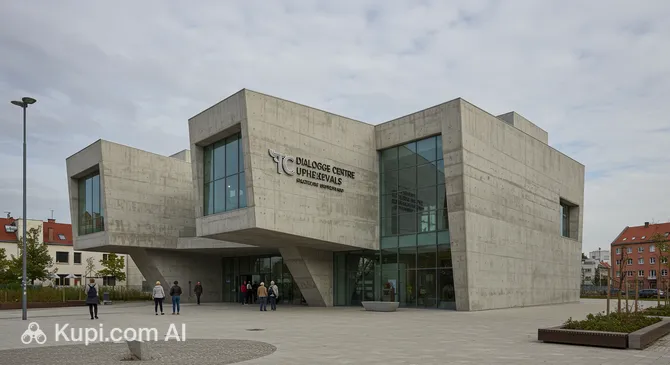
National Museum in Szczecin – Dialogue Centre Upheavals
National Museum in Szczecin – Dialogue Centre Upheavals. Иллюстрация. Источник: Kupi.com AI

The architectural design of the museum, created by Robert Konieczny's studio, has gained worldwide recognition. In 2016, it was named "World Building of the Year" at the World Architecture Festival. Its uniqueness lies in the fact that the underground museum's roof serves as a functional city square, where residents meet and important events take place.

The museum's exhibition covers the period from 1939 to 1989, focusing on fateful moments in the region's history, such as worker protests and the struggle for independence. Thanks to modern technology and interactivity, a walk through the halls becomes a deep immersion into the past through the voices and objects of real people.

Contacts

For more information on special exhibitions or to organize group tours, you can use the official communication channels. The museum is located in the very center of the city, making it easily accessible for tourists.

How to contactContact
AddressPlac Solidarności 1, 70-515 Szczecin, Польша
Phone+48 571 309 239
Websiteprzelomy.muzeum.szczecin.pl

What to Do

A visit to the museum is, above all, an interactive experience. You will be able to see unique multimedia installations, listen to audio recordings of memories from participants in historical events, and watch documentary footage. One of the most memorable objects is an art installation in the form of a cage and a collage located at the entrance to the gallery.

Walking through the dimly lit underground halls, you will pass through a chronological chain of events, studying artifacts and text panels translated into English and German. This place encourages reflection and dialogue about how modern society was formed.

After diving into history, you can visit a small cafe located on the premises or head up to the surface to walk across Solidarity Square, which itself is part of an open-air exhibition. Lectures and discussions on cultural and historical topics are often held here.

Getting There

The National Museum in Szczecin – Dialogue Centre Upheavals is located at Plac Solidarności 1, directly under Solidarity Square. This location is in the heart of the city, right across from the famous modern Philharmonic, making it easy to find.

If you are in the center, the easiest way to reach the museum is on foot while enjoying the architecture of the old town. For those who prefer public transport, major tram and bus lines stop nearby. You can also use a taxi—the ride from any central point will take only a few minutes.

For travelers arriving from Szczecin-Goleniów Airport or the central railway station, it is most convenient to take a train or express bus to the center. From the station, the walk to the square takes about 15 minutes, allowing you to see other iconic city sites along the way.

Ближайший город: Szczecin

History & Facts

The history of this place is inextricably linked to the fate of post-war Poland. The museum covers the period from 1939 to 1989, paying special attention to how Szczecin was transformed from a German city into a Polish one. It presents detailed themes of mass migration and the post-war reconstruction of the region.

The building's location is symbolic: beneath Solidarity Square, where significant social protests took place in December 1970. The museum serves as an architectural monument to the events that eventually led to the country's independence in 1989. The exhibition honestly portrays challenging times, using personal memories and archival documents.

Interestingly, the Dialogue Centre Upheavals project became a true breakthrough in modern architecture. The building was designed not to dominate the historical square but to literally "dissolve" beneath it, leaving the space above for public events and the memory of the past.

Time Needed

To thoughtfully explore the exhibition, it's worth setting aside 1.5 to 2.5 hours. The museum is rich in multimedia content, including video interviews with witnesses of historical events, which require time to watch and reflect upon.

Visitors often note that the Dialogue Centre Upheavals has a strong emotional impact, so rushing would be out of place. If you plan to study the text panels and installations in detail, it's better to allow a bit more time for your visit.

Working Hours

The museum is open to visitors throughout the week, except for Mondays. Please note that on Thursdays, entry for seniors is traditionally free.

The opening hours are as follows: Tuesday, Wednesday, Thursday, and Saturday from 10:00 AM to 6:00 PM; on Friday and Sunday, the museum closes slightly earlier, at 4:00 PM. Nevertheless, it is recommended to check the current information on the official website before your visit, as hours may change on holidays.

DayWorking hours
понедельникЗакрыто
вторник10:00–18:00
среда10:00–18:00
четверг10:00–18:00
пятница10:00–16:00
суббота10:00–18:00
воскресенье10:00–16:00

Nearby

Thanks to the museum's central location, you can easily combine your visit with other iconic city landmarks. Historical monuments and modern entertainment centers are both nearby, allowing you to create a full itinerary for the day.

Exploring the surroundings will help you better feel the atmosphere of the city, where medieval heritage stands alongside avant-garde architecture and green terraces by the river.

NameDistance
National Museum in Szczecin – Museum of Regional Traditions0.2 km
Tkacka Craft Kitchen0.3 km
VR Planet Szczecin0.4 km
Hotel Szczecin0.4 km
Chrobry Embankment0.5 km
Brasileirinho Brazilian Cuisine & Bar0.5 km
17 Steps Cocktail Bar0.5 km

Reached the end of the page?

That means the route is fully explored