Support

Wieża Ciśnień Muzeum Wodociągów

About

High above the tiled roofs of the old quarters rises the Water Tower – Waterworks Museum — a unique monument of industrial architecture that adorns the city of Bydgoszcz. Built in 1900, this cylindrical brick beauty with its conical dome was once the technical heart of the city, and today it has transformed into one of the most original museums Poland has to offer.
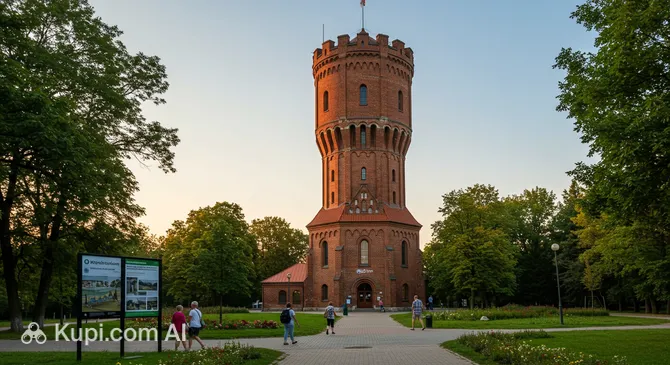
Water Tower – Waterworks Museum
Water Tower – Waterworks Museum. Иллюстрация. Источник: Kupi.com AI

The building is situated on the picturesque slope of Henryk Dąbrowski Park. Inside the tower lies the fascinating exhibition of the Waterworks Museum, featuring rare artifacts ranging from wooden pipes of previous centuries to elements of vintage bathrooms and water tokens. This is not just a warehouse of antiquities, but a vivid history of how technology transformed the daily lives of citizens.

The main highlight of the tower is its observation deck located at the top. After climbing the spiral staircase, visitors find themselves on a gallery offering what is arguably the best panoramic view of the entire city and the winding Brda River. It is a perfect blend of industrial heritage and aesthetic pleasure.

Contacts

For details regarding your visit or to book a group tour, you can use the official contact information provided below.

How to contactContact
AddressFilarecka 2, 85-160 Bydgoszcz, Poland
Phone+48 52 586 05 55
Websitewww.muzeum.mwik.bydgoszcz.pl

What to Do

For those ready to climb the 118 steps, the ultimate reward is access to the open gallery. From this bird's-eye view, a magnificent panorama of the Old Town and park areas unfolds. It is a great spot to take memorable photos and get your bearings on the city's geography before continuing your walk.

Inside the tower itself, you can immerse yourself in the world of antique plumbing and engineering. Be sure to look for the wooden water pipes — artifacts from the pre-industrial era — as well as the collection of zinc bathtubs and cast-iron toilets, which today seem like genuine works of art. A collection of archival photographs and documents helps you imagine what the city looked like a century ago.

The museum actively uses modern technology: here you can watch interactive films and animations that clearly explain the complex journey water takes before reaching the tap. Thanks to this approach, the visit will be equally interesting for adults fascinated by the history of technology and for children.

Getting There

Finding your way to the tower is easy: it is located at Filarecka 2, in a pleasant park on the Henryk Dąbrowski Hill. If you are in the city center, a lovely walk from the Old Town will take only about 15–20 minutes (a distance of 1–2 km), allowing you to enjoy the park alleys along the way.

For those who prefer public transport, trams and buses running to stops near Filarecka or Dąbrowski Park are suitable. If you are coming from the main railway station, Bydgoszcz Główna, the journey by public transport takes about 10 minutes, while walking takes about half an hour.

Travelers arriving by car can use the parking lots on the adjacent streets. A visit here can also be conveniently combined with another site of the Waterworks Museum — the Pump Hall (Hala Pomp) in the Gdańsk Forest, creating a comprehensive educational itinerary.

Ближайший город: Bydgoszcz

History & Facts

The construction of this engineering masterpiece began in 1898–1899 according to the design of the architect Franz Marshall. The tower was officially commissioned on May 15, 1900, becoming a vital link in the city's new water supply system. The investment in the project, which also included 20 deep wells and modern pumps, amounted to an impressive sum of more than 3 million marks.

For nearly 90 years, the tower flawlessly performed its technical function. Its upper section houses a massive reservoir with a capacity of 1,260 m³, which accumulated water during low-consumption hours and maintained stable pressure in the network during peak loads. Interestingly, even at the time of construction, the building was designed with aesthetic value in mind and served as an observation deck.

In 1990, following the modernization of the city network, the tower's original operational use ceased. However, this unique structure was not abandoned: in the 1990s, it was carefully transformed into a museum. Today, the historical fittings and interiors have been preserved, allowing visitors to see early 20th-century technology in its original form.

Time Needed

When planning your itinerary, set aside approximately 1.5–2 hours for the visit. This is enough time to explore all levels of the exhibition at a leisurely pace and enjoy the panorama from the top.

If you decide to study the archival photographs in detail and watch the multimedia materials about the water purification cycle, your visit may last a bit longer. However, for most tourists, two hours is sufficient to gain a full impression of this unusual monument of industrial architecture.

Working Hours

The museum's doors are open to visitors according to a schedule that should be considered when planning your weekend. Please note that Friday is the museum's day off.

  • Monday — Thursday: 11:00 – 16:00
  • Friday: Closed
  • Saturday — Sunday: 10:00 – 20:00
DayWorking hours
Понедельник11:00 – 16:00
Вторник11:00 – 16:00
Среда11:00 – 16:00
Четверг11:00 – 16:00
ПятницаЗакрыто
Суббота10:00 – 20:00
Воскресенье10:00 – 20:00

Nearby

After immersing yourself in the history of the water supply, it is worth spending some time at other interesting sites located within walking distance. The area surrounding the tower and the Old Town is rich in architectural monuments and recreational areas that will harmoniously complement your walk.

NameDistance
Garlic and Olive0.2 km
Cybermachina0.3 km
Rother's Mills0.4 km
Monument to Casimir the Great0.5 km
Museum of Soap and History of Dirt0.5 km
SEE YA0.5 km
Mill Island0.5 km

Reached the end of the page?

That means the route is fully explored