Support

Wassertor

About

Imagine a massive red-brick structure that has greeted sailors and merchants for centuries. This is the Wassertor (Water Gate) — the only surviving medieval gate in the city of Wismar. Built in the mid-15th century, it is a striking symbol of Brick Gothic architecture, characteristic of northern Germany.
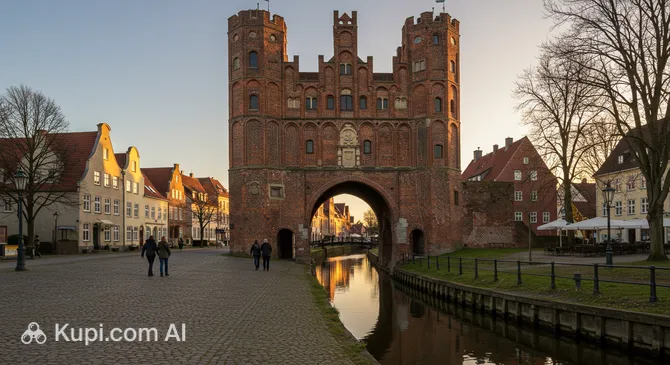
Water Gate
Water Gate. Иллюстрация. Источник: Kupi.com AI

The gate owes its name to its location: it opens directly onto the Old Harbor and once controlled access from the sea. Its stepped gable and powerful walls recall the times when the city was a prominent member of the Hanseatic League. Today, it is not just a historical site, but part of a UNESCO World Heritage site.

Located at Am Hafen 1, the Wassertor is a landmark of the city. Travelers come here to feel the spirit of antiquity, admire the reflection of the Gothic forms in the waters of the Grube canal, and begin their journey through the cozy streets of one of the Baltic's most atmospheric port towns.

Contacts

For your convenience, we have gathered the main contact information for the attraction in the table below.

How to contactContact
AddressAm Hafen 1, 23966 Wismar, Germany
Websitewww.wismar.m-vp.de

What to Do

The best thing to do at the Wassertor is to take a slow walk along the Old Harbor (Alter Hafen) promenade. This spot offers the finest view of the stepped Gothic facade, which looks particularly impressive in the rays of the setting sun. It is a perfect place for photography: the combination of old brickwork and the masts of ships in the harbor creates a unique backdrop.

Pay attention to the details: near the gate, you will find the famous "Swedish Guards" sculptures—lion heads that serve as a reminder of the Swedish period in the city's history. It is also worth stopping by one of the cozy restaurants nearby to sample traditional Hanseatic cuisine. Freshly caught fish and local beer are a must for every visitor.

If you are looking for more activity, you can take a boat trip along the canal or participate in a city quest, where the Wassertor often serves as one of the key points on the route. In summer, maritime festivals are frequently held here, filling the square in front of the gate with live music and the bustle of a fair.

Getting There

The Wassertor is located at Am Hafen 1, directly by the Old Harbor in the historic center of Wismar. If you are already in the city center, a walk from the main Market Square (Markt) will take no more than 10–15 minutes through picturesque streets.

For those arriving from other cities in Germany, taking the train is the most convenient option. The journey from Hamburg takes about 1.5 hours, while from Rostock it is just 30 minutes. From the central railway station (Hauptbahnhof), you can reach the harbor on foot in 20 minutes or by taking bus No. 1.

Travelers arriving by car should follow the A20 motorway. Parking is available at one of the paid lots near the port. Navigator coordinates: 53.8963606, 11.4612544. During the summer season, Wismar can also be reached by cruise ships, which dock in the immediate vicinity of the attraction.

Ближайший город: Wismar

History & Facts

The Wassertor (Water Gate) is a silent witness to the grandeur of the Hanseatic League. Built in the mid-15th century in the Late Brick Gothic style, it replaced earlier fortifications. Out of the five medieval gates that once protected Wismar, only this one has survived to the present day, making it a unique architectural monument.

During the city's heyday, the gate played a key strategic role, controlling access to the Grube canal. This canal was used to transport goods into the city, as well as water for domestic use and firefighting. Later, in the 17th century during the period of Swedish rule, the fortifications around the gate were reinforced, further emphasizing the significance of this maritime hub.

In 2002, the historic center of Wismar, including the Wassertor, was officially inscribed on the UNESCO World Heritage list. This decision recognized the exceptional preservation of the medieval town layout and architecture typical of the wealthy trading cities along the Baltic coast. Today, the gate serves as a reminder of the era when the city flourished through the trade of herring, beer, and cloth.

Time Needed

To simply view the Wassertor and take a few souvenir photos, you will need very little time—about 30–45 minutes. It is an ideal stop during a leisurely stroll along the waterfront.

If you plan to walk along the Grube canal, visit one of the local shops, or sit in a café by the Old Harbor, it is better to set aside 1–1.5 hours. To fully explore the historic city center in combination with the gate and nearby churches, you should plan for at least half a day.

Working Hours

Since the Wassertor is an open-air architectural monument and part of the public urban space, it is accessible 24 hours a day. You can visit it at any time that suits you—whether in the early morning while the harbor is still quiet or late in the evening when the building is beautifully illuminated.

There are no tickets or entry restrictions; the gate is open to visitors daily, including weekends and public holidays.

Круглосуточно

Nearby

Visiting the Wassertor is an excellent starting point for exploring the rich heritage of the Hanseatic League. Discovering the surrounding area will help you immerse yourself deeper into the atmosphere of a medieval port and see how history is carefully preserved in this corner of Germany.

Within walking distance of the harbor, you will find majestic churches, ancient streets with unusual names, and market squares that still bustle with city life. Below are the nearest points of interest:

NameDistance
Kai Barcafé0.1 km
Kutterkaten Fish Restaurant0.1 km
Old Harbour0.2 km
Wismar City History Museum0.4 km
Poeler Kogge Association (Baumhaus)0.4 km
SprottenHannes Fisch & So0.4 km
Historic Old Town of Wismar0.5 km

Reached the end of the page?

That means the route is fully explored