Support

Dünenweg Wenningstedt

About

Imagine a walk where the waves of the North Sea roar on one side, and endless sandy hills covered with wild grasses stretch out on the other. The Wenningstedt Dune Path (known as Dünenweg) is a picturesque walking route on the island of Sylt in Germany, offering guests of the city of Westerland a chance to touch the untouched northern nature.

This route is considered one of the most beautiful on the coast thanks to its panoramic views. The trail begins at Strandstraße and leads travelers through a unique landscape where golden sand contrasts with the deep blue of the sea.
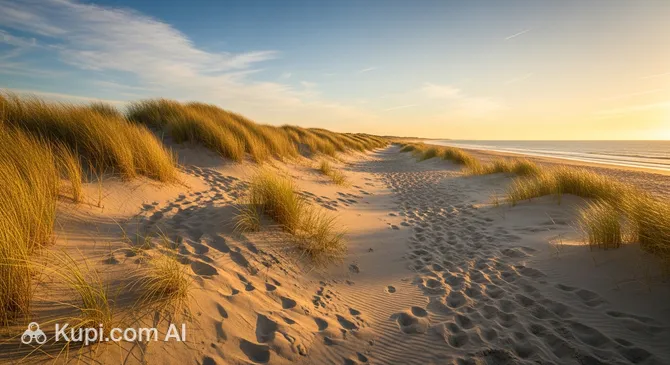
Dune Trail Wenningstedt
Dune Trail Wenningstedt. Иллюстрация. Источник: Kupi.com AI
For the convenience of visitors, the path is equipped with sturdy wooden boardwalks and stairs, making the walk comfortable even for families with small children.

The main value of this place lies in its atmosphere of tranquility and pristine beauty. It is not just a road, but an ecological site that allows you to see the fragile ecosystem of the dunes without disturbing its integrity. The Dünenweg attracts those seeking inspiration in seascapes and wanting to feel the true spirit of the German North.

Contacts

For the latest news on events and trail conditions, you can visit the official municipality website or contact the local tourist center.

How to contactContact
AddressUnnamed Road 25996, 25996 Wenningstedt-Braderup (Sylt), Германия

What to Do

The main activity on the Dünenweg is a contemplative walk. From the tops of the dunes, stunning views of Wenningstedt beach open up, which seem endless in clear weather. This is an ideal place for photographers: the soft light and natural curves of the landscape allow for creating true masterpieces without any filters.

Active lifestyle enthusiasts should head down to the coast. Here, at the foot of the dunes, you can go surfing, kiting, or paddleboarding. Strong winds and open water make this section of the sea popular among experienced athletes and beginners looking to catch their first wave.

For those interested in history and biology, the trail serves as a starting point for exploring the surroundings. Very close by is the ancient megalithic burial site Denghoog, which is over 5,000 years old. You can also take an excursion to the Braderup Heath nature reserve to observe rare birds and the unique flora of the coastal region.

Getting There

Getting to this natural location is easy, as it is situated in the central part of Wenningstedt and is within walking distance of most hotels and recreation areas. The main entry point is Strandstraße, a beach street from which it is convenient to begin your exploration of the landscape.

If you are arriving from the mainland, the route via the famous Hindenburg Dam is popular in Germany. You can take a car or board a train connecting the island with the station in the town of Niebüll. Public transport on Sylt itself is well-developed, with buses running regularly between towns and attractions.

For those who prefer private transport, paid parking is available near the Dünenweg and the beach area. You can also always call a taxi from the center of Westerland or rent a bicycle, which is the most eco-friendly and pleasant way to travel along the coast.

Ближайший город: Westerland

History & Facts

The amazing landscape we see today has been formed over millennia. The mighty waves of the North Sea and constant winds created these sandy hills, which for centuries served the residents of Sylt as a natural shield, protecting settlements from the fury of the elements.

Wenningstedt's history as a resort began in the mid-19th century. It received the official status of a seaside resort (Seebad) in 1859, and a century later, in 1960, it established its title as a health resort. The development of the walking infrastructure on the trail was part of a large-scale plan to attract tourists seeking to enjoy the healing sea air and solitude.

The modern Dune Path is a result of careful environmental stewardship. To preserve the fragile ecosystem and prevent sand erosion, special wooden boardwalks were designed. This allows guests to admire the beauty of the dunes without harming the rare plant species and inhabitants of this unique biome.

Time Needed

A standard introduction to the Dünenweg route usually takes about 1.5–2 hours. This is quite enough time to leisurely stroll along the wooden boardwalks, take several impressive panoramic photos, and simply sit on a bench, breathing in the salty sea air.

However, if your plans include heading down to the beach for sunbathing, surfing, or visiting the ancient Denghoog burial site, it is worth setting aside half a day or even a full day for your walk. Sylt encourages a slow pace, so there’s no need to rush — every turn of the path here reveals a new breathtaking view.

Working Hours

The trail is open to visitors daily, typically from 06:00 to 22:00. This allows you to catch a picturesque sunrise here or watch the sun dip below the horizon. Although the route is accessible year-round, the best time for a visit is considered to be from May to September, when the weather is conducive to long walks and coastal cafes are in full swing.

In the winter period, the trail is also open, but you should take into account strong winds from the sea and the possibility of icy steps. Before planning your trip, it is recommended to check the official resort website for the latest information on the condition of the boardwalks.

06:00–22:00

Nearby

A visit to the trail can easily be combined with exploring other interesting places on the island. Nearby locations offer both a dive into deep antiquity and an introduction to the modern culture of the coast.

NameDistance
Frisian Chapel0.8 km
Westerland West Beach3 km
Brandenburger Strand3.1 km
Hotel Stadt Hamburg3.4 km
Bronze Woman SOS – Save Our Seas3.5 km
#Foodporn ... Taste of Sylt3.5 km
Barbushka Cocktail Café Sylt3.5 km

Reached the end of the page?

That means the route is fully explored