Support

The Occupation Museum

About

Located in the heart of the historic center, in the cellars of the old town hall, the Occupation Museum (Besættelsesmuseet) offers visitors a unique opportunity to look at life in the city of Aarhus during the Second World War. This is a place where history stops being just text in a textbook and takes on a real form through authentic everyday objects and the personal stories of residents.
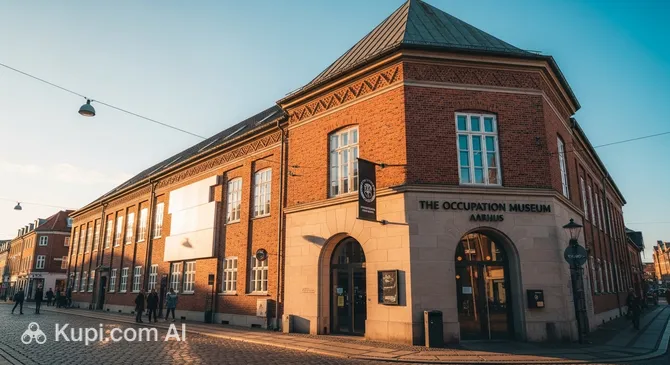
The Occupation Museum
The Occupation Museum. Иллюстрация. Источник: Kupi.com AI

The exhibition covers the period from 1940 to 1945, when Denmark was under German control. The museum was founded by volunteers in 1982 and was developed through their enthusiasm for a long time, which helped preserve a special, intimate, and very sincere atmosphere. The building at Mathilde Fibigers Have 2 is an architectural monument in itself: until the mid-20th century, it housed administrative services and the police.

For tourists, this place is interesting not only for its historical facts but also for how it conveys the spirit of the time. You will learn not only about global events but also about how ordinary people adapted to restrictions, preserved their culture, and expressed protest. High visitor ratings confirm that the museum leaves a deep impression due to its accessibility and clarity.

Contacts

To plan your visit to the Occupation Museum, it's helpful to check its contact details in advance. You can reach the administration directly or visit the official website for the most up-to-date information.

How to contactContact
AddressMathilde Fibigers Have 2, 8000 Aarhus, Дания
Phone+45 86 18 42 77
Websitewww.besaettelsesmuseet.dk

What to Do

In the museum halls, a detailed look at the daily life of Danes under wartime conditions awaits you. You can see what life was like for people facing shortages and curfews, and learn how, even in such dark times, there was room for cultural expression and specific Danish humor.

Special attention should be paid to the interactive elements of the exhibition. One of the most discussed objects is an installation where visitors are invited to analyze the actions of resistance members and make their own moral choice by placing a magnet on a board in the "murder" or "war action" column. This encourages reflection on the complexity of historical processes and the ethical dilemmas of the past.

While walking through the halls, be sure to study the collection of artifacts and photographs. It features documents from resistance members, personal belongings of volunteers, and representatives of the women's movement. The compactness of the space allows you to focus on details and feel a sense of connection to the stories of real people who lived in Aarhus decades ago.

Getting There

Finding the museum is quite simple: it is located at Mathilde Fibigers Have 2, practically in the shadow of the city's main cathedral towers. If you are in the city center, the best way to get there is a pleasant stroll. From the Aarhus H central railway station, the walk takes no more than 10–15 minutes at a leisurely pace.

For those who prefer public transport, city buses and trams stop within walking distance, connecting all parts of the city with its historical core. If you are coming from Aarhus Airport (AAR), the journey by airport shuttle or taxi takes about 40 minutes.

If you are traveling by car, keep in mind that paid parking is available in the center. However, due to the high density of buildings and heavy traffic, tourists are often advised to use taxis or public transport to avoid the hassle of finding a spot.

Ближайший город: Aarhus

History & Facts

The museum’s history is closely tied to a local grassroots initiative. It was founded in 1982 by women's movement activists and former resistance members. Originally, it was a private exhibition created and maintained solely by the enthusiasm of volunteers who sought to preserve the memory of the events from 1940–1945.

The location for the exhibition was not chosen by chance. The museum occupies the cellar of a building that served as the city hall from 1857 to 1941, and later as a police station. The fact that the police continued to occupy the building until 1983 gives the historical space a special sense of authenticity and a somber atmosphere.

The museum's exhibits detail the key moments of the resistance in the region. It is known that over 440 actions were carried out in this city, starting with the first demonstrations on August 13, 1942. The museum does more than just list dates; it tells the stories of strikes, equipment deliveries from the Allies, and the everyday heroism of ordinary people who forever changed the face of modern Denmark.

Time Needed

A visit to the museum typically doesn't take the whole day, as the exhibition is compactly arranged. However, for a thoughtful look at the artifacts, reading the chronicles, and engaging with the interactive elements, it is recommended to set aside 1 to 2 hours.

This is plenty of time to leisurely walk through all the themed halls, examine archival photographs, and immerse yourself in the atmosphere of that difficult period. If you have a deep interest in the history of World War II, you might want to spend more time at the displays dedicated to the activities of the resistance.

Working Hours

When planning a visit to the Occupation Museum, keep its specific schedule in mind. At the beginning of the week, on Monday and Tuesday, the museum is usually closed to visitors. On weekdays from Wednesday to Friday, the doors are open from 13:00 to 17:00, and on weekends from 11:00 to 17:00.

Since the schedule may change depending on public holidays or special events, tourists are strongly encouraged to check the current opening hours on the museum's official website before visiting.

DayWorking hours
понедельникЗакрыто
вторникЗакрыто
среда13:00–17:00
четверг13:00–17:00
пятница13:00–17:00
суббота11:00–17:00
воскресенье11:00–17:00

Nearby

Exploring the central quarters of the city after visiting the museum will allow you to fully experience the atmosphere of old Aarhus. Many iconic landmarks are within walking distance, making it convenient for a walking tour.

Nearby, you will find both quiet historical corners and bustling squares where you can take a break and discuss what you've seen. Here is a list of some interesting sites located nearby:

NameDistance
Store Torv0.1 km
Aarhus Cathedral0.1 km
Erlings Jazz & Beer Bar0.4 km
Gedulgt0.5 km
Vesterlauget0.6 km
Kunsthal Aarhus0.6 km
All at LYNfabrikken0.7 km

Reached the end of the page?

That means the route is fully explored