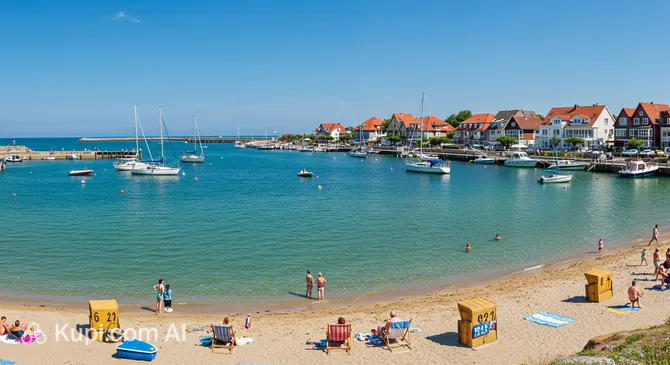
Imagine endless horizons where the sky merges with the mirror-like surface of the water, and the silence is broken only by the cries of seagulls. Rantum Basin is a unique natural treasure located on the picturesque island of Sylt in Germany. This area is a vast lagoon surrounded by salt marshes, which has become a true home for thousands of feathered inhabitants of the North Sea.
Rantum Basin. Illustration.
Source: Kupi.com AI
Traveler photos:
Located in close proximity to the popular town of Westerland, this attraction offers tourists a rare opportunity to escape the city bustle and immerse themselves in an atmosphere of absolute tranquility. Due to its ecological significance and incredible scenery, the site is deservedly popular among ecotourism enthusiasts and professional photographers.
Considered one of the most important ornithological reserves in the region, the basin is part of the Wadden Sea, a UNESCO World Heritage site. It is not just a body of water, but a living ecosystem where you can see firsthand how the tides change the landscape, creating ideal conditions for rare bird species and marine organisms.
Contacts
For those planning a visit to the Rantum Basin and wishing to clarify route details or learn more about current conservation efforts, official contact information is available.
The main reason to visit the Rantum Basin is to observe nature in its pristine form. Here, you can wander for hours along specially equipped trails, scanning the horizon for rare bird species. This place is considered a true bird paradise, so be sure to bring binoculars: hundreds of birds find rest and food here during their seasonal migrations.
For outdoor enthusiasts, the basin area offers excellent opportunities for cycling and long hikes. The routes are designed so that guests can enjoy panoramic views of the lagoon without disturbing its inhabitants. Photographers will find endless inspiration here, especially during sunrise or sunset, when the soft light paints the salt marshes in fantastic shades of gold and purple.
A visit to this area can easily be combined with cultural leisure. Just a couple of hundred meters away is the Kunst: Raum Sylt Quelle gallery, and popular outlets and cabarets are located nearby. Such variety allows for a busy day, combining meditative contemplation of nature with visits to modern art spaces and boutiques.
Getting There
There are several ways to reach this natural attraction. The island's main transport hub is the Westerland (Sylt) railway station, where trains arrive from mainland Germany via the famous Hindenburgdamm causeway. From the station to the Rantum district, you can take a local bus or a taxi, covering a distance of about 10–15 kilometers.
Travelers arriving at Sylt Airport can also use a taxi or local transport — the journey takes very little time, as the distance to the site is between 5 and 10 kilometers. For those who prefer active recreation, renting a bicycle in Westerland is an excellent option; a well-developed network of cycle paths allows for a comfortable ride to the location while enjoying the sea breeze.
For motorists, parking is available directly next to the site at Nösistich 13. The compact size of the island makes it easy to combine a trip to the Rantum Basin with visits to other interesting Sylt locations within a single day.
Nearest city: Westerland
History & Facts
The history of this place is inextricably linked with the development of the island of Sylt and its unique Frisian culture. Although the Rantum Basin in its current form is better known as an ecological site, the region itself was used for centuries by locals for grazing and traditional fishing, adapting to the harsh conditions of the North Sea.
Interestingly, the active development of Sylt as an elite health resort began in the 1950s. It was during this period that the need to preserve the island's fragile ecosystems was recognized. Over time, the salt marshes and the lagoon gained the status of a protected natural area, becoming a vital sanctuary for migratory and nesting birds.
Today, the basin serves as a living example of how human influence (including the creation of dikes and protective structures) has transformed into a valuable biosphere reserve. This place reminds us of the importance of balance between tourism and the preservation of pristine nature, which the island's residents have carefully protected for decades.
Time Needed
For a leisurely walk along the shores and a brief introduction to the local flora and fauna, 1–2 hours is sufficient for most visitors. This time allows you to enjoy the silence, take some picturesque photos, and observe the birds from the viewpoints.
If you plan a full cycling route around the entire lagoon or are an avid birdwatcher, you should set aside 3 to 4 hours for your visit. This will allow you to explore the remote corners of the basin without rushing and perhaps visit nearby art galleries or cozy cafes in Rantum itself.
Working Hours
Since the Rantum Basin is an open natural area, it is accessible for visiting 24/7. You can come here early in the morning to catch the first rays of the sun, or late in the evening for a walk under the starry sky — access is open 24 hours a day, seven days a week.
There are no operating hours or closing days for entering the reserve, making it an ideal destination for spontaneous trips at any time that suits you.
Open 24 hours
Nearby
Exploring the surroundings of the Rantum Basin allows tourists to dive deeper into the atmosphere of Sylt, combining nature contemplation with cultural and historical discoveries. Near the natural area, you will find both technical structures and ancient monuments that testify to the region's rich past.