Support

Riesa

About

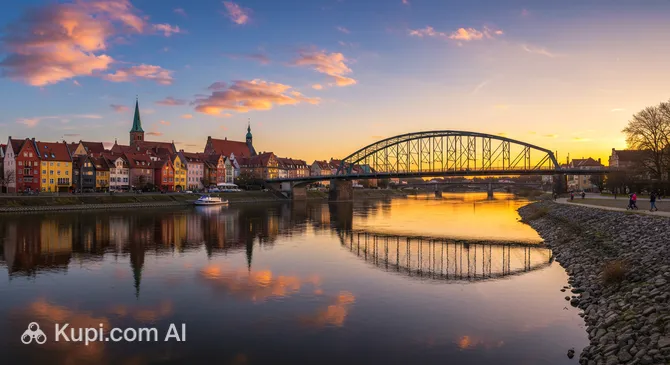
Riesa is a colorful city in the state of Saxony, picturesquely situated on the banks of the Elbe River. Home to approximately 29,000 people, this corner attracts travelers with its unusual combination of industrial heritage, sporting spirit, and the cozy atmosphere for which Germany is so famous. Thanks to its favorable riverside location, the climate here is mild and comfortable for walks at any time of year.

Riesa. Illustration.
Source: Kupi.com AI

The city's symbol is a legendary giant who, according to legend, shook the sand out of his boot, forming the hill on which the settlement was founded. The fascinating history of Riesa is closely intertwined with the development of industry and transport, which is reflected in the appearance of the city streets. Today, Riesa is known as the "City of Sports" due to its regular hosting of prestigious international competitions and championships.

Among the main points of attraction for tourists is the unique Noodle Center (Nudelcenter) with its "glass factory," where you can observe the production process of the famous German pasta. Guests are also drawn to the ancient monastery complex, transformed into a cultural center, and the well-maintained Elbe embankment, ideal for cycling and walking.

A visit to Riesa will be an excellent addition to a trip through Saxony, allowing you to see the life of a German city that knows how to honor traditions while living in the rhythm of modern times.

Weather Overview

The climate in Riesa can be described as moderate, with clearly defined seasons, typical of Saxony. Summer usually brings warmth: in the hottest months, July and August, average daytime temperatures reach 25°C. This is an ideal time for walks along the Elbe, though you should be prepared for variable cloudiness—about 11 rainy days are recorded per month in summer.

The winter period in the city is quite mild; severe frosts are rare. The average temperature in January and December stays around 2–3°C, and nighttime values rarely drop below zero. However, winter is the wettest time of year: in December, the number of days with precipitation can reach 16, so warm and waterproof clothing will be useful.

The shoulder seasons, especially May and September, offer tourists comfortable conditions with average temperatures ranging from 14°C to 19°C. To choose the best dates for your visit and not depend on nature's whims, we recommend studying the detailed weather in Riesa before planning your route. Expect a warm summer with occasional rain and cool, rather damp winters.

Average monthly temperature

Average monthly precipitation

Interesting Facts

Riesa holds many fascinating secrets that reveal themselves only to the most attentive travelers. Behind the familiar appearance of a Saxon town lie unexpected records and unique traditions that not all tourists know about.

  • The Capital of European Sumo. Surprisingly, it was Germany, and more specifically Riesa, that became an important center for the Japanese wrestling style on the continent. The city has repeatedly hosted World and European Sumo Championships, gathering the best wrestlers on the planet in its arenas—a highly unusual feat for a German provincial town.

  • Energy Breakthrough. Riesa played a key role in the global history of electrification. In 1912, the first 110 kV high-voltage power line in Europe was put into operation here, connecting the city with the power plant in Lauchhammer.

  • The Matchstick City. For many decades, Riesa was famous for its match production. The local factory produced millions of boxes with distinctive labels that were known in almost every home and became a kind of symbol of the era.

How to Get There

When planning a trip to this cozy Saxon city, it is helpful to study the route and choose the optimal transport in advance. Thanks to the region's developed infrastructure, the journey will not be difficult. You can find out more about how to get to Riesa to plan your trip as comfortably as possible.

Riesa itself does not have its own airport, so travelers usually fly into neighboring large cities. The closest and most convenient option is Dresden International Airport (DRS). It is located in Dresden, just 40 km from Riesa. A taxi or transfer will take about 45–50 minutes, making this the fastest route.

Another popular choice is Leipzig/Halle Airport (LEJ), located in Leipzig (the distance to Riesa is about 74 km). Travel time by car is approximately 1 hour. For those flying from afar, the large hub Berlin Brandenburg Airport (BER) in Berlin is a great option. Despite being 118 km from the destination, its wide geography of flights makes it popular among tourists.

For convenience, here is a summary of the main airports through which you can reach the region:

AirportPassenger trafficDistance
Dresden International Airport929 92840 km
Leipzig/Halle Airport2.2 mln74 km
Berlin Brandenburg25.5 mln118 km
Karlovy Vary Airport37 900126 km
Vaclav Havel Airport Prague16.4 mln152 km

Rail transport is another excellent way to get to the region. Although the list of nearest major hubs includes stations in neighboring metropolises, they serve as excellent transfer points. For example, Dresden Central Station is located in the city of Dresden, just 40.5 km from Riesa. From there, you can quickly reach your destination by regional train or taxi.

Leipzig Central Station is also an important transport hub. It is located in Leipzig, at a distance of about 74 km from Riesa. This is one of the largest stations in Europe, receiving many trains, making it a convenient transfer point when traveling through Saxony.

Below is information about the nearest major railway stations:

StationPassenger trafficDistance
Dresden Hauptbahnhof21.9 mln41 km
Leipzig Hauptbahnhof43.8 mln74 km
Halle (Saale) Railway Station12.8 mln123 km
Berlin Zoologischer Garten Station36.5 mln133 km
Berlin Ostbahnhof Station36.5 mln134 km

Main Attractions

Despite its industrial character, Riesa offers travelers several unique and memorable places that reveal the history and culture of this Saxon city from unexpected angles.

An absolute magnet for tourists is the famous Noodle Center (Nudelcenter Riesa). It is not just a factory, but a truly interactive world of pasta. Visitors can take a tour of the "glass production facility" to see the entire process of making pasta with their own eyes—from kneading the dough to packaging. The complex also features a museum telling the history of the brand and a restaurant where you can taste the freshest products. This place is especially popular with families with children.

Connoisseurs of architecture and history should visit Riesa Monastery (Kloster Riesa). Founded in the 12th century, this complex is the oldest in the city and serves as its historical core. Today, the renovated buildings of the former monastery house the city museum and library. The museum's exhibitions tell the story of Riesa's development from a medieval settlement to an important industrial center, and the preserved chapter hall allows you to feel the atmosphere of deep antiquity.

The symbol of the city greeting guests is the sculpture "Riesaer Riese" or the "Giant of Riesa." According to local legend, the city was founded on a hill formed from sand that a giant shook out of his boot. The statue of this mythical character has become a popular photo spot and a reminder of the region's folklore traditions.

For a quiet break, the Holy Trinity Church (Trinitatiskirche) and its surrounding area are ideal. This majestic Neo-Romanesque church, built at the end of the 19th century, dominates the cityscape. After viewing the church, it is pleasant to stroll along the Elbe embankment, which is part of the famous Elberadweg cycle route. Here you can enjoy views of the river and watch the passing ships.

Local Cuisine

Riesa's gastronomic scene is a harmonious blend of hearty Saxon traditions and the city's unique identity as the unofficial "capital of pasta." A journey here is inconceivable without getting to know the local products, as the country-famous pasta, which has become a real culinary brand of the region, is produced right here.

On the menus of many establishments, noodle dishes take a special place: from hearty casseroles to exquisite variations with seasonal vegetables. Tourists should definitely try the pasta at the restaurant near the local factory, where you can appreciate the product's freshness combined with original sauces. For lovers of meat classics, traditional Saxon Sauerbraten will hit the spot—marinated roast beef, usually served here with potato dumplings and red cabbage.

For dessert in Riesa, as in all of Saxony, it is customary to order Eierschecke. This is a tall three-layered cake with a delicate curd filling and an airy layer of egg custard that literally melts in your mouth. Another popular treat is Quarkkäulchen, sweet curd pancakes often served with apple mousse, sugar, and cinnamon.

As for drinks, the city boasts its own specialties. Beer lovers should visit the local private brewery HammerBräu, located in the "Riesenhügel" complex, where excellent varieties are brewed according to old recipes. As an authentic souvenir or digestif, the famous herbal liqueur "Riesaer Zündhölzer" ("Riesa Matches") is often chosen, its name referencing the city's historic matchstick production. Additionally, proximity to the vineyards of the Elbe Valley ensures that restaurants have fine local wines, such as Müller-Thurgau or Riesling.

The dining culture in Riesa is characterized by cozy simplicity. Locals prefer to have lunch in traditional inns (Gasthaus), where a homey atmosphere prevails and the portions are generous. In the warmer months, the open terraces and cafes along the Elbe embankment become a hub of attraction, where you can enjoy food while admiring the picturesque views of the river.

Travel Tips

Traveling to Riesa is an immersion into the measured life of the Saxon province, where comfort meets tradition. To ensure your trip goes smoothly and you feel at home, we have prepared a list of practical recommendations taking into account local peculiarities.

  1. Clothing and Weather. The climate here is moderate, but it is often windy and damp in the Elbe Valley. The best choice is the "onion principle" (layering) to easily adapt to weather changes. Be sure to bring an umbrella or raincoat, even in summer. For walks along the embankment and the historic center, choose comfortable flat shoes, as many streets are paved with cobblestones.

  2. Transport and Getting Around. Riesa is a compact city, and the main attractions are easy to explore on foot. For trips to the outskirts or neighboring cities, it is convenient to use regional buses and trains belonging to the VVO (Verkehrsverbund Oberelbe) transport association. Taxis can be called by phone; apps like Uber do not work here. A great idea is to rent a bicycle, as the famous Elberadweg cycle route passes through the city.

  3. Finances and Payment. The official currency is the Euro (€). Although Germany is a modern country, in small towns like Riesa, the cult of cash (Bargeld) is still strong. Cards are accepted in supermarkets and hotels, but in small bakeries, kiosks, and cozy cafes, they may ask for cash. ATMs (Geldautomat) are available everywhere. Tips are usually left in the amount of 5–10% or simply by rounding up the bill.

  4. Health and Safety. Riesa is a quiet and safe city, but standard precautions apply. Pharmacies are easy to recognize by a large red letter "A" (Apotheke); the schedule for duty pharmacies is usually posted on the door of any of them. The single emergency number is 112. Tap water is safe to drink and of excellent quality.

  5. Language and Communication. The primary language is German. In tourist spots and hotels, staff often speak English, but the older generation may not. Learn a couple of phrases: "Guten Tag" (Good day) and "Danke" (Thank you)—this will endear you to the locals. A SIM card can be bought in supermarkets (Lidl, Aldi) or mobile shops; a passport is required for registration. Free Wi-Fi is available in cafes and at the station, but it is not always stable.

  6. Local Etiquette. Saxons value politeness and restraint. When entering a small shop, it is customary to greet the shopkeeper. On Sunday (Ruhetag), most shops are closed, and making noise in the street or in an apartment is considered bad manners. Punctuality here is not just a word but a norm of life, so it is better to arrive on time for excursions or meetings.

  7. What to Avoid. Never walk on bicycle paths! There is very active cycling in Riesa, and a pedestrian stepping onto a dedicated lane (usually red) can lead to a collision and justified indignation from cyclists. Also, avoid crossing the road on a red light, even if there are no cars—this is socially disapproved behavior and can result in a fine.

  8. Local Tip. If you plan to buy souvenirs, don't look for typical magnets. The best gift from Riesa is a pack of local pasta from the company store at the Nudelcenter factory. They often sell limited editions and unusual pasta shapes that you won't find in regular supermarkets.

Following these simple rules will help you avoid minor misunderstandings and focus on the main thing—enjoying the atmosphere of this hospitable city on the Elbe. We wish you an easy and memorable journey!

Entertainment & Nightlife

Nightlife in Riesa is characterized by a calm and measured rhythm, typical of small Saxon towns. You won't find noisy techno clubs or raves until dawn like in Berlin, but the city offers excellent opportunities for a cozy evening. The main leisure format here is the traditional "Kneipenkultur" (pub culture), dinners in atmospheric restaurants, and attending cultural events.

One of the main hubs for evening relaxation is the multi-functional complex Riesenhügel. This is where life bustles after sunset. Inside, you'll find the popular HammerBräu brewery restaurant, where you can try freshly brewed local beer and enjoy a hearty dinner. The atmosphere is casual, and the crowd is diverse—from young people to families. The complex often hosts themed parties and bowling tournaments, making it an ideal place for an active evening with friends.

If you prefer classic entertainment, look into the Filmpalast Riesa cinema. It is a modern multiplex in the city center showing international premieres; a trip to the movies here is often accompanied by a cocktail at the lobby bar. For fans of live music and dancing, the Kulturzentrum "stern" is open. This is an important cultural venue that hosts concerts, discos, and youth events. Its program often includes the "Stadthalle" hall, used for chamber performances and local events.

However, for truly large-scale shows, sports championships, and A-list concerts, there is the SACHSENarena (also known as the WT Energiesysteme Arena). This is one of the region's largest arenas, which made the city famous as a venue for international dance and sumo competitions. If your trip coincides with events at the "SACHSENarena," be sure to buy tickets—the level of organization is always top-notch.

Those looking for quieter options to end the day should take a walk in the Stadtpark (City Park). This well-maintained green area is perfect for a leisurely promenade before bed. An evening walk here or along the Elbe embankment allows you to enjoy the silence and fresh air.

Practical tips for evening leisure:

  • Opening hours: Most bars and restaurants close around midnight, on weekends a bit later (until 01:00–02:00). Kitchens often stop serving as early as 21:00–22:00, so it's best not to delay dinner.
  • Dress code: The style in Riesa's establishments is predominantly "casual." Comfortable and neat clothing is appropriate almost everywhere; there are no strict requirements for appearance.
  • Transport: Public transport runs infrequently at night. If you stay out late, it is most reliable to call a taxi by phone, as catching a car on the street can be problematic.
  • Payment: Germany is known for its love of cash. Many bars and small pubs may not accept cards, so always have Euros on you.

From a safety standpoint, Riesa is a quiet city. Walking through the center in the evening, especially near the main street Hauptstraße, is considered safe. The streets are well-lit, and the crime rate is low. Nevertheless, as with any travel, you should use common sense and avoid unlit outskirts alone.

Parks & Museums

Despite its reputation as an industrial center, Riesa offers guests cozy green oases and a rich cultural program. The city harmoniously combines well-maintained park areas along the river with museum exhibitions that tell stories ranging from ancient legends to modern Saxon achievements.

Nature lovers should start their acquaintance with the city at the City Park (Stadtpark). These are the "green lungs" of Riesa—a vast area with ancient trees, winding paths, and a pond where you can escape the city's hustle and bustle. The park is perfect for morning jogs or leisurely strolls. Its botanical diversity gives it a special charm: various plant species are collected here, creating a picturesque backdrop in any season.

Another important natural and recreational area is the Riesa Zoo (Tierpark). It is located in a unique spot—right at the foot of the ancient monastery walls. It is an intimate and very cozy zoo, home to more than 50 species of animals. There are no huge enclosures with predators here, but you can see local forest inhabitants, exotic birds, and monkeys. For tourists with children, this is a must-visit: the petting zone and calm atmosphere make it a great place for family relaxation.

The main keeper of history is the City Museum (Stadtmuseum), located in the former Benedictine monastery complex. The building's walls themselves, dating back to the 12th century, are an exhibit. Inside, visitors will find exhibitions covering all stages of the city's life: from the first settlements and the legend of the giant to rapid industrial development. Exhibitions dedicated to the life of monks and the history of navigation on the Elbe are of particular interest.

A truly unique experience is offered by the German Pasta Museum (Nudelmuseum). It is the only museum of its kind in Germany where dull history turns into an exciting adventure. Here you can learn how pasta came to Europe, see old equipment for its production, and vintage packaging from years past. The museum is part of the Nudelcenter complex and is interesting for showing an everyday product through the prism of culture and art.

For those interested in science and space, the Public Observatory (Volkssternwarte Riesa) operates in Riesa. Although it is not a classic museum, it regularly hosts lectures and night observations of the starry sky, making it an important cultural and educational point on the city map.

Insider Tip: After visiting the zoo, don't rush back to the center. Walk through the Monastery Garden (Klostergarten)—this is a hidden corner of silence with medicinal herbs and flowers, recreated according to medieval traditions. It is the best place in the city to read a book or simply enjoy a moment of solitude.

Getting Around

Riesa's transport system is compact and convenient, perfectly matching the measured pace of life in this Saxon city. Public transport is primarily composed of buses and regional trains. As the city is relatively small, there are no metros or trams, but an extensive network of bus routes makes it easy to reach any district, including remote industrial zones and residential quarters. The VGM (Verkehrsgesellschaft Meißen) is responsible for organizing transportation, and the city itself is part of the Upper Elbe transport association (VVO), which makes the tariff system unified and clear for travelers.

City buses run on several main lines connecting the train station, city center, retail parks, and residential areas. Routes are usually designated by letters (e.g., A, B, C) or numbers. Service starts early in the morning, around 5:00, and ends at approximately 20:00–21:00. On weekends, the intervals between buses increase and the number of trips is reduced, so tourists are advised to check the schedule in advance at stops or via online apps.

Fares are paid according to the VVO zonal system. For trips within Riesa, you will need a ticket for one tariff zone. Tickets can be purchased from the bus driver (it's best to have change), at machines at the train station, or through mobile apps like "VVO mobil" or "DB Navigator." There are single tickets, day passes (Tageskarte), which are beneficial if you plan to travel a lot during the day, as well as group tickets for families or friends.

An important point for tourists: paper tickets purchased from machines must be stamped (validated) before starting the journey or immediately upon entering the vehicle if they do not have a time stamp. Validators are usually orange or blue. A ticket purchased from the driver is usually already validated. Fines for fare dodging in Germany are high, so keep your ticket until the end of the journey.

A special feature of the transport system is the ferry across the Elbe (Elbfähre), connecting Riesa with the Promnitz district on the other bank. This is not just a means of transportation, but also a kind of attraction that allows you to enjoy a view of the city from the water. The ferry operates year-round, but the schedule depends on the river's water level, so it's worth checking for up-to-date information before visiting.

As an alternative to public transport, taxis and bicycles are popular in Riesa. Taxi services operate 24/7, but it's hard to catch a car on the street—it's better to order by phone or find a stand at the station. Given the flat landscape and the presence of bike lanes, renting a bicycle is an excellent solution for sightseeing, especially if you plan to ride along the picturesque Elbe embankment.

Accommodation

Where to stay:

Riesa offers travelers a compact but worthy selection of accommodation options that perfectly match the status of a cozy Saxon city. You won't find massive luxury resorts or global luxury chain giants here, but the city is famous for its hospitality and high-quality service. The bulk of the accommodation consists of mid-range hotels focused on comfort and functionality, as well as numerous family pensions (Pensionen) and apartments where you can feel a home-like atmosphere.

When choosing a place to stay, you should be guided by the purpose of your visit, though most tourists prefer to stay in the city center (Innenstadt) or in the immediate vicinity of the Elbe embankment. Staying in the center provides walking access to the main attractions, such as the Noodle Center and the Monastery, as well as the train station, which is convenient for those planning trips around the region. Hotels by the river offer picturesque views and the opportunity to start the day with a walk along the promenade.

Among the well-known accommodation options often chosen by guests of the city, the Mercure Hotel Riesa Dresden Elbland stands out. It is perhaps the largest and most prominent hotel in the city, located right on the riverbank. It is excellent for both business travelers and tourists who value standardized comfort and an on-site restaurant. Another popular spot is the historic Wettiner Hof hotel, which attracts with its atmosphere and proximity to the pedestrian zone.

The price range in Riesa can be described as moderate and affordable, especially compared to neighboring Dresden. The cost of living varies from budget options in small guesthouses to mid-level in the city's main hotels. Booking is available through popular international online platforms, but many private apartments and small pensions can be booked directly by phone or through their own websites, which sometimes allows for a better deal.

Important booking tip: Riesa holds the title of "City of Sports" and regularly hosts major international competitions (e.g., in dance or sumo) at the SACHSENarena. During these championships, demand for housing spikes, and available rooms run out very quickly. Therefore, if your trip coincides with sports events, we strongly recommend booking your accommodation well in advance—at least 2–3 months before.

Nearby Cities

For those wishing to explore the surroundings, Riesa serves as an excellent starting point for day trips to several interesting nearby locations. The convenient location in the Elbe Valley and the developed transport network allow for quick access to true gems of Saxony, each with its own unique character.

One of the most popular destinations is Meissen, located just a few dozen kilometers downstream. This city is world-famous as the cradle of European porcelain. Besides the famous manufacture, tourists are drawn to the majestic Albrechtsburg Castle and the Gothic Cathedral, which create the city's unique hilltop silhouette.

Another interesting option is Radebeul, often called the "Saxon Nice." The city is famous for its picturesque hillside vineyards and the museum of writer Karl May. You can also take a ride on a historic narrow-gauge steam train here, which is a great adventure for the whole family.

Below is information about nearby cities that are convenient to visit on a short trip:

CityPopulationDistance
Oschatz14 34911 km
Grossenhain18 21819 km
Meissen28 96423 km
Döbeln23 72024 km
Bad Liebenwerda9 24225 km

These nearby destinations allow you to get a sense of the diverse culture and landscapes of the region, harmoniously complementing the experience of visiting Riesa itself.

Shopping & Souvenirs

Shopping in Riesa is a calm and pleasant activity, free from the hustle and bustle of metropolises. The city offers a balanced mix of modern shopping centers and cozy shops located in pedestrian zones. You are unlikely to find world-class high-fashion boutiques here, but there are plenty of opportunities for buying high-quality clothing, local products, and everyday goods. A feature of local shopping is its compactness: most interesting spots are within walking distance of each other.

The heart of the city's commercial life is Hauptstraße. This long pedestrian street, connecting the station area with the Elbe embankment, is considered the main boulevard for promenades and shopping. Branches of well-known clothing brands, bookstores, pharmacies, and small private shops are located here. A walk along Hauptstraße allows you to combine shopping with architecture sightseeing and relaxing in numerous street cafes.

For those who prefer to shop under one roof, Riesa has two large complexes. In the very center, right on the main street, is the Elbgalerie. It is a modern shopping arcade with a glass roof, featuring fashion, footwear, perfumery, and accessory stores. Another important point is RIESA PARK—a large-scale retail park on the outskirts of the city. Locals and tourists come here for electronics, sports goods, and groceries at a large hypermarket.

Fans of fresh farm products should visit the weekly market (Wochenmarkt), which usually takes place in the central squares of the city. Here you can buy seasonal fruits and vegetables from Saxon gardens, fresh pastries, honey, and meat delicacies from regional producers. The atmosphere at the market is very friendly and allows you to feel the true taste of local life.

The choice of souvenirs in Riesa is inextricably linked to its main symbols. A mandatory stop is the shop at the Noodle Center. This is a true gourmet paradise: they sell pasta in incredible shapes and colors, gift sets, and sauces that cannot be found in regular supermarkets. Also popular gifts are the "Riesaer Zündhölzer" herbal liqueur and wines from the neighboring Saxony region. Souvenirs featuring the famous Giant of Riesa can be purchased at the tourist information center.

Shops in Riesa follow a standard schedule for Germany. Large shopping centers and supermarkets are open Monday through Saturday, usually from 09:00 to 20:00. Small boutiques in the center may close earlier—around 18:00—and on Saturdays work on a reduced schedule (until 14:00 or 16:00). Important to remember: Sunday is an official day off (Ruhetag), when almost all shops are closed, except for bakeries and kiosks at the station.

The payment system in the city is mixed. Shopping centers (Elbgalerie, RIESA PARK) and chain stores accept credit and debit cards (Visa, MasterCard) without problems. However, in small souvenir shops, at the market, or in small cafes, they may ask for cash. Tourists from non-EU countries can use the Tax Free system: when buying goods worth over 50 Euros in one store, look for the Global Blue logo or ask for the tax refund form at the checkout.
Nearby cities

Reached the end of the page?

That means the route is fully explored