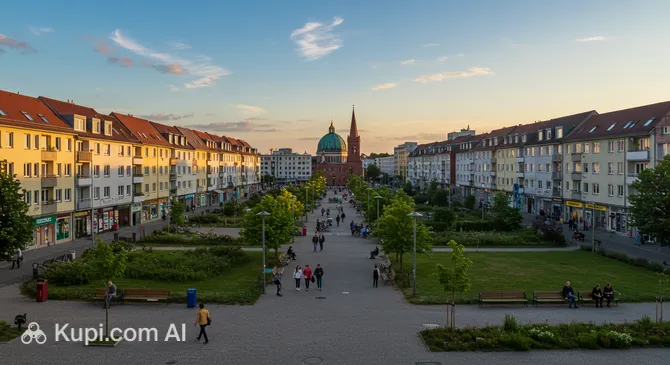
Schönefeld is a cozy town in the federal state of Brandenburg, located directly on the border with the southeastern part of Berlin. Thanks to its strategic position, it serves as a true "gateway" to the country: it is here that the Berlin Brandenburg International Airport (BER) is located. When visiting Germany, many travelers begin their acquaintance with the country from here, appreciating the convenience and transport accessibility of this location.
Schoenefeld. Illustration.
Source: Kupi.com AI
The town is spread across picturesque plains surrounded by green parks and forests, which creates a special atmosphere of tranquility here in contrast to the noisy capital. The population of Schönefeld is about 18,500 people, and locals value this place for its perfect balance between quiet suburban life and proximity to the opportunities of a metropolis. Administratively, the town is part of the Dahme-Spreewald district and continues to develop actively, attracting new residents and tourists.
Despite its modern infrastructure, the history of Schönefeld holds many interesting stages of development, which transformed it from a small settlement into an important European transport hub. Today, there is no big-city bustle here, but there is everything necessary for a comfortable stay: from cozy cafes where it is pleasant to spend an evening to modern shopping centers. It is an excellent starting point for those who want to explore Berlin but prefer to return to the quiet and comfort of a welcoming suburb.
Weather Overview
The climate in Schönefeld can be described as temperate continental, comfortable for traveling at any time of year. Summer here pleases with pleasant warmth without exhausting heat: in the sunniest months, such as June and August, the average temperature is about 19.5–20.4°C, and during the day the air often warms up to 25°C. This is an ideal period for long walks in the fresh air.
The winter season here is mild; severe frosts occur rarely. In January and December, average figures stay at the level of 2.5–3.3°C, and night temperatures practically do not fall below zero. Spring arrives gradually: while it's still cool in March (about 5.3°C), by May the city blooms, and the air warms up to a comfortable 19.0°C during the day.
Precipitation is distributed fairly evenly throughout the year, so an umbrella may come in handy in any season. The "driest" month is September with 8 rainy days, while in winter the number of wet days increases to 14. Expect a warm summer with occasional rain and cool, wet winters. To choose appropriate clothing for your trip, we recommend checking the current weather in Schönefeld before your flight.
Average monthly temperature
Average monthly precipitation
Interesting Facts
Beyond its status as a major transport hub, Schönefeld holds many fascinating secrets that reveal the town from an unexpected side. Here are a few facts to help you better understand the character of this place:
Aviation Legend: Schönefeld is world-renowned for its aviation history. For a long time, the oldest airport operated here, serving as the main "air gateway" to East Berlin. After a large-scale reconstruction, its infrastructure became an integral part of the modern Berlin Brandenburg Airport (BER), turning the town into one of Europe's key logistics hubs.
Green Oases: Contrary to stereotypes about an industrial district, the town's surroundings are rich in nature. Picturesque ponds and forests have been preserved here, and for fans of long walks, the Johannisthal/Adlershof Landscape Park is a perfect place to escape the city bustle.
Architectural Contrast: In the immediate vicinity of modern terminals and business centers, you can find traditional German villages. Local residents carefully preserve old half-timbered houses, creating a striking contrast between the technological present and the region's cozy past.
Multicultural Environment: Due to its proximity to the international airport and the capital, Schönefeld features a particularly cosmopolitan atmosphere. Local Brandenburg traditions and the cultures of guests from all over the globe intertwine harmoniously on the streets and at town festivals.
Schönefeld boasts exceptional transport accessibility, being an important logistics hub in the region. Thanks to its proximity to the capital, getting here is easy from anywhere in the world. You can study all the ways to get to the city in more detail on a separate page, and below we will look at the main air and rail routes.
Undoubtedly, the main arrival point for most travelers is Berlin Brandenburg Airport (IATA: BER). Although it officially belongs to the Berlin transport system, the terminals are located just 3.5 km from the center of Schönefeld. This makes the trip very short: you can reach your hotel in literally 10–15 minutes by taxi or bus. The airport accepts flights from all over the world and is one of the largest in Europe.
As an alternative, you can consider Leipzig/Halle Airport (IATA: LEJ), located in the city of Leipzig. It is much further away—about 140 km from Schönefeld. The journey by car or taxi will take about 1.5–2 hours. This option can be convenient if you are planning a trip through the eastern part of the country or found bargain tickets to this specific aviation hub.
For clarity, here is summary information on the main airports:
Railway communication is also excellently developed. In Schönefeld itself, there are S-Bahn and regional train stations, but the main high-speed lines pass through the stations of neighboring Berlin. The nearest major hub is Berlin Ostbahnhof (Berlin), located 14.4 km away. From here, you can quickly reach Schönefeld by a direct S-Bahn train or taxi; the travel time will be about 20–30 minutes.
The main railway hub of the region is Berlin Hauptbahnhof (Berlin), located 17.9 km from Schönefeld. This is the capital's central station with a colossal passenger flow, where trains from all over Europe arrive. The transfer to Schönefeld from here is also very convenient thanks to the regular FEX express and the S-Bahn; the journey will take about 30 minutes.
Below is a table with the nearest major railway stations:
Schönefeld is often perceived solely as a transit point near the airport, but if you have some free time before your flight or decide to stay here for a couple of days, the town and its surroundings have plenty to surprise you with. Here you can find both breathtaking entertainment and peaceful natural spots that allow you to forget about the hustle and bustle.
For lovers of adrenaline and unusual experiences, a real find is the Hurricane Factory Berlin. This unique complex features one of the largest wind tunnels in Europe. Here, anyone can experience the feeling of freefall without having to jump with a parachute from a height. The attraction is suitable for both professional athletes and beginners, and experienced instructors will make the flight safe and unforgettable.
Hurricane Factory Berlin. Illustration.
Source: Kupi.com AI
Traveler photos:
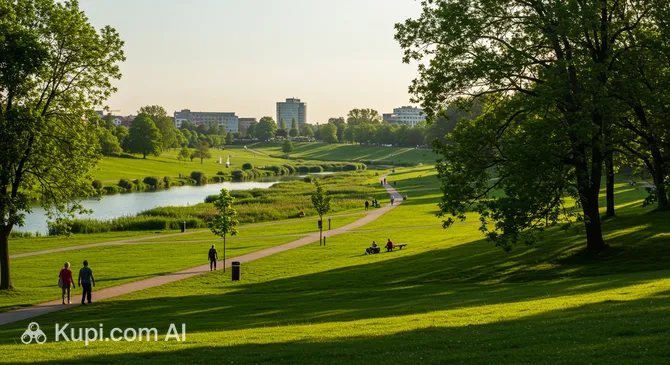
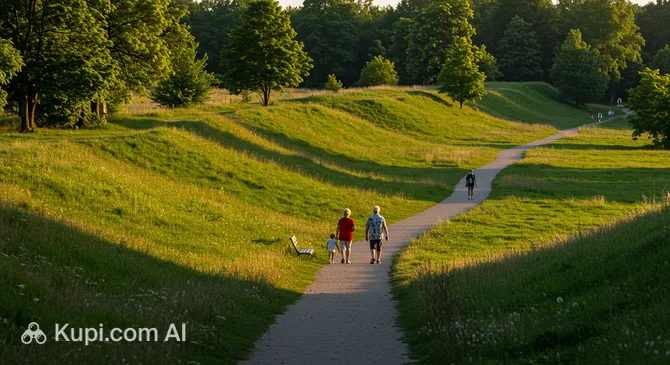
If you prefer a relaxing break in the fresh air, it's worth visiting the Rudow-Altglienicke Landscape Park. This vast green area is located on the border with Berlin and is a wonderful example of how nature reclaims its rights. The park is crisscrossed with picturesque paths, perfect for morning jogs or leisurely strolls. Here you can enjoy the silence of the meadows and take a break from the noise of the terminals.
Landschaftspark Rudow-Altglienicke. Illustration.
Source: Kupi.com AI
Traveler photos:
For those who want to spend time shopping or just browse through stores, the Wutzky Shopping Center is open. This modern space brings together many boutiques, service points, and gastronomic establishments under one roof. It is convenient to buy necessary travel smalls, souvenirs, or just spend some pleasant time over a cup of coffee while waiting for your flight.
Local Cuisine
Schönefeld's culinary scene is a harmonious blend of hearty Brandenburg traditions and the vibrant flavors of neighboring Berlin. The true gastronomic symbol of the region is considered the Berlin currywurst—a sausage fried to a golden crust under a spicy tomato-curry sauce. Local family restaurants will also offer you substantial potato and cabbage dishes, smoked ham, and fresh fish caught in the clean lakes of Brandenburg.
Special attention should be paid to the culture of breakfasts and pastries. Local residents often start their mornings with fragrant, crispy brötchen rolls, served with farmer's cheese, honey, or jam. In the town's cozy bakeries, you can find magnificent strudels and homemade pies with seasonal berries, prepared according to old recipes, which perfectly complement a cup of strong coffee.
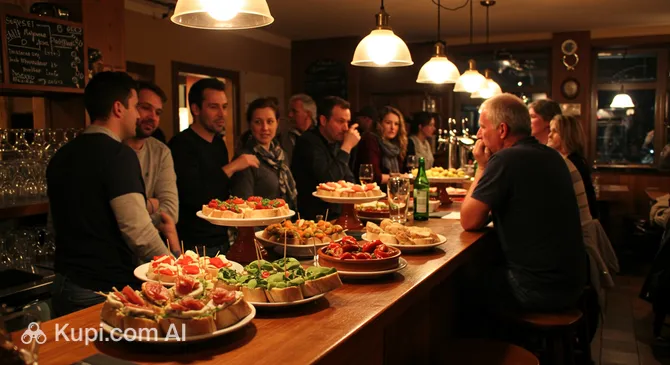
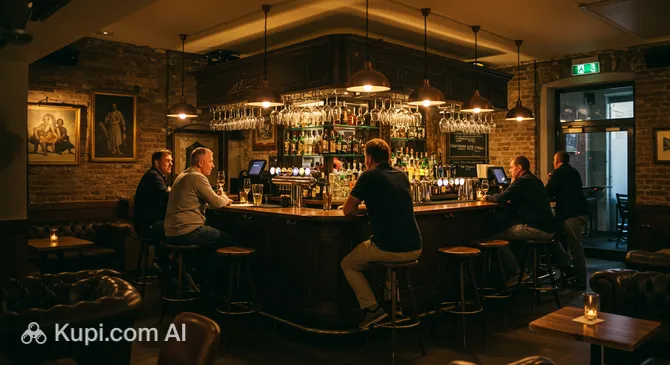
Geco Tapas Bar Café. Illustration.
Source: Kupi.com AI
Traveler photos:
As for drinks, classic German diversity reigns here. Beer lovers will appreciate local craft beers, and in the summer season, refreshing apple cider is popular. In winter, the air on the town's streets and markets is filled with the aroma of glühwein—hot spiced wine that warms you during walks. The city also hosts food festivals where you can get acquainted with the products of local breweries.
Thanks to the proximity of the international airport, the town's gastronomic map is quite diverse: from street stalls with sausages to restaurants with world cuisine. If you are looking for a place for a relaxed evening with snacks and drinks, the Geco Tapas Bar Café, with its laid-back atmosphere, is a great choice. For those who prefer spicy eastern flavors, it's worth checking out the Amritsari Restaurant & Bar, which offers colorful dishes that contrast with traditional German cuisine.
Travel Tips
Schönefeld is not just a point on the map near the airport, but a convenient start for a big journey through Germany, requiring knowledge of some local nuances. To ensure your trip is as comfortable as possible and without unnecessary organizational hassle, we have gathered several proven recommendations to help you feel confident here from the first minutes.
Clothing and Packing: Weather in Brandenburg is changeable, so the best wardrobe principle here is layering. Even in summer, it's worth having a light jacket or jumper for cool evenings, and an umbrella or raincoat will be your faithful companions in any season. Be sure to bring comfortable flat shoes, as you will be doing a lot of walking. Outlets here are of the standard European type (Type F), so check if you need an adapter for your gadgets.
Transport Logistics: The fastest way to get to central Berlin or neighboring cities is by trains (FEX, RE7, RB14) and the S-Bahn (lines S9, S45). Taxis are expensive, so to save money, it is better to use public transport. Download the DB Navigator or BVG Fahrinfo app to build routes and buy tickets online—this will save you time at machines.
Finances and Payment: The currency is the Euro (€). Although Visa and Mastercard are accepted in many places, people here still love cash (Bargeld). Always have 20–50 euros in small bills for payment in kiosks, bakeries, or for bus fares. Tipping in restaurants is welcome: it is customary to round up the bill amount or leave about 5–10% for good service.
Health and Safety: Schönefeld is a quiet and safe town. Pharmacies are marked with a red letter "A" (Apotheke). Note that on Sundays and at night, only on-call pharmacies (Notdienst) are open. The emergency services number is 112. Tap water is drinkable as it undergoes strict quality control, but many tourists buy bottled water out of habit.
Connection and Communication: The official language is German, but thanks to the proximity of the airport, staff in hotels, cafes, and shops speak English very well. For mobile internet, it's more profitable to buy a local prepaid SIM card (for example, in supermarkets or mobile shops at the airport), as roaming can be expensive. Free Wi-Fi is available in terminals, hotels, and some trains, but it is not found everywhere on the town's streets.
Local Etiquette: Germans value politeness and personal space. When entering a small shop or an elevator, it is customary to say hello (the phrase "Guten Tag" or simply "Hallo"). On Sunday, a "day of silence" is observed: most shops (except those at the airport and railway stations) are closed, and making noise on the street is not common.
What to Avoid: Never walk on cycle paths! They are often highlighted by color or markings on the sidewalk. Local cyclists ride fast and expect their lane to be clear; violating this rule can cause serious dissatisfaction and even lead to injuries. Also, do not cross the road on a red light, even if there are no cars—this is considered bad manners.
Important Nuance with Tickets: Schönefeld is in tariff zone C of the Berlin transport system. If you are going to the capital, you definitely need a ticket covering zones Berlin ABC. A regular AB ticket is not valid here, and the fines for this are quite substantial. Don't forget to validate your paper ticket before boarding the train if it doesn't have a purchase time stamp.
By following these simple tips, you can avoid typical tourist mistakes and focus on the main thing—new experiences and discoveries. May your stay in Schönefeld be a pleasant beginning to a great German adventure!
Entertainment & Nightlife
Nightlife in Schönefeld has its own specifics, determined by the town's status as an airport satellite. Here you won't find noisy blocks with night clubs open until dawn or red-light districts. Evening leisure in the town is oriented towards transit passengers and those who prefer a quiet rest after a flight. Most activity is concentrated around large hotels and near the railway station, where bars and lobbies stay open longer than usual, offering a relaxed atmosphere and quality drinks.
For those who want to spend an evening in a cozy setting with an exotic flavor, the Amritsari Restaurant & Bar is an excellent choice. This establishment combines the functions of an Indian restaurant and a bar. Here you can not only have a hearty dinner but also order cocktails or wine while enjoying quiet music and spicy aromas. The crowd here is mixed: from local residents to tourists from all over the world, so the dress code is democratic—casual style will be quite appropriate.
Amritsari Restaurant & Bar. Illustration.
Source: Kupi.com AI
Traveler photos:
If your goal is real club life and dancing until morning, Schönefeld is an ideal starting point. Thanks to excellent transport links (S-Bahn line S9), you can reach Berlin's legendary party districts such as Neukölln or Friedrichshain (Warschauer Straße station) in just 20–30 minutes. This allows you to combine staying in a quiet and safe suburb with the capital's wild parties. Night trains and buses run regularly, so returning to the hotel won't be a problem even late at night.
Speaking of daytime entertainment and shopping, it's worth mentioning the Wutzky Shopping Center. Although it's not a night venue, it is an important leisure hub. Here you can stroll through the shops, visit a cafe, or just pass the time before an evening out. Prices in Schönefeld tend to be slightly lower than in central Berlin, which also applies to the average check in bars—a glass of beer or wine will cost you a reasonable amount.
In terms of safety, Schönefeld is a very quiet place. The areas around the hotels and the station are well-lit and patrolled, so evening walks here cause no concern. If you stay out late, you can call a taxi through popular apps (like Uber or Free Now) or ask a receptionist in any hotel or bar—a car will arrive within 5–10 minutes.
Parks & Museums
Schönefeld might seem like an exclusively industrial center due to its proximity to the airport, but if you delve a little into its surroundings, a completely different picture opens up. The town and adjacent areas offer a surprising combination of spacious green zones that emerged on the sites of historical events and educational venues telling about the region's past and future.
One of the most interesting places for walks is the Johannisthal/Adlershof Landscape Park. It's not just a square, but a real nature reserve created on the territory of a former airfield. Here you can observe a unique symbiosis of aviation history and wild nature: old runways are overgrown with rare herbs, and sheep often graze in the meadows, supporting the ecosystem. The park is divided into active recreation zones and protected areas, making it an ideal place for those who want to see how nature reclaims its space from technology.
Another significant green artery is the Rudow-Altglienicke Landscape Park. Located along the former border, it is part of Berlin's "Green Belt." This park attracts with its scale and open spaces where the wind sweeps through tall grasses. Tourists appreciate it for its long cycling and walking routes passing through picturesque hills and groves. This place is great for picnics and watching planes land from a safe and quiet distance.
Although Schönefeld does not abound in classic art galleries, its "museums" have a special historical and technical character. The main point of attraction for curious travelers is the Berlin Brandenburg Airport Visitor Center (Besucherzentrum). This interactive space allows you to take a look behind the scenes of a giant aviation hub's operation, learn about the history of aeronautics in the region, and even climb to the observation deck, which offers a panorama of the airfield.
History buffs will be interested in a section of the Berlin Wall Trail (Berliner Mauerweg) passing in the immediate vicinity of the town. This is a kind of open-air museum where information steles and preserved fragments of fortifications tell the dramatic story of Germany's division. A walk along this route allows you to physically feel the scale of the historical changes that took place on this land.
Among the architectural monuments, the old Schönefeld Village Church (Dorfkirche Schönefeld) stands out. Built back in the 13th century, this stone church survived many wars and reconstructions, remaining a quiet guardian of history amidst modern development. Its austere appearance and cozy interior create an atmosphere of peace that contrasts with the hustle and bustle of the airport.
For those looking for hidden gems, we recommend visiting the Dörferblick viewpoint on the hill. Although it is technically on the border with Berlin, it is very easy to get there from Schönefeld. From the top of this artificial hill, about 86 meters high, perhaps the best view of the surroundings opens up, including a panorama of the airport and the TV Tower on the horizon—an ideal place to watch the sunset.
Getting Around
Schönefeld's transport system is fully integrated into the overall Berlin and Brandenburg (VBB) network, making moving around the town and trips to the capital as convenient and understandable as possible. A single ticket is valid here, which is suitable for all types of public transport, whether it's an S-Bahn, a train, a bus, or a tram. Thanks to this, tourists can easily change modes of transport without needing to buy different travel documents.
The main transport artery of the town is the railway connection. Through the Schönefeld (bei Berlin) station and the airport station, S-Bahn city trains (lines S9 and S45) run, connecting the town with the region's key hubs. This is the most reliable way to get to the center of Berlin: trains run at intervals of 10–20 minutes. In addition, regional expresses (FEX, RE7, RB14) stop here, allowing you to cover the distance to the capital's main station much faster—in just half an hour.
The bus network complements the railway, connecting residential quarters and numerous hotels with the stations. The buses here are modern, clean, and follow the schedule strictly. For tourists, routes running between the airport terminals and the center of Schönefeld are particularly useful, as are the night lines (marked with the letter N), which help with late arrivals or departures when the S-Bahn trains are temporarily not running.
The fare payment system has its own specifics. Schönefeld is in tariff zone C of the Berlin transport network. If you plan a trip to the capital center, you will definitely need a ticket covering zones Berlin ABC. For travel only within Schönefeld or to neighboring suburbs, a BC zone ticket is sufficient. You can purchase them at machines at stations (accept cards and cash, there is a menu in several languages) or from bus drivers (often cash only).
The most convenient way to buy tickets is through mobile apps such as DB Navigator or BVG Fahrinfo. This saves you from queues and searching for change. In the apps, you can also build an optimal route taking into account transfers and current delays. The cost of a single trip in zone ABC is about 4 euros, but for active travel, it's more profitable to take a day pass (24-Stunden-Karte) or a group ticket if you are traveling in a group of up to 5 people.
A critical point for all paper tickets: they must be validated (stamped) before starting the journey. Special red or yellow validator boxes stand on S-Bahn platforms and inside buses. A ticket without a date and time stamp is considered invalid, and inspectors issue substantial fines for this, making no exceptions for tourists.
As an alternative to public transport, taxi and car-sharing services are widely available in Schönefeld. Popular apps (Uber, Free Now, Bolt) work here as stably as in the metropolis. Drop-off zones for car-sharing vehicles (Miles, Share Now, Sixt) usually cover the airport and some surrounding streets, allowing you to reach your hotel comfortably with luggage. For short trips in good weather, you can use bike or electric scooter rental services, which are often parked near the railway station.
Accommodation
Where to stay:
Schönefeld, being a satellite town of a major international airport, offers travelers a wide range of accommodation, primarily focused on convenience and functionality. Modern hotels predominate here, ideal for transit passengers, airline crews, and business travelers. However, if you look deeper into the residential quarters, you can also find cozy guesthouses or apartments offering a quieter and more home-like atmosphere.
The main accommodation zones are logically concentrated around key transport hubs. The most popular and convenient area is the territory near the Schönefeld (bei Berlin) railway station. Numerous chain hotels of 3 to 4 stars are located here within walking distance, providing quick access to both the terminals and the S-Bahn for trips to the capital center. Another popular cluster is located directly at the main terminal of BER airport (Willy-Brandt-Platz), which houses modern business-class hotels, allowing you to walk to the check-in desk in minutes.
The price range in the town varies from budget to above average. Budget travelers can find inexpensive hostels and motels with a basic set of services, whose prices are often lower than in Berlin itself. For those who value increased comfort and silence, international brand hotels are available with excellent soundproofing, fitness gyms, and early breakfasts. There are no luxury resorts in the traditional sense here, as the specifics of the location dictate a pragmatic approach to accommodation.
When planning your trip, consider the factor of seasonality and business activity. It is strongly recommended to book accommodation in advance, especially if your dates coincide with major international exhibitions (Messe) in Berlin or school holiday periods. At these times, demand for rooms rises sharply, and finding a free room upon arrival can be problematic. Most properties are available through popular online platforms, making it easy to compare prices and choose the optimal option.
Nearby Cities
For those who want to explore the surroundings, Schönefeld serves as an excellent starting point for day trips to several interesting nearby places:
Just a few minutes' drive away is Berlin—a dynamic capital where history meets modernity. This is an ideal destination for those who want to see the Brandenburg Gate, visit world-class museums on Museum Island, or simply enjoy the atmosphere of a metropolis. Thanks to excellent transport links, the journey there will take very little time.
A little further to the southwest is the magnificent Potsdam. This city is famous for its luxurious palaces and parks, included in the UNESCO World Heritage list. A walk through the Sanssouci gardens or the historical Dutch Quarter will give unforgettable impressions to fans of architecture and history.
If you are looking for solitude and proximity to nature, you should pay attention to Königs Wusterhausen. The town is known for its hunting lodge, where the Prussian King Frederick William I loved to visit, as well as picturesque lakes that are perfect for a quiet rest on the water.
City
Population
Distance
Zeuthen
11 381
9 km
Blankenfelde
28 761
9 km
Wildau
10 848
11 km
Rangsdorf
11 540
12 km
Königs Wusterhausen
38 283
13 km
These nearby destinations provide an insight into the diverse culture and landscapes of the region, from the capital's glamour to the peaceful nature of Brandenburg.
Shopping & Souvenirs
Shopping:
General Overview: Schönefeld does not claim the title of fashion capital; however, its unique location next to an international airport creates specific opportunities for shopping. Shopping here is rather pragmatic: it is an ideal place to purchase travel goods, buy forgotten items, or choose gifts at the last moment before a flight. Thanks to excellent transport links to Berlin, tourists usually head to the capital for a major wardrobe update, leaving Schönefeld the role of a convenient zone for quick and useful purchases.
Main Shopping Areas: The main shopping activity in the town is concentrated in two zones. The first is, undoubtedly, the terminals of Berlin Brandenburg Airport (BER). Here, in the departure zones and public halls, dozens of boutiques with clothing, accessories, electronics, and press are located. This is the only place in the area where life is buzzing seven days a week. The second zone is the center of the Schönefeld settlement itself and the area around the railway station, where there are supermarkets, pharmacies, and drugstores (household goods stores) that provide for the daily needs of residents and hotel guests.
Shopping Centers: In the immediate vicinity of the city is the Wutzky Shopping Center. This is a modern complex that combines many clothing, footwear, and cosmetics stores under one roof. Here you can find popular European mass-market brands as well as specialized departments. The center is convenient because it offers not only shopping but also a wide range of services, from hairdressers to bank branches, making it a point of attraction for local residents.
Wutzky Shopping Center. Illustration.
Source: Kupi.com AI
Traveler photos:
Markets: Traditional market culture in Schönefeld is not as brightly developed as in the historical centers of old German cities. There are no large permanent markets here; however, in the run-up to Christmas, small festive fairs with glühwein and handicrafts may appear in the squares. For the atmosphere of a real flea market or farmer's stalls, it's better to travel a couple of stops by S-Bahn to neighboring Berlin districts, for example, to Rudow or Neukölln.
Souvenirs: Since Schönefeld is the gateway to the region, the range of souvenirs here combines the symbolism of Berlin and Brandenburg. Tourists often buy Ampelmann figures (the famous traffic light man from the GDR), miniature fragments of the Berlin Wall, or "Buddy Bear" models. It is also worth paying attention to gastronomic souvenirs from Brandenburg, for example, the famous Spreewald pickles or local liqueurs, which can be found in grocery departments.
Opening Hours and Payment: Most shops in the town are open from Monday to Saturday, usually from 10:00 to 20:00. Sunday is a day off, and almost everything is closed except bakeries (in the morning) and gas stations. However, this rule does not apply to shops in the airport, which are open daily, including Sundays and holidays. Cash Euros and bank cards (Visa, Mastercard) are universally accepted for payment, but in small kiosks, it's better to have small bills with you.
Tax Free: For tourists living outside the European Union, a value-added tax refund system (Tax Free) is available. Since Schönefeld is an airport town, it is easiest to arrange a refund here. Look for shops with the "Tax Free Shopping" sign, ask for a special form when purchasing (usually from 50 euros), and present the receipts at customs at BER airport before departure to receive a refund.