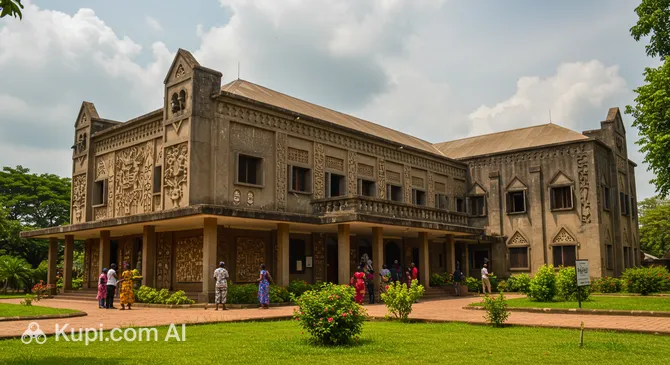
Imagine a place where the centuries-old history of a great kingdom comes to life. Manhyia Palace is not just a building, but the majestic residence of the Ashanti kings, located in the colorful city of Kumasi. Today, this complex has been transformed into a unique museum that serves as the primary guardian of the cultural code and traditions of Ghana.
Manhyia Palace. Illustration.
Source: Kupi.com AI
Traveler photos:
The architecture of the palace reflects the colonial style of the early 20th century, but its interior is steeped in the spirit of African identity. Within the walls of the former residence are priceless relics, personal belongings of the monarchs, and works of art that tell the story of the golden age of the Ashanti Kingdom and its role in the history of West Africa.
A visit here allows tourists to get a glimpse behind the scenes of royal life. The palace remains an important symbol of unity and pride for the local people, making it an essential stop for anyone who wants to truly experience the soul of this region.
Contacts
For inquiries regarding visits, special events, or group tours, you may use the museum's official contact information.
The palace staff is always ready to assist tourists with the schedule or answer questions about current exhibitions.
Inside the museum, a deep immersion into the atmosphere of the royal court awaits you. Visitors can view the throne halls and private chambers of the rulers, where original furniture and interior pieces have been preserved. The exhibition features unique ceremonial robes, gold jewelry, and traditional weapons, each with its own legend.
Special attention should be paid to the documentary films shown in the museum halls. They help provide a better understanding of the complex rituals and the significance of royal power for the Ashanti people. Guides are happy to lead tours, sharing fascinating stories about the lives of the Asantehene (kings) and explaining the symbolism of traditional royal regalia.
In addition to exploring the interior rooms, you can stroll through the well-kept courtyard, where official receptions and important cultural events often take place. It is a great place to see how the living traditions of the people are harmoniously woven into the modern life of the city.
Getting There
Manhyia Palace is located in the heart of Kumasi, which is rightfully considered one of the country's major transport hubs. If you are traveling from Accra or other large regions, it is most convenient to use bus services or the railway to reach the city.
Once in the city center, reaching the palace complex by taxi is the quickest and most comfortable option for tourists. Local public transport also operates throughout the city, but for your first trip, it is better to choose a licensed taxi to save time.
The entrance to the museum is clearly visible from the road and well-marked with signs. The area surrounding the residence has a developed infrastructure, so independent travelers will easily find their way to this iconic location.
Nearest city: Kumasi
History & Facts
The history of this site is inextricably linked to the greatness of the Ashanti people. The modern Manhyia Palace was built in 1925. Interestingly, its construction was commissioned by the British colonial authorities—the building was intended for the king returning from exile after the destruction of the original residence at the end of the 19th century.
For decades, the palace served as the official home for the rulers (Asantehene), remaining the center for major political decisions. It was only in 1995, when a new modern residence was built nearby for the royal family, that the old building was converted into a public museum.
The city of Kumasi itself has been the capital of a powerful confederation since the 17th century, and the palace remains a potent symbol of continuity of power to this day. A visit to this site allows you to feel a living connection across time and understand how ancient traditions adapted to the changes of the 20th century.
Time Needed
To explore all the museum's halls without rushing, study the artifacts on display, and walk through the grounds, it usually takes about 1.5 to 2 hours. This time is quite sufficient for participating in the main guided tour and exploring the exhibition at your own pace.
If you plan to study archival documents in detail or watch documentary films about the history of the dynasty, you should factor in a bit more time. Morning hours are usually the most comfortable for a visit, as they allow you to avoid the large influx of tour groups.
Working Hours
Manhyia Palace is open to visitors daily, making it very convenient for planning your travel itinerary. The museum operates on a consistent schedule from Monday to Sunday.
Opening hours: daily from 9:00 AM to 5:00 PM. It is recommended to arrive no later than one hour before closing to ensure you have enough time to walk through all the museum's halls comfortably.
9:00 – 17:00
Nearby
Visiting the royal residence is just one part of discovering the region's rich heritage. A stroll through the surrounding areas will allow you to see other historical monuments and important city landmarks that round out the picture of life in the cultural capital.
Many interesting locations are within walking distance or a short taxi ride away, allowing you to create a full and engaging day-long itinerary.