Support

Porto Heli

About

Porto Heli is a picturesque and cosmopolitan resort town located in the southern part of the Argolida region on the Peloponnese peninsula. Thanks to its exceptional beauty, a bay sheltered from the winds, and its well-developed infrastructure, this place is often referred to as the "Greek Riviera." An atmosphere of quiet luxury prevails here, where the traditional way of life harmoniously coexists with elegant villas and modern marinas filled with snow-white yachts.

Geographically, the town is situated in a natural harbor, considered one of the safest and most beautiful in the Mediterranean. Sunny Greece has generously endowed this region with a mild climate, allowing for a pleasant vacation practically year-round. The town's permanent population is about 3,000 people, which maintains a sense of coziness and intimacy; however, during the summer season, Porto Heli comes alive, filling with travelers from all over the world.
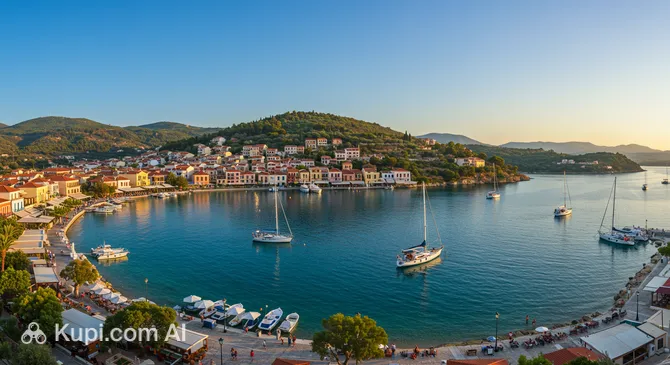
Porto Heli. Illustration.
Source: Kupi.com AI

Despite its modern appearance and popularity among the elite, the history of Porto Heli is rooted in deep antiquity. A unique feature of the town is the opportunity to literally touch the past: the ruins of the ancient city of Halieis rest in the waters of the bay. Snorkeling and diving enthusiasts can see the remains of fortification walls and buildings right below the sea's surface, making a swim here a true journey through time.

In addition to its historical heritage, Porto Heli attracts tourists with excellent opportunities for water sports and its convenient location. From here, it is easy to reach the popular islands of Spetses and Hydra, making the town an ideal base for exploring the Saronic Gulf. If you are looking for a place to combine a relaxed beach holiday, gastronomic delights, and maritime adventures, Porto Heli is the perfect choice for you.
Weather Overview

The climate in Porto Heli can be described as typically Mediterranean, with hot sunny summers and mild but wetter winters. Thanks to its favorable geographical location, the resort season here lasts quite a long time, and extreme weather conditions are extremely rare. Expect hot dry summers and cool winters with occasional precipitation, which makes this region attractive for visiting at any time of year, depending on the purpose of your trip.

The warmest time of year is July and August, when the average air temperature is around 28°C, and daytime maximums often reach 32°C. In these months, the probability of precipitation is minimal—only about 2 rainy days—which guarantees excellent conditions for a beach holiday. For those who prefer more moderate heat, May and September are ideal: during this time, the air warms up to a comfortable 20–24°C, and the tourist flow subsides slightly.

Winter months, especially January and February, bring cool temperatures with an average of around 10–11°C. This is the period when nature rests, and the number of rainy days increases to 8–9 per month. If you are planning a trip and want to know what to expect from the weather on specific dates, the detailed weather in Porto Heli will help you competently plan your wardrobe and activities.

Average monthly temperature

Average monthly precipitation

Interesting Facts

Beyond its well-known beaches and luxury villas, Porto Heli hides many curious details that make this place truly unique. History and modernity are intertwined here in the most whimsical way, creating a unique atmosphere for those who want to know more than what is written in standard guidebooks.

  • The Secret of Royal Purple. The submerged ancient city of Halieis, ruins of which can be seen underwater, was not just a settlement in antiquity but an important industrial center. It was here that the famous Tyrian purple dye was extracted from sea mollusks. This dye cost a fortune and was used exclusively for the robes of kings and Roman emperors, making the city incredibly wealthy.

  • The Greek Monaco. This region is often called the "Greek Riviera" due to the incredible concentration of elite real estate. Porto Heli and its surrounding areas have become the unofficial residence for many members of European royal families and shipping magnates. Places like the Porto Heli Resort & Spa set the tone for local life, combining privacy with the highest level of service.

  • Home of the Manaki Olive. While most of Greece grows the "Koroneiki" variety, the outskirts of Porto Heli in the Argolida region are famous for the unique "Manaki" olive. These trees ripen more slowly, and the oil produced from them has a thicker consistency, a mild buttery taste, and a golden-yellow color highly valued by gourmets.

  • A Natural Swimming Pool. The town's bay is considered one of the safest natural harbors in the entire Mediterranean. Due to its narrow entrance and specific bottom topography, storms practically never occur here. This creates a unique "lake within a sea" microclimate, making the bay an ideal place for learning water sports and for year-round yacht mooring.

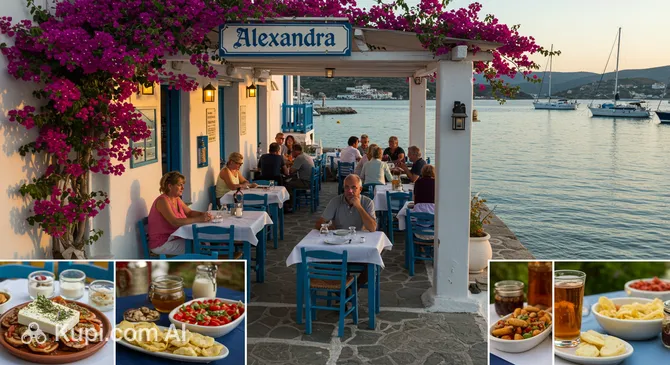
Alexandra. Illustration.
Source: Kupi.com AI

Traveler photos:

How to Get There

When planning a vacation on the "Greek Riviera," it is important to think through your logistics in advance, as there are no direct flights to the resort itself. Porto Heli does not have its own airport, so travelers usually fly into major cities in Greece and then continue their journey by land or sea. You can study all ways to get to the city in more detail, and below we will look at the most popular routes via the nearest air hubs.

The main transit point for most tourists is Athens International Airport Eleftherios Venizelos (ATH). It is the country's largest hub, receiving flights from all over the world. It is located about 98 km from Porto Heli in a straight line, but the actual road journey is longer and more scenic. A trip by taxi or rental car from Athens airport to the resort will take about 2 hours and 50 minutes. It is also convenient to get from Athens to the port of Piraeus, from where high-speed ferries operate.

The second most convenient option, especially in the summer season, is Kalamata Airport (KLX). it receives many charter flights from European countries. The distance to Porto Heli is just over 100 km. Traveling by car from this airport will take about 3 hours, passing through the beautiful landscapes of the Peloponnese.

Below is summary information on the nearest airports for planning your route:

AirportPassenger trafficDistance
Eleftherios Venizelos International Airport31.9 mln98 km
Kalamata Airport338 000103 km
Kithira Airport37 031117 km
Milos Airport77 501138 km
Araxos Airport182 000177 km

There is no direct rail link to Porto Heli, as the railway network in the Peloponnese does not extend in this direction. The nearest station that can be reached by suburban train from Athens airport is in the city of Corinth. However, from there to the resort, you will still need to travel by taxi or bus for another hour and a half, making this option less convenient, especially if you are traveling with luggage.

In the absence of trains, sea transport is an excellent alternative. High-speed hydrofoils ("Flying Dolphins") and catamarans depart regularly from the port of Piraeus (Athens). The travel time by sea is about 2–2.5 hours, and you arrive right in the heart of the resort, enjoying sea views along the way. You can also use the KTEL intercity buses, which travel from Athens through the famous Corinth Canal and the mountains of Argolida.

Main Attractions

The main attractions of Porto Heli are not so much classic museums as they are a unique combination of natural beauty, ancient mysteries, and modern luxury architecture. Here, history literally lies beneath your feet—or more accurately, underwater—neighboring the elegant buildings that have become the hallmark of the "Greek Riviera."

The undisputed pearl of the region is the Submerged City of Halieis. This place holds a magical attraction: just a few meters from the shore, at a shallow depth, lie the ruins of an ancient polis that flourished thousands of years ago. Snorkeling with a mask, you can make out the outlines of house foundations, city walls, and even the remains of an ancient port. This is a rare opportunity to combine a beach holiday with a real archaeological exploration without having to buy entry tickets.

Another iconic point on the map is the scenic Cape Agios Emilianos. Located a few kilometers from the town center, this cape is famous for its namesake chapel, standing at the very edge of the shore surrounded by dense pine trees. It offers perhaps the best panoramic view of Spetses island and the open sea. It is an ideal spot for evening strolls and romantic sunset photo sessions.

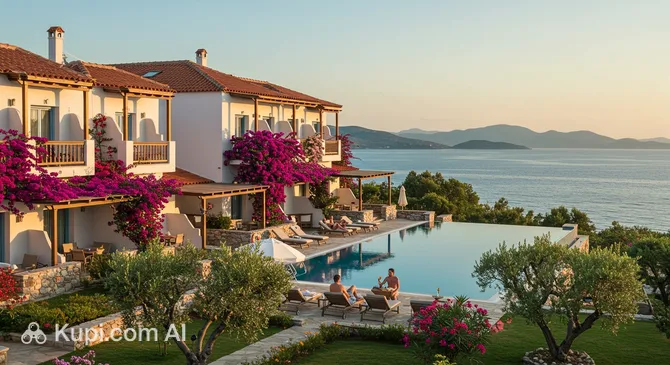
Porto Heli Resort & Spa. Illustration.
Source: Kupi.com AI

Traveler photos:

The modern face of Porto Heli is shaped by elite infrastructure projects that have become attractions in their own right. The famous Porto Heli Resort & Spa is not just a place to stay, but an architectural focal point of the coastline. Its grounds and buildings, integrated into the landscape, attract attention with their aesthetics and serve as a landmark for many travelers, symbolizing the resort's high status.

One cannot overlook the gastronomic attractions either, as local cuisine is an integral part of the cultural code. Establishments such as the Alexandra restaurant have long moved past the status of simple eateries. These are places where the region's culinary traditions are preserved, and where tourists come specifically to experience the authentic flavors of Argolida in an atmosphere of genuine Greek hospitality.

Local Cuisine

The cuisine of Porto Heli vividly reflects the culinary traditions of the Argolida region, where ancient heritage meets modernity. Traveling through Greece, you will surely appreciate the local gastronomic features. Thanks to its coastal location, the menu is based on seafood brought to the port by fishermen at dawn. But the cuisine here is not limited to fish: the fertile lands of the Peloponnese provide restaurants with juicy vegetables, citrus fruits, and the famous "Manaki" variety olive oil.

The main dish in any seaside taverna remains grilled fish. Most often, it is sea bream or sea bass, seasoned only with olive oil and lemon to preserve the true flavor. Be sure to try the octopus, which is prepared here according to a special recipe: first sun-dried and then charcoal-grilled until crispy. Those seeking authenticity should order "goges"—traditional handmade shell-shaped pasta served with melted butter and local mizithra cheese.

The dining culture in Porto Heli is characterized by a lack of rush. Dinner here is a long social ritual that often starts after 9:00 PM. The choice of places is vast: from casual gyros bars to exquisite establishments. For example, the Alexandra restaurant is famous for its cozy home atmosphere and classic Greek recipes, attracting both tourists and local gourmets.

Meals are traditionally accompanied by local drinks. Proximity to the Nemea wine region ensures an excellent selection of red wines from the Agiorgitiko grape. On a hot afternoon, an ice-cold Freddo Espresso or a glass of freshly squeezed orange juice—after all, this region is known as the citrus orchard of the Peloponnese—will be your salvation. And as an aperitif, ouzo with a set of "meze" snacks is perfect.

Travel Tips

Welcome to Porto Heli! To ensure your journey to the "Greek Riviera" is as comfortable as possible and leaves only pleasant impressions, we have prepared a list of practical recommendations. These tips will help you adapt more quickly to the local pace of life and avoid typical tourist mistakes.

  1. Clothing and Accessories. It gets hot here in the summer, so bring light clothing made of natural fabrics and be sure to have a hat. Since Porto Heli is a resort with a touch of luxury, smart casual attire will come in handy for evening dining at restaurants. Don't forget special swim shoes (aqua shoes), as the seabed can be rocky or have sea urchins at some wild beaches.
  2. Transport. The town center is compact and pleasant to explore on foot. However, for trips around Argolida, it is better to rent a car. A unique feature of local traffic is the water taxis that run 24/7 between Porto Heli and Spetses island. Apps like Uber may not be available here, so it is better to write down the numbers of local taxi services in advance.
  3. Finances. The official currency is the Euro. Most hotels, restaurants, and supermarkets accept cards without problems, but cash is necessary for paying for bus fares, water taxis, and small kiosk purchases. Prices here can be higher than the average in Greece, so plan your budget with a small reserve. Tipping is welcome: usually 5–10% of the bill or rounding up the amount in a taxi.
  4. Health and Safety. Porto Heli is a very safe place where you can walk peacefully at any time of day. Pharmacies are marked with a green cross; if you need medicine at night or on a weekend, look for the duty pharmacy schedule in the window. The main natural danger in summer is the active sun, so always use sunscreen with high SPF, even if you are just walking around town.
  5. Communication. Greek is the primary language, but thanks to the resort's elite status, staff almost everywhere speak English perfectly. Learn a few phrases in Greek, such as "Kalimera" (good morning) or "Efharisto" (thank you)—this will instantly endear you to the locals. Wi-Fi is available in almost all cafes, and it's best to buy a SIM card in advance at the airport or in major cities along the way.
  6. Local Etiquette. Greeks are open and friendly people. It is customary to say hello when entering a shop or taverna. If you are invited to a home, it is good manners to bring a small treat for the table. In public places and temples, observe the dress code: swimsuits are only appropriate on the beach, and when visiting churches, shoulders and knees should be covered.
  7. What to Avoid. Don't try to handle important business or look for open shops during siesta hours (approximately from 2:30 PM to 5:30 PM). During this time, life falls silent, and making noise on the streets in residential neighborhoods is considered bad manners. Also, avoid criticizing local cuisine or comparing it to Turkish—this might offend patriotic Greeks.
  8. Traveler's Secret. Be sure to pack a mask and snorkel in your suitcase! The main historical attraction—the submerged city of Halieis—is underwater in shallow areas. You don't need expensive equipment or a guide to see the ruins of ancient walls and buildings; just swim near the shore in the southern part of the bay.

We hope these tips help you feel at home in Porto Heli. Relax, tune in to the "siga-siga" rhythm, and enjoy every moment of your Greek vacation!

Entertainment & Nightlife

The nightlife in Porto Heli fully matches its "Greek Riviera" status: you won't find the loud, sunrise-to-sunset raves typical of Mykonos here, but you will immerse yourself in an atmosphere of elegant luxury and cosmopolitanism. Evenings here start late and follow the "siga-siga" rhythm—slowly and with style. The epicenter of evening activity is the picturesque promenade and marina, where the lights of seaside establishments reflect in the water next to snow-white yachts.

The primary format of entertainment is stylish lounge bars and beach clubs that transform into trendy venues with DJ sets and signature cocktails after sunset. The crowd here is respectable: yacht owners, the Athenian elite, and European tourists. The dress code in most places is smart casual or island chic; beach shorts will not be quite appropriate in the evening, especially in high-end establishments.

A perfect evening in Porto Heli should begin with a gastronomic journey. The Alexandra restaurant is an excellent choice for a pre-party dinner: here you can enjoy local delicacies in a cozy setting while getting ready for a long night. After dinner, the center of life shifts to the waterfront bars, where the music gets louder and the atmosphere becomes more relaxed.

Porto Heli Resort & Spa. Illustration.
Source: Kupi.com AI

Traveler photos:

A special place on the region's nightlife map is held by the Porto Heli Resort & Spa. It is not just a hotel, but a true magnet for social life: it often hosts themed parties, live concerts, and gala dinners open to more than just its guests. If you feel like changing the scenery, remember that the island of Spetses is just a 10-minute water taxi ride away, famous for its bars in the Old Port, where the fun often lasts until dawn.

Practical tips: It is best to arrive at the bars after 11:00 PM when they fill up with people. Prices for cocktails and entry can be higher than the Greek average, which is explained by the resort's exclusivity. The area is considered exceptionally safe for night walks, but to reach remote clubs or villas, it is recommended to save the number of a local taxi service in advance, as catching a car on the street at night can be problematic.

Daytime entertainment in Porto Heli is more focused on outdoor activities than on visiting classic museums or theaters. The main "attractions" of the day are water sports: diving to the submerged city, windsurfing, and sailing. For those seeking cultural leisure, it is worth taking a boat trip to the museums of neighboring islands or visiting summer festivals that are periodically held at outdoor venues in the region.

Parks & Museums

Porto Heli is a resort where the boundaries between the urban environment and wild nature are practically blurred. You won't find large, fenced city parks in the conventional sense here, as the town itself is literally immersed in greenery, and the surrounding landscapes serve as natural recreational zones. The region's cultural life is closely intertwined with its rich history, offering travelers unique open-air museums and exhibitions in the immediate vicinity.

The role of the resort's main "green lungs" is played by the picturesque natural areas surrounding the town. The Ververonda Lagoon deserves special attention. This is a unique natural body of water surrounded by pine groves and eucalyptus trees. The water here is considered healing, and the calm surface of the lake is perfect for leisurely walks along the shore and bird watching. Another significant natural area is Cape Agios Emilianos. This is a dense pine forest descending directly to the sea, with hiking trails that allow you to enjoy the scent of pine needles and panoramic views of the Saronic Gulf.

As for museums, Porto Heli offers a non-standard approach to studying history. The most impressive "museum" is the Submerged City of Halieis. This is an underwater archaeological park located in the southern part of the bay. There are no display cases or guards here—only a mask and fins will allow you to see the remains of ancient walls, a mint, and dwellings dating back to 468 BC. This is a rare opportunity to touch antiquity in its natural environment.

To get acquainted with the traditional culture of the region, it is worth visiting the Kranidi Folklore Museum, located in the administrative center just a few kilometers from Porto Heli. This cozy museum houses a rich collection of household items, national costumes, looms, and tools that tell the story of local life in the 19th and 20th centuries. The exhibition allows you to understand how the craftsmen and fishermen of Argolida lived before the tourism boom began.

Art lovers and maritime history enthusiasts are strongly recommended to take a short water taxi crossing to the island of Spetses, which is effectively a cultural extension of the resort. There you will find the famous Bouboulina Museum—the house-museum of a Greek revolutionary heroine, where the interiors and personal belongings of that era have been preserved, including a unique carved ceiling made of Florentine wood.

Insider tip: If you want to see something truly authentic and hidden from most eyes, go in search of the old windmills scattered on the hills around Porto Heli. Although many are in ruins, they create an incredibly romantic landscape at sunset and serve as an excellent backdrop for photos capturing the spirit of old Greece.

Getting Around

The transport system in Porto Heli has its own unique features, determined by the town's size and its status as a resort. Here you won't find subways, trams, or trolleys. The town is quite compact, so it is most convenient and pleasant to get around the center, the promenade, and the marina area on foot. However, for trips to the beaches, neighboring villages, or islands, there is a well-established network of other types of transport.

The primary public transport connecting the resort with the surroundings is the KTEL Argolidas bus service. These are intercity buses, usually green or cream-colored, which run on a schedule between Porto Heli, Kranidi, Ermioni, and other settlements in the region. Tickets can be purchased at the bus station or, more commonly, directly from the conductor or driver when boarding. Payment is accepted mostly in cash, so always keep small bills and coins on hand.

A real "highlight" of the local transport system is the water taxis (Sea Taxis). Based in the port and operating 24/7, they provide a fast link to Spetses island and remote bays. While not the most budget-friendly option, it is a very colorful and quick way to get around. The cost of a trip is usually fixed for the route rather than per passenger, making them more economical for groups. Captains accept cash payment before departure or upon arrival.

For those who prefer comfort and independence from schedules, the best solution is vehicle rental. Many rental offices operate in the town, offering cars, scooters, ATVs, and even bicycles. To rent a car, you will need an international driving permit, driving experience, and a credit card. A scooter or ATV is an excellent option for maneuvering through narrow roads during the high season, when parking problems may arise near popular beaches.

Standard taxis are also available in town. Their stand is located near the port, but a car can also be called by phone through your hotel reception or a taverna. Unlike major cities in Greece, ride-hailing apps may be unstable or completely unavailable here. Always check the approximate cost of the trip with the driver before boarding, especially if you plan to go beyond the town limits. Night rates may be higher.

Accommodation

Where to stay:

Porto Heli is often called the "Greek Riviera," and its hotel infrastructure fully matches this prestigious status. However, despite its image as an elite resort, the town offers accommodation options for various categories of travelers. The main stock consists of cozy apartments, small family hotels, and, of course, luxury resort complexes and private villas, which are in particular demand among discerning guests.

When choosing a location, you should be guided by your plans. If you want to be in the heart of the action, with quick access to tavernas, shops, and water taxis to Spetses island, choose hotels in the area of the central promenade and the port. For those seeking silence, privacy, and panoramic sea views, options near Cape Agios Emilianos or along the coast of the Ververonda Lagoon, where development is more sparse, are ideal.

Among specific accommodation examples that set the tone for the entire region, the Porto Heli Resort & Spa stands out. This place has become a sort of hallmark for the coast, offering guests world-class service and extensive infrastructure for a complete vacation without leaving the hotel grounds.

Booking tips: Given the resort's popularity among the European and Athenian elite, it is worth taking care of your accommodation search well in advance, preferably 2–3 months before the trip. This is especially true for the peak season (July-August), when finding a vacant room "on the day" is practically impossible, and prices reach their maximum.

The price range in Porto Heli is shifted towards "above average" and "luxury" categories, although you can find quite budget-friendly options at the beginning and end of the season. For booking, it is most convenient to use popular international online platforms that guarantee transaction security; however, renting exclusive villas is often best discussed through specialized real estate agencies.

Nearby Cities

For those who want to explore the surrounding area, Porto Heli serves as an excellent starting point for day trips to several interesting nearby locations. Thanks to regular high-speed sea connections, you can reach the capital region and Attica from here, switching the relaxed resort atmosphere for the rhythm of a big city.

One of the key destinations is Piraeus—the country's main maritime gateway. It is not just a port, but a city with a rich history, where you can stroll through the picturesque Microlimano harbor, full of fish restaurants, or visit the Archaeological Museum. Piraeus is interesting for its contrast between huge cruise liners and cozy yacht marinas.

If you are interested in shopping and social life, it is worth paying attention to the city of Glyfada. This is the heart of the "Athens Riviera," known for its luxury boutiques, elegant cafes, and well-maintained beaches. A trip here allows you to immerse yourself in the atmosphere of modern urban luxury and enjoy walks along the sea in a more lively setting.

CityPopulationDistance
Nafplio14 20340 km
Argos22 08550 km
Sparta16 23969 km
Corinth30 17670 km
Tripoli30 86671 km

These nearby destinations provide an insight into the diverse culture and landscapes of the region, complementing a beach holiday with new experiences.

Shopping & Souvenirs

Shopping in Porto Heli is a relaxed and pleasant activity that perfectly complements the atmosphere of an elite resort. Here you won't find the huge malls or noisy commercial districts typical of large cities. Instead, the town offers an intimate shopping experience: from small souvenir shops with handmade goods to elegant boutiques with summer clothing and accessories, catering to the discerning crowd arriving here on yachts.

The main shopping areas are concentrated primarily along the central promenade and on the streets adjacent to the port. Strolling along the sea, you can find stores featuring beach fashion, jewelry, and high-quality Greek cosmetics. It's also worth heading a bit deeper into the town, where traditional food shops and bakeries are located, tempting you with the aroma of fresh bread and local pastries.

Shopping centers in the conventional sense do not exist in Porto Heli. It is a small resort town where the large retail format has not taken root. For larger-scale shopping or visits to chain clothing stores, locals and tourists usually head to the nearby town of Kranidi or take a trip to Athens.

Markets and gourmet shops play an important role in the life of the resort. Although there isn't a large permanent bazaar here, you will always find specialized stores selling the freshest fruits, vegetables, and seafood. Special attention should be paid to local delicacies: farmer's cheeses, olives, and homemade wine, which are sold in small family-run shops.

As souvenirs from Porto Heli, people most often bring back the gastronomic treasures of the Argolida region. Be sure to buy a bottle of the local "Manaki" olive oil, which is famous for its mild taste. Thyme honey, natural olive oil-based cosmetics, handmade ceramics, and leather sandals are also popular and will serve as a great reminder of a sunny Greek summer.

Opening hours for shops follow the traditional Greek schedule. Most shops open around 9:00 AM and stay open until 2:00 PM or 3:00 PM. After this comes the time for the afternoon rest (siesta), and trade falls silent. In the evening, usually after 5:30 PM or 6:00 PM, shops open their doors again and stay open until late at night (9:00 PM–10:00 PM), especially during the tourist season. Large supermarkets may operate without a break.

As for payment, most tourist shops, boutiques, and supermarkets accept bank cards (Visa, MasterCard) without any problems. However, for purchases at small kiosks, markets, or in taxis, it is recommended to always have cash Euros with you. The Tax Free system is available in Greece for tourists from non-EU countries for purchases over 50 Euros on a single receipt, but the possibility of tax refund processing should be checked in each specific store—there is usually a corresponding sticker on the window.

Reached the end of the page?

That means the route is fully explored