Support

Toussaint Louverture International Airport

About the Airport

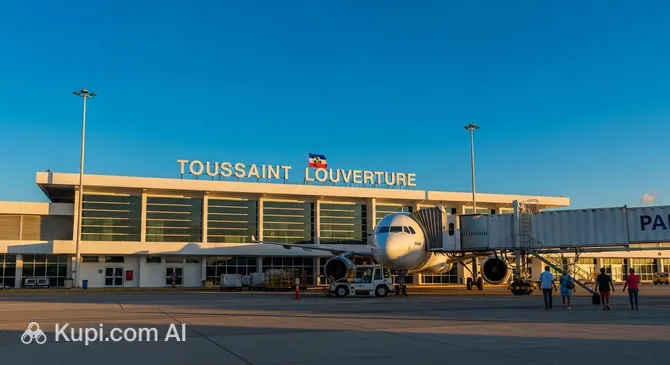
Toussaint Louverture International Airport. Source: Kupi.com Binoculars

Toussaint Louverture International Airport (IATA: PAP) is the main air gateway to Haiti, located in the country's capital, the city of Port-au-Prince. Named in honour of the leader of the Haitian Revolution, this airport serves as the first point of contact with the unique and vibrant Caribbean culture for thousands of travellers. It is here that your introduction to the history, art, and incredible nature of this island nation begins. As the busiest airport in the country, it is constantly developing to ensure comfort and convenience for all arriving and departing passengers.

IATA Code PAP
ICAO Code MTPP
City Port-au-Prince
Distance to centre about 6-13 km
Status International
Passengers per year approx. 1.9 million (based on 2017 data)
Popular Airlines Air Caraibes, Sunrise Airways, American Airlines
Schedule online board "Toussaint Louverture International Airport"

The airport features a modern terminal where all necessary conditions for travellers have been created. Its premises include waiting lounges, including a VIP zone for a more comfortable stay. Passengers can utilise luggage storage services, visit shops, including Duty Free, and have a bite to eat in cafés or restaurants. For the convenience of guests, ATMs and currency exchange points are provided.

Despite its relatively small size, Toussaint Louverture airport plays a key role in the transport system of Haiti, connecting the country with cities in North America, Europe, and the Caribbean. You can reach the centre of Port-au-Prince by taxi or local public transport known as "tap-taps" — brightly painted buses and pickups that are a part of the local flair themselves. Please note that finding a vacant taxi at the terminal exit can be difficult, so it is recommended to arrange a transfer in advance.

Contact Information

Below you will find contact information for Toussaint Louverture International Airport (PAP). Please note that some details may change, and it is always recommended to check the latest information on official resources before your trip.

  • Official Website: The Autorité Aéroportuaire Nationale (AAN), which manages the Port-au-Prince airport, has an official website www.aan.gouv.ht. Essential information for passengers is published here.
  • Help Desk Phone: +509 2812-9000. You can call this number to clarify general questions about airport operations.
  • Airport Address: Boulevard Toussaint Louverture, Port-au-Prince, Haiti.
  • Email: An official public email for general enquiries is usually not provided. For communication, it is recommended to use the contact details listed on the AAN website or contact your airline.
  • Social Media: Dedicated social media pages for the airport may be inactive. The most reliable source of information is the airport authority's official website.
  • Lost Luggage Information: For issues regarding lost or damaged luggage, you must contact the Lost & Found service of your airline directly. Airport staff do not handle such requests.
  • Passenger Support Contacts: For information on flight status, check-in rules, and baggage allowance, please contact your airline directly. General information can be obtained at the information desk within the terminal.

How to Get to the Airport

You can get to Toussaint Louverture International Airport (PAP) from the city centre of Port-au-Prince in several ways. The choice of the suitable option depends on your budget, amount of luggage, and readiness for local experiences. When planning your trip, be sure to allocate extra time, as the traffic situation in the capital of Haiti can be unpredictable.

Taxi and Private Transfer — the most popular and convenient method for tourists. You can book a transfer in advance through your hotel or use official taxi services. It is extremely important to agree on the fare before the journey begins, as taximeters are rarely used. A trip from central areas, such as Pétion-Ville, usually takes from 30 minutes to an hour or more depending on traffic. The cost can vary from 25 to 40 USD. For solo travellers with light luggage, motorcycle taxis are available, which are cheaper but considered a less safe option.

Public Transport in Port-au-Prince is represented by colourful "tap-taps" — these are brightly painted pickups or buses that operate on the principle of shared taxis. This is the cheapest way to travel, but it can be a real adventure for an unprepared tourist. "Tap-taps" do not have fixed stops and do not always drive directly up to the airport terminal, which is inconvenient if you have luggage. This option is suitable for those who want to save money and immerse themselves in local life.

Car Rental provides maximum freedom of movement, especially if you plan to travel outside the capital. Several international and local rental agencies operate at the airport and in the city. However, it is worth noting that driving in Port-au-Prince can be chaotic and requires a certain level of experience and confidence. Roads are not always in perfect condition, and local driving rules may differ from what you are used to.

Airport Parking is available for those arriving in their own or rented vehicles. Both short-term and long-term parking zones are available. Although the parking is considered guarded, it is not recommended to leave valuables in plain sight inside the car.

Terminals and Map

Toussaint Louverture International Airport (PAP) has a fairly simple and clear structure, which facilitates navigation for passengers. The main thing is to know in advance which terminal you are departing from, as they serve different destinations.

The airport consists of two main terminals:

  • International Terminal — this is the main airport building, serving all international flights.
  • Guy Malary Terminal — a separate, smaller building designed for domestic flights within Haiti.

The layout of the International Terminal is organised in a classic manner. It has two levels: the departure zone is located on the upper floor, and the arrival zone is on the lower floor. After entering the building, you will see the airline check-in counters. After completing check-in and dropping off luggage, passengers proceed to passport control and security screening, after which they enter the waiting area with boarding gates. Navigation is intuitive thanks to signage.

Arrival and Departure Zones are clearly separated. Upon arrival in Port-au-Prince, you will go through passport control, then descend to the baggage claim hall and pass through customs inspection. In the departure zone, after all formalities, passengers have access to a small Duty Free shop, souvenir stalls, and several cafés where one can have a snack while waiting for the flight.

It is important to note that the international and domestic terminals are located in separate buildings. Transfer between them is not provided within the sterile zone — for this, you need to exit one building and walk or drive to the other. The distance is short, but it is worth allocating extra time for this when planning connecting flights.

The time for passing through check-in and security screening may vary. To avoid rushing, it is recommended to arrive at the airport at least 2.5–3 hours before the departure of an international flight. Queues are possible during peak hours, so a small time buffer will be helpful. For domestic flights, arriving 1.5 hours in advance is usually sufficient.

Airport History

The history of the main airport of Haiti, located in the city of Port-au-Prince, is closely intertwined with key events in the country's life. The airport was built in the 1940s by the US military and initially served as a military airbase. It was opened for civil and international flights significantly later, in 1965, and originally bore the name of François Duvalier.

An important stage in the airport's history was its renaming in 2003. It received its modern name — Toussaint Louverture International Airport — in honour of Haiti's national hero and leader of the Haitian Revolution. This symbolised a new page in the history of the country's air gateway.

One of the most tragic and simultaneously heroic events in the airport's history is connected with the devastating earthquake of 2010. Although the control tower and terminal were seriously damaged, the airport did not cease operations. On the contrary, it became a vital centre for the delivery of international humanitarian aid and the evacuation of victims. For several weeks, air traffic control was managed by the US military to coordinate hundreds of incoming flights carrying aid from all over the world.

After the earthquake, large-scale reconstruction began. With international financial support, the old terminal was repaired and a new one was built, which was grandly opened in 2012. This modernisation significantly improved the infrastructure and capacity of the airport, making it more modern and comfortable for passengers. Today, Toussaint Louverture Airport remains the main air gateway of Haiti, receiving flights from the Caribbean, North America, and Europe.

Services and Facilities

Toussaint Louverture International Airport (PAP) in Port-au-Prince offers passengers a basic set of services to make their stay before departure or after arrival as comfortable as possible. Although it is not the largest airport in the region, everything necessary for travellers is available here.

In the terminal, you will find several cafés and eateries where you can have a snack with sandwiches, pastries, or drink coffee. For those looking for souvenirs, shops are operating that offer local rum, coffee, cigars, and Haitian handicrafts. There is also a Duty-Free zone where perfume, beverages, and tobacco products can be purchased at favourable prices.

For a more comfortable wait, VIP lounges function at the airport. They offer guests a secluded and quiet atmosphere, complimentary snacks and drinks, as well as the latest press. Access to such lounges may be paid or provided to holders of premium bank cards and business class passengers. In the general waiting halls, there is access to Wi-Fi, as well as sockets for charging electronic devices.

Currency exchange points and ATMs are located in the airport building, where you can withdraw cash or exchange money for Haitian gourdes (HTG). A medical point operates at the airport to provide first aid.

Basic amenities are provided for passengers with children — changing tables are available in the restrooms. There may not be specialised play areas or mother and child rooms at the airport, so parents should plan entertainment for young travellers in advance. The airport is also equipped to serve passengers with reduced mobility: there are ramps and specially equipped restrooms. Passengers requiring special assistance are recommended to notify their airline in advance.

There are no hotels directly on the airport territory, but several hotels are located in the immediate vicinity, and some of them offer transfers for their guests. There are no specialised conference halls at the airport, however, basic business services may be provided in the VIP lounges.

Where to Eat

At Toussaint Louverture International Airport, passengers have access to several options for a snack or a full meal, although the choice may not be as wide as in major international hubs. The main dining points are concentrated in the departure zone (airside), after passing passport control and security screening.

In the main departure hall, there is usually a restaurant with à la carte service where you can have a leisurely lunch. Here you will have a last opportunity to try Haitian cuisine dishes, such as griot (fried pork) or banan peze (fried plantains). This is a great place to enjoy local Prestige beer or the famous Haitian Barbancourt rum before departure. Additionally, the menu typically includes more familiar international dishes — sandwiches, salads, and burgers.

For those short on time, there are several small cafés and snack bars in the departure zone and in the general area before security (landside). They offer coffee, pastries, light snacks, and beverages. This is an ideal option for a quick bite. Prices at the airport are expectedly higher than in the city and vary from moderate in cafés to higher in the restaurant.

Opening hours of establishments usually correspond to the flight schedule: they open early in the morning and work until the departure of the last evening planes. Regarding special dietary requirements (vegetarian, vegan, gluten-free, halal), the choice may be extremely limited. Travellers with strict dietary restrictions are recommended to carry their own snacks just in case.

Travel Tips

Travelling through Toussaint Louverture International Airport in the city of Port-au-Prince will be more comfortable if you prepare for some specific features in advance. Here are a few tips that will help you save time, nerves, and money.

Arrival Time and Check-in. To avoid unnecessary rushing, arrive at the airport at least 2-3 hours before the departure of your international flight. Queues for check-in and pre-flight security screening can be quite long. Keep your passport, tickets, and other necessary documents ready. If possible, use online check-in — this will significantly save your time.

Seat Selection and Hand Luggage. When choosing a seat on the plane, consider your priorities: a window seat will give you picturesque views of the island of Haiti as a farewell, while an aisle seat will provide more freedom of movement during the flight. Before packing, be sure to familiarise yourself with your airline's hand luggage rules. Standard restrictions apply to liquids in containers over 100 ml and any sharp objects.

Transfers and Customs Control. If you have a connecting flight, allocate sufficient time for it. Procedures at the airport may take longer than you expect. When passing through customs control, be prepared to answer staff questions clearly and truthfully about the purpose of your trip and the contents of your luggage. Fill out all necessary declarations in advance if they are required.

Saving Money and Unforeseen Situations. To save money, bring an empty water bottle (it can be filled after passing security) and light snacks, as prices at the airport can be high. In case of a flight delay, remain calm. Contact a representative of your airline for information and clarification of your rights. It is always useful to have a portable charger, a book, or headphones in your hand luggage so that waiting is less tiring.

Reached the end of the page?

That means the route is fully explored