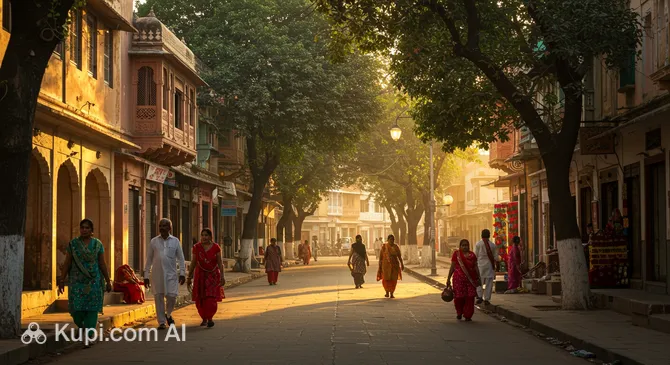
Agra is a majestic historical center in northern India, located in the state of Uttar Pradesh. Situated on the banks of the Yamuna River, the city is rightfully considered one of the country's primary tourist magnets thanks to its rich Mughal heritage. With a population of over 1.5 million people, this metropolis harmoniously combines the dynamics of modern life with the stone-carved grandeur of the past.
Agwar. Illustration.
Source: Kupi.com AI
The city's unique atmosphere is steeped in the spirit of history: from narrow medieval streets and bustling oriental bazaars to luxurious gardens and monumental palaces. Agra long served as the capital of the Mughal Empire, which left an indelible mark on its architectural appearance. Today, the city is a key point on the famous "Golden Triangle" route, attracting travelers from all over the world with its architectural masterpieces.
The city's main treasure remains the legendary Taj Mahal — a symbol of eternal love and one of the Seven Wonders of the World. In addition to it, the majestic fortifications and mosques that have preserved their original appearance deserve special attention. A visit to this city is not just an excursion, but a true immersion into the heart of Indian culture and history that will leave no one indifferent.
Weather Overview
Agra is characterized by a subtropical climate with distinct seasons, each dictating its own pace of life. The most comfortable time for a visit is considered to be the period from October to March, when the weather is mild and dry. During the winter months, average temperatures range from 10°C to 25°C, which is ideal for long walks and exploring monuments in the open air.
Summer in the city begins in April and brings exhausting heat, with the thermometer potentially rising to 45°C. During this period, travelers are recommended to plan excursions for the early morning. From July to September, monsoons arrive in the region, bringing heavy rains and long-awaited coolness; however, high humidity and potential downpours can make moving around the city more difficult.
Expect a hot, dry summer and a pleasant, cool winter with minimal precipitation. Morning fogs are possible in December and January, which give historical sites a special mystery but sometimes affect transport schedules. When packing your suitcase, cater to the season, but do not forget sunscreen at any time of year.
Average monthly temperature
Average monthly precipitation
Interesting Facts
The first mentions of the area where Agra is located are found in the ancient epic "Mahabharata," where it appears under the name Agravana, which translates as "paradise forest."
The construction of the famous Red Fort was a massive project: over 4,000 workers labored on it for eight years, and three great emperors participated in its creation.
In the 16th century, during its heyday under Emperor Akbar, the city was a major center of science and art, and its population already exceeded half a million people.
The abandoned city of Fatehpur Sikri on the outskirts of Agra served as the empire's capital for only 10 years, but it managed to acquire one of India's most majestic mosques — the Jama Masjid.
The city is an important spiritual center: it houses the tomb of the holy saint Sheikh Salim Chishti, to which thousands of pilgrims flock every year in hope of a miracle.
How to Get There
Agra enjoys excellent transport accessibility, making it a mandatory stop on any traveler's itinerary through India. The city is located approximately 200 kilometers south of Delhi, and you can reach it from the capital in just 2–4 hours thanks to modern expressways and a well-developed railway network.
For those who prefer air travel, the city is served by Agra Kheria Airport (IATA: AGR). It handles regular domestic flights from the country's largest metropolises, such as Delhi and Mumbai. The airport is located a few kilometers from the center, and the most convenient way to reach hotels is by official taxi or through ride-hailing mobile apps.
The railway remains the most popular way to visit the city. The main station, Agra Cantt, is a major transport hub served by comfortable express trains. The station is conveniently located and features all necessary infrastructure: from luggage storage to tourist offices. If you are planning a trip, check the schedule in advance to choose the fastest trains.
Station
Passenger traffic
Distance
Gorakhpur Junction railway station
12
58 km
Nautanwa railway station
2
67 km
Ayodhya Dham Junction railway station
8
75 km
Raibojha railway station
1
174 km
Varanasi Junction railway station
13
191 km
Main Attractions
The main attractions of Agra are three UNESCO World Heritage sites, each striking in its scale. Leading this list is the Taj Mahal — a mausoleum of dazzling white marble erected by Shah Jahan in memory of his beloved wife. This architectural masterpiece, which took nearly twenty years to build, is considered the highest achievement of Mughal art.
No less impressive is the Agra Fort (Red Fort) — a powerful defensive structure made of red quartzite. Hidden within its massive walls are elegant palaces, mosques, and audience halls where the empire's most important decisions were made. The fort was built and rebuilt by several generations of emperors, turning it into a literal city within a city.
In the vicinity of Agra, Fatehpur Sikri is also worth a visit. This abandoned city, which once served as Emperor Akbar's capital, is a unique ensemble of temples and civic buildings. Its architecture wonderfully combines Islamic and Hindu traditions, creating the unique image of a "ghost city" frozen in time.
Local Cuisine
A gastronomic journey through Agra is an introduction to the vibrant flavors of the state of Uttar Pradesh. The local cuisine is famous for its rich aromas and abundance of spices. Be sure to try the biryani with tender lamb and the traditional dal — a thick lentil puree served with warm pecha wheat flatbreads.
The city's main culinary symbol is considered petha — translucent candies made from ash gourd (white pumpkin), prepared here according to ancient recipes. This dessert makes an excellent souvenir. Among drinks, locals prefer warming masala chai with spices or refreshing lassi — a thick yogurt drink that is especially good on a hot afternoon.
For lunch or dinner, you can choose from popular restaurants like Pinch of Spice, known for its exquisite presentation, or more casual spots like Joney's Place, which serves authentic Indian food. Street food at the city bazaars also deserves attention, offering tourists the chance to try freshly prepared snacks in the most colorful settings.
Travel Tips
Preparing for your trip to Agra will help make your journey as comfortable and rewarding as possible. Here are some proven tips that will be useful for every tourist:
Clothing and Dress Code: Choose light clothing made of natural fabrics, but be sure to bring a scarf or wrap. When visiting religious sites, shoulders and knees must be covered. Comfortable shoes are the key to successful walks across the vast territories of the forts.
Best Time to Visit: Plan your trip for the period from October to March. At this time, the weather is most pleasant for excursions, whereas in summer, the heat can reach 45°C.
Transport: For getting around the city, it is most convenient to use the Uber or Ola apps. If you choose a rickshaw, always agree on the price before the ride starts.
Finances: The primary currency is the Indian Rupee. Cards are accepted in hotels and large shops, but always keep small cash on hand for markets and rickshaws.
Health: Drink only bottled water and avoid ice in street drinks. During the monsoon season, be sure to use repellents.
Tickets to Attractions: Buy tickets for the Taj Mahal online in advance on official websites to avoid long queues at the ticket office. The most beautiful photos are taken at sunrise.
Etiquette: Be sure to remove your shoes when entering temples and some mausoleums. It is customary to greet people with the traditional "Namaste" gesture (palms pressed together).
What to Avoid: Do not agree to "free" tours from random passers-by and be cautious with overly persistent street vendors.
Following these simple rules will allow you to focus entirely on the beauty and grandeur of one of the world's most amazing cities. Have a pleasant journey!
Entertainment & Nightlife
Entertainment in Agra is predominantly cultural and closely intertwined with its historical heritage. In the evening, the city is transformed: colorful light and sound shows are often organized at the main monuments, telling the story of the Mughal Empire's glorious past. Theatrical performances featuring traditional music and dance are especially popular, allowing guests to feel the atmosphere of ancient India more deeply.
The nightlife here is quite calm and oriented toward relaxed leisure. Tourists often prefer spending time in cafes overlooking the Yamuna or in hotel restaurants, where live music is frequently played. The city's bazaars remain lively until late in the evening, offering not only shopping but also performances by street artists, magicians, and musicians, creating a unique local flavor.
For daytime leisure, Agra offers walks through historical parks and visits to craft workshops where you can observe the process of creating the famous marble inlay. While there are few noisy clubs here, the city offers a rich palette of experiences for those seeking aesthetic pleasure and a quiet immersion into an exotic culture.
Parks & Museums
The parks of Agra are true oases of tranquility amidst the city's hustle and bustle. A special place is held by Mehtab Bagh (Moonlight Garden), located on the opposite bank of the river. It is the perfect spot for those who want to enjoy a panoramic view of the Taj Mahal in the rays of the setting sun. Equally beautiful are the landscaped gardens surrounding the city's main mausoleums and palace complexes, where you can rest in the shade of centuries-old trees.
For history buffs, the museum at the Red Fort is a must-visit. Its halls present a rich collection of Mughal-era artifacts: from exquisite jewelry and miniatures to ancient weapons. These exhibits provide a vivid illustration of the daily life and luxury that surrounded the emperors of the great dynasty during their period of highest power.
Although the city's focus is shifted toward grandiose open-air architectural ensembles, small galleries and private museums complete the cultural map. Here you can get acquainted with traditional crafts and the art of stone inlay, which has been passed down from master to apprentice for centuries, preserving the unique identity of this historical region.
Getting Around
The transport system in Agra is diverse and colorful, offering options for every taste and budget. The backbone of city travel consists of auto-rickshaws and cycle-rickshaws. They are ideal for short trips through the narrow streets of the historical center and between main attractions. It is always worth agreeing on the fare in advance, as meters are rarely used.
For more comfortable travel, tourists often choose taxis or mobile services such as Uber and Ola. This is a convenient way to reach distant sites like Fatehpur Sikri or to get to the railway station with luggage. Prices for such trips are quite affordable, and the presence of a fixed fare in the app eliminates the need to negotiate.
Public buses also run through the city, connecting residential areas with the center; however, they may seem too crowded for international tourists. It is important to consider that traffic in the city can be very heavy, so allow extra time for your journey. Inside the historical complexes themselves, such as the Red Fort, movement is exclusively on foot.
Accommodation
The choice of accommodation in Agra is impressive in its diversity and can satisfy the needs of any traveler. The main concentration of hotels is found in the Taj Ganj districts (near the main mausoleum) and Rakabganj (not far from the fort). Here, you can find cozy budget guesthouses for thrifty travelers as well as world-renowned luxury five-star complexes.
The city's special pride is its premium hotels, such as the Oberoi Amarvilas or ITC Mughal. Many of them offer a unique opportunity — to admire the view of the main attractions directly from your room window or an open terrace. For those looking for a "middle ground," The Taj Hotel & Convention Centre is an excellent choice, offering modern service and comfort.
Accommodation prices vary greatly depending on the season and proximity to historical sites. It is recommended to book rooms in advance, especially if your trip falls between October and March, when the tourist flow reaches its peak. At other times, you can count on pleasant discounts even in the city's most prestigious hotels.
Nearby Cities
Agra serves as an ideal starting point for exploring the cultural and historical riches of northern India. Its proximity to major transport arteries allows for easy planning of exciting trips to neighboring cities, each possessing a unique character.
One of the most significant destinations is Gorakhpur — an important religious and historical center of the region. It is also worth paying attention to cities such as Sahjanwa and Chhapiya. The latter is particularly interesting for pilgrims and lovers of India's spiritual culture. If you have time for a longer trip, you can head to Mathura, located just 50 kilometers away, to see the famous Krishna temples.
Exploring the surroundings will allow you to see India from different perspectives: from quiet provincial settlements to bustling pilgrimage centers. Each such trip will complement your impressions of visiting the main city and reveal new facets of this amazing region.
Shopping & Souvenirs
Shopping in Agra is primarily a hunt for unique handicraft items. The city is world-famous for its marble inlay technique (pietra dura). Small boxes, decorative plates, and figurines adorned with semi-precious stones will serve as exquisite reminders of your trip. It is also worth paying attention to high-quality leather goods, handmade carpets, and the finest silk.
The city's main commercial arteries are Sadar Bazaar and Kinari Bazaar. These are classic oriental markets where the air is thick with the scent of spices and the stalls are overflowing with silver and gold jewelry. A lively trading atmosphere prevails here, and the ability to haggle actively will come in handy — it not only helps save money but also allows you to experience the local flavor.
Shops and stalls usually operate from morning until late evening, with the markets becoming most lively after sunset. In addition to traditional goods, don't forget to stop by the confectionery shops for the local sweet petha. Most large retail outlets accept cards, but it is always better to have a supply of cash rupees for trips to the bazaars.