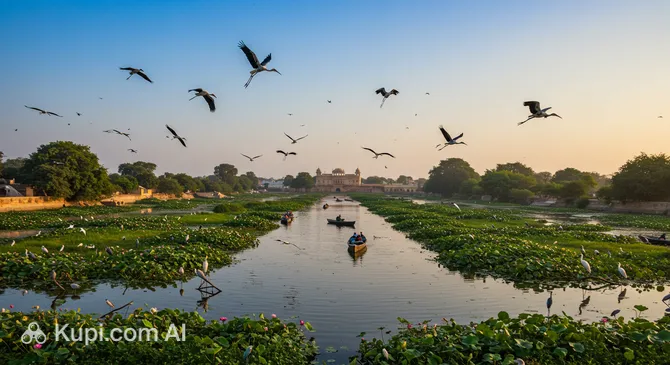
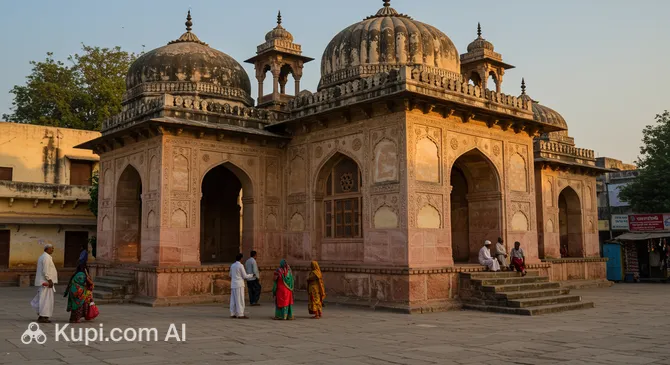
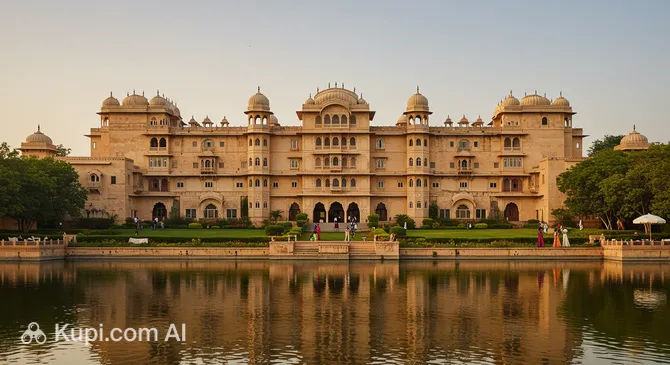
Bharatpur is a colorful city in the state of Rajasthan, located in northwestern India. Founded in 1733 by the Jat ruler Suraj Mal, it long served as the capital of a powerful princely state. Today, with a population of about 252,000, the city retains the atmosphere of a traditional regional center of the Braj region, where modern hustle and bustle is closely intertwined with the great heritage of the past.
Bharatpur. Illustration.
Source: Kupi.com AI
For most travelers, Bharatpur is an essential transit point and a base for exploring unique natural sites. Although the city does not claim to be a metropolis, its rich history is felt within the walls of its powerful defensive structures and ancient temples located in the heart of the urban area. Here, you can experience the true rhythm of Rajasthani life: from busy market squares to the peaceful agricultural lands surrounding the residential quarters.
The city's main magnets remain its historic fortress and world-famous bird sanctuary, turning an ordinary administrative center into a mandatory stop on the route between Agra and Jaipur. We invite you to get to know this hospitable city to see another, less formal, but infinitely sincere India.
Weather Overview
The climate in Bharatpur is distinctly subtropical, typical of the state of Rajasthan. Summers can be truly hot: in May and June, the thermometer often reaches the +40...45°C mark, accompanied by dry and dusty winds. During this period, the weather in Bharatpur requires travelers to exercise caution and protect themselves from the sun.
The winter months, from November to February, are considered the most favorable for a visit. During this time, the average daytime temperature fluctuates within a comfortable range of +15...25°C, although nights can be quite cool (down to +7°C). It is during this dry and clear season that the city welcomes thousands of tourists and ornithologists.
The monsoon period arrives in July and lasts until September. Expect warm days with heavy rainfall—August is the wettest month, with over 200 mm of precipitation. The rains bring long-awaited freshness and bring the nature of the sanctuary to life; however, high humidity and possible road flooding can make moving around the city more difficult.
Average monthly temperature
Average monthly precipitation
Interesting Facts
Bharatpur was named in honor of Bharata, the brother of Lord Rama, who is considered a symbol of loyalty and selflessness in Indian culture.
The legendary Lohagarh Fort lived up to its name, "Iron Fort": it took several exhausting sieges by British forces in the 19th century to break the resistance of the fortress defenders.
The city is part of the legendary Braj region, which is closely associated with the earthly pastimes and deeds of Lord Krishna, although Bharatpur itself is younger than many nearby pilgrimage centers.
The Keoladeo Bird Sanctuary used to be the private hunting ground of the Maharajas of Bharatpur, where large-scale duck hunts were held before it became a protected nature park.
How to Get There
Bharatpur enjoys excellent accessibility, serving as an important link between Delhi, Agra, and Jaipur. Getting to the city is most convenient by train or car, as it is located on the main tourist routes of the "Golden Triangle."
The city does not have its own airport. The nearest international air hubs are in New Delhi (about 202 km away) and Jaipur (about 180 km away). From Delhi airport, a taxi or bus ride will take 4 to 6 hours depending on traffic, while from Jaipur, it takes about 3-4 hours via the NH21 expressway.
Railway transport is the most popular and reliable way to travel. Bharatpur Junction station is a major hub, receiving trains from Agra (only 1 hour away) and Delhi (about 3-4 hours). Despite potential delays typical of Indian railways, this option remains the most budget-friendly and comfortable for travelers.
Station
Passenger traffic
Distance
Agra Cantt railway station
11
49 km
Agra Fort railway station
9
51 km
Aligarh railway station
6
94 km
Gwalior Junction railway station
7
130 km
Hazrat Nizamuddin railway station
14
154 km
Main Attractions
The main pride and primary tourist attraction of the city is undoubtedly Keoladeo National Park, also known as the Bharatpur Bird Sanctuary. It is a UNESCO World Heritage site, home to more than 370 species of birds. Travelers enjoy exploring its shaded paths on bicycles or rickshaws, observing migratory birds in their natural habitat.
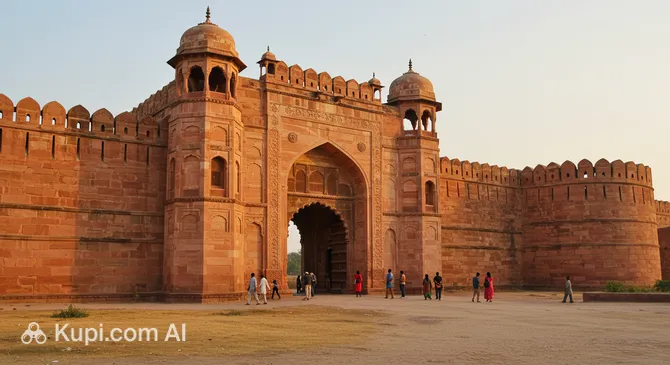
In the very center of the city stands the majestic Lohagarh Fort, whose name translates to "Iron Fort." Built in the 18th century, it is considered one of the most impregnable in the country's history due to its massive earthen ramparts that absorbed cannon fire. Today, museums operating inside the fortress walls house rare artifacts of the Jat rulers.
Lohagarh Fort. Illustration.
Source: Kupi.com AI
Traveler photos:
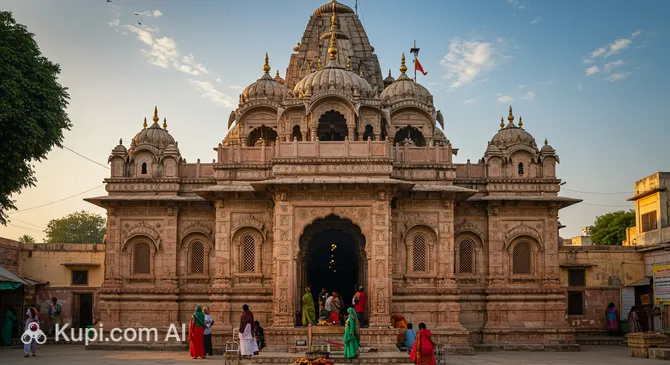
The spiritual life of the city is represented by magnificent temple complexes. It is worth visiting the Shri Bankey Bihari Temple, dedicated to Lord Krishna, which is an important center of pilgrimage and an architectural ornament of the city. Equally impressive is the Shri Ganga Maharani Temple—an elegant pink sandstone structure that combines features of Rajput and Mughal styles.
The gastronomic landscape of Bharatpur is a vibrant palette of traditional Rajasthani cuisine. Here, you must try the famous lentil and grain-based dishes: hearty baati flatbreads served with spicy dal, and fragrant vegetable curries. A specialty of the region is ker sangri—a unique combination of wild beans and desert berries that has a truly distinctive taste.
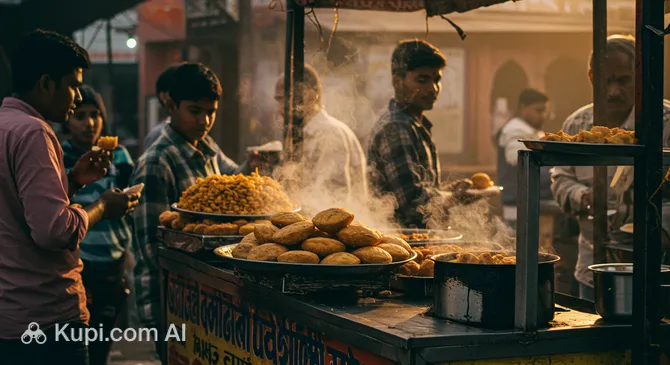
Fans of street food and quick snacks should visit Deviram Kachori. They prepare some of the best kachoris in the city—deep-fried flatbreads with spicy fillings that pair perfectly with hot masala chai or a cool lassi. The street snack culture here is very developed: you can always find fresh samosas and various types of chutney at the markets.
Deviram Kachori. Illustration.
Source: Kupi.com AI
Traveler photos:
If you prefer a more relaxed setting with a full menu, we recommend Dine & Dive Restaurant, which offers a wide range of both Indian and international dishes. Generally, most hotel restaurants focus on vegetarian preferences, but you can also find places in the city that serve spicy mutton prepared in the best traditions of royal feasts.
Travel Tips
Welcome to Bharatpur! To ensure your journey to this historical corner of Rajasthan is as comfortable as possible and leaves only pleasant impressions, we have prepared a few useful tips for you.
Clothing and Essentials: The best time to visit is from October to March when the weather is cool. Bring light cotton clothing, but don't forget a warm sweater for evening walks. Modest clothing covering shoulders and knees is mandatory for visiting temples. Be sure to bring comfortable shoes for walking around the sanctuary.
Transport: It is most convenient to get around the city by cycle-rickshaws—it is cheap and authentic. For trips to Keoladeo Sanctuary, it is best to rent a bicycle right at the entrance.
Finances: The main currency is the Indian Rupee (INR). Cards are accepted only in large hotels and some restaurants, so always have a supply of cash with you. ATMs are available in the city center and at the station.
Health and Safety: Drink only bottled water and avoid ice in street drinks. During the bird migration season, use insect repellent. The city is generally safe, but keep an eye on your bags in the markets.
Communication: The main language is Hindi, but hotel staff and sanctuary guides speak decent English. You can buy a local SIM card at specialized shops by presenting your passport.
Local Etiquette: Always remove your shoes when entering homes and temples. The traditional "Namaste" greeting with palms pressed together is always received warmly by locals.
What to Avoid: Do not feed the wild animals in the sanctuary and do not make noise—it frightens the birds. Try not to get into long arguments with persistent street vendors; simply say "No, thank you" politely.
Extra Tip: Try to reach the bird sanctuary at sunrise—the light is perfect for photos at this time, and the birds are most active.
May your introduction to Bharatpur become a bright chapter in your book of travels across India!
Entertainment & Nightlife
In Bharatpur, you won't find noisy nightclubs or discos that stay open until dawn; this city lives at a calm, almost family-like pace. The main evening entertainment for tourists consists of leisurely walks and dinners. After sunset, life centers around local markets, such as the area near Mathura Gate, where you can observe the daily life of the locals and enjoy aromatic tea at one of the many stalls.
For those who prefer cultural leisure, visiting historical locations during the day is an excellent option. Be sure to check out Bijli Ghar Chauraha—a busy intersection and square that serves as a landmark for many city routes. Daytime excursions through the bird sanctuary are also popular, where nature provides a sense of peace unavailable in large metropolises.
In search of more active nightlife or shopping in modern malls, locals and tourists often head to neighboring Agra or Delhi. In Bharatpur itself, it is best to enjoy the authenticity: the evening lights of the temples, the silence of the gardens in resort hotels like The Bagh, and the welcoming atmosphere of local restaurants.
Parks & Museums
The undisputed leader among the city's natural areas is Keoladeo National Park. Covering an area of about 28 square kilometers, this sanctuary is a complex system of wetlands that has become home to thousands of birds. Visitors are offered boat trips along the canals or rickshaw rides, making a visit to the park comfortable and educational at any time of day.
Those interested in the history and culture of the region should visit the Government Museum, located inside the powerful defensive structure of Lohagarh Fort. It houses a rich collection of sculptures, ancient weapons, coins, and manuscripts reflecting the glorious past of the Jat rulers. The museum's exhibition allows for a deeper understanding of why Bharatpur played such an important role in the political life of 18th-century India.
Other notable locations include the historic Mathura Gate, which is an architectural monument in itself, and the Bijli Ghar Chauraha area. While there are not many park zones within the city limits, the sanctuary itself and the green areas at major resort hotels fully compensate for the need for outdoor relaxation.
Bijli Ghar Chauraha. Illustration.
Source: Kupi.com AI
Traveler photos:
Getting Around
The public transport system in Bharatpur is simple and oriented toward the needs of a small city. The primary means of transportation for both tourists and locals are auto-rickshaws and cycle-rickshaws. This is the fastest and most affordable way to get from one point to another, especially through the narrow and noisy streets of the center. The cost of a trip usually ranges from 10 to 50 rupees, but the price should be agreed upon in advance.
There is no metro, tram, or trolleybus system within Bharatpur. For longer distances, such as to the entrance of the National Park, you can use local buses that run between the main districts. However, many travelers prefer to rent bicycles—this is particularly popular within the sanctuary itself, where motorized traffic is restricted.
Bharatpur Junction railway station serves as the main transport hub connecting the city with the rest of India. For moving between attractions in comfort, you can call a taxi through apps or hire a car for the entire day. Keep in mind that traffic jams are possible during peak hours and traffic may seem chaotic, so allow extra time for your journey.
Accommodation
For a city of its size, Bharatpur offers a decent selection of accommodation, primarily aimed at nature lovers and transit travelers. Most mid-range and budget hotels are concentrated in two areas: near the railway station (for convenient travel) and in close proximity to the entrance of Keoladeo National Park.
If you are looking for comfort and the atmosphere of a historic estate, consider the countryside resorts. For example, The Bagh hotel offers a stay surrounded by greenery and tranquility, perfect after a busy day in the sanctuary. Another landmark location is the Udai Bilas Palace, where classic-style architecture is combined with modern service and swimming pools.
Udai Vilas Palace. Illustration.
Source: Kupi.com AI
Traveler photos:
Budget travelers can easily find guesthouses and small hotels, such as the lodges popular among birdwatchers. Prices here are quite reasonable; however, during the peak tourist season (from November to February), when thousands of migratory birds arrive at the sanctuary, it is better to book in advance. Most accommodations can be found on popular international booking platforms.
Nearby Cities
Thanks to its prime location in the center of the "Golden Triangle," Bharatpur serves as an excellent starting point for exploring the surroundings. In just one day, you can visit several UNESCO World Heritage sites or travel to the country's spiritual centers.
The most popular destination is the ancient abandoned city of Fatehpur Sikri, located just 21 km away. This architectural masterpiece of the Mughal era impresses with its red sandstone palaces. Also worth noting are Mathura and Vrindavan—sacred cities inextricably linked to the life of Krishna, filled with hundreds of ancient and modern temples.
In addition to short trips to neighboring Achhnera or Nadbai, travelers often use Bharatpur as a base for visiting Agra (55 km) to see the legendary Taj Mahal. A well-developed railway network and the availability of taxis make it easy to plan such excursions and return to the quiet atmosphere of Bharatpur by evening.
Shopping & Souvenirs
Shopping in Bharatpur is primarily an immersion into the atmosphere of traditional Indian bazaars. The main commercial heart of the city is Sadar Bazaar. You won't find the glitz of modern malls here, but there is an abundance of local handicrafts: bright Rajasthani fabrics, hand-embroidered clothing, and famous ethnic-style jewelry.
Near historical landmarks like Mathura Gate, the trade in spices and sweets is bustling. If you are looking for an unusual gift, pay attention to wooden and marble products—local craftsmen are famous for their fine work. Souvenirs related to birds are also popular and can be found in shops near the entrance to the National Park.
Shops are usually open from 10 AM to 8 or 9 PM, and it is customary to bargain actively in the markets—it is part of the local culture of communication. Most outlets accept cash (Indian Rupees), so it is worth having small bills on hand. Large shopping centers are absent in the city; residents usually go to neighboring metropolises for them, allowing Bharatpur to maintain its authentic trading character.