Support

Jagannath Temple

About

The Jagannath Temple is a modern Hindu temple in the city of Hyderabad, which serves as an important religious and cultural center for followers of Vaishnavism in India. Dedicated to Lord Jagannath, a form of Vishnu, it attracts both pilgrims and tourists eager to learn about the spiritual traditions and architecture of the region. The temple serves not only as a place of worship but also as a popular city landmark.
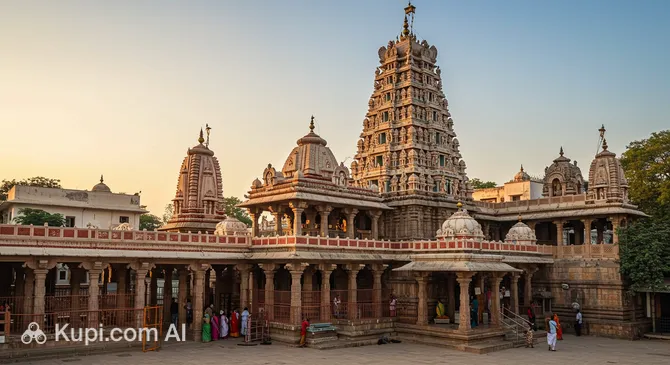
Jagannath Temple. Illustration.
Source: Kupi.com AI

Traveler photos:

Built in the likeness of the famous ancient Jagannath Temple in Puri, this temple in Hyderabad is its modern interpretation. Although it was built recently, its architecture strictly follows the canons of traditional temple building, making it a striking example of cultural continuity. The temple complex includes a main sanctuary and several auxiliary buildings where rituals and festivals are held, playing an important role in the life of the local community.

Visitors are greeted by a spiritual and peaceful atmosphere. The main sanctuary, dedicated to the deities Jagannath, his brother Baladeva, and sister Subhadra, is the central place for prayer and meditation. The temple is particularly famous for its annual festivals, such as the Ratha Yatra (chariot festival), which gather many devotees and create an unforgettable spectacle reflecting rich cultural traditions.

Contacts

To obtain up-to-date information on opening hours, special events, and visiting rules, it is recommended to contact the temple administration. Below are the primary contact details for reaching out.

How to contactContact
AddressPlot No- 1269, Road No. 12, Bhavani Nagar, Banjara Hills, Hyderabad, Telangana 500034, India
Websiteshrijagannathtemplehyderabad.com

What to Do

Visitors to the Jagannath Temple can learn about Hindu traditions by observing the daily pujas — rituals of worship — or by joining communal prayers. Of particular interest is the annual Ratha Yatra festival, known as the "Festival of Chariots." During this grand event, a colorful procession passes through the city streets with huge, richly decorated chariots carrying wooden idols of the deities. This vibrant and lively event, attracting thousands of believers and tourists, creates a truly unforgettable spectacle.

In addition to religious rites, the temple attracts the attention of architecture enthusiasts. Its towers and sculptural compositions are executed in the vibrant Odishan style, making the building itself a work of art. The atmosphere inside the complex invites calm and reflection, creating a pleasant contrast to the busy streets of Hyderabad. Many guests come here not only to participate in ceremonies but also to simply enjoy the peaceful setting, admire the exquisite architecture, and take commemorative photos.

Getting There

The Jagannath Temple is located in the prestigious and well-developed Banjara Hills area of Hyderabad, which ensures excellent transport accessibility. Thanks to its central location, you can reach the temple by taxi, auto-rickshaw, or city bus. A trip from the city center usually takes between 20 and 30 minutes, depending on traffic conditions.

For tourists, especially those unfamiliar with the city, the most convenient way to reach the temple is by taxi or ride-hailing services. This avoids transfers and saves time. Alternatively, you can use the metro: the nearest station is Jubilee Hills Check Post, from which the temple can be reached by auto-rickshaw or taxi in about 10 minutes, covering a distance of approximately 3 km. Some sources also suggest that it is possible to walk to the temple from this station.

Nearest city: Hyderabad

History & Facts

The history of the Jagannath Temple in Hyderabad is inextricably linked with one of the most ancient and revered shrines in India — the Jagannath Temple in the city of Puri. The Hyderabad temple is its modern architectural and spiritual replica, created so that devotees can experience the sanctuary without undertaking a long pilgrimage. The construction of the temple in Hyderabad serves as a tribute to centuries-old traditions rooted in ancient legends.

According to legend, the history of the original temple began with King Indradyumna, who, at the command of the gods, built the first sanctuary in Puri many centuries ago. Stones brought from Nila-Kandara Hill were used for construction, and according to tradition, Lord Brahma himself consecrated the temple. The deities appeared miraculously: Lord Jagannath manifested in the form of Daru-Brahman — a sacred piece of wood from which the unique images of the deities, revered to this day, were carved.

The original temple in Puri is so significant that it is one of the four main Hindu shrines known as the Char Dham. It is also with this temple that the origin of the English word "juggernaut" is associated, meaning an inexorable and all-crushing force. This word appeared thanks to the grand annual Ratha Yatra chariot festival, during which thousands of believers pull giant wagons carrying the deities, a procession that appears as an unstoppable power.

Thus, the Jagannath Temple in Hyderabad is not just a beautiful structure, but a living heritage embodying deep history and cultural traditions. It allows visitors to learn about unique rituals and legends that have been shaped over millennia and to feel the atmosphere of one of India's most important spiritual centers without leaving the city.

Time Needed

To explore the Jagannath Temple in Hyderabad, 1 to 2 hours will be sufficient for most visitors. This is enough time to leisurely tour the temple complex grounds, appreciate its impressive architecture inspired by the famous temple in Puri, and take some memorable photos. During this period, you can also enter the main sanctuary and observe the daily rituals, immersing yourself in the peaceful atmosphere of this spiritual place.

If your time is limited, less than an hour is enough for a quick look at the main architectural features and a short walk around the grounds. However, to truly feel the essence of this place, it is recommended not to rush. Visitors wishing to delve deeper into the traditions of India may want to participate in one of the pujas (religious ceremonies) or simply sit in silence, enjoying the tranquility.

It is worth considering that during major religious holidays, such as the annual Ratha Yatra chariot festival, visiting the temple will require much more time. On such days, the complex and its surroundings fill with thousands of devotees, and participating in the festivities can take half a day or even longer. Therefore, when planning a visit, it is advisable to check the temple's event schedule in advance.

Working Hours

The Jagannath Temple in Hyderabad is open to visitors year-round, and entry is generally free, so no advance ticket booking is required for a regular visit. The temple usually operates daily, but with a break in the middle of the day. Morning visiting hours are approximately from 6:00 AM to 12:00 PM, and evening hours are from 4:00 PM to 9:00 PM. This schedule allows guests to plan their visit for either the early morning to enjoy the quiet atmosphere or the evening when the daytime heat subsides.

It is important to remember that these operating hours may change, especially during major religious holidays and festivals such as Ratha Yatra. During these periods, the temple can become very crowded, and the schedule may be adjusted. Before your trip, it is highly recommended to check the current opening hours on the temple's official website or via the contact telephone number to ensure your visit is as comfortable as possible.

6:00 – 12:00, 5:00 – 21:00

Nearby

Visiting the Jagannath Temple is a wonderful opportunity to get acquainted with the spiritual side of Hyderabad, but exploring its surroundings can make your journey even more fulfilling. The temple is located in the prestigious Banjara Hills district, which is famous not only for its religious sites but also for its parks, restaurants, and other interesting spots. A stroll nearby will allow you to see different facets of life in this dynamic city.

In the immediate vicinity of the temple, you will find peaceful parks and other shrines, as well as modern establishments where you can relax and grab a bite to eat. This variety makes the area attractive to tourists with all kinds of interests. Below is a list of nearby attractions that you can visit to complement your experience.

NameDistance
Kasu Brahmananda Reddy National Park0.6 km
Hare Krishna Golden Temple0.6 km
Manam Chocolate Factory0.7 km
Roast CCX1.1 km
Zythum Brewing1.8 km
Air Live2.3 km
Krishna Hotel2.5 km

Have you reached the end of the page?

So the route has been studied inside and out