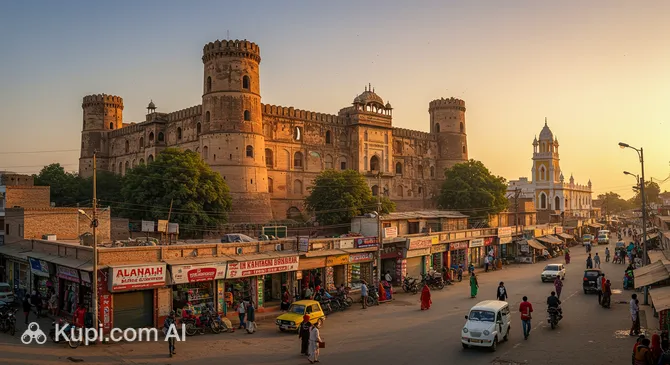
Karnal is a city with deep roots and a practical character, located in the state of Haryana in northern India. Part of the National Capital Region (NCR), it serves as a vital link on the legendary Grand Trunk Road between Delhi and Chandigarh. With a population of approximately 357,000, the city harmoniously blends the atmosphere of endless agricultural lands with the rhythm of a modern industrial hub.
Known as the "Rice Bowl of India," Karnal is famous for its vast fields where the finest Basmati rice is grown. Beyond its agricultural achievements, the city is home to leading research centers, such as the National Dairy Research Institute (NDRI). It is a place where you can experience the authentic, hardworking life of the country's northern region, away from the typical hustle and bustle of popular tourist metropolises.
Karnal. Illustration.
Source: Kupi.com AI
Although often perceived as a transit point, Karnal's rich heritage attracts those who appreciate history and authenticity. Walking along the Western Yamuna Canal and visiting local markets allows you to feel the unique flavor of a region where rural tranquility meets urban development. Karnal is an excellent discovery for travelers seeking to see India as it is in its everyday, productive life.
Weather Overview
The climate in Karnal is characterized as subtropical, with distinct seasonality. Summers here can be truly hot: in May and June, the average air temperature stays around 31–32°C, but it frequently rises to an extreme 45°C. Winters, by contrast, bring a pleasant chill, with January temperatures dropping to an average of 13°C, and nights can be quite fresh (around 7–8°C).
An important feature of the region is the monsoon rains, which peak in July and August. During this time, humidity increases significantly, and rainfall can reach 270 mm per month. If you are planning a trip, it is worth checking the weather forecast in the city, especially during harvest periods when winds and agricultural activity can lead to increased dust in the air.
Expect very hot and humid summers with powerful downpours in the middle of the year, and mild, dry, and sunny winters, which are considered the most comfortable for visiting. The most favorable time for a visit is between October and March, when the weather is ideal for walking and exploring the surroundings without the exhausting heat.
Average monthly temperature
Average monthly precipitation
Interesting Facts
According to ancient legends, Karnal was founded by Raja Karna, one of the key and most tragic figures of the Indian epic "Mahabharata."
The city rightfully holds the title of the largest exporter of Basmati rice: over 300 rice mills operate here, supplying grain to the Persian Gulf countries and the rest of the world.
It was in Karnal in 1739 that a famous battle took place, where the Persian ruler Nadir Shah defeated the forces of Emperor Muhammad Shah, a turning point in the history of the Mughal Empire.
The city is home to one of the country's oldest and most prestigious scientific centers—the National Dairy Research Institute (NDRI), founded back in 1923.
In the 12th century, a unique marble tomb for Sultan Ghiyas-ud-din was erected in the city, which remains an important historical monument of Islamic architecture in the region today.
How to Get There
Karnal boasts excellent transport accessibility due to its location on the famous National Highway 1 (NH1), also known as the Grand Trunk Road. The city is situated approximately 125 kilometers north of Delhi and 120 kilometers south of Chandigarh, making it a convenient transit point. Detailed information on routes can be found in the section on how to get to Karnal.
The nearest major air hub is Indira Gandhi International Airport in Delhi, located about 130 kilometers away. A taxi or bus ride from the airport usually takes 3 to 4 hours, depending on traffic intensity on the NH44. Regular bus services by the state-owned Haryana Roadways are also available, connecting the city to all key points in the region.
Rail travel is another popular way to reach the city. Karnal Railway Station is located on the busy Delhi–Amritsar line. Significant trains like the Grand Trunk Express pass through it, providing reliable connections to the capital and northern states. The station is conveniently located, and the city center can be reached by auto-rickshaw in just a few minutes.
Station
Passenger traffic
Distance
Sarai Rohilla railway station
8
115 km
Delhi Junction railway station
11
116 km
New Delhi railway station
27
118 km
Anand Vihar Terminal
11
119 km
Dehradun railway station
10
122 km
Main Attractions
While Karnal is primarily an agro-industrial center, it hides several interesting spots worth visiting. One of the city center's symbols is the Clock Tower, where the daily life of locals bustles around. This architectural landmark serves as a great reference point for those exploring the city's commercial quarters.
History buffs will be interested in seeing the historical 12th-century marble tomb built by Sultan Ghiyas-ud-din of Ghor. It is one of the few surviving testaments to the city's ancient past, highlighting its significance on the path of great conquerors of antiquity. It is also worth visiting commemorative sites like the Statue of Tau Devi Lal, dedicated to a prominent political figure of the region.
For a more peaceful break, travelers head to the banks of the Yamuna River or the areas around the National Dairy Research Institute (NDRI) campus. These zones offer greenery—a rarity in an industrial city—and a chance to observe the agricultural way of life. If you are looking for a place to relax after a walk, you can drop by Suvidha Store, one of the city's popular spots for shopping and meeting up.
Local Cuisine
The gastronomic map of Karnal is an ode to the fertile lands of Haryana. At the heart of the local cuisine is the famous Basmati rice, prepared here in numerous variations: from fragrant pilafs to spicy biryanis. Thanks to the proximity of the National Dairy Research Institute, the city is famous for the exceptional quality of its dairy products. Be sure to try the local paneer (cottage cheese) and thick, refreshing lassi.
For those who prefer vegetarian cuisine, Karnal offers true delicacies: thick lentil dal, various vegetable sabzis, and freshly baked roti or naan. If you are looking for a reliable place for a family lunch, Soyaway Restaurant, known for its high-quality vegetarian food, is an excellent choice. For fans of familiar global brands, there is a Fast Food Restaurant (Burger King) operating in the city.
Roadside eateries—dhabas—located along the NH1 highway are particularly charming. Here you can always find "piping hot" fresh food made from local farm products. The food culture in Karnal is simple and honest: natural flavors of grain and milk are prized, and meals often take place in a relaxed family atmosphere. For dessert, don't forget to taste rice-based sweets, which are a hallmark of this region.
Travel Tips
A visit to Karnal will give you a unique look at the agricultural heart of India, and to ensure your trip goes smoothly, we have prepared a few practical tips.
Clothing and Season: The best time to visit is from October to March, when the weather is cool and pleasant. In summer (April-June), the heat can reach 45°C, so light cotton clothing is essential. When visiting temples, choose modest outfits that cover your shoulders and knees.
Transport: For convenient travel, use the Uber or Ola apps. Within the city, rickshaws are the fastest way to get around, but it's better to agree on the fare in advance if there is no meter.
Finances: The official currency is the Indian Rupee (INR). Cards are accepted in major hotels and stores like Suvidha Store, but always carry cash for markets and small expenses. ATMs are located throughout the center.
Health: Drink exclusively bottled water and avoid ice in street drinks. During the dusty season (October-November), a protective mask may be useful, especially if you suffer from allergies.
Connectivity: To buy a local SIM card (Airtel or Jio), you will need your passport and a photo. Wi-Fi is available in most hotels, but its quality can be unstable.
Etiquette: The "Namaste" greeting with folded palms is always received warmly. Before entering a private home or temple, be sure to remove your shoes.
What to Avoid: It is not recommended to take solo walks through industrial zones and the city outskirts after dark due to poor lighting.
Extra Tip: If you are a fan of agriculture, try to time your visit with the annual horse fair—this spectacle will help you better understand the local color.
By following these simple rules, you can fully enjoy the hospitality of Karnal and discover the real life of northern India. Have a great trip!
Entertainment & Nightlife
Nightlife in Karnal is quite low-key, reflecting its status as a quiet agricultural and industrial city. There are virtually no traditional nightclubs or loud discos here; for vibrant parties, locals and expats usually head to neighboring Delhi or Panipat. Nevertheless, you can find cozy spots for evening relaxation within the city itself.
A popular pastime is dining at hotel restaurants. For instance, you can visit the Bar at Deventure Hotel in Karnal, which offers a wide selection of drinks in a comfortable setting. Another popular spot for evening leisure is Vatika Bar & Restaurant, attracting a crowd with its calm atmosphere and good service. Most establishments close by midnight, so it's best to plan your evening entertainment in advance.
During the day, entertainment in Karnal revolves around the markets and walking areas near the canals. A special event in the cultural calendar is the annual horse fair, which draws many spectators and participants from across the region, creating a unique local vibe. For family outings, residents often choose to spend time at the roadside cafes (dhabas) along the NH1 highway, where fresh food can be enjoyed in the open air.
Parks & Museums
The park infrastructure in Karnal is geared more toward local residents than mass tourism; however, there are several pleasant spots for a stroll. Most of the city's greenery is provided by the areas around large research institutes and the banks of the Yamuna canals. Although access to campuses like the NDRI may be limited, their green spaces create a favorable microclimate and are pleasing to the eye against the industrial backdrop.
Among the city's landmarks, the Clock Tower and its adjacent squares are noteworthy as centers of public life. Another iconic site is the Statue of Tau Devi Lal, around which a small recreational area has been formed. Residents often note a lack of large public parks, so for nature outings, it is better to choose spots along the canal where you can enjoy the water views and relative silence.
There are few specialized museums in Karnal itself, and travelers usually head to nearby Kurukshetra or Delhi for rich exhibits. However, the city itself can be seen as a living open-air museum of agricultural culture. The fields surrounding Karnal turn into picturesque golden canvases during harvest season, and visits to old grain markets allow you to see trading traditions that haven't changed in decades.
Getting Around
The transport system in Karnal is typical for a mid-sized Indian city and relies heavily on the road network. The backbone of public transport consists of Haryana Roadways state buses, which run regularly both within the city and to neighboring settlements. This is an affordable way to get around, though buses can be very crowded with workers and students during peak hours.
For short trips within the city and moving between markets, it is most convenient to use rickshaws, auto-rickshaws, and modern e-rickshaws. They are maneuverable and allow you to reach your destination quickly, bypassing traffic in narrow alleys. Popular ride-hailing apps like Uber and Ola also operate in Karnal, significantly simplifying travel for tourists who prefer comfort and fixed prices.
Travelers should keep in mind that the city has no metro or trams, and traffic in central areas can be quite chaotic. Peak traffic hours usually occur in the morning (from 7 AM to 10 AM) and evening (from 5 PM to 8 PM). When planning trips during the dry season or harvest time, it is recommended to bring a mask or scarf, as there can be a lot of dust in the air from agricultural work. Bicycles remain a popular mode of transport among locals, but for tourists, riding one might be a challenge due to the intense traffic.
Accommodation
The choice of accommodation in Karnal is primarily geared towards business travelers, scientists, and those passing through the city on their way to Punjab or Himachal Pradesh. Most hotels are concentrated along the NH1 national highway and in the central districts. Budget and mid-range hotels predominate, offering a decent level of comfort for reasonable prices.
For those looking for quality service, the Deventure Hotel is worth considering, as it is one of the most well-known places to stay in the city. The price range for accommodation in Karnal typically varies from 1,000 to 3,500 Indian Rupees per night. Guesthouses and apartments are also available, often chosen by professionals visiting local research institutes for extended periods.
While Karnal is not a tourist resort, it is recommended to book accommodation in advance if your trip coincides with major agricultural exhibitions or the annual horse fair. Popular international and Indian services remain the primary platforms for searching and booking. When choosing a place to stay, prioritize options with air conditioning, which is especially relevant during the hot season.
Nearby Cities
Karnal is an excellent starting point for exploring the country's northern regions, offering travelers access to places rich in history and culture. Its convenient location on a major transport artery allows for exciting day trips to neighboring cities.
Just 33 kilometers to the south is Panipat—the famous "City of Weavers" and the site of three great historical battles that changed the course of Indian history. In the opposite direction, about a 40-minute drive away, lies the sacred city of Kurukshetra (near the town of Thanesar), where, according to legend, the events of the "Mahabharata" unfolded. It is also worth visiting smaller towns like Rajaheri and Ladva, which offer a glimpse into the traditional lifestyle of Haryana state.
If you have more time, you can head to Kairana or plan a full trip to Delhi. The variety of destinations around Karnal makes it a convenient hub for those who want to get to know the agricultural heart and ancient legends of northern India. Don't miss the chance to explore these surroundings, as each trip will reveal a new facet of this amazing region.
Shopping & Souvenirs
Shopping in Karnal is primarily an introduction to the region's agricultural wealth. The city doesn't abound with massive shopping malls; instead, traditional trade thrives here. The city's main "goods" are top-quality Basmati rice, cotton, and salt. Local markets located near the railway station and along the NH1 highway are always full of life and offer an authentic shopping experience.
If you are looking for a more familiar store format, it's worth checking out Suvidha Store, which offers a wide range of daily necessities. For souvenirs and local handicrafts, it is best to visit the annual horse fair or the central bazaars, where you can find traditional Haryana textiles and unique handmade items.
The typical operating hours for shops in Karnal are from 10:00 AM to 8:00 PM, though many small shops may close for a break during the hottest part of the day. Large retail outlets accept bank cards, but in markets and dhabas, you will definitely need cash rupees. From Karnal, it is worth bringing back a pack of premium rice and, if logistics permit, local dairy sweets, which will serve as an excellent reminder of your visit to the country's "Rice Bowl."