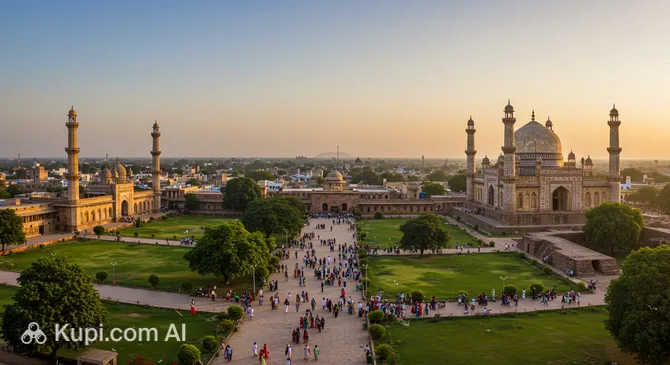
Panipat is a vibrant industrial center in the state of Haryana, located in northwestern India. The city is situated approximately 90–95 kilometers north of Delhi, directly on the famous NH-44 national highway. Despite its industrial appearance, it holds deep historical significance, as it was here that the fate of the country was decided in three great battles that forever changed the history of the city and the entire subcontinent.
Panipat. Illustration.
Source: Kupi.com AI
Today, Panipat is often called the "City of Weavers" or the "Recycled Clothing Capital of the World." It earned this title due to its colossal production volumes of textiles, woolen goods, and carpets. The city has a population of nearly 300,000, and the atmosphere here is permeated with the rhythm of looms, the noise of bustling markets, and the movement along the legendary Grand Trunk Road.
For the traveler, Panipat is primarily a place to encounter the past. Here you can see ancient mosques and museums dedicated to the legendary battles. While the city is not a classic tourist resort, its unique industrial scale and rich heritage of the Mughal era make it a mandatory stop for those who want to see the real, hardworking, and historical India.
Weather Overview
Panipat is located in a subtropical climate zone, characterized by sharp seasonal changes. Summers in the city can be very grueling: in May and June, temperatures often reach +40°C...+45°C. During this time, the air is dry and dusty, which is typical for the industrial plains of Haryana. If you do not tolerate heat well, it is better to plan your visit for another time.
From July to September, monsoons arrive in the region, bringing heavy rains and long-awaited coolness; however, humidity increases significantly during this period. Winters in Panipat, by contrast, are mild and pleasant: from December to February, the average daytime temperature is around +15°C...+20°C, while nights can be quite chilly. This is the ideal time for walking and exploring historical monuments.
Before your trip, be sure to check the current forecast, as the weather in the city can affect transport operations and the overall environmental situation. During the dry seasons, smog is possible due to textile factories and highway traffic, which is why winter is considered the most favorable season for a visit.
Average monthly temperature
Average monthly precipitation
Interesting Facts
Panipat holds the unofficial title of the "Recycled Clothing Capital of the World" due to its unique facilities for textile recycling and the production of goods from recycled materials.
The city is a major exporter of Achar (traditional pickled vegetables) — every year, more than 500 million rupees worth of this snack is produced here for markets in the UK and the USA.
The famous poet Maulana Hali, who made an invaluable contribution to the development of Urdu literature, was born here.
Panipat is closely linked to Sufism: it is home to the shrine of the saint Bu Ali, who enjoyed the patronage of India's Muslim rulers.
One of Asia's largest oil refineries (Panipat Refinery) is located in the city, highlighting its status as a key industrial hub for the country.
How to Get There
Panipat boasts excellent transport accessibility thanks to its location on the country's main highway, NH-44. The city is an important transit hub between Delhi and the northern states. The easiest way to get to Panipat is from India's capital; a trip by car or taxi takes between 2 to 3 hours depending on traffic conditions.
The nearest international airport is Indira Gandhi International Airport in Delhi (DEL), located about 90 km away. From there, you can book a transfer to Panipat or use the regular buses that depart from the ISBT Kashmiri Gate station.
Railway travel is one of the most convenient ways to get there. Panipat is on the Delhi–Ambala line, and trains from New Delhi reach the city center in just 1.5–2.5 hours. Panipat Junction railway station serves both suburban and long-distance trains.
Station
Passenger traffic
Distance
Sarai Rohilla railway station
8
84 km
Delhi Junction railway station
11
85 km
New Delhi railway station
27
87 km
Anand Vihar Terminal
11
89 km
Hazrat Nizamuddin railway station
14
93 km
Main Attractions
Although Panipat is primarily an industrial hub, it preserves unique historical monuments. One of the most significant attractions is the Kabuli Bagh Mosque. This structure was built by Emperor Babur in 1527 to commemorate his victory in the First Battle of Panipat. Named after his wife, Kabuli Begum, the mosque is considered the first Mughal building in India and attracts connoisseurs of Islamic architecture with its harmonious forms.
Another interesting site is the ancient Purana Qila (Old Fort). It serves as a living reminder of the city's ancient origins and its strategic role over the centuries. Walking through these sites, you can literally feel the breath of time and the scale of the events that took place on these plains.
For those who want to delve deeper into the region's military history, the Panipat Museum is a must-visit. Its halls house artifacts from the three legendary battles: weapons, armor, and ancient manuscripts. The museum provides a clear perspective on how the battles of 1526, 1556, and 1761 influenced the architecture and culture of the modern Indian state.
Local Cuisine
Panipat's cuisine features the classic flavors of the state of Haryana, dominated by hearty dishes made from wheat, vegetables, and dairy products. Be sure to try the various types of flatbreads (roti and paratha), which are served here with a thick lentil sauce known as dal. The local food is famous for its simplicity and nutritional value, reflecting the hardworking character of the region.
The main gastronomic pride of Panipat is Achar — pickled vegetables and fruits with spices. The city is a world center for the production of this product, so achar can be found in any eatery and at every market. For drinks, locals prefer refreshing yogurt-based Lassi or spicy Masala Chai.
For a comfortable lunch, you can head to Themis Barbecue House, which offers grilled dishes with a modern twist. If you prefer a quick and quality snack, stop by Hangries Panipat. Additionally, many roadside cafes (dhabas) are located along the Grand Trunk Road, where you can experience the true flavor of an Indian meal alongside truck drivers and travelers.
Travel Tips
A trip to Panipat is an immersion into the very essence of India's industrial heart. To ensure your journey is comfortable and leaves only pleasant impressions, check out our tips.
Clothing and Essentials: Choose light cotton clothing, as it gets very hot here in the summer. During the winter months (December-January), bring warm clothes, as temperatures can drop to +5°C. When visiting mosques, follow a modest dress code: shoulders and knees should be covered.
Transport: Use auto-rickshaws for moving around the city, and for trips to Delhi, use the Uber or Ola apps. Be prepared for serious traffic jams during peak hours due to the abundance of freight transport.
Finance: The main currency is the Indian Rupee (INR). Cards are accepted in large stores and hotels, but you will definitely need cash in markets and dhabas.
Health: Panipat can be dusty due to factory operations. If you have sensitive lungs, bring a protective mask. Drink only bottled water and avoid ice in street drinks.
Communication: The main language is Hindi. English is understood by hotel staff and young people, but it is useful to learn a few basic phrases for communicating in the markets.
Local Etiquette: The traditional greeting "Namaste" is always well-received. Remove your shoes before entering temples and private homes.
What to Avoid: It is not recommended to walk around the outskirts and industrial zones after dark, as lighting there may be insufficient.
Additional Tip: Visit the Panipat Museum in the first half of the day before the halls become too crowded; this will allow you to get a better look at the historical artifacts.
May your introduction to Panipat be a brilliant discovery of the rich history and modern power of this amazing city!
Entertainment & Nightlife
Nightlife in industrial Panipat is quite modest, as the city lives according to the rhythm of its factories and workshops. You won't find an abundance of noisy nightclubs here; however, modern venues are available for evening relaxation. For instance, Pyramid Bar offers guests a lounge bar, microbrewery, and restaurant concept where you can spend time with friends enjoying good music.
If you are looking for a place with an authentic atmosphere, it's worth visiting RK Talli Haveli. Such establishments combine elements of traditional Indian culture with modern service. The primary crowd here consists of locals and business people who prefer quiet dinners and conversation in a comfortable setting. Most bars and restaurants close around midnight.
Daytime entertainment in the city centers around cinemas, shopping rows, and annual fairs. During festive periods, the streets of Panipat are transformed: religious processions and festivals take place, allowing tourists to see the colorful side of local life. For larger-scale entertainment and night parties, many residents prefer to travel to nearby Delhi or Chandigarh.
Parks & Museums
As a typical industrial city, Panipat is not rich in vast green zones, but its historical sites partially compensate for this lack. The main cultural site is the Panipat Museum. This place is a real portal to the past, where the history of the three great battles is presented in detail. The museum's exhibition includes rare maps, ancient weapons, and everyday objects that allow visitors to understand the scale of the events that took place on these fields.
In terms of outdoor relaxation, residents often use the areas around historical monuments. For example, the space near the Kabuli Bagh Mosque or the old Purana Qila fort allows for a peaceful walk away from the factory noise. Small park areas can also be found in residential neighborhoods, though they are more utilitarian in nature.
The shortage of large parks and gardens is due to dense construction and the city's industrial specialization. Nevertheless, when planning a visit, it is worth dedicating time to the museum — it is the best way to get to know the soul of the city. For more extensive garden walks, travelers usually head to nearby Kurukshetra or Delhi.
Getting Around
The transport system in Panipat is typical for a developing industrial city in India. Public transport is based on Haryana Roadways buses, which connect the center with the industrial outskirts and neighboring cities. For quick trips around town, locals and tourists most often use auto-rickshaws and cycle-rickshaws — the most maneuverable way to navigate the narrow and congested streets.
Popular ride-hailing apps like Uber and Ola also operate in Panipat, significantly simplifying travel between the railway station and hotels. Rickshaw fares are negotiable, so it is worth confirming the price of the trip in advance. The city is quite compact, but due to heavy traffic, especially trucks on the NH-44, travel times can increase significantly.
Walking can be difficult due to the lack of wide sidewalks and high dust levels in industrial zones. Nevertheless, the central market districts are quite accessible for exploration on foot. For long-distance travel in a northern or southern direction, it is best to use the railway, which operates efficiently and connects Panipat to all key points in the region.
Accommodation
The hotel sector in Panipat is primarily geared towards business travelers and transit tourists. Mid-range and budget hotels predominate, many of which are located along the NH-44 highway in the form of modern motels. This type of accommodation is convenient for those traveling to the north of the country or visiting the city for textile manufacturing purposes.
In the central districts of the city, you can find guesthouses and small hotels offering basic services. The cost of accommodation usually starts from 1,000–3,000 Indian Rupees per night, making Panipat a very affordable destination. There are few luxury five-star complexes here, as most demand comes from business missions and trade representatives.
When choosing a hotel, it is recommended to check for air conditioning, especially during the hot summer months, and proximity to major transport interchanges. It is better to book accommodation in advance through popular international services, particularly if your trip coincides with major textile industry exhibitions.
Nearby Cities
Panipat serves as an excellent starting point for exploring the northern regions of the country, as it is conveniently located between major cultural centers. Just 90 kilometers to the south is the nation's capital, Delhi, where you can head for a full day of shopping, a visit to the Red Fort, and an introduction to the metropolis.
To the north, about an hour's drive away, lies the city of Kurukshetra, which holds immense significance for Hindu culture. A little further is the modern and green city of Chandigarh, famous for its unique layout and gardens. Also of interest are small neighboring settlements like Rajaheri or the market town of Samalkha.
City
Population
Distance
Rajakheri
25 091
5 km
Samalkha
40 000
17 km
Kairana
89 000
23 km
Kaith
9 902
25 km
Safidon
34 728
29 km
For day trips, it is best to use trains or a rented car with a driver. Proximity to historical sites and major cities makes Panipat a convenient hub for those who want to see the diversity of northern India without staying long in noisy tourist centers.
Shopping & Souvenirs
Shopping in Panipat is primarily a hunt for high-quality textiles. The city is not called a "textile hub" for nothing: here you can buy magnificent carpets, bedspreads, and curtains at wholesale prices. The main shopping points and specialized handloom shops are concentrated along the city's main highway. Panipat's markets are a paradise for those looking for home comfort and products made from natural fabrics.
Special attention should be paid to unique goods made from recycled materials. Panipat is a leader in the production of clothing and textiles from recycled fibers, offering eco-friendly and affordable solutions. As a souvenir, visitors take home not only carpets but also the famous local Achar. These spicy pickled vegetables are considered the best in the country and are sold in a huge variety at food markets.
There are few large Western-style shopping and entertainment centers in the city; most trade is conducted in chaotic but colorful shopping districts and wholesale warehouses. Shops usually operate from 10 AM until late in the evening. It is always better to have cash rupees on hand for payment, as credit cards are rarely accepted in small shops and markets.