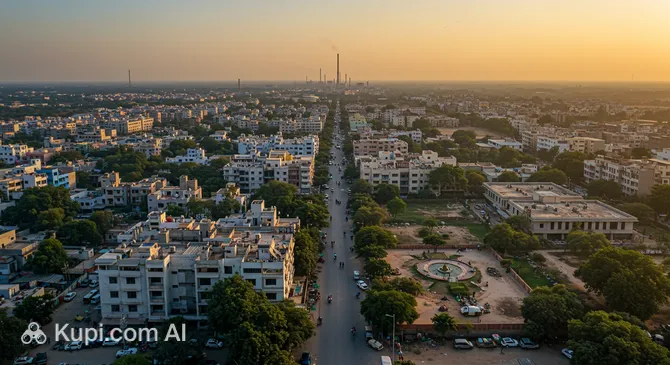
Narela is a dynamically developing suburban district located in the northern part of the National Capital Territory of Delhi, India. As the third mega sub-city planned by the Delhi Development Authority, this area blends industrial strength with deep agricultural roots. Home to over 660,000 people, it serves as a significant residential and industrial hub on the border with Haryana state.
Geographically, the town is situated about 30–40 km from central Delhi, creating a distinct "city within a city" atmosphere. The climate is typical for the northern part of the country: hot summers followed by a monsoon period, while winters offer a pleasant coolness. Although the district was originally developed as a residential and industrial sector, exploring the history of Narela's development reveals how old 19th-century markets transformed into modern logistics centers.
Narela. Illustration.
Source: Kupi.com AI
One of the town's unique features is Asia's largest food grain mandi (market), which is impressive for its sheer scale and bustling activity. Despite its industrial focus, the town attracts residents with affordable housing and proximity to major transport arteries like the Grand Trunk Road. We invite you to visit Narela to see the inner workings of an Indian metropolis and feel the rhythm of life in its working-class outskirts.
Weather Overview
The climate in Narela reflects the subtropical nature of the entire Delhi region, offering travelers distinct seasonal changes. Summers here can be extremely hot—in May and June, temperatures often reach +40°C...+45°C, accompanied by dust storms. If you plan a visit during this period, be prepared for the scorching sun and dry air. More detailed information can be found on the page about weather in Narela.
Winter, lasting from December to February, is considered the most comfortable time to visit: the average temperature is around +15°C, although it can drop to +7°C at night. Expect warm sunny days and cool, sometimes foggy evenings. It is important to note that winter often brings smog to the district due to meteorological conditions and industrial activity.
The monsoon season arrives in July and continues until September, bringing welcome relief from the heat along with intense rainfall. Humidity increases significantly during this time, and rainfall in July can exceed 200 mm. Before your trip, be sure to check the current forecast to ensure your wardrobe matches the conditions.
Average monthly temperature
Average monthly precipitation
Interesting Facts
The name of the town, Narela, has deep roots: in Hindi, it means "the place where reeds grow," referring to the marshy past of the area.
In the mid-19th century, Narela was considered a thriving trade center and was the closest major market to Delhi, located on a strategic route.
Today, the town is officially recognized as the home of Asia's largest grain market, through which colossal volumes of food pass for the entire country.
The region was previously famous not only for grain but also for its red pepper production and large-scale fairs held in honor of the goddess Mata Mansa Devi.
The modern stage of the town's development began in the 1980s, when it became part of an ambitious plan to expand Delhi and decongest its central districts.
How to Get There
Narela enjoys good transport links with central Delhi and neighboring states due to its location along the vital Grand Trunk Road (NH-44). A journey from the capital's center by car or bus can take between one and a half to three hours depending on traffic, which is often heavy during peak hours. Detailed route information can be found on the page describing how to get to Narela.
Delhi's Indira Gandhi International Airport remains the primary air hub for arrivals. From there, it is most convenient to reach the district by taxi or by combining the metro with ground transport.
Rail service is represented by Narela station, located on the Delhi–Kiratpur Sahib line. This is a convenient option for those arriving from northern states or planning a budget trip from other parts of the capital. DTC buses departing from major terminals such as Kashmiri Gate are also a popular way to travel.
Station
Passenger traffic
Distance
Sarai Rohilla railway station
8
23 km
Delhi Junction railway station
11
25 km
New Delhi railway station
27
27 km
Anand Vihar Terminal
11
32 km
Hazrat Nizamuddin railway station
14
34 km
For those who prefer rail transport, it is important to note that a direct metro line has not yet been extended into the district itself. The nearest stations are Samaypur Badli (Yellow Line) and Rithala (Red Line), from which the town center can be reached by auto-rickshaw in 30–60 minutes.
Main Attractions
While Narela is primarily known as an industrial and residential center, the curious traveler will find several interesting locations here. One of the main "attractions" is the Grain Market (Mandi), which is considered the largest in Asia. It is worth visiting early in the morning to see the incredible scale of the grain trade and feel the true commercial energy of the region.
For those interested in historical heritage, the remains of the old 19th-century market located near the Grand Trunk Road are noteworthy. In its time, it served as a key trade hub for all surrounding villages and still retains fragments of a bygone era's atmosphere. Also, look out for the modern A+1 site, which is part of the sub-city's evolving infrastructure.
Overall, Narela is not a typical tourist destination with an abundance of monuments; however, it offers a unique perspective on India's rapid urbanization. For tourists, the town is more interesting as a transit point or a place to study industrial architecture and the massive DDA residential complexes that define the look of modern Delhi.
Local Cuisine
The gastronomic identity of Narela is classic North Indian cuisine with a noticeable influence from Punjabi and Haryanvi culinary traditions. In local eateries, you must try the rich dal makhani, fragrant malai kofta, and freshly baked naan. Thanks to the proximity of the massive grain market, ingredients are always fresh, giving the dishes a special homemade taste.
Street food culture thrives in the local bazaars: you’ll find vendors selling hot samosas, spicy chaat, or hearty rajma chawal (beans with rice) at every turn. For drinks, locals prefer classic masala chai, thick lassi, or refreshing juices made from seasonal fruits like mango and guava.
For a full lunch or dinner, you can visit popular local establishments. The Baithak restaurant offers a comfortable setting and a wide selection of traditional dishes. Another excellent option is Madan Pure Veg Dhaba, where you can experience the authentic vegetarian cuisine so beloved in this region. Most gastronomic life bustles near the main roads and market squares, where affordable and delicious food is always available.
Travel Tips
Preparing for a trip to Narela requires considering the specifics of this industrial district, and our tips will help make your visit as comfortable and safe as possible.
Clothing and essentials: Choose light clothing made from natural fabrics for summer and be sure to bring a warm sweater for winter evenings. Due to the proximity of industrial zones and heavy traffic, it is useful to carry a protective mask against dust and smog.
Transport: To move between areas, it is best to use the Uber or Ola apps. If you decide to take a DTC bus, be prepared for heavy crowds during peak hours.
Finances: The primary currency is the Indian Rupee. You will definitely need cash at markets and for rickshaws, although pharmacies and newer shops accept cards and QR payments.
Health and safety: Drink only bottled water and avoid ice in street drinks. During winter months, monitor the Air Quality Index (AQI), as pollution levels can be high.
Communication: The main language is Hindi, but many employees at pharmacies and large stores speak basic English. It is better to purchase a SIM card in advance at the airport or in central Delhi districts.
Local etiquette: When visiting residential neighborhoods and markets, stick to a modest style of dress. The greeting "Namaste" is always met with a smile.
What to avoid: It is not recommended to walk alone in old industrial zones or unlit outskirts after dark.
Extra tip: If you plan to visit the famous grain market, do so early in the morning (from 6 to 9 AM) to see the trading process in all its glory.
Following these simple rules will help you focus on exploring this unusual industrial heart of Delhi and ensure you have only positive impressions.
Entertainment & Nightlife
The entertainment scene in Narela reflects its status as an industrial and residential district: you won’t find loud nightclubs or major concert venues here. Most evening activity is centered around local markets, where residents gather to socialize over a cup of tea. If you are looking for classic entertainment such as cinemas or modern shopping malls, locals recommend heading to neighboring Delhi districts like Rohini or Pitampura.
Nevertheless, there are a few places in town where you can enjoy a pleasant evening. For example, the Baithak restaurant offers a cozy atmosphere for dinner with family or friends. Nightlife here is quite subdued, and most establishments close relatively early. For nighttime walks, it is better to choose well-lit central streets or the grounds of newer residential complexes.
Daytime leisure in the town is mainly associated with visiting markets and browsing the stalls near Grand Trunk Road. Despite the absence of specialized amusement parks, Narela attracts visitors with its authentic everyday life. To call for transport late at night, it is recommended to use official taxi apps, which ensure safety and comfort while moving around.
Parks & Museums
In Narela, as a rapidly developing industrial district, the number of classic parks and museums is currently small. The town is more focused on functionality, so major cultural sites are still in the development stage. Nevertheless, residents often use fragmented green zones and gardens located within new DDA residential complexes for their walks.
The area was previously rich in ponds and natural reservoirs that served as recreation spots, but urbanization has changed the landscape. Currently, nature lovers can find small, well-maintained patches near the main roads or head to the neighboring Alipur district, where park infrastructure is significantly better developed.
Museum activities are practically non-existent in the district itself, but for those seeking cultural enrichment, the doors of establishments like the Baithak restaurant, which is a social hub in itself, are always open. For classic museums and galleries, tourists are recommended to take a short trip to central parts of Delhi or the Rohini district, where the main cultural attractions of the northern capital are concentrated.
Getting Around
The public transport system in Narela is actively developing, adapting to the needs of hundreds of thousands of residents and workers. The backbone of ground transportation is the state-run DTC buses, which connect the district with key points in Delhi via the NH-44 highway. It is worth noting that buses can be very crowded during morning and evening peak hours, so it is better to plan your trips in advance.
For moving short distances within the town itself, auto-rickshaws and their more eco-friendly counterparts—e-rickshaws—are indispensable. This is the fastest and most affordable way to reach the local market or the railway station. Prices with auto-rickshaw drivers often need to be negotiated in advance if a meter is not installed or used in the vehicle.
Although Narela does not yet have its own metro station, many residents use the Samaypur Badli terminus of the Yellow Line. Numerous shuttle taxis and buses run between the station and the district. For maximum comfort, tourists are recommended to use mobile taxi apps (Uber or Ola), which help avoid language barriers and guarantee a fixed trip cost.
Accommodation
The hospitality market in Narela is primarily geared towards business travelers and those visiting the town for extended periods. There are virtually no luxury five-star hotels, but there is a wide selection of budget guesthouses and apartments. Most accommodation options are concentrated along Grand Trunk Road and near the industrial zones.
For tourists and expats, PG (paying guest) arrangements and apartment rentals in new residential complexes built by the DDA are popular. If you are planning a short-term visit, it is worth looking at local mid-range hotels that offer basic amenities. It is recommended to book accommodation in advance, especially if your trip coincides with major trading seasons at the local grain market.
If you are looking for a higher level of service or chain hotels, consider staying in the neighboring Rohini district. The choice of hotels there is wider, and transport accessibility allows you to quickly reach major sites in Narela itself. Within the town, places like Baithak, located near residential quarters, are often chosen for dining and relaxation.
Nearby Cities
Narela is a convenient starting point for exploring the northern outskirts of Delhi and the neighboring state of Haryana. Thanks to its proximity to high-speed highways, you can easily take interesting day trips from here, discovering both bustling metropolises and quiet suburban settlements.
Just 8 kilometers away is Alipur, known for its green zones and recreation parks, where North Delhi residents often go. If you are interested in a larger urban center, it is worth visiting Sonipat—a fast-growing city in Haryana famous for its educational institutions and markets. Also within a half-hour drive is the Bhalswa Jahangirpur area, known for its lake and developing infrastructure.
Exploring the surroundings will allow you to see the contrasts between industrial zones and the agricultural lands that are still preserved in this region. Each of these destinations offers its own unique flavor and helps to better understand the multifaceted culture of North India.
Shopping & Souvenirs
Shopping in Narela is primarily about exploring its massive wholesale and retail markets. The town does not have giant glass malls, but its bazaars offer an incredible assortment of goods for everyday life. The most famous site is the Grain Market, where you can see endless rows of spices, grains, and pulses supplied from all over the country.
For clothing, textiles, and household goods, tourists usually head to the shopping stalls along Grand Trunk Road. High-quality Indian fabrics and spices can be found here at very attractive prices. If you need brand-name stores or modern entertainment centers, the best solution is a trip to the neighboring Rohini district, home to large shopping complexes.
Typical souvenirs from this area are, first and foremost, fresh Indian spices and locally produced goods. Shops usually operate from morning until late evening, and cash in rupees is the most common form of payment at markets, although larger outlets and establishments like Madan Pure Veg Dhaba are beginning to actively use digital payments.