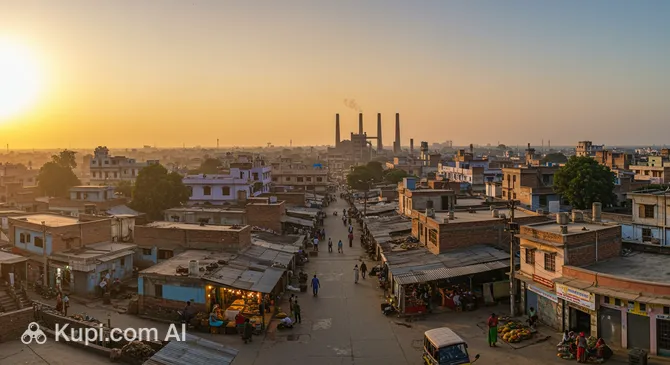
Loni is a dynamically developing industrial center located in the state of Uttar Pradesh in northern India. As part of the National Capital Region (NCR), the city serves as a vital link between the capital and the region's key industrial clusters. With a population of over 516,000, this city is a bustling hub where industry and active trade are concentrated.
Loni. Illustration.
Source: Kupi.com AI
Geographically, the city is located less than an hour's drive from New Delhi, which largely defines its character as a rapidly growing suburb. While Loni's history is rooted in the distant past and even linked to the ancient epic "Ramayana," today it is dominated by the atmosphere of an energetic industrial hub with dense development and noisy commercial streets.
One of the city's main architectural gems is the Shahi Eidgah mosque, built in the 18th century. Visiting this site allows you to experience the region's cultural heritage against a backdrop of modern industrial landscapes. If you are looking for the authentic industrial spirit of North India and want to see how a modern metropolitan suburb lives, this city will be an interesting stop on your route around the capital.
Weather Overview
Loni is characterized by a typical North Indian subtropical climate with distinct seasonality. Summers here can be truly hot: in May and June, the thermometer often crosses the +40°C mark. In contrast, winters are quite mild and comfortable, although in January the average temperature drops to +13°C, and it can be cool at night.
The monsoon season brings most of the rainfall between July and September, with July traditionally being the wettest month. Detailed weather in Loni by month shows significant fluctuations in humidity—from dry November to the humid summer. When planning your trip, it is worth considering that air quality may decrease during the autumn-winter period due to climatic factors.
Average monthly temperature
Average monthly precipitation
Interesting Facts
Discover the fascinating sides of this industrial center, which hides more than meets the eye.
Demographic scale: Loni ranks 26th in population in Uttar Pradesh and is among the 300 largest cities in all of India.
Connection to legends: According to local lore, the city's history has mythological roots dating back to the times of the great epic Ramayana.
Architectural heritage: One of the oldest buildings in the city is the Shahi Eidgah mosque, which preserves the spirit of the 18th century.
Strategic hub: Due to its location, the city plays a key role in logistics between the state's industrial zones and the nation's capital.
How to Get There
Loni's accessibility is due to its proximity to the capital region, making it easy to reach from various parts of the country. To learn more about routes and schedules, check out the section on how to get to the city using various modes of transport.
The nearest and main air hub is Indira Gandhi International Airport in Delhi (DEL). This is the region's largest airport, offering numerous domestic and international flights. From there, the city can be reached by taxi or bus; however, you should allow extra time for potential traffic jams at the city entrance during peak hours.
Railway connections also link the city with neighboring regions. Loni station handles suburban trains from Delhi and Ghaziabad. This is a convenient way to travel for those looking to avoid congestion on highways like National Highways NH-24 and NH-119.
Station
Passenger traffic
Distance
Anand Vihar Terminal
11
10 km
Delhi Junction railway station
11
10 km
New Delhi railway station
27
13 km
Sarai Rohilla railway station
8
13 km
Ghaziabad railway station
10
16 km
Main Attractions
Although Loni is primarily known as an industrial and residential center, there are several locations worth visiting. One of the busiest spots is Loni Tiraha—an important transport intersection around which urban activity and local trade are concentrated.
The main cultural and historical attraction of the city is the Shahi Eidgah Mosque. This majestic 18th-century structure serves as an important religious center for the local community and is of interest to lovers of classical North Indian architecture. The mosque is particularly transformed during major Muslim holidays.
For those interested in mythology, the city is notable for its ties to the Ramayana epic. Pilgrims and cultural researchers often visit local shrines to touch ancient traditions. Overall, the city's sights are best seen as part of a day trip, combined with visits to larger cultural centers in neighboring Delhi.
Local Cuisine
Loni's dining scene offers tourists the classic flavors of North India. Hearty and spicy food prevails here: you should definitely try hot samosas with potato filling, freshly baked chapati flatbreads, and aromatic lentil dal. Street food plays a huge role in city life, and spiced masala tea is the main drink found on every corner.
For a more comfortable meal, you can stop by local establishments such as the Angiti Rooftop Restaurant and Cafe, which serves popular Indian dishes in a cozy setting. Another interesting spot is The Food Train restaurant, which is popular with locals and offers a wide selection of vegetarian and meat specialties.
The food culture in the city is focused on accessibility and a traditional approach. Most establishments are small eateries and roadside cafes (dhabas) that prepare simple but very tasty dishes. Special attention should be paid to local sweets, which are an excellent conclusion to any meal in the best Indian traditions.
Travel Tips
A trip to Loni requires some preparation to ensure your journey is as smooth and comfortable as possible. Use these practical tips based on local experience.
Clothing: Choose light clothing made of natural fabrics for the summer, but don't forget a warm sweater for winter evenings. When visiting mosques, observe a modest dress code: shoulders and knees should be covered.
Transport: Getting around the city is most convenient by taxi booked through the Uber or Ola apps. Be prepared for public transport to be very crowded during peak hours.
Finances: The official currency is the Indian Rupee. Large restaurants accept cards, but for markets and small shops, be sure to have cash on hand.
Health: Smog is possible between October and January, so travelers with sensitive lungs should use protective masks. Drink only bottled water.
Communication: The main language is Hindi. Basic English is understood in hotels, but learning a few phrases in Hindi will be very helpful for communicating in markets.
Etiquette: It is customary to greet people with the traditional Namaste gesture. Be sure to remove your shoes before entering homes and religious sites.
Safety: It is better to avoid walking through industrial zones after dark, sticking to well-lit central streets and using taxis.
Following these simple rules will help you immerse yourself deeper into the local culture and ensure only positive emotions from visiting this bustling corner of India.
Entertainment & Nightlife
Entertainment in Loni is predominantly quiet and family-oriented. Nightlife in the classic sense—with clubs and bars—is virtually non-existent here, as the city lives at a working pace. The main activity after sunset is centered around popular restaurants like the Angiti Rooftop Restaurant and Cafe, where you can spend the evening over a pleasant dinner overlooking the city lights.
Evening strolls often lead locals to the lively Loni Tiraha area, where street markets and eateries operate. If you are looking for vibrant parties and modern nightclubs, the best solution is to head to neighboring Delhi, which is famous for its variety of entertainment venues and is only a few kilometers away.
During the day, a popular spot for relaxation is the family-friendly restaurant The Food Train, which offers a cozy atmosphere and an interesting design concept. There are also cinemas in the city showing the latest Bollywood releases—attending such a screening is a unique cultural experience in itself for any tourist.
Parks & Museums
The city of Loni is characterized by very dense industrial and residential development, so there are few large parks or forested areas within its limits. Small green squares serve as resting spots for locals; however, for large-scale nature walks and manicured gardens, travelers usually head to neighboring districts of Delhi.
In terms of a museum program, Loni does not have large galleries or national exhibitions. The main focus of cultural interest here is shifted toward religious architecture and mythology. Nevertheless, exploring the historical Shahi Eidgah Mosque compensates for the lack of traditional museums, offering a glimpse into the region's past through its architectural heritage.
For those who value cultural leisure, the proximity to the capital is a major advantage. While staying in Loni, you can easily reach the country's main museums, such as the National Museum of India, and return, using the city as a convenient base for budget accommodation. Within the city itself, social life is concentrated in spots like Loni Tiraha.
Getting Around
Loni's transport system is primarily represented by a network of bus routes and suburban trains. Buses are the most budget-friendly way to get around, connecting various parts of the city and neighboring tehsils. However, it's worth noting that they are often overcrowded, so tourists are better off choosing daytime hours for comfortable trips, avoiding the periods from 7 to 10 AM and 5 to 8 PM.
Taxis and auto-rickshaws serve as an alternative to public transport. The Uber and Ola mobile apps work reliably in the city, allowing you to know the cost of the trip in advance and avoid long negotiations with drivers. Payment in these services is possible both by card through the app and in cash at the end of the trip.
The city is not adapted for walking everywhere: many streets lack sidewalks, and traffic is very heavy. Nevertheless, central shopping streets are quite suitable for exploring on foot. If you plan to travel to neighboring cities, the most convenient way is to use the railway—it is a reliable way to save time given the busy highways.
Accommodation
Accommodation options in Loni are primarily focused on the budget and mid-range segments. Here you can find many inexpensive guest houses and hotels, often chosen by business travelers and those looking to save on housing in the capital region. While there are virtually no luxury five-star hotels in the city itself, the existing options offer a basic set of amenities at affordable prices.
For tourists, the most convenient areas are those located near major transport interchanges, such as Loni Tiraha, or along the main highways leading toward Delhi. Proximity to the railway station is also an important factor when choosing a place to stay for those who plan to travel actively around the region.
It is recommended to book accommodation in advance using trusted online services, although booking on-site is also popular in Loni. It's worth keeping in mind that service standards in budget hotels may differ from those in the capital, so it is useful to check reviews and confirm the availability of necessary amenities, such as air conditioning or Wi-Fi, before checking in.
Nearby Cities
Thanks to its location, Loni serves as an excellent starting point for exploring the capital region and the state of Uttar Pradesh. Its proximity to major highways allows for planning busy day trips to the country's most famous landmarks.
Naturally, the main destination for a trip is Delhi, located just 16 kilometers away. There you will find the Red Fort, Qutub Minar, and the endless markets of Old Delhi. It is also worth visiting neighboring Usmanpur and the town of Jandapur, which allow you to better understand the rhythm of suburban life.
For those ready for longer trips, the region offers easy access to historical cities like Agra. The surroundings of Loni open up many opportunities to discover the culture, architecture, and daily life of North India.
Shopping & Souvenirs
Shopping in Loni is primarily an immersion into the atmosphere of traditional Indian markets and small shops. The main commercial activity buzzes around central intersections, such as Loni Tiraha, where you can find everything from vibrant fabrics and spices to electronics and household goods.
There are no giant Western-style shopping centers in the city, but local markets offer a unique shopping experience. At the food markets, look for high-quality Indian spices and sweets, and in the textile shops, for cotton products and traditional clothing. Shops usually operate from morning until late evening, and payment at most small outlets is made in cash.
If you require a more refined selection of brand-name items, it is better to head to the malls in neighboring Delhi. Nevertheless, authentic gifts and household items bought on the streets of Loni will serve as a great reminder of real, non-tourist India. After a successful shopping trip, you can relax at the local Angiti Rooftop Cafe.