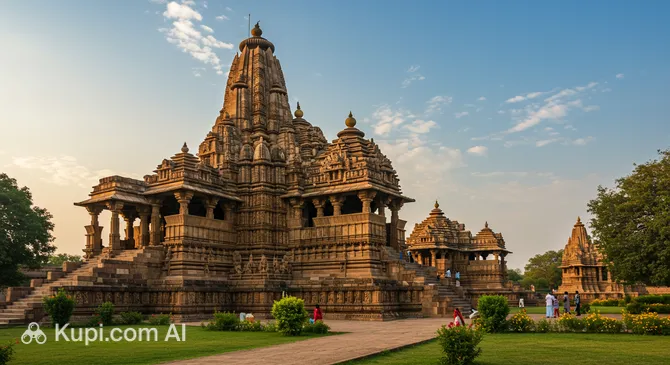
This majestic architectural complex, known as the Western Group of Khajuraho Temples, is a true masterpiece of medieval architecture and a UNESCO World Heritage site. Located in the state of Madhya Pradesh, in the small town of Khajuraho, the ensemble is the most significant and best-preserved part of the ancient city of the Chandela dynasty.
Khajuraho Western Group of Temples. Illustration.
Source: Kupi.com AI
Traveler photos:
The temples of the complex, built in honor of the Hindu gods Shiva and Vishnu, as well as Jain saints, are world-renowned for their incredibly detailed stone carvings. India takes great pride in this monument, which is considered the pinnacle of the Nagara style. The walls of the structures are adorned with thousands of figures: here you can see not only mythical creatures and deities but also expressive scenes from the lives of ordinary people — from dancing and hunting to the famous erotic motifs symbolizing the unity of the earthly and the spiritual.
A walk through the complex grounds gives the feeling of touching eternity. The delicate work of ancient craftsmen turned solid sandstone into "stone lace" that leaves every visitor in awe. This place is rightfully considered one of the most impressive historical monuments in the country.
Contacts
For your convenience, the main contact details for the complex are listed below. Please note that the site is an open-air museum under the auspices of the Archaeological Survey of India.
When visiting the complex, the primary activity is thoughtful contemplation. Start your route with the Kandariya Mahadeva Temple — the most grandiose structure of the group, which impresses with its height and 84 smaller spires resembling a mountain range. Be sure to notice the Lakshmana and Vishvanatha temples, where the carvings are preserved in minute detail.
In addition to exploring the architecture, it's worth visiting the local museums, which house unique artifacts found during excavations. For those who want to dive deeper into the context, we recommend using the services of a professional guide: they can help decipher the symbolism of complex sculptural compositions and share ancient legends.
In the evening, the site is transformed by a light and sound show. This vibrant open-air performance brings the history of the Chandela dynasty to life and tells the story of the temples' construction. After your walk, you can browse the nearby souvenir shops to purchase replicas of the famous sculptures or traditional handicrafts from the state of Madhya Pradesh.
Getting There
This architectural complex is located in the state of Madhya Pradesh, approximately 620 kilometers from Delhi. The town has its own airport with regular flights from the capital and Varanasi, making flying the fastest way to reach the site. From the airport to the entrance of the Western Group of Temples, you can easily take a taxi or motor rickshaw in just 10–15 minutes.
If you prefer traveling by rail, the nearest major stations are in Jhansi and Satna, although the town itself has a railway station that receives trains from Delhi. Inexpensive auto-rickshaws run from the station to the town center.
Since Khajuraho is quite compact, many tourists prefer to get around on foot or rent a bicycle. Most hotels and cafes are located in close proximity to the western group at: Sevagram, Khajuraho, Madhya Pradesh 471606, India.
Nearest city: Khajuraho
History & Facts
The history of this amazing place dates back to the reign of the Chandela dynasty. Between 950 and 1050 AD, when the dynasty was at the peak of its power, the rulers ordered the construction of more than 80 magnificent temples. It is believed that each ruler sought to build at least one structure during their lifetime to demonstrate devotion to the gods and the prosperity of their state.
Unfortunately, after the decline of the dynasty in the 12th century, the city fell into disrepair. The temples were abandoned and eventually completely hidden by thick jungle. Paradoxically, this "oblivion" helped them survive and avoid destruction during wars. It wasn't until the 19th century that British officer T. Burt accidentally stumbled upon these majestic ruins, rediscovering these masterpieces of medieval architecture for the world.
Today, only about 25 buildings remain, and the Western Group is considered the most valuable and representative. The uniqueness of the temples lies in the fact that they were built without the use of mortar: the golden sandstone blocks are perfectly fitted together and held in place by their own weight and mortise-and-tenon joints.
Time Needed
To leisurely explore all the key temples of the Western Group, appreciate the intricate carvings, and soak in the ancient atmosphere, a typical visitor needs about 2 to 4 hours. This is enough time to walk around the main platforms and take high-quality photographs.
If you plan to visit the nearby archaeological museums or want to stay for the evening light show, it's better to dedicate an entire day to the complex. In this case, you can avoid the midday heat and enjoy the sunset colors on the temple walls, when the sandstone takes on a golden-copper hue.
Working Hours
The grounds of the Western Group of Temples are open to visitors daily. You can plan your visit during the following hours:
Monday — Sunday: 6:00 AM – 6:00 PM
Please note that light and sound shows are held after sunset, so their schedule may change depending on the season. It's best to arrive at opening to catch the soft morning light and avoid the large crowds of tourists.
6:00 – 18:00
Nearby
Exploring the surroundings of the Western Group will allow you to dive deeper into the atmosphere of this unique region. Nearby, you'll find museums, natural spots, and places to rest after your temple tour.