Support

Italian Garden

About

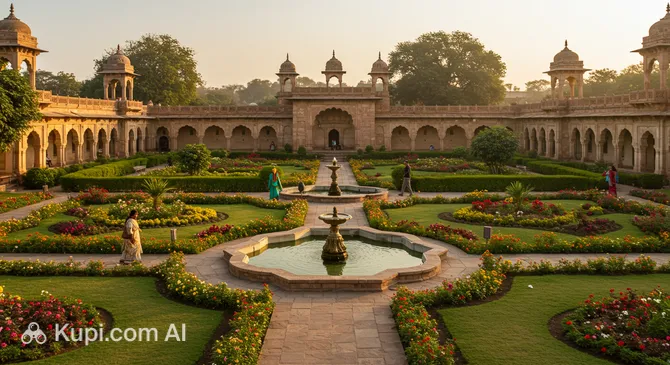
The Italian Garden is a picturesque corner of landscape art nestled within the grounds of the majestic fort in the city of Gwalior. This site represents a rare combination for India of European park traditions and the rugged beauty of an ancient fortress built atop a massive 90-meter cliff.
Italian Garden
Italian Garden. Иллюстрация. Источник: Kupi.com AI

The garden is part of a large-scale historical complex that includes palaces and temples. The main feature of this place lies in its stylistic uniqueness: classical Italian features in the layout of the paths and flowerbeds create a striking contrast with the massive sandstone walls surrounding the area.

Today, this spot attracts travelers with its peaceful atmosphere and the chance to see the result of blending different cultures. A visit to the garden allows you not only to enjoy the aesthetics of the landscape but also to feel the historical depth of one of the country's most significant defensive structures.

Contacts

The Italian Garden can be found in the Lashkar district, near Phool Bagh. Since the site is part of a historical heritage area, any questions regarding visits and current events can be directed to the city's tourism office or representatives of the Archaeological Survey of India.

How to contactContact
Address655C+M48, Italian Garden Rd, Phool Bagh, Lashkar, Gwalior, Madhya Pradesh 474007, India

What to Do

In the Italian Garden, guests can enjoy the tranquility and aesthetics of a European landscape in the middle of an Indian fortress. A walk along the well-kept paths allows you to admire the details of the classical design, which looks unusual against the backdrop of ancient basalt and sandstone walls. It is an ideal spot for those who want to take a break between exploring the majestic palaces and temples.

Photography enthusiasts will find many interesting angles here. The geometrically precise lines of the garden, combined with the monumental architecture of the fort, make for beautiful shots. It is also worth visiting the nearby sacred pond, Suraj Kund, which is steeped in ancient legends about the healing of rulers.

After finishing your tour of the garden compositions, be sure to walk to the edge of the fortress cliff. From here, a breathtaking panoramic view of all of Gwalior opens up. Watching the city's hustle and bustle from a bird's-eye view brings a sense of calm and allows you to appreciate the scale of ancient fortification art.

Getting There

To reach the Italian Garden, travelers need to head to the famous fort that towers over the city. From central Gwalior, the most convenient way is to take a taxi or a motor rickshaw. The trip to the foot of the hill doesn't take long, and from there, the path leads to the fortress gates.

For those who prefer walking, it is possible to climb up to the fort on foot. Keep in mind that the ascent is quite steep, so in hot weather, it's better to use transport. If you are arriving from another region of India by train, you can reach the park entrance from the Gwalior railway station via local bus or private driver.

Ближайший город: Gwalior

History & Facts

The history of this site is closely intertwined with the chronicles of Gwalior Fort itself, which dates back to the 6th century AD. Legend tells of a ruler named Suraj Sen, who was cured of a disease after drinking water from a sacred pond on the advice of the sage Gwalipa. In gratitude, the prince built a mighty citadel and named it after his savior.

The Italian Garden became an elegant addition to the fort's rugged appearance in later periods. It reflects the trends of a time when local nobility began to take an interest in European landscape art. The garden fits harmoniously into the ensemble of palaces and temples, demonstrating the openness of Indian culture to Western aesthetic ideas.

Over the centuries, the territory where the garden is located passed from one dynasty to another. Rajputs, Mughals, and Marathas all ruled here, and each period left its mark on the architecture and atmosphere of the site. Today, the garden remains a silent witness to the centuries of history and cultural flourishing of the Madhya Pradesh region.

Time Needed

To leisurely stroll through the paths of the Italian Garden and appreciate its landscape design, visitors usually need about 40–60 minutes. However, given that the site is located within the vast territory of the fort, it is best to make the garden visit part of a larger tour.

To fully explore all the palaces, temples, and observation decks of Gwalior Fort, it is recommended to set aside at least 3 hours. The best time to visit is in the morning when the sun is not yet too hot, and the soft light is perfect for taking impressive photos of the architectural monuments.

Working Hours

Visiting the Italian Garden is possible during two time intervals, which is very convenient for planning your walk. On weekdays and Sundays, the site is open in the morning from 6:00 to 9:00 and in the evening from 17:00 to 20:00.

On Saturdays, there is an extended schedule in the evening—the garden welcomes guests from 14:00 to 20:00, providing more opportunities for a leisurely rest on the weekend. It is recommended to arrive close to the opening of the morning or evening shifts to avoid the peak heat and fully enjoy the beauty of the landscape.

DayWorking hours
Понедельник6:00 – 9:00, 5:00 – 20:00
Вторник6:00 – 9:00, 5:00 – 20:00
Среда6:00 – 9:00, 5:00 – 20:00
Четверг6:00 – 9:00, 5:00 – 20:00
Пятница6:00 – 9:00, 5:00 – 20:00
Суббота6:00 – 9:00, 2:00 – 20:00
Воскресенье6:00 – 9:00, 5:00 – 20:00

Nearby

Exploring the surroundings of the Italian Garden allows tourists to dive deeper into the city's atmosphere and see how ancient history coexists with the pace of modern life. A walk through the fort grounds and neighboring districts will enrich your experience with unique architectural details and interesting leisure spots.

NameDistance
Gwalior Zoo0.1 km
Maharani Laxmibai Memorial0.5 km
Jiwajirao Scindia Museum0.5 km
Molecule0.6 km
Jai Vilas Palace0.6 km
Gopachal Jain Hill0.6 km
Usha Kiran Palace0.7 km

Reached the end of the page?

That means the route is fully explored