Support

Maharani Laxmibai Smarak

About

In the heart of the vibrant city of Gwalior lies a place steeped in the spirit of heroism and national pride — the Maharani Laxmibai Memorial. This majestic complex is dedicated to the legendary "Rani of Jhansi," who became a symbol of resistance in the struggle for independence for which India is famous.

The central figure of the memorial is an impressive eight-meter bronze statue of the ruler, depicted on her faithful horse with a sword in her hand. The complex is nestled in the picturesque Phool Bagh garden, creating a quiet and solemn atmosphere amidst the city bustle. Here, history literally comes alive in the details: from the white marble pavilion to the memorial halls.
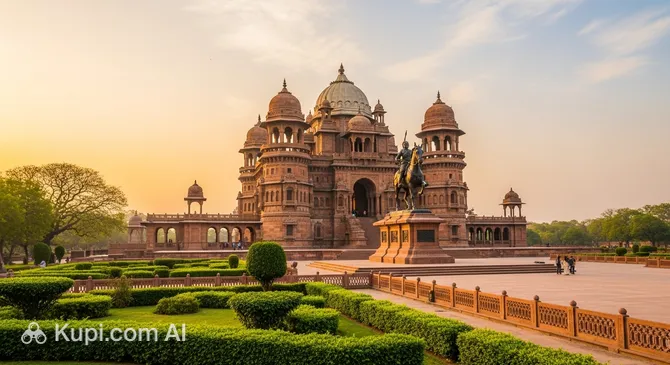
Maharani Laxmibai Memorial
Maharani Laxmibai Memorial. Иллюстрация. Источник: Kupi.com AI

Beyond its aesthetic beauty, this place serves as an important educational center. A museum operates on the grounds, housing weapons, coins, and paintings from that era, allowing visitors to gain a deeper understanding of the scale of Rani Laxmibai's personality and her contribution to the country's history.

Contacts

For more information about visiting the memorial, you can refer to the official address, as specialized phone lines or websites for this site are often unavailable.

How to contactContact
Address656F+V9G, Maharani Laxmi Bai Colony, Gandhi Nagar, Gwalior, Madhya Pradesh 474007, Индия

What to Do

When visiting the complex, be sure to take time for a detailed look at the statue of Rani Laxmibai. Its dynamic pose on horseback captures the full energy of the queen's final battle. Inside the memorial hall, you can see another life-sized bronze figure of the ruler and pay your respects at the akhand jyoti — an eternal flame symbolizing the immortality of her heroic feat.

History buffs should stop by the local museum. It features authentic artifacts from the era of the uprising: ancient bladed weapons, rare coins, and sculptures. Special attention should be given to the portrait gallery, where colorful dioramas and paintings depict key moments in the life and battles of Maharani Laxmibai.

For those seeking tranquility, the Phool Bagh gardens offer wonderful conditions for a walk. You can join locals who come here for dawn yoga sessions or for a leisurely rest on benches in the shade of the trees. If your trip coincides with June 18th, you will witness a solemn fair and cultural events dedicated to the memory of the great woman warrior.

Getting There

Finding this historical monument in Gwalior is easy. It is located just 1.5 kilometers from the city's main railway station. You can reach the site on foot in about 15–20 minutes, or use the services of numerous rickshaws that will take you to the Phool Bagh garden entrance in 10 minutes.

If you are arriving in the city via Gwalior Airport (GWY), the distance is about 12 kilometers. A taxi or Uber ride will take between 20 and 30 minutes, depending on traffic. For those using intercity buses, the central station is 3–4 kilometers from the memorial, from where it is also convenient to take local transport.

The memorial complex itself is located in the Gandhi Nagar district, which is the center of urban activity. Thanks to the developed infrastructure and proximity to other significant sites, a visit here fits easily into any tourist route through the city.

Ближайший город: Gwalior

History & Facts

Maharani Laxmibai, born in 1835 in Varanasi, went down in world history as one of the most courageous female rulers. After taking charge of the princely state of Jhansi, she refused to submit to British annexation policies and became a key figure in the Indian Rebellion of 1857. Her resilience and military talent earned respect even from her opponents.

Tragic and heroic events unfolded here in Gwalior in June 1858. After the fall of the Jhansi fort, the queen continued the struggle and met her final battle in the Phool Bagh area. Legends say she fought until her last breath with a sword in her hands and her young son on her back. It was at this spot that local residents, loyal to their ruler, performed her cremation rites.

In 1920, the then-ruler of Gwalior, wishing to honor the memory of the national heroine, ordered the installation of a majestic eight-meter statue here. The memorial became not just an architectural monument, but a symbol of freedom and patriotism for millions of people in India.

Today, the name of Rani Laxmibai is celebrated in numerous legends, poems, and films. She remains an example of fearlessness for women around the world, and the site of her final battle has turned into a national shrine visited by thousands every year.

Time Needed

A thorough tour of the complex usually takes 1 to 2 hours. This is enough time to take a leisurely stroll through the garden, examine the main statue and memorial hall, and explore the exhibits of the small museum containing historical artifacts.

If you plan to combine your visit to the memorial with a walk to the nearest gate of the fort or a visit to neighboring parks, it is better to set aside about 3 hours for this part of your itinerary. Morning or pre-sunset hours are considered the best times to visit, when the soft lighting is ideal for photography.

Working Hours

The memorial is open to the public daily, making it accessible to tourists every day of the week. Official opening hours are from 06:00 to 21:00. The early opening allows you to enjoy the silence of the complex in the rays of the rising sun.

Please note that the museum pavilions may close slightly earlier than the main park entrance (usually around 18:00). Before your visit, it is recommended to check for up-to-date information on the official tourism resources of the state of Madhya Pradesh.

06:00–21:00

Nearby

The memorial's central location in Gwalior allows tourists to easily combine their visit with other points of interest. The surrounding area is rich in both historical monuments and entertainment options for the whole family.

NameDistance
Molecule0.2 km
Tosh0.4 km
Gwalior Zoo0.5 km
Gopachal Jain Hill0.5 km
Italian Garden0.5 km
Sai Baba Temple0.7 km
Kunal Aquarium0.9 km

Reached the end of the page?

That means the route is fully explored