Support

Dilkusha Kothi

About

Imagine a corner of serenity where majestic ruins of the past rise amidst manicured green gardens. Dilkusha Kothi is a unique architectural monument from the early 19th century, located in the city of Lucknow. Built around 1800 by a British resident as a hunting lodge for local Nawabs, this palace became a striking example of European Baroque on Indian soil.
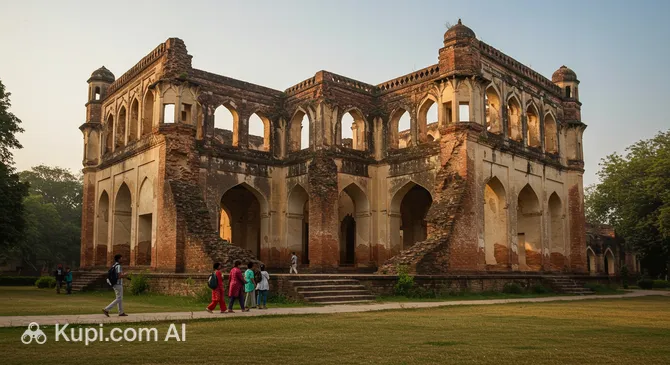
Dilkusha Kothi
Dilkusha Kothi. Иллюстрация. Источник: Kupi.com AI

Today, only fragments of the external walls and elegant towers remain of the once-luxurious three-story residence, yet their appearance is still impressive. The building was constructed from special lakhauri bricks and was once remarkable for its lack of a traditional inner courtyard, making its architecture unusually compact and tall for this part of India.

This site attracts travelers with its special atmosphere: situated on the banks of the Gomti River, the Dilkusha Kothi ensemble harmoniously combines the strict lines of English classics with the exotic nature of the region. The palace ruins serve as a silent reminder of colonial history and the former splendor of the court of the rulers of Awadh.

Contacts

To ensure your trip to these historic ruins goes smoothly, it is helpful to familiarize yourself with official information and the exact location beforehand. Below are the current contact details to help you navigate the city and plan your visit to Dilkusha Kothi.

How to contactContact
AddressRXH7+FV5, Bibiapur Marg, Neil Lines, Cantonment, Lucknow, Uttar Pradesh 226002, India
Websitesaveourheritage.in

What to Do

A visit to Dilkusha Kothi offers guests the opportunity to touch history through a tactile exploration of the ancient ruins. Here, you can walk freely along the surviving walls, examining the remains of spiral staircases inside the towers and the fine lakhauri brickwork. Photographers will find many expressive angles where the play of light on weathered stone and the contrast of ancient masonry with emerald grass create perfect shots.

The vast territory surrounding the palace is excellent for peaceful relaxation. You can enjoy panoramic views of the Gomti River's bends or have a small picnic in the shade of the trees, imagining how royal processions and aristocratic receptions took place here two hundred years ago. The well-kept gardens are perfect for slow reading or reflection away from the urban noise of Lucknow.

It is also fascinating to imagine the historic moment of the first hot air balloon flight, which took place right on these meadows in 1830. To get the most complete picture of the era, experienced guides suggest combining a visit to Dilkusha Kothi with a trip to the nearby La Martiniere College or the famous Residency, creating a comprehensive route through the traces of India's great past.

Getting There

The historic monument of Dilkusha Kothi is located in the quiet Cantonment district at Bibiapur Marg, Neil Lines. Reaching it from the city center is quite simple: the distance from popular spots like the Charbagh area or the historic Residency is about 5–7 kilometers. A taxi or auto-rickshaw ride typically takes between 15 and 30 minutes, depending on traffic conditions.

For a more comfortable journey, modern travelers often use the Uber or Ola mobile apps, which allow for a fixed-price ride. If you prefer public transport, the nearest bus stops are within the Cantonment area, though you will need to walk for about 10–15 minutes from there. For precise navigation, it is recommended to use Google Maps, as the site is tucked away within a green zone.

Tourists arriving in Lucknow from further away can easily reach the attraction directly from major transport hubs. From Chaudhary Charan Singh International Airport, a taxi ride is about 15 km (approximately 25–30 minutes), and from the main railway station, it is only about 6 km. Parking is available on-site.

Ближайший город: Lucknow

History & Facts

The history of this remarkable place began around 1800, when Major Gore Ouseley, a close friend of Nawab Saadat Ali Khan, decided to build a hunting lodge here. Later, under King Nasir-ud-Din Haider, the building was transformed into a luxurious summer residence. The uniqueness of Dilkusha Kothi lay in its architectural style: unlike traditional Indian buildings with inner courtyards, this palace was designed in the English Baroque style, inspired by Seaton Delaval Hall in Northumberland.

Interestingly, it was here in 1830 that one of the most unusual events of the era took place—an early hot air balloon ascent. The flight demonstration, organized by an Englishman, was watched with delight by the Nawab and his large entourage. In those days, the surroundings of the palace were covered with dense forests, making it an ideal location for royal hunts and lavish European-style picnics.

Unfortunately, the building's fate was tragic. During the events of 1857, the structure suffered significant damage from artillery fire. While photographs from 1858 showed relatively minor damage, by the end of the 19th century, the palace lay in ruins. Nevertheless, even today, the surviving walls made of traditional lakhauri brick coated with lime plaster allow visitors to sense the former grandeur of this colonial-era monument.

The palace's architectural appearance was a true challenge to local traditions: three high floors, the absence of a traditional courtyard, and elegant towers with spiral staircases created a vertical silhouette that was quite unusual for the architecture of Lucknow at the time. Today, these ruins serve as important evidence of the cultural synthesis that occurred in India under the influence of European masters.

Time Needed

For a thoughtful exploration of the Dilkusha Kothi ruins and a stroll through the surrounding gardens, 1 to 2 hours will be sufficient for most travelers. The site is quite compact, allowing you to view the surviving towers and architectural details without spending too much time.

If you are passionate about photography or plan to enjoy a short break in the fresh air while admiring the views of the Gomti River, you may want to set aside a little more time. This place is ideal for leisurely contemplation, where you can unhurriedly examine the patterns on the ancient bricks and imagine what the palace looked like in its prime.

Working Hours

The attraction is open to the public daily, making it a convenient stop on any tourist itinerary. Dilkusha Kothi opens its doors to visitors from 8:00 AM to 6:00 PM.

The operating schedule remains consistent throughout the week, including Saturdays and Sundays. This allows guests to choose the most suitable time for a visit: whether it be early morning, when the sun's rays softly illuminate the ancient walls, or the pre-sunset hours, ideal for a garden stroll.

8:00 – 18:00

Nearby

A visit to the historic ruins can easily be combined with sightseeing at other interesting places in the area. Exploring the surroundings of Dilkusha Kothi will allow you to dive deeper into the city's atmosphere and find activities for every taste—from peaceful parks to modern active recreation centers.

NameDistance
Nawab Wajid Ali Shah Zoological Garden2.1 km
Lucknow Zoo2.3 km
Lucknow Zoo2.3 km
Dr. Bhimrao Ambedkar Memorial Park2.4 km
Dr. Bhimrao Ambedkar Memorial2.6 km
Taj Mahal, Lucknow2.7 km
U P Darshan Park2.8 km

Reached the end of the page?

That means the route is fully explored