Support

Jahangir Palace

About

Jahangir Mahal (also known as Jahangiri Mahal) is a magnificent palace complex located inside the famous Red Fort, which graces the city of Agra. Built in India, this architectural monument is considered one of the most striking examples of early Mughal architecture. The palace was built by Emperor Akbar from characteristic red Rajasthani sandstone and is shaped like a crescent.
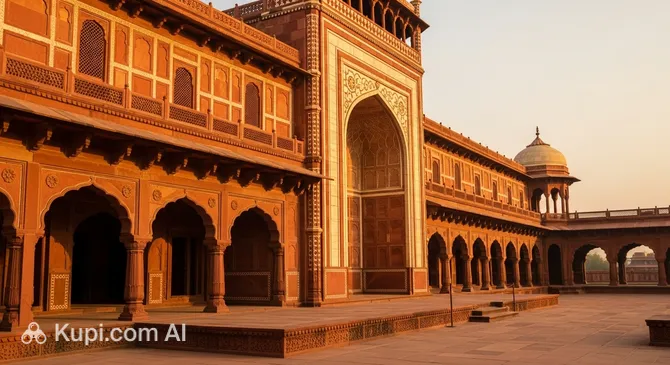
Jahangir Palace
Jahangir Palace. Иллюстрация. Источник: Kupi.com AI

The main feature of the structure lies in the harmonious blend of Hindu and Islamic architectural elements. The inner halls are striking with exquisite carvings, and the observation decks offer breathtaking views of the sacred Yamuna River and the majestic Taj Mahal visible in the distance. Today, the building is part of a UNESCO World Heritage site and attracts thousands of tourists with its rugged beauty and historical significance.

Jahangir Mahal is not just an open-air museum, but a true journey through time. Walking along its massive walls, which reach a height of 21 meters, one can easily imagine the atmosphere of the 16th-century imperial court and feel the scale of the former power of the Great Mughals.

Contacts

The palace is located within the famous architectural complex in the heart of the city. To simplify your visit planning, current contact details for this historical site are provided below.

Please note that the site is protected, and standard security regulations for tourist zones may apply at the entrance.

How to contactContact
AddressRakabganj, 52HF+37V, Agra Fort, Fort, Agra, Uttar Pradesh 282003, Индия

What to Do

Visiting Jahangir Mahal is, above all, a visual delight. The main thing to do here is to closely examine the delicate stone carvings. The walls and columns are decorated with ornaments where Hindu motifs are intricately intertwined with Islamic geometry. Photographers will find an endless number of subjects here: from the play of light in deep niches to panoramic views of the Taj Mahal opening from the eastern side of the palace.

Walking through the courtyards and halls, you can feel the coolness of the massive sandstone walls and imagine how the life of the imperial family flowed. It is recommended to take some time to explore the adjacent green lawns and gardens, which add a special sense of peace and tranquility to the place. It is an ideal space to take a break from the city bustle and soak in the spirit of history.

Many tourists combine a visit to Jahangir Mahal with a tour of neighboring sites, such as Khas Mahal or the Shish Mahal (Mirror Palace). If you have the opportunity, use an audio guide — it will help you learn hidden details about the purpose of each room. The best time to visit is in the morning hours, when the soft sunlight beautifully highlights the terracotta shades of the stone and the crowds are minimal.

Getting There

Jahangir Mahal is located inside the Agra Fort architectural complex, so you should focus on reaching the fort itself. The most convenient way to get here is by taxi or a traditional auto-rickshaw. If you are near the Taj Mahal, the trip will take only about 15 minutes (a distance of approximately 5 km). From the main Agra Cantt railway station, the journey is about 10–15 km and takes up to 30 minutes depending on city traffic.

For travelers arriving from Delhi, the Gatimaan Express high-speed train is an excellent option, reaching the city in just an hour and a half. From the station, it is also easy to take a taxi directly to the fort's Amar Singh Gate (historically known as the Lahore Gate). If you prefer air travel, Agra Airport (Kheria) is located approximately 13 km from the attraction.

Public transport includes local buses heading towards the central fort; however, tourists are more often advised to use mobile taxi apps or negotiate with rickshaw drivers in advance. It is recommended to plan your trip for the early morning to avoid traffic jams and the midday heat.

Ближайший город: Agra

History & Facts

The history of this majestic structure is inextricably linked with the name of the great Emperor Akbar, who ordered the palace to be built at the end of the 16th century. It was one of the first fundamental buildings in the renovated Agra Fort. Interestingly, the Mahal was originally built for Akbar's wife — the mother of the future ruler Jahangir — highlighting the special family significance of this residence in the lives of the Mughal monarchs.

The palace received its current name during the reign of Akbar's son, Jahangir. It was during this period that lush gardens and elegant lawns were laid out around the building, reflecting the emperor's love for art and aesthetics. Despite the fact that subsequent rulers, including Shah Jahan, preferred building with white marble, Jahangir Mahal has retained its original red sandstone appearance, remaining a unique example of early Mughal architecture.

In the 18th century, in 1761, the fort briefly came under the control of the Jats of Bharatpur. During this period, Jawahar Singh ruled these lands, sitting on the black marble throne of Jahangir. Today, the palace is recognized as a UNESCO World Heritage Site and serves as an important reminder of the golden age of the Mughal Empire, attracting researchers and travelers from all over the world.

Time Needed

To leisurely explore the interiors of Jahangir Mahal, examine the delicate carvings, and take high-quality photographs, an average visitor will need about 1.5–2 hours. This is enough time to soak in the atmosphere and enjoy the panoramic views of the river.

If you plan to explore not only Jahangir Mahal but the entire Agra Fort complex, we recommend setting aside at least 3–4 hours for your walk. Keep in mind that the territory of the complex is quite extensive, and every corner holds its own historical secrets.

Working Hours

You can visit Jahangir Mahal daily, as it follows the schedule of the entire Agra Fort complex. The doors are open to tourists from 07:00 to 18:00. Please note that the attraction is closed on Fridays.

Since the operating schedule may change depending on public holidays or official events, tourists are strongly advised to check current information on the official website of the Archaeological Survey of India (ASI) before their trip.

DayWorking hours
понедельник07:00–18:00
вторник07:00–18:00
среда07:00–18:00
четверг07:00–18:00
пятницаЗакрыто
суббота07:00–18:00
воскресенье07:00–18:00

Nearby

A visit to Agra is rarely limited to exploring just one palace. The surroundings of the fort and the city itself offer many options for continuing your cultural or entertainment program, making your trip as fulfilling as possible.

Below are some interesting places located relatively nearby that can help diversify your leisure time:

NameDistance
Shish Mahal (Glass Palace)0.1 km
Anguri Bagh0.1 km
Amar Singh Gate0.2 km
Agra Fort0.3 km
Chhatrapati Shivaji Maharaj Memorial0.3 km
Agra Fort0.3 km
Shri Mankameshwar Temple0.9 km

Reached the end of the page?

That means the route is fully explored