Support

Anguri Bagh

About

In the heart of the majestic Red Fort, which graces the city of Agra, lies Anguri Bagh — a true masterpiece of Mughal landscape art. Also known as the Grape Garden, this historical site is an exquisite four-level ensemble where strict geometry meets natural charm.
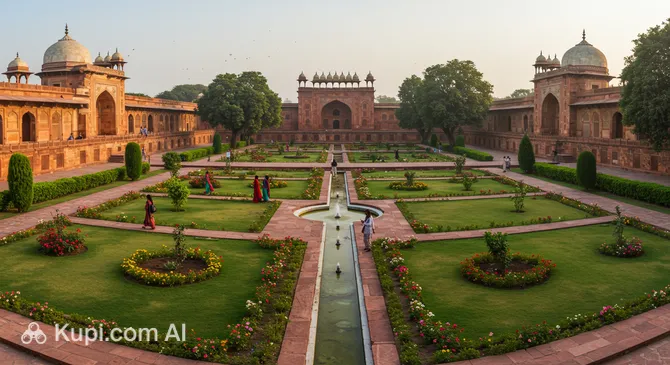
Anguri Bagh
Anguri Bagh. Иллюстрация. Источник: Kupi.com AI

Located in India, this garden is considered a benchmark of Mughal-era aesthetics. Its territory is divided into clear sectors with intricate flowerbed patterns, where juicy grapes were once grown for the imperial court. Surrounded by elegant marble pavilions and palace buildings, Anguri Bagh creates an atmosphere of tranquility and former grandeur.

The site's architectural surroundings add special significance: the terraces of the neighboring Khas Mahal offer perhaps the best view of the symmetrical paths and the remains of ancient fountains. This is not just a walking area but an important cultural landmark demonstrating the harmonious fusion of Islamic and Hindu architectural traditions.

Contacts

To clarify visit details, you can contact the Agra Fort administration, as Anguri Bagh is part of this massive museum complex. There are no specific separate contacts for the garden itself.

How to contactContact
Address52HF+966, Agra Fort, Rakabganj, Agra, Uttar Pradesh 282003, India

What to Do

Visiting this place is an excellent opportunity for quiet contemplation and relaxation in the shadow of centuries-old walls. The main activity here is walking along the well-kept alleys, where you can examine in detail the unique geometric layout of the flowerbeds, which preserves the spirit of the imperial past.

Be sure to head up to the Khas Mahal pavilion. From its elevation, you get an ideal panorama of the entire garden, allowing you to appreciate the scale and precision of the Mughal masters. This is the best spot for panoramic photos, especially in the soft morning sunlight when shadows highlight the relief of the stone borders.

History buffs will enjoy exploring the remains of the complex water supply and fountain system that once filled the garden with coolness. Anguri Bagh invites leisurely reflection, so it's worth lingering a bit longer to feel the contrast between the power of the fortress walls and the fragile beauty of the courtyard.

Getting There

This historical monument is located within the Agra Fort at 52HF+966, Agra Fort, Rakabganj, Agra. To get inside, tourists must use the Amar Singh Gate, which serves as the main entrance to the fortress.

If you are arriving from other regions, it is most convenient to use the rail link to Agra Cantt station (for example, on the Gatimaan Express from Delhi). From the station to the fort, you can get there by taxi, Uber, or a traditional auto-rickshaw in just 10–15 minutes. The nearest airport, Kheria (AGR), is located about 10 km from the site.

Within Agra itself, getting around is simplified thanks to an abundance of licensed taxis and ride-hailing services. For those who prefer private transport, parking is provided at the entrance to the fort, although it is recommended to arrive early to avoid traffic and the scorching sun.

Ближайший город: Agra

History & Facts

Anguri Bagh, which translates to “Grape Garden,” was laid out during the peak of the Mughal Empire's power. Its history is inextricably linked to the development of Agra Fort, the large-scale construction of which began in 1565 under Emperor Akbar the Great, who decided to move the capital from Delhi.

The garden acquired its current refined appearance thanks to Akbar's successors, especially Shah Jahan. It was during his reign that magnificent marble pavilions were added to the fort's architecture, and the garden's landscape design reached perfection. The geometric clarity of the flowerbeds and the irrigation system reflect Persian traditions of landscape gardening, which the Mughals adapted to the Indian climate.

Despite the passing centuries, the garden's layout has remained virtually unchanged. In former times, the finest grape varieties and exotic flowers were grown here, creating a paradise-like atmosphere right in the middle of a stern fortress. Today, this place serves as a living reminder of the skill of medieval engineers and the refined taste of Mughal rulers.

Time Needed

A detailed tour of the Anguri Bagh garden itself usually takes about 30–45 minutes. This is quite enough time to stroll leisurely along the paths, admire the symmetry of the flowerbeds, and take memorable photos against the backdrop of ancient arches.

Since the garden is located within the fortress walls, plan your visit comprehensively: you should allocate at least 2–3 hours for the entire Agra Fort. If you plan to visit the landmark with a guide, the time may increase slightly due to interesting historical stories about every corner of the complex.

Working Hours

You can admire the geometric patterns of the Grape Garden daily. The site is open to visitors during daylight hours, following the general operating schedule of Agra Fort.

Opening Hours:
Monday – Sunday: from 6:00 AM to 7:30 PM.

6:00 – 19:30

Nearby

Exploring the surroundings of Anguri Bagh allows you not only to delve deeper into Mughal history but also to find great spots for family leisure. After a walk through the monumental fort, many travelers prefer to change the setting and visit modern entertainment zones.

Within 10-20 kilometers of the historical center, several popular water complexes are located, where you can cool off and take a break from the city bustle.

NameDistance
Shish Mahal (Glass Palace)0 km
Jahangir Palace0.1 km
Agra Fort0.2 km
Amar Singh Gate0.2 km
Agra Fort0.2 km
Chhatrapati Shivaji Maharaj Memorial0.3 km
Shri Mankameshwar Temple0.8 km

Reached the end of the page?

That means the route is fully explored