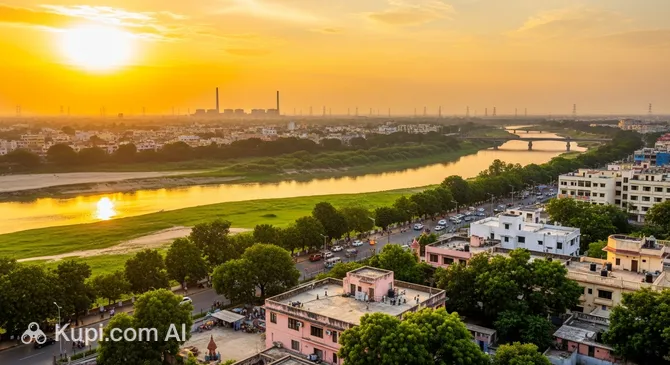
Korba is a dynamic industrial center located in the state of Chhattisgarh, India. The city is rightfully known as the "Power Capital" of its region, serving as a key hub for electricity and aluminum production. Nestled at the confluence of the Hasdeo and Ahiran rivers, it blends industrial prowess with proximity to dense tropical forests.
Korba. Illustration.
Source: Kupi.com AI
Geographically, the city sits at an elevation of 252 meters above sea level and has a population of over 365,000 people. A significant portion of the residents belongs to indigenous tribes, which leaves a unique mark on the local culture. The history of the land's development is inextricably linked to its rich mineral deposits, including one of the largest coal mines in Asia — Gevra.
While Korba is primarily a working hub for energy sector employees and miners, it may interest travelers with its massive industrial scale and unique ethnic composition. A visit to the city offers a chance to see modern industrial India from the inside and experience the traditions of the local tribes.
Weather Overview
A tropical climate prevails in Korba, characterized by distinct seasonal changes. Summers here can be extremely hot, with the thermometer sometimes reaching +45°C in May. In contrast, the winter months offer mild and comfortable weather with average temperatures ranging from +15°C to +25°C, making the period from November to February the most favorable for a visit.
The monsoon season plays a significant role, lasting from June to October and bringing heavy rainfall that peaks in July and August. If you are planning a trip, keep in mind that the weather in the city significantly affects road conditions, and the industrial nature of the region can impact air quality during dry periods.
Average monthly temperature
Average monthly precipitation
Interesting Facts
Getting to know this industrial giant will reveal many surprising aspects of life in the state of Chhattisgarh.
Coal Giant: The district is home to the Gevra mine — one of the largest open-cast coal mines in all of Asia.
Forest Land: The district is the largest by area in the state, with about 40% of its territory covered by forests.
Ethnic Diversity: More than half of the district's population (about 51.67%) belongs to indigenous tribes, including the unique protected Pahadi Korwa people.
River Arteries: The city is conveniently situated at the confluence of three rivers — Hasdeo, Tan, and Chorai, which historically determined its development.
How to Get There
Transport accessibility to Korba mainly relies on rail and road connections, as the city does not have its own airport. Those planning a visit should research routes and ways to reach this industrial hub from major Indian cities in advance.
The main transport hub is Korba Junction railway station. It connects the city with important destinations via the Bilaspur-Gevra Road line. Regular trains arrive from Raipur, as well as overnight trains from Delhi and Kolkata, which can take between 12 and 24 hours.
Station
Passenger traffic
Distance
Bilaspur Junction railway station
7
69 km
Ib railway station
6
138 km
Raipur Junction railway station
5
168 km
Rourkela railway station
4
218 km
Bhawanipatna railway station
2
272 km
For air travelers, the closest options are the airport in Bilaspur or the larger hub in Raipur, located about 230 km away. From there, the city can be reached by bus or taxi via the NH-130 highway. It is worth noting that serious traffic jams often occur during peak hours near industrial zones and mines.
Since Korba is not a classic tourist destination, its attractions have a specific industrial character. The main interest here lies in the grand energy and mining facilities that impress with their sheer scale.
One of the most impressive sites are the Gevra and Dipka open-cast coal mines. These giant mines attract industrial tourism enthusiasts, though special permission is often required for group visits. The NTPC power plants, which define the skyline of the "Power Capital," are also worth noting.
For more relaxed pastimes, locals prefer the walking areas near the confluence of the Hasdeo and Ahiran rivers. Here, you can take a break from the industrial noise and watch the slow flow of the water. The city’s central squares and the markets near the railway station serve as the main gathering spots for experiencing the daily rhythm of the townspeople.
Local Cuisine
The culinary culture of Korba is a surprising mix of traditional Indian cuisine and authentic recipes from the local tribes of Chhattisgarh. The diet here is based on rice, maize, and legumes, as well as unique forest products like wild vegetables and honey.
Be sure to try the local version of Dal-Bhat (lentil soup with rice) or the signature Chhattisgarhi red rice with turmeric. If you're lucky, local eateries may offer fresh fish caught in the Hasdeo River. Among drinks, Mahua is particularly popular — a specific spirit made from the fermented flowers of the Mahua tree, along with traditional strong milk tea.
The city's restaurant scene is mostly concentrated around the railway station and central markets. Small eateries and diners dominate the area, offering hearty thalis — an assortment of several dishes on one tray. Street food in industrial areas mainly consists of samosas and chapati with curry, aimed at a quick and budget-friendly meal for workers.
Travel Tips
A trip to an industrial center requires some preparation, so we've gathered a few practical recommendations to make your visit to Korba more comfortable.
Clothing and Essentials: In summer, bring light cotton clothes and sunblock. For winter evenings (December-January), a light jacket will be useful. Comfortable closed-toe shoes are essential for walking near industrial areas.
Transport: The main way to get around is by auto-rickshaws. Apps like Uber have limited availability. Avoid traveling to the outskirts after dark due to poor road lighting.
Finances: The Indian Rupee is the currency used. Cards are rarely accepted, so always carry cash in small denominations for rickshaws and market purchases.
Health: Drink only bottled water and use repellents. Keep in mind that coal mining can cause a lot of dust in the air, which is important for people with allergies.
Communication: Hindi is the main language. English is understood by employees of large enterprises. For internet, it's best to purchase a local SIM card in advance at a major airport.
Local Etiquette: Show respect for tribal traditions. When visiting ethnic settlements, always ask for permission before taking photos. Greet locals with the word "Namaste".
What to Avoid: Do not attempt to enter coal mine territories without official permission — these are restricted areas with heavy industrial traffic.
Safety: Try not to travel around the city during rush hours (7:00–10:00 and 17:00–20:00), when the roads are most congested with worker transport.
By following these simple tips, you can focus on exploring this unusual industrial region of India!
Entertainment & Nightlife
Nightlife in Korba is virtually non-existent, as the city lives according to the rhythm of production shifts. You won't find typical nightclubs or bars here. The primary evening leisure for locals is centered around central markets, small tea stalls, or family circles. The banks of the Hasdeo River are popular for evening strolls and picnics.
Daytime entertainment is limited to occasional cinemas showing Bollywood releases and spontaneous sports matches — cricket is the primary passion for the local residents. If you're looking for more active recreation, shopping in modern malls, or visiting clubs, you'll need to head to neighboring Bilaspur or the state capital, Raipur.
Special attention should be paid to local ethnic festivals. From time to time, tribal celebrations featuring traditional dances and fairs take place in surrounding villages. These are vibrant and authentic spectacles, though they aren't always geared towards tourists, so it's best to ask locals about the dates.
Parks & Museums
Due to its industrial status, Korba does not boast an abundance of classic museums or exhibition halls. Cultural heritage here lives not in museum display cases, but in the traditions of local tribes, which can be seen in their daily lives in suburban settlements.
City parks are represented by small green zones along the Hasdeo and Ahiran rivers. While there aren't enough trees within the city's built-up area for such a large population, the district itself is surrounded by vast forest massifs. This is where residents and visitors go for a breath of fresh air and outdoor relaxation.
If you are looking for historical artifacts, consider a trip to nearby districts, as Korba itself is a relatively young city focused on industrial development. The lack of large park complexes is compensated for by the opportunity to see real tropical forests of Chhattisgarh just a few kilometers from the factories.
Getting Around
The public transport system in Korba is developed at a basic level and is geared toward the needs of industrial workers. The primary modes of transport are auto-rickshaws and cycle-rickshaws, which ply between residential quarters, markets, and industrial zones. There are often no fixed fares, so it's best to agree on a price in advance.
Bus service in the city includes routes connecting the center with the coal mines and the railway station. However, buses are often overcrowded, and their schedules can be unpredictable. For long-distance travel within the state and beyond, the most reliable transport remains the railway, specifically the Korba Junction station.
Getting around the city can be difficult due to serious congestion during shift changes at the plants (morning and evening). Many locals prefer using their own bikes or scooters. If you value comfort, the best option is to book a taxi, although wait times can increase significantly during peak hours.
Accommodation
The hotel infrastructure in Korba is primarily geared towards business travelers, energy company employees on assignment, and transit passengers. There are no luxury five-star hotels here, but the city offers a decent selection of mid-range and budget options.
The most convenient areas to stay are in the city center, closer to the river, or in the immediate vicinity of the railway station. Most 2–3 star hotels offering basic amenities are concentrated here. For long-term stays, one might also consider renting apartments in the central part of the city.
When planning a visit, it is recommended to book accommodation in advance, especially if your trip coincides with major industrial conferences. The main booking methods are through popular Indian online platforms or directly, as not all local guesthouses are listed on international systems.
Nearby Cities
Korba serves as a convenient base for exploring other interesting corners of Chhattisgarh. The city's surroundings offer both historical monuments and opportunities for modern shopping in larger settlements.
Just 70 km away is Bilaspur — a major administrative center worth visiting for its shopping malls and more developed urban infrastructure. History buffs will be interested in Ratanpur (61 km), famous for its ancient temples and fort. You can also head to Raigarh, which is renowned for its cultural heritage and natural beauty.
Exploring nearby towns like Sakti or Hardi will allow you to better understand the diversity of this region, where industrial landscapes harmoniously transition into quiet temple complexes and endless forests.
Shopping & Souvenirs
Shopping in Korba is purely utilitarian and local in nature. You won't find huge, glitzy shopping centers with global brands here; trade thrives mainly in street bazaars and markets located near the railway station and in central neighborhoods.
In the local markets, you can find quality textiles, spices, and everyday goods. Of particular interest are folk handicrafts: woven baskets, mats, and copper jewelry created by artisans from surrounding tribes. These are the best souvenirs to bring from this part of India, as they reflect the authentic ethnic culture of the region.
It's also worth looking for "forest products" — wild honey, medicinal herbs, and dried mahua flowers. Shops usually operate from 10:00 to 20:00, and it is customary to pay with cash at the markets. If you need a full modern shopping experience with large malls, locals recommend heading to neighboring Bilaspur.