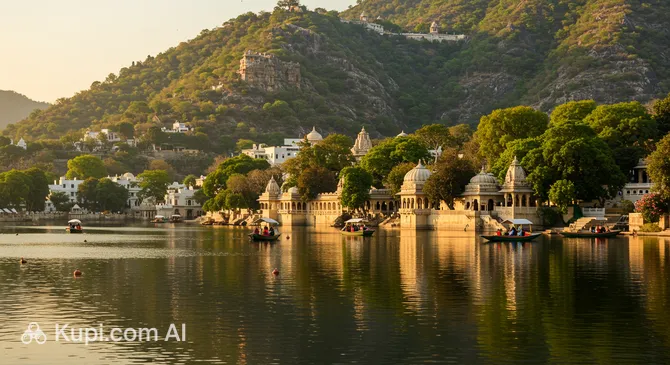
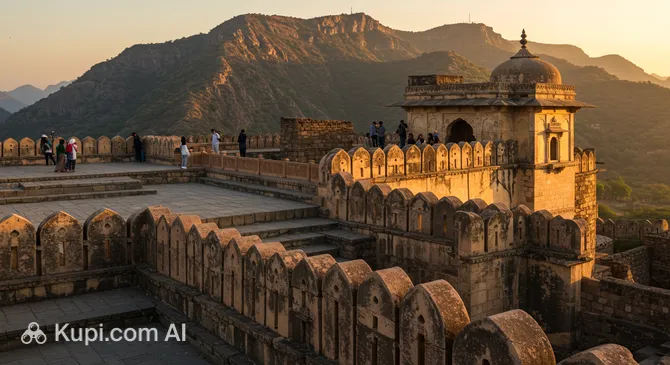
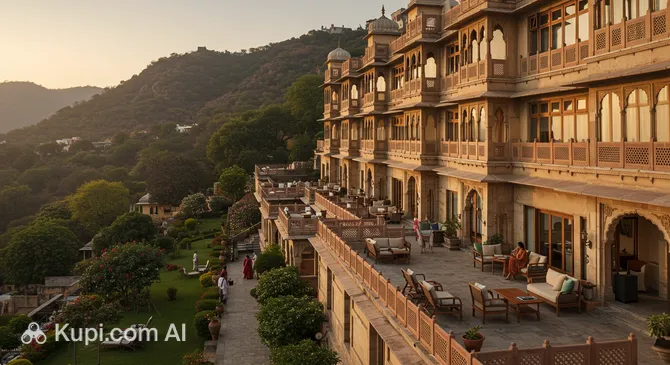
Mount Abu is the only hill station in the desert state of Rajasthan, making it a true oasis of coolness and greenery in India. Perched at an altitude of about 1,220 meters above sea level in the Aravalli Range, this charming town attracts travelers with its pleasant climate, especially during the hot summer months, and its tranquil atmosphere. The population of Mount Abu is just over 22,000 people, giving it the cozy feel of a small town.
Mount Abu. Illustration.
Source: Kupi.com AI
The town is famous not only for its natural beauty but also for its significant cultural sites. One of the main highlights of Mount Abu is the magnificent Dilwara Temples—masterpieces of Jain architecture renowned for their exquisite marble carvings. Another popular spot for tourists is the picturesque Nakki Lake, which is surrounded by numerous hotels, markets, and cafes. It is an ideal place for boating and enjoying panoramic views.
Mount Abu offers a unique blend of spiritual heritage, natural beauty, and opportunities for a relaxing getaway. Whether you are looking for peace away from the city bustle, coolness among the mountains, or want to connect with ancient culture, this welcoming town is an excellent choice for your journey.
The weather in Mount Abu is characterized by a pleasant coolness compared to the rest of Rajasthan. Expect warm summers with peak temperatures in May (average around 32.2°C, maximum up to 38.4°C) and monsoon rains that are most intense in July and August, when the number of rainy days can reach 22 per month. Winters here are mild and dry, with the lowest temperatures in January (average around 17.4°C, minimum can drop to 10.3°C). The shoulder seasons, especially October and November, offer comfortable weather with moderate temperatures and minimal rainfall, making this a popular time to visit. You can learn more about the climate of Mount Abu on our dedicated page.
Average monthly temperature
Average monthly precipitation
Interesting Facts
Beyond its well-known attractions and status as Rajasthan's only hill station, Mount Abu holds many surprising stories and unique features. Here are just a few interesting facts that will help you see this town in a new light:
Brahma Kumaris Peace Park. Illustration.
Source: Kupi.com AI
Traveler photos:
According to legend, the picturesque Nakki Lake, one of the town's main gems, was dug out by the gods using their fingernails ('nakh' means nail in Hindi). This story gives the lake a special mystical charm.
Mount Abu is the international spiritual headquarters of the Brahma Kumaris organization, whose followers come here from all over the world. Their Brahma Kumaris Peace Park is a popular spot for meditation and quiet walks, open to everyone.
The ancient name of the town is Arbudaanchal. It is believed to come from the name of the serpent-god Arbuda, who, according to legend, saved the bull Nandi, the sacred vahana (mount) of Lord Shiva, here. The Arbuda Devi Temple, located in a cave, is named after this deity.
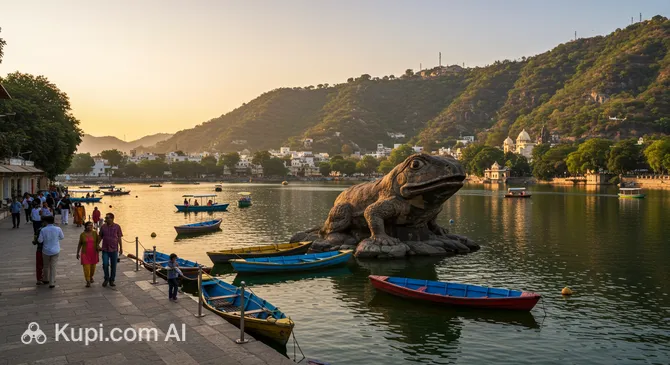
The famous Toad Rock near Nakki Lake is not a man-made sculpture but a natural rock formation that looks amazingly like a toad preparing to jump into the water. It is one of the most photographed spots in Mount Abu.
How to Get There
There are several ways to get to Mount Abu; however, the most convenient option for many tourists is flying to one of the nearest airports, as there is no airport in the town itself. From there, you can reach Mount Abu by taxi or bus.
The nearest major air hub is Maharana Pratap Airport(UDR), located in the city of Udaipur. This international airport is approximately 120 km from Mount Abu. A trip by taxi or rental car from the airport to Mount Abu will take about 3 – 3.5 hours. Maharana Pratap Airport serves many domestic flights and is an important transport hub for the region.
Another popular option is flying into Ahmedabad Airport, also known as Sardar Vallabhbhai Patel International Airport (AMD). It is located in Ahmedabad, about 168 km from Mount Abu. This is one of the largest airports in the region, offering a wide range of both domestic and international flights. The drive from Ahmedabad to Mount Abu by car will take approximately 4 – 4.5 hours. Smaller but also accessible airports are located in Jodhpur (Jodhpur Airport(JDH), about 187 km) and Vadodara (Vadodara Airport(BDQ), about 255 km), although the transfer from these to Mount Abu will be longer.
For convenience, here is summary information on the main airports from which you can reach Mount Abu:
State and private buses run regularly from the cities where these airports are located to Mount Abu. Taxis or car rentals are also always available for a more comfortable journey. It is recommended to check the current bus schedules and estimated taxi fares in advance.
Main Attractions
Mount Abu, being a picturesque hill station, offers its guests many interesting places to visit. Among them are several key attractions that should definitely be included in your itinerary to fully experience the charm of this corner of India.
The heart of the town is undoubtedly Nakki Lake. This ancient and sacred lake, shrouded in legends, attracts visitors not only with its natural beauty but also with its leisure opportunities. Here you can take a leisurely boat ride while enjoying views of the surrounding hills and peculiar rock formations, such as the famous Toad Rock. Life bustles around the lake, with numerous hotels, markets, and cafes making it a popular spot for evening walks and gatherings.
Nakki Lake. Illustration.
Source: Kupi.com AI
Traveler photos:
For those who appreciate breathtaking landscapes, Sunset Point is a must-visit. As the name suggests, this place is famous for its incredible sunset views, as the sun slowly sinks behind the Aravalli hills, painting the sky in stunning colors. This is the perfect spot for romantic moments and creating magnificent photographs. The atmosphere here is particularly peaceful, allowing you to take a break from the hustle and bustle and enjoy the beauty of nature.
One of the most revered and unique religious sites in Mount Abu is the Arbuda Devi Temple. This ancient temple, dedicated to the goddess Arbuda, is located in a rocky cleft, and to reach it, pilgrims and tourists must climb about 365 steps. The effort is rewarded not only by the opportunity to touch the shrine but also by the special energy of the place and the panoramic views from the height.
History buffs and fans of ancient architecture should visit Achalgarh Fort. Built in the 15th century, this fort houses the ruins of ancient structures and several important temples, including the famous Achaleshwar Mahadev Temple dedicated to Shiva and the picturesque Mandakini Kund pond. The climb to the fort offers impressive views of the surroundings, and exploring its grounds allows you to dive into the region's rich past.
Local Cuisine
The cuisine of Mount Abu will delight connoisseurs of traditional Indian flavors, offering mainly vegetarian dishes characteristic of the state of Rajasthan, with some Gujarati influences. Thanks to its status as a popular hill station, you can find both authentic local delicacies and dishes adapted for tourists.
Be sure to try the famous Rajasthani dish Dal Baati Churma—a hearty combination of spicy lentils (dal), wheat balls baked in a tandoor or over coals (baati), and sweet crumbled fried wheat flour (churma). Also worth noting is Gatte ki Sabzi—a curry featuring chickpea flour dumplings in a savory yogurt sauce. Many restaurants offer a thali—a large platter with several small bowls containing various vegetable curries, dal, rice, chapati (flatbreads), and sweets, allowing you to sample several regional flavors at once.
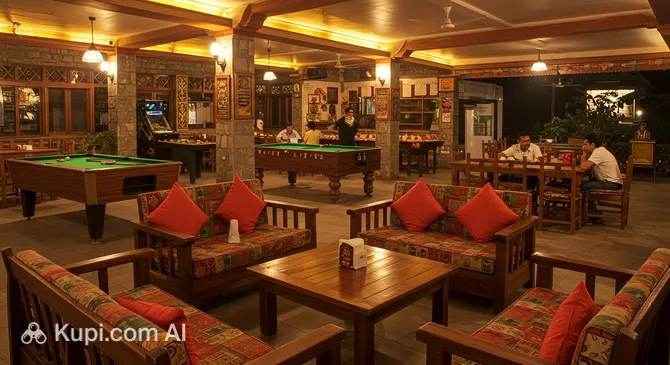
JOJI Bar, Restaurant & Game Zone. Illustration.
Source: Kupi.com AI
Traveler photos:
Popular drinks include refreshing lassi (a yogurt drink that can be sweet, salted, or flavored with fruit) and chaas (spiced buttermilk). Of course, you can enjoy aromatic masala chai everywhere. Some establishments also offer alcoholic beverages, including local and imported beer.
The dining culture in Mount Abu centers around restaurants of various levels, from simple eateries to more refined establishments within hotels. Many cafes and restaurants can be found particularly in the Nakki Lake area. Don't overlook the street food, where you can try fresh snacks like pakoras (batter-fried vegetables) and various chaats. For a wider selection of dishes, you can visit, for example, JOJI Bar, Restaurant and Game Zone, which offers a diverse menu. The town's gastronomic scene provides a pleasant mix of traditional Rajasthani flavors and the comfortable atmosphere of a mountain resort, making the exploration of local cuisine an essential part of the journey.
Travel Tips
Planning a trip to charming Mount Abu? To ensure your journey goes smoothly and leaves only pleasant impressions, we have prepared some practical tips to help you better prepare for your visit to this unique corner of India.
Clothing and Essentials: The climate in Mount Abu is mountainous, so even in summer, evenings can be cool. Light cotton clothing is suitable for the daytime, but be sure to bring a sweater or a light jacket. In winter (November to February), warmer clothes will be needed. A key point is comfortable shoes for walking on hilly terrain and sightseeing. Don't forget sunscreen, a hat, and perhaps a universal power adapter for your electronics. When visiting temples, such as the famous Dilwara Temples, both men and women are recommended to cover their shoulders and knees.
Getting Around Town:Mount Abu is a relatively small town, and its central part is pleasant to explore on foot. For longer distances, such as to viewpoints or temples outside of town, taxis and auto-rickshaws are available. Always agree on the fare in advance. There is little public transport in the form of city bus routes, and there are no subways or trams. Renting a car may not be practical if you plan to move mostly within the town limits.
Financial Matters: The official currency is the Indian Rupee (INR). You can exchange currency at banks or authorized exchange offices. Credit and debit cards are accepted in most hotels, restaurants, and large shops. However, for small purchases at markets, rickshaw fares, and in small eateries, it is best to have cash on hand. There are ATMs in town. Tipping in India is welcomed but not strictly mandatory; in restaurants, it is customary to leave 5-10% of the bill if a service charge is not included.
Health and Safety: There are pharmacies in Mount Abu where you can purchase basic medications. For more serious cases, there are clinics and a small hospital. It is recommended to drink only bottled water. As in any tourist spot, take basic precautions: watch your belongings, especially in crowded places, and avoid walking in poorly lit or deserted areas after dark. Overall, Mount Abu is considered a fairly safe town for tourists.
Communication: The main languages of communication are Hindi and Rajasthani. In tourist areas, hotels, and restaurants, staff generally speak English. Learning a few simple phrases in Hindi, such as "Namaste" (Hello/Goodbye), "Dhanyavad" (Thank you), and "Kitna?" (How much?), will be very useful and appreciated by locals. A local SIM card can be purchased by presenting your passport and visa. Wi-Fi is available in most hotels and many cafes.
Local Etiquette and Traditions: Indians are hospitable people. A "Namaste" greeting with palms joined at the chest is always appropriate. When visiting temples and other religious sites, it is customary to remove your shoes before entering and dress modestly. It is best to ask for permission before photographing people, especially women. Avoid public displays of affection, as this is not customary in Indian culture.
What to Avoid: Try not to engage in overly aggressive bargaining, especially if the price seems reasonable—respect the work of local artisans. Do not leave litter in natural areas, such as around Nakki Lake or at viewpoints, to preserve the beauty of the place.
Additional Tip:Mount Abu is a popular holiday destination, especially on weekends and holidays when many local tourists visit. If you prefer a quieter atmosphere, try to schedule your visit for weekdays. Also, keep in mind that some shops may close for a siesta in the afternoon.
We hope these tips make your stay in Mount Abu comfortable and unforgettable. Enjoy the cool mountain air, picturesque views, and the rich culture of this amazing town!
Entertainment & Nightlife
In the evening, Mount Abu offers its guests an atmosphere of peace and comfort that differs from the noisy nightlife of large metropolises. You won't find many thumping nightclubs here, but you can enjoy a pleasant evening at one of the local venues, taking in the cool mountain air and scenic views. The town's nightlife is centered around relaxed leisure, conversations with friends, and delicious dinners.
Most evening activity is concentrated around Nakki Lake and the main market street. There are many restaurants, cafes, and several bars where you can spend time after a busy day. Many establishments offer open terraces or tables overlooking the lake, creating a romantic setting. The atmosphere is generally casual and family-friendly, with the crowd consisting of tourists and locals enjoying the evening cool.
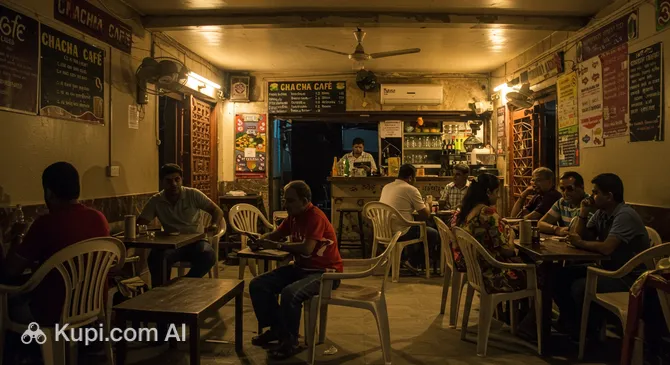
Among the places to spend an evening, Chacha Cafe is worth mentioning. It is a popular spot known for its relaxed atmosphere and good selection of drinks, perfect for unwinding and socializing. Another place that might catch your attention is JOJI Bar, Restaurant and Game Zone, which offers food, drinks, and some entertainment. Some hotels in Mount Abu also have their own bars or lounge areas available to guests and sometimes the general public.
Chacha Cafe. Illustration.
Source: Kupi.com AI
Traveler photos:
Most restaurants and cafes are open until 10:00 PM – 11:00 PM, though some bars may stay open a bit later, especially during peak tourist season or on weekends. There is usually no specific dress code; casual, comfortable clothing is perfectly appropriate. Prices vary but generally remain moderate. It's best to arrive after sunset, when the daytime heat subsides and the town is enveloped in evening coolness.
To get around town in the evening, you can use auto-rickshaws or taxis. It is recommended to agree on the fare in advance. As for safety, Mount Abu is considered a fairly quiet town. Nevertheless, as elsewhere, it is best to stick to well-lit streets and avoid walking alone in deserted areas late at night. You can call for a taxi through your hotel or by arranging with a driver at one of the stands.
While the nightlife in Mount Abu is rather peaceful, the town offers plenty of activities during the day. You can visit the Celebrity Wax Museum or take a stroll through one of the parks, such as Victoria Park or the Brahma Kumaris Peace Park. Thus, Mount Abu offers a balanced holiday where daytime exploration of the sights is harmoniously replaced by calm and pleasant evenings.
Parks & Museums
Mount Abu is not just about picturesque mountain landscapes; it is also a place where you can enjoy the tranquility of well-maintained parks and get acquainted with cultural heritage through its unique attractions. The town offers both natural oases for relaxation and interesting exhibits for curious travelers.
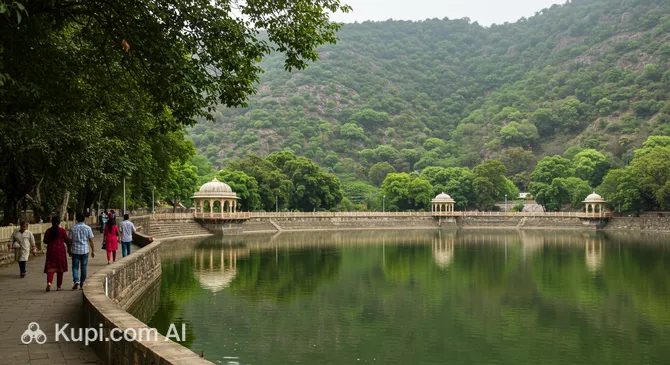
One of the town's main gems is Nakki Lake. This ancient sacred lake, surrounded by hills and peculiar rocks, is an ideal place for leisurely strolls, boating, and enjoying the cool air. Small gardens and viewpoints are scattered around the lake, offering magnificent views, especially at sunset. This is a must-visit for every guest in Mount Abu.
Nakki Lake. Illustration.
Source: Kupi.com AI
Traveler photos:
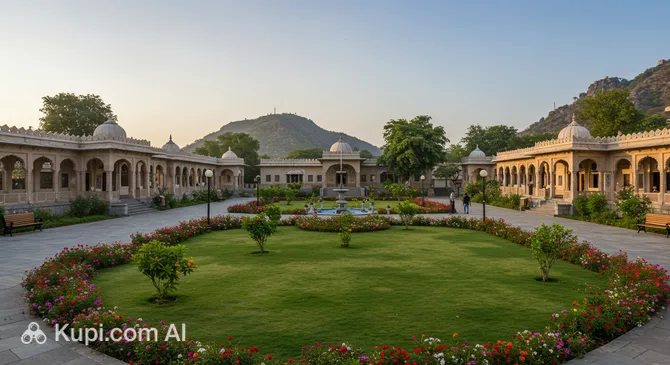
For those seeking peace and harmony, the Brahma Kumaris Peace Park will be a true discovery. This beautifully maintained park with flower beds, neat lawns, and quiet meditation corners is designed for spiritual rest and contemplation. You can spend time here in silence, enjoying the beauty of nature and the calm atmosphere, making it popular among tourists seeking relaxation.
Brahma Kumaris Peace Park. Illustration.
Source: Kupi.com AI
Traveler photos:
Nature and wildlife lovers should visit Trevor’s Tank. This is a man-made reservoir, originally created for crocodile breeding, which also attracts many bird species. It is an excellent spot for watching animals in their natural habitat and for quiet relaxation in nature, away from the city bustle. Visitors can enjoy a picnic or just a walk here.
Trevor's Tank. Illustration.
Source: Kupi.com AI
Traveler photos:
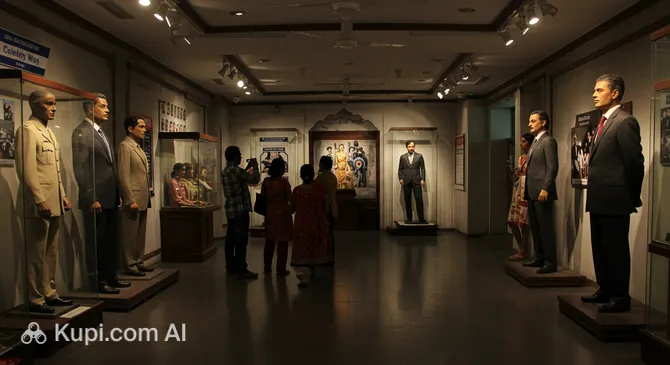
In terms of museums, Mount Abu offers several interesting options. One popular spot is the Celebrity Wax Museum. Here you can see realistic figures of famous personalities from India and around the world, making it an entertaining place to visit, especially if you are traveling with children or are interested in modern culture.
Celebrity Wax Museum. Illustration.
Source: Kupi.com AI
Traveler photos:
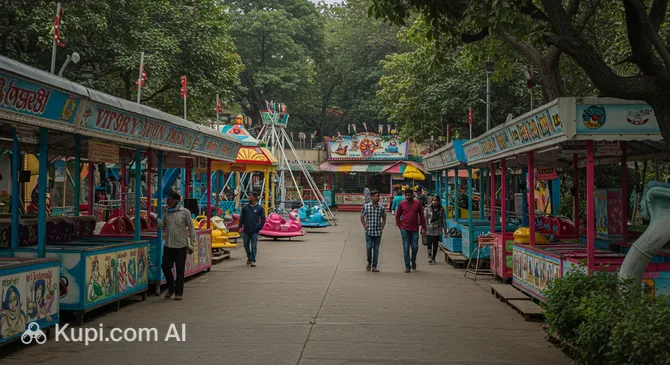
An unusual cultural site that combines elements of a park and a memorial is Victoria Park. While it may be categorized as a museum, it is more of a green zone dedicated to memory and history. Here you can not only walk along well-kept alleys but also learn more about significant events through the installed exhibits or memorial markers, adding an educational aspect to outdoor relaxation.
Victory Fun Park. Illustration.
Source: Kupi.com AI
Traveler photos:
Besides specialized museums, many historical and architectural sites in Mount Abu are themselves living testaments to the region's rich history. For instance, the ancient Achalgarh Fort, with its impressive temples and ancient ruins, offers a real dive into the past. Exploring the fort allows you to learn about the rulers and eras that shaped this region as effectively as any museum exhibition.
Achalgarh Fort. Illustration.
Source: Kupi.com AI
Traveler photos:
For a more authentic Mount Abu experience, don't limit yourself to the main tourist routes. Take a walk along the lesser-known trails around Nakki Lake or stop by the local markets, where you can find unique handmade items and feel the true color of the town. Also, look out for the many small temples, such as the Arbuda Devi Temple or Shankar Math, scattered throughout the surroundings, each holding its own unique atmosphere and history.
Getting Around
Getting around Mount Abu is fairly simple, given its compact size as a hill resort. There are no subways, trams, or trolleybuses, but other convenient ways to move between attractions and hotels are available.
The main modes of transport for tourists in Mount Abu are auto-rickshaws (tuk-tuks) and taxis, which are often jeeps well-suited for the mountainous terrain. Auto-rickshaws are ideal for short trips around town, such as to the market or nearby temples. Taxis are more convenient for longer routes, trips to remote viewpoints, or if you are traveling in a group with luggage. You may also encounter local buses or shared taxis (sometimes in the form of shared jeeps) running on specific routes, including to neighboring settlements, but for moving specifically within the town's tourist center, they may be less convenient than rickshaws or taxis.
The fare payment system in Mount Abu is predominantly cash-based. There are generally no specialized transport cards or mobile apps for paying fares. The cost of an auto-rickshaw or taxi ride is usually negotiable, so it is important to discuss the price with the driver before starting the trip. For reference, prices for short distances within the city will be low, but it's always better to clarify. Long-term transit passes are not common here.
Here are a few practical tips:
* Always agree on the fare in advance, especially when using auto-rickshaws or taxis.
* If you plan to visit several attractions with waiting times, discuss this with the driver—he might offer you a package price.
* Main taxi and auto-rickshaw stands are usually located near the central market, the bus station, and popular tourist sites like Nakki Lake.
* Transport is generally available from early morning until evening. Finding transport at night can be more difficult and expensive.
As an alternative to public transport, many central areas of Mount Abu, including the lake and shopping streets, are quite accessible for walking. This is a great way to enjoy the town's atmosphere and views. In some places, you may find scooter rentals, but be sure to check the conditions and availability beforehand. For specific routes, such as the climb to some temples, porter services or horse rides are sometimes offered, which are more of a tourist attraction than regular transport.
Accommodation
Mount Abu offers a wide range of accommodation options to suit the needs of many different travelers. Here you will find budget guesthouses and hostels as well as mid-range hotels, comfortable resorts, and even several options with heritage charm. Most hotels and guesthouses are concentrated in the central part of town, near the main market square and the popular Nakki Lake, providing easy access to major attractions, shops, and restaurants. For those seeking more privacy and quiet, there are options located a bit further from the busy center, offering a peaceful atmosphere and beautiful views.
Among the many offerings, one could highlight, for example, the Hotel Sheraton Mount Abu, which offers comfortable accommodation and good service. In general, when planning a trip, especially during peak tourist seasons (such as summer vacations, festivals, or long weekends), it is recommended to book accommodation well in advance. This will help you secure the best choice and avoid issues with availability, as Mount Abu is a popular holiday destination.
Hotel Sheraton Mount Abu. Illustration.
Source: Kupi.com AI
Traveler photos:
The price range for accommodation in Mount Abu varies from very affordable options for budget travelers to more expensive offers in hotels with high levels of comfort and additional services. You can book accommodation through popular international and Indian online booking platforms, which offer a wide selection and the ability to compare prices. Direct booking via hotel websites or by phone is also common, especially for smaller local hotels.
Nearby Cities
For those who want to explore the surrounding area, Mount Abu serves as an excellent starting point for day trips to several interesting nearby locations:
City
Population
Distance
Sirohi
39 229
35 km
Pindwara
24 487
41 km
Vellar
11 691
57 km
Shivganj
24 785
70 km
Khedbrahma
25 001
71 km
These nearby destinations provide insight into the diverse culture and landscapes of the region. For example, Udaipur, known as the "City of Lakes" or "Venice of the East," enchants with its magnificent palaces, lakes, and rich history. A trip there promises an immersion into Rajasthan's royal past. Other mentioned towns, such as Bali or Patan, also offer unique local attractions, temples, and markets reflecting the flavor of rural India.
Shopping & Souvenirs
Shopping in Mount Abu is primarily about immersing yourself in the local flavor rather than chasing global brands. The town offers a charming selection of goods reflecting the culture and crafts of Rajasthan and the surrounding regions. Here you will find many small shops and street stalls where you can purchase unique souvenirs and handmade items.
The main shopping spots are concentrated around the main market square and on the streets adjacent to the popular Nakki Lake. Walking through these busy streets, you will find rows of shops selling textiles, clothing, jewelry, wood and stone crafts, and various souvenirs. The atmosphere here is typical of Indian bazaars—vibrant, noisy, and inviting interaction with the sellers.
In Mount Abu, you won't find large modern shopping malls in the conventional sense. Shopping here is more traditional. However, you may come across government emporiums or larger stores with fixed prices that feature a wide range of quality products from local artisans. Such shops can be a good option for those who prefer to avoid bargaining.
The heart of shopping life in Mount Abu is its markets. The main town market is a kaleidoscope of colors, smells, and sounds. You can find everything from fresh fruit and local sweets to traditional Rajasthani clothing, footwear (such as juttis), bags, shawls, and jewelry. Particularly popular are items made of sandalwood, marble, and metal, as well as colorful fabrics with embroidery or batik.
Souvenirs to bring home from Mount Abu include:
* Rajasthani Textiles: Bright saris, shawls, bedspreads, and tablecloths with traditional patterns and embroidery.
* Wood and Stone Crafts: Statuettes, trinket boxes, and decorative items.
* Jewelry: Ethnic-style silver pieces, bangles, and earrings with semi-precious stones.
* Local Sweets and Spices: If transport allows, you can bring traditional Indian sweets or aromatic spices.
* Miniature Style Paintings: Traditional Rajasthani art.
Most shops and stalls in Mount Abu open around 10:00 AM – 11:00 AM and stay open until 8:00 PM – 9:00 PM, though some may close for a lunch break. During the tourist season, hours may be extended. The primary method of payment is cash (Indian Rupees). Larger shops and hotels may accept credit and debit cards, but in small stalls and at the market, it's better to have cash on hand. Don't hesitate to bargain in small shops and markets—it's part of the local shopping culture.
The availability of Tax Free (VAT refund) for tourists in Mount Abu, as in most such tourist spots in India oriented towards domestic and regional tourism, is usually not common and is not a standard practice for most goods purchased by tourists.