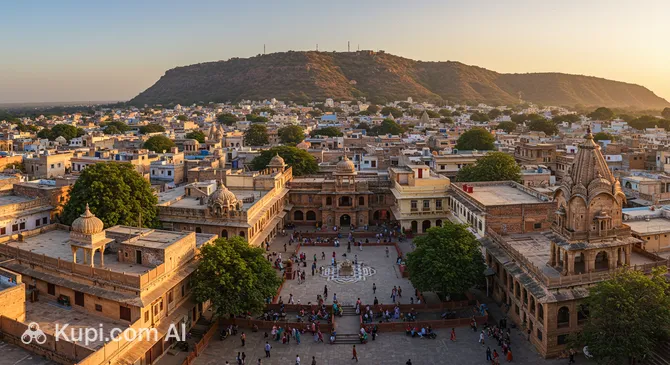
Located in the heart of the vibrant state of Rajasthan, Pali is a dynamic administrative and industrial hub of the Marwar region. Unlike India's popular "postcard" destinations India, this city preserves the atmosphere of the country's authentic everyday life, where traditions are closely intertwined with the modern rhythm of a business center.
Geographically, Pali is nestled on the banks of the Bandi River, at an altitude of about 213 meters above sea level. According to recent major censuses, the city's population exceeds 229,000, making it one of the state's significant urban centers. The climate here is typical of semi-desert zones: hot, energetic summers give way to mild and comfortable winters.
Pali. Illustration.
Source: Kupi.com AI
Although the city is primarily focused on industry and trade, its deep historical heritage is reflected in the architecture of the old quarters and lively markets. Tourists often visit the Bangar Museum to learn about Marwar culture or take walks along the Bandi River embankment.
Visiting Pali is an excellent opportunity to see India without embellishment, immerse yourself in bustling street life, and feel the true spirit of Rajasthan. We recommend including this city in your itinerary if you are looking for authenticity and want a break from overcrowded tourist trails.
Weather Overview
Pali is characterized by a semi-desert climate typical of the state of Rajasthan. Significant seasonal temperature fluctuations are observed here: expect extremely hot summers with temperatures sometimes reaching +40...+45°C, and quite comfortable, mild winters. The monsoon period brings long-awaited moisture in July and August, though total rainfall remains moderate.
The typical weather cycle in the city includes dry and dusty spring months when humidity is at its minimum. The most favorable time to visit is from October to March, when average daytime temperatures hover around +25...+30°C, and nights bring a pleasant chill. Detailed weather in Pali by month will help you more accurately plan your wardrobe for the trip.
It is important to consider that due to the proximity of the Bandi River and landscape features, local flooding is possible during the rainy season, while during the dry period, the city is often shrouded in dust. In winter months, especially in January, night temperatures can drop to +10°C, so a light jacket or sweater will not be out of place in your luggage.
Average monthly temperature
Average monthly precipitation
Interesting Facts
Pali is a city of contrasts that can surprise even a seasoned traveler with its details. Here are a few notable facts:
The city ranks 176th in India by population, highlighting its importance as a major regional center of Rajasthan.
Pali is situated directly on the banks of the Bandi River, which for centuries has been a vital artery for the development of local settlements in the arid Marwar region.
In the early 2000s, the literacy rate in the city was over 68%, which was significantly higher than the national average at that time.
An interesting demographic feature is the growth rate: at the end of the last century, the city's population grew rapidly, increasing by almost 23% in just one decade.
The city is an important transport hub—its Pali-Marwar railway station connects the region with India's largest cities, ensuring the transit of goods and passengers.
How to Get There
The transport accessibility of Pali makes it a convenient hub for travelers exploring Rajasthan. The city is well-integrated into the state's road and rail networks, making it easy to reach from major tourist centers. Detailed information on routes and logistics can be found on the page describing how to get to Pali.
The city does not have its own airport. The main air gateway used by tourists is in neighboring Jodhpur (IATA: JDH), located approximately 60–70 kilometers away. A trip from Jodhpur airport to central Pali by taxi or bus usually takes about 1.5–2 hours, depending on traffic conditions.
Railway communication is the preferred method of travel. The Pali-Marwar station receives trains from Jodhpur, Jaipur, and other key cities across the country. Travel time by train from Jodhpur is about 2–3 hours. Regular bus routes and the modern NH62 highway also pass through the city, connecting it with Udaipur and other regions.
Station
Passenger traffic
Distance
Jodhpur railway station
11
64 km
Udaipur City railway station
5
139 km
Kishangarh railway station
3
174 km
Bikaner Junction railway station
7
248 km
Jaisalmer railway station
4
271 km
Main Attractions
Although Pali is not classified as a classic tourist destination of world renown, it offers travelers several interesting locations to connect with local culture and history. The city lives at its own pace, and its main attractions are centered around cultural education and traditional trade.
One of the key points of interest is the Bangar Museum. This site serves as an important repository of artifacts reflecting the rich heritage of the Marwar region. Here, you can see collections dedicated to the art, ethnography, and history of the state, making it a must-visit for those who want to understand Rajasthan's traditions more deeply.
Beyond the museums, city life thrives in the central markets and squares located near the Bandi River. These are typical Indian spaces where the architecture of administrative buildings sits alongside noisy trading rows. There are no majestic forts here like in neighboring Jodhpur, but the atmosphere of an old trading hub is felt in every alleyway.
For many travelers, Pali becomes an interesting transit point where they can observe the daily life of an average Indian city. The main value here lies not in grand monuments, but in the opportunity to see the real life of the state beyond the usual tourist routes.
Local Cuisine
The cuisine of Pali is a true feast for lovers of the spicy and hearty dishes characteristic of Rajasthan's arid regions. The local diet is based on products with a long shelf life: lentils (dal), chickpea flour, and various types of flatbreads like baati. One of the region's signature specialties is keri sangri—a unique dish made from dried desert berries and beans, stewed with spices.
For an introduction to meat traditions, it is worth visiting Mehfil-e-Tandoor, which serves excellent dishes prepared in a traditional oven. Also popular is the Pali Highway Restaurant & Café, where you can try traditional Rajasthani sets (thali) as well as Mughlai cuisine. For drinks, you must try the aromatic masala chai with spices or a cooling lassi—a yogurt drink that is a lifesaver on hot days.
Food culture in the city is closely linked to street food and traditional eateries known as dhabas. Locals often eat at markets, where hot samosas and spicy curries are prepared right in front of you. The gastronomic scene here lacks pretension but wins you over with its honesty and the richness of flavors developed over centuries in the harsh conditions of Marwar.
Travel Tips
A trip to Pali is a great chance to see the real India. To make your journey comfortable and leave only pleasant impressions, check out our tips.
Clothing and Essentials: Choose light clothing made from natural fabrics that covers shoulders and knees—this will help protect you from the scorching sun and dust, and show respect for local traditions. Don't forget comfortable closed shoes for walking on dusty streets and sunglasses.
Transport: The best way to get around the city is by auto-rickshaws. Always agree on the price of the trip before getting in, as meters are rarely used.
Finances: Cash (Indian Rupees) is dominant in the city. Cards are only accepted in large hotels or chain establishments. Carry a supply of small bills for markets and tipping.
Health and Safety: Drink only bottled water and avoid ice in drinks on the street. Basic medications can be found in pharmacies, but it's better to bring specific drugs with you. Avoid walking in industrial zones due to dust.
Communication: The main languages are Hindi and Marwari. Hotel staff and young people understand English, but it's useful to know a few phrases: "Namaste" (greeting) and "Shukriya" (thank you).
Local Etiquette: Always remove your shoes when entering temples or private homes. Greet people by joining your palms in the "Namaste" gesture.
What to Avoid: Do not use your left hand to pass money or food, as it is considered unclean. Also, try not to take photos of people without their prior consent.
Extra Tip: The best time to visit is from November to February, when the air temperature is most pleasant for walking.
May your introduction to Pali be a bright discovery on the map of great Rajasthan!
Entertainment & Nightlife
The entertainment scene in Pali reflects its status as a provincial administrative center—you won't find noisy nightclubs or large-scale concert venues typical of megacities here. The city's nightlife is quite calm and traditional: locals prefer to spend their evenings at lively markets or in cinemas watching the latest Bollywood releases.
Evening activity is concentrated around central squares and popular dining establishments. For instance, places like Mehfil-e-Tandoor or Pali Highway Restaurant & Café become magnets for those wanting a delicious dinner in a pleasant atmosphere. For those seeking vibrant parties and Western-style bars, the best option is a trip to neighboring Jodhpur, which is just a couple of hours away.
Daytime entertainment includes strolling through local market stalls and visiting cultural sites such as the Bangar Museum. Parks in the city are few, so residents often gather by the Bandi River to enjoy the cool air in the evening hours. Overall, a stay here suits those who appreciate quiet, authentic cuisine, and the measured pace of provincial life.
Parks & Museums
In the arid climate of Rajasthan, green zones in Pali are of true value. The urban development is quite dense, and there are few large-scale park complexes; however, residents find relaxation in small squares and along the banks of the Bandi River. Although the river dries up in the hot season, it transforms the surrounding landscape during the monsoon period, creating natural areas for walking.
The main cultural and educational center of the city is rightfully considered the Bangar Museum. This museum is a must-visit for anyone interested in the history of Marwar. Its exhibits include rare archaeological finds, traditional clothing, weapons, and household items of local communities. It is an excellent place to escape the midday heat and immerse yourself in studying the region's rich heritage.
If you feel like having a snack or resting in comfortable conditions after visiting the museum, you can stop by places like Pali Highway Restaurant & Café, which are frequent meeting spots for both tourists and locals. Although Pali cannot boast an abundance of galleries, it is these local museums and public spaces that allow you to feel the city's authentic character.
Getting Around
The transport system in Pali is typical of mid-sized Indian cities, where the main load falls on the road network and the railway. Within the city, auto-rickshaws are the most popular and maneuverable means of transport. They are ideal for the narrow streets of the old quarters and market squares, where congestion often occurs.
Public transport is represented by buses that connect various city districts and suburbs. However, tourists should keep in mind that they can be very crowded during peak hours. For travel between cities, the Pali-Marwar railway station is a key facility, with trains departing for all over the state. The railway remains the most reliable and budget-friendly way to travel long distances.
The payment system for urban transport is mainly cash-based: tickets are bought from the conductor on the bus or paid to the rickshaw driver by agreement (always confirm the price in advance!). Online taxi-hailing services are poorly developed here, so most trips are made through traditional hire. If you prefer more freedom, you can consider renting a bike, but be prepared for chaotic and noisy traffic on the roads.
Accommodation
The hotel sector in Pali is primarily oriented toward business travelers and tourists transiting through Rajasthan. Practical accommodation options prevail here: budget hotels, guesthouses, and small mid-range hotels offering the necessary amenities for a comfortable stay without unnecessary luxury.
The most convenient area for a short-term stop is near the Pali-Marwar railway station. Most affordable hotels are concentrated here, allowing quick access to transportation. For those planning to stay in the city longer, apartment rentals can be found in residential neighborhoods. If you get hungry, you can always find good establishments such as Pali Highway Restaurant & Café, which are popular with visitors.
When planning a trip, keep in mind that there are no five-star international resorts in the city. It is recommended to book accommodation in advance, especially if your visit coincides with major holidays or festivals when the flow of visitors to the region increases. Room prices in Pali remain very affordable, making it an excellent choice for budget travelers.
Nearby Cities
Pali is an excellent starting point for exploring the central part of Rajasthan, allowing travelers to make exciting trips to neighboring cities. Proximity to major transport arteries provides access to both tiny authentic settlements and grand historical centers.
Just 60 kilometers away lies the majestic Jodhpur, famous for its "Blue City" and the monumental Mehrangarh Fort. This destination is perfect for a day trip. It is also worth noting the small town of Sojat, located just 37 kilometers away, which is known throughout India for its henna plantations and an ancient hilltop fort. For those wanting to see another major regional hub, Bali is accessible within a few hours' drive.
We strongly recommend not limiting yourself to just city walks but exploring the surroundings. The region around Pali is rich in hidden temples and picturesque rural landscapes that will help you form a more complete picture of life in the state of warriors and kings.
Shopping & Souvenirs
Shopping in Pali is a classic immersion into the atmosphere of an Indian bazaar. You won't find huge shopping malls with glass windows here, but you will fully experience the flavor of traditional trade. The main activity is concentrated in the central markets stretching near the Bandi River, where stalls are overflowing with goods for every taste.
The city is famous for its textile products. Rajasthani fabrics with bright prints and embroidery are what make the trip here worthwhile. The markets also offer a huge selection of spices, ethnic-style jewelry, and handmade leather goods. For those looking for souvenirs, items from local artisans reflecting Marwar culture are an interesting choice.
Shops usually open around 10:00 AM and stay open until late evening, though many stalls close for a lunch break during the hottest hours. Payment is most often made in cash, especially in smaller markets, although larger outlets and places like Mehfil-e-Tandoor may accept cards. Don't forget to bargain—it is an integral part of the local communication culture and the best way to get a good deal.