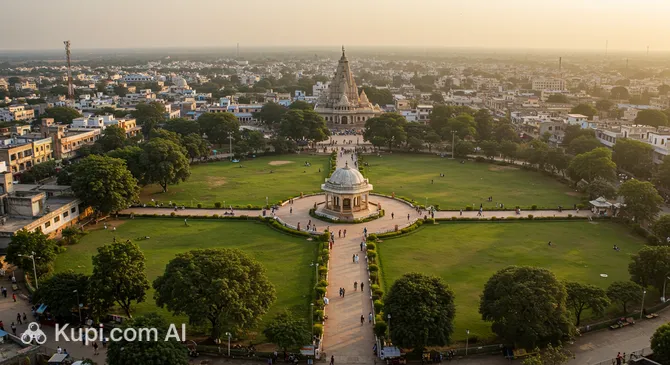
Muzaffarpur is one of the most significant cities in the state of Bihar, located in the northern part of India. Known as the "Lychee Kingdom," this bustling administrative and commercial center stretches along the banks of the Burhi Gandak River. The city possesses the unique flavor of the Indo-Gangetic Plain, where vibrant markets sit alongside the academic atmosphere of B. R. Ambedkar Bihar University.
Muzaffarpur. Illustration.
Source: Kupi.com AI
Geographically, Muzaffarpur occupies a strategic position, serving as a key transport hub on the route between Patna and the Nepal border. With a population of over 330,000, the city is considered an important agro-industrial center. Its rich history, which began in the 18th century with its founding by Muzaffar Khan, is closely intertwined with the regional development and its transformation into a major municipality as early as the 19th century.
Tourists are primarily drawn here by its gastronomic fame: it is here that the famous Shahi Lychee varieties are grown, which have been granted Protected Geographical Indication status. Although the city is often perceived as a transit point, walking through the old districts and discovering local crafts will give you a genuine feel for authentic Bihar. We invite you to discover this "orchard" of India, where traditional hospitality meets the energy of a growing economic center.
Weather Overview
The climate in Muzaffarpur is characterized as subtropical monsoon, which largely determines the rhythm of life in the region. Summers here can be truly scorching: in April and May, the thermometer often rises to +36...+40°C. The winter months, by contrast, bring a pleasant coolness with daytime temperatures around +21°C and nighttime lows down to +10°C, making the period from November to February the most comfortable for a visit.
The rainy season begins in June and lasts until September, bringing heavy precipitation that nourishes the famous fruit orchards. The greatest amount of moisture falls in July and August, when humidity increases significantly and the sky is often overcast. It is worth checking the weather in the city in advance, especially if your trip is planned for the peak of the monsoon, when local rivers may overflow and transport schedules may change.
Average monthly temperature
Average monthly precipitation
Interesting Facts
Muzaffarpur was named in honor of Muzaffar Khan, a British tax collector who played a key role in the establishment of the settlement in the 18th century.
The city is officially recognized as the "Lychee Capital" of India; the local Shahi Lychee variety has a Geographical Indication (GI) certificate, confirming its unique taste and origin.
In 1908, the city was the site of the historic "Muzaffarpur Bomb Case," involving the revolutionary Khudiram Bose—a monument to him remains an important landmark today.
Muzaffarpur is famous for its production of exquisite lac bangles, which are an essential attribute of traditional Bihari weddings.
The city is located in a seismically active zone and was significantly damaged during the devastating 1934 earthquake, after which it was partially rebuilt.
How to Get There
Muzaffarpur is a strategically important road and rail hub in North Bihar. The city is well-connected to the country's major metropolises; however, route planning requires attention to detail due to the congestion on local highways. To find the optimal routes and current travel methods, we recommend checking the section on how to get there.
Air travel is available via the local airport (IATA: MZU), but regular flights are extremely limited. Most travelers prefer to fly to the airport in Patna (approximately 80 km south), from where you can reach the center of Muzaffarpur by taxi or bus in 2–3 hours. You can also use the airport in Darbhanga, which is about a 1.5-hour drive away.
Rail transport is the most reliable and popular way to visit the city. Muzaffarpur Junction receives trains from Delhi (a 20–24 hour journey), Kolkata, and other major centers. It is a key hub on the line connecting the state with Nepal. The NH-57 and NH-77 highways provide road connections, but one should account for potential traffic jams due to heavy truck traffic.
Main Attractions
While Muzaffarpur is primarily known as an agricultural and commercial hub, there are several landmark sites worth visiting. One of the main historical points is the Khudiram Bose Memorial, erected in memory of the young independence fighter involved in the events of 1908. This site holds deep symbolic meaning for the city's residents and often serves as a starting point for exploring the history of India's struggle for freedom.
For peaceful walks, Rajendra Park is ideal—a central green zone located near old colonial-era administrative buildings. It is also worth noting the architecture of the old town, where British-era structures remain, such as the 1936 Collectorate building and the Civil Court. These sites create the unique character of the "Capital of North Bihar."
The spiritual heart of the region is considered to be the Baba Garib Sthan Mandir temple, dedicated to Lord Shiva. It is one of the oldest and most revered temples, attracting pilgrims with its special atmosphere. And, of course, one cannot forget the vast lychee orchards surrounding the city. During the flowering and harvesting season (May–June), they transform into the main natural attraction of Muzaffarpur, filling the air with a sweet aroma.
Local Cuisine
A gastronomic journey to Muzaffarpur is inconceivable without tasting its main treasure—fresh lychees. The city is rightfully proud of its orchards; local produce is used not only in its fresh form but also for preparing exquisite desserts and juices. It is also worth trying the local mangoes and bananas, which have a special flavor thanks to the fertile soils of the Gandak river floodplain.
The city's primary cuisine represents classic Bihari traditions. Be sure to try Litti Chokha—wheat flour balls stuffed with sattu (roasted chickpea flour), served with mashed vegetables and ghee. Dishes made from rice, dal (lentils), and freshwater fish are also popular. For a sweet conclusion to your meal, try Mishtanni—traditional sweets made from milk and sugar from local mills.
The food culture in the city is concentrated in the markets and small street venues in the center. At the bazaars, you can find many stalls selling street food: samosas, chaat, and refreshing lassi. High-quality vegetarian thalis and North Indian cuisine are usually offered by hotel restaurants. Evening tea with local snacks on a busy shopping street is the best way to feel the true rhythm of life in Muzaffarpur.
Travel Tips
A trip to Muzaffarpur requires some preparation to ensure your journey is comfortable and leaves a pleasant impression. Here are some practical tips from experienced travelers:
Clothing and Items: Choose light clothing made from natural fabrics, as the region can be very hot and humid. When visiting religious sites, follow a conservative dress code: shoulders and knees should be covered. During the monsoon season, be sure to bring a raincoat or umbrella.
Transport: The most convenient way to move around the city is by auto-rickshaw. Always agree on the price of the trip before getting into the vehicle. For travel between cities, it is better to use trains, and tickets should be purchased in advance.
Finances: The Indian Rupee is the currency in use. Always carry a supply of cash, as cards are only accepted in large hotels. ATMs are concentrated in the center, but they do not always accept international cards.
Health and Safety: Drink only bottled water and avoid ice in drinks. Basic medications can be found in pharmacies, but bring specific prescriptions with you. Try not to walk alone in the outskirts of the city after dark.
Communication: The main language is Hindi. English is understood by hotel staff and young people, but knowing a few phrases in the local language, such as the greeting "Namaste," will greatly help in communicating with residents.
Local Etiquette: It is customary to remove your shoes when entering homes or temples. The people of Bihar are hospitable but value respect for their traditions and modesty in behavior.
What to Avoid: It is not recommended to engage in political arguments or use the services of illegal guides at railway stations. You should also avoid eating unwashed fruit directly from the market.
Additional Tip: Plan your visit for May if you want to see the city during its "fruit bloom," when the famous lychees ripen.
Following these simple rules will allow you to deeper experience the flavor of Bihar and enjoy the authentic atmosphere of Muzaffarpur.
Entertainment & Nightlife
The entertainment infrastructure in Muzaffarpur is predominantly traditional and family-oriented. You won't find loud nightclubs or bars in the Western sense here, as the city lives at the calm pace of an administrative center. The main form of evening leisure for locals is visiting cinemas showing the latest Bollywood releases, as well as strolling through central markets that remain lively until sunset.
During the day, entertainment is centered in city parks like Rajendra Park, where families gather for picnics. The city's cultural life becomes more active during religious festivals and seasonal fairs. It is particularly interesting to visit the city during the lychee harvest period when festive harvest events are held. Young people often spend time in the shopping arcades or at the university's sports grounds.
If you are looking for more modern leisure infrastructure, it is worth taking a trip to Patna, located 80 kilometers away, where the choice of restaurants and cultural venues is significantly broader. In Muzaffarpur itself, evening safety is ensured by staying in central, well-lit areas. For nighttime travel, it is recommended to use taxi services booked through your hotel to avoid walking through unlit residential neighborhoods.
Parks & Museums
Green spaces in Muzaffarpur play an important role in the life of this densely populated city, which suffers from dust and heavy traffic. Rajendra Park is the main oasis of silence in the center, located by the old Collectorate building. Here, among well-kept alleys and old trees, you can take a break from the city's noise and bustle while observing the daily life of the townspeople.
While there are practically no classic museums with extensive exhibitions in the city, the old administrative buildings are of historical interest. A walk past the Civil Court or the old municipality allows you to imagine what the city was like during the colonial period. Local lychee gardens also serve as unique open-air exhibits, showcasing the agricultural heritage and unique ecosystem of the region.
For outdoor recreation, residents also use the banks of the Burhi Gandak River. Despite the lack of developed park infrastructure along the water, it is a popular spot for walks and picnics. The absence of major galleries is compensated by a living craft culture: visiting workshops where the famous lac bangles are created is an excellent alternative to a museum visit and allows you to experience the traditional art of Muzaffarpur.
Getting Around
The transport system of Muzaffarpur is oriented toward practicality and accessibility. The backbone of city communication consists of buses and auto-rickshaws, which connect various wards (districts) to one another. It is worth noting that public transport is often overcrowded, especially during morning and evening rush hours, and traffic on main thoroughfares like the NH-77 highway can be slow due to heavy truck flow.
For tourists, auto-rickshaws and cycle-rickshaws are the most convenient way to get around. They are maneuverable in the chaotic city traffic and allow you to reach your destination quickly. It is very important to agree on the fare with the rickshaw driver in advance. There are no bike rentals or modern car-sharing systems in the city, so rickshaws remain the main alternative to walking.
An important hub is Muzaffarpur Junction station, providing connections to Patna and the border areas of Nepal. When planning trips around the city, allow extra time: due to congestion, a trip that should take 15 minutes can stretch to half an hour. Payment for transport is made exclusively in cash, so it is always useful to have small Indian Rupee notes with you.
Accommodation
Muzaffarpur offers accommodation options primarily geared toward transit passengers, business travelers, and students. The highest concentration of hotels is found near the railway station and in the central part of the city. Budget hotels and 2–3 star guesthouses dominate here, providing a basic set of amenities for short-term stays.
For those visiting for academic purposes, it is more convenient to stay in residential areas near B. R. Ambedkar Bihar University. Long-term rental apartments are also available in the city, which are popular with expats and employees of agricultural companies. There are almost no luxury resorts here, but a solid middle class of hotels, such as Hotel Pawan International, will fully satisfy a traveler's needs.
The price range in the city's hotels remains affordable, making it a convenient stop for a budget trip. When booking during the peak season (especially in May, during the lychee harvest), it is best to arrange accommodation in advance. Most properties can be found through online services, though small guesthouses often request payment in cash, so it is always wise to have local currency on hand.
Nearby Cities
Muzaffarpur serves as an excellent starting point for exploring the northern and central regions of the state of Bihar. Thanks to its position at the center of the transport network, the city allows for easy access to cultural and historical monuments in neighboring regions through day trips.
Just 80 kilometers to the south is the state capital, Patna, where you can visit majestic temples and museums. To the east lies the city of Darbhanga, known as the cultural center of the Mithila region. It is also worth noting small nearby settlements such as Pokhraira and Pasaul, which offer a glimpse into the traditional rural lifestyle of Bihar.
For those willing to travel a bit further, Bihar Sharif or a trip to the Nepal border via the town of Sitamarhi are interesting options. The region around Muzaffarpur is rich in authentic villages and natural beauty that reveal the spirit of India hidden from the eyes of mass tourists. We recommend not limiting yourself only to city walks but dedicating time to exploring the picturesque surroundings.
Shopping & Souvenirs
Shopping in Muzaffarpur is primarily an introduction to traditional markets and local crafts. The city is not famous for huge shopping malls, but its central bazaars offer unique goods that are hard to find in other regions. The main souvenir and pride of the city are lac products, especially the famous lac bangles, which are hand-decorated by craftsmen and are an essential attribute of Indian weddings.
If your visit coincides with May or June, the markets turn into a sea of red—this is the harvest season for the famous Shahi Lychee. Locals buy baskets of fresh fruit here, which are prized for their unique taste. The city is also known as a trade center where you can purchase high-quality rice, sugar, and even locally produced steel items and knives.
For everyday goods and textiles, the shopping arcades near the railway station are best. Shops usually operate from morning until late evening, and moderate bargaining is welcomed in the markets. In Muzaffarpur, transactions are primarily made in cash, so it is worth preparing local currency before going shopping. A stroll through the local bazaars is not just a search for souvenirs but an opportunity to immerse yourself in the vibrant atmosphere of Bihar's trading hub.