Support

Pamban

About

Pamban is an amazing town located on the island of the same name in the state of Tamil Nadu, India. It is snugly situated at the very edge of the country, washed by the waters of the Bay of Bengal. Geographically, Pamban serves as a unique gateway to Rameswaram Island, a place where land meets the endless blue of the ocean. The town's unique atmosphere is steeped in the spirit of adventure and ancient legends.

The town is small, with a population of about 40,000 people. Pamban is part of the Ramanathapuram (Ramnad) district and serves as an important transport hub. Its main artery is the famous Pamban Bridge, one of the most picturesque and engineeringly unique bridges in the country, which connects mainland India with Rameswaram Island and further with the town of Dhanushkodi. Thanks to its strategic location, Pamban serves as a starting point for pilgrims and travelers seeking to touch the ancient traditions and natural wonders of South India.
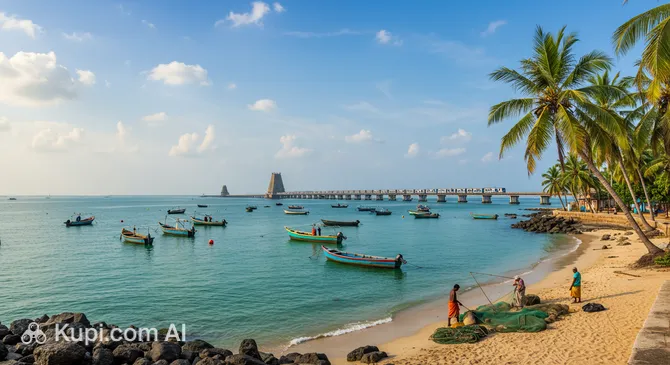
Pamban. Illustration.
Source: Kupi.com AI

Pamban harmoniously combines Hindu temples, colorful fishing villages, and long stretches of beach. Here, you can fully experience the authentic flavor of Tamil Nadu: see the bright sarees of local women, breathe in spicy aromas, hear the melodic sounds of temple bells, and the soothing sound of the surf. This place is ideal for those seeking authenticity, peace, and inspiration away from noisy tourist centers.

Why visit Pamban? To enjoy breathtaking ocean views, take an unforgettable walk across the legendary bridge, and get acquainted with the rich culture and history of this amazing region. Pamban is a town that will certainly leave a mark on your heart as a vivid memory of meeting the real India.

You can find more interesting facts on the Pamban city history page

Weather Overview

The weather in Pamban is characterized by warm temperatures all year round. Average monthly temperatures range from 25.8°C in January to 29.7°C in May and June. Expect a hot summer with low rainfall and a wetter period from October to December. The highest rainfall occurs in November (averaging 15 mm and 25 rainy days), while March, June, July, and August are the driest months with minimal precipitation.

For more detailed weather information, including monthly forecasts, you can visit the Pamban Climate page.

Average monthly temperature

Average monthly precipitation

Interesting Facts

In addition to its obvious charms, Pamban hides many amazing stories and little-known details that make it a truly unique place. Get ready to be surprised, as this corner of India keeps secrets that not everyone knows.

  • The famous Pamban Bridge is not just a transport artery, but a true engineering masterpiece of the early 20th century. Built in 1914, it became the first sea railway bridge in India, and its central section can still be raised to let ships pass, turning a journey across it into a spectacular sight with cinematic views of the ocean.

  • The town and its surroundings literally breathe ancient legends; according to the great Indian epic "Ramayana," it was from here that Lord Rama began the construction of a mythical bridge to Sri Lanka to save his wife Sita. Locals will proudly show you "Rama's footprints" and tell ancient tales, bringing the pages of the sacred text to life.

  • In close proximity to Pamban lies Dhanushkodi – a ghost town frozen in time. Almost completely destroyed by a powerful cyclone in the mid-20th century, it attracts travelers with its atmospheric ruins, endless beaches, and a unique feeling of being at the very edge of the earth.

  • Pamban is not only about historical monuments and legends, but also a living center of traditional fishing. For centuries, local fishermen have been going out to sea in their bright, painted boats, and at the colorful coastal markets, you can see a rich catch of the freshest seafood, which forms the basis of the local cuisine and the pride of the region.

How to Get There

A journey to Pamban is an adventure in itself, as the town is located on an island connected to the mainland by a famous bridge. To plan your perfect route, you can explore all the ways to get to the city, and below we will look at the main transport hubs through which tourists most often arrive.

There is no airport in the town of Pamban itself, so travelers usually use the air gateways of neighboring large cities. The closest and most convenient option is Madurai Airport (IATA: IXM) in the city of Madurai, which is located about 139 km from Pamban. This is a modern transport hub receiving flights from many cities in India. The journey from here by taxi or bus will take about 3.5–4 hours, allowing you to enjoy the views of Tamil Nadu state.

Another popular option is Tiruchirappalli International Airport (IATA: TRZ), located in the city of Tiruchirappalli, approximately 174 km from Pamban. This airport serves more international destinations, which is convenient for tourists flying in from abroad. The drive from here will take about 4.5–5 hours. You can also consider Tuticorin Airport (IATA: TCR), which is 146 km away, although it receives fewer flights.

For clarity, here is a summary of the main airports:

AirportPassenger trafficDistance
Kankesanturai40 000108 km
Madurai Airport1.4 mln139 km
Tuticorin Airport230 151146 km
Tiruchirapalli International Airport1.8 mln174 km
Sigiriya Slaf Base15 000221 km

The railway is perhaps the most scenic way to reach Pamban. Trains run from major Indian cities such as Chennai, Madurai, and Coimbatore towards Rameswaram, stopping at Pamban station. The highlight of the trip is crossing the strait via the famous Pamban Bridge: the train moves literally above the sea, giving passengers unforgettable impressions and unique photo opportunities.

Main Attractions

Pamban, despite its modest size, is the starting point for exploring truly iconic places in southern India. This island town attracts travelers with its unique atmosphere and proximity to important cultural and natural sites.

The main symbol of Pamban and a mandatory stop for many travelers is the famous Pamban Bridge. Taking a trip across it or watching it in action, when the central part spectacularly lifts to let ships pass, is a unique experience that allows you to feel the power of engineering and enjoy breathtaking marine panoramas. It is not just a transport artery, but a living piece of history connecting the island to the mainland, and a place offering magnificent views of the Indian Ocean, especially at sunrise or sunset, providing photographers and casual observers with unforgettable shots.

The surroundings of Pamban are also famous for their picturesque coastlines. While there may not be extensively developed tourist infrastructure like in popular resorts, travelers can find quiet stretches of beach where they can enjoy the tranquility, the sea breeze, and panoramic views of the ocean. This is a wonderful opportunity for solitary walks and nature contemplation.

Pamban serves as an important transit point on the way to the holy city of Rameswaram, one of the main pilgrimage centers for Hindus. From here, it is easy to reach the majestic Ramanathaswamy Temple, striking for its thousand-pillar halls, which are considered the longest in the world, and its rich spiritual history. Visiting this temple is an immersion into the ancient culture and architecture of India.

Lovers of unusual places and atmospheric landscapes should head to Dhanushkodi. This is a place where time seems to have stood still after a devastating cyclone, offering a unique experience of immersion in silence and contemplation. A walk along its deserted beaches, among ruins that recall former life, and watching the waters of the Bay of Bengal meet the Indian Ocean, leaves a deep and almost mystical impression. This journey is not so much to ruins as to a place of power, natural beauty, and solitude, perfect for those seeking opportunities for reflection and unique photographs away from the hustle and bustle.

Local Cuisine

The cuisine of Pamban is a real feast for gourmets, especially for seafood lovers. Located on the coast, the town offers an incredible abundance of fresh sea treasures: prawns, crabs, squid, and various fish, masterfully prepared using fragrant Tamil spices. The signature dish of the local gastronomy is rightfully considered "meen kuzhambu" – a spicy fish stew with coconut milk, curry, and aromatic herbs. This dish, which pairs perfectly with fluffy rice, is a must-try for every visitor to the town.

In addition to exquisite fish dishes, Pamban is famous for its street food. In the busy markets and cozy small cafes, you will be offered traditional Tamil snacks: "idli" (steamed rice cakes), "dosa" (thin, crispy pancakes made from fermented lentils and rice), and "sambar" (a thick vegetable soup with tamarind). All this splendor is usually served with a variety of spicy chutneys and hot sauces that add brightness to the dishes. For breakfast, locals often choose "appam" – delicate pancakes with appetizing crispy edges, which pair perfectly with coconut milk or a light curry.

Those with a sweet tooth should definitely try "payasam" – a thick and aromatic dessert made from milk, rice, and cardamom, which is often prepared for holidays. As for drinks, on a hot day there is nothing better than refreshing freshly squeezed sugarcane juice or cool coconut water straight from the nut. These natural drinks perfectly quench thirst and provide a boost of energy.

Food culture in Pamban is very democratic. Locals and tourists alike enjoy eating in small family restaurants as well as right on the street where the freshest dishes are prepared. Gastronomic Pamban acquires a special atmosphere during festivals: the streets turn into real food fairs where you can try rare delicacies and learn the secrets of local chefs. A gastronomic journey through Pamban promises to be a bright and unforgettable experience full of new tastes and aromas.

Travel Tips

Heading to Pamban? Wonderful! To ensure your trip to this colorful corner of India is as comfortable as possible and leaves only bright memories, we have prepared some useful tips.

  1. Clothing and essentials: The climate in Pamban is predominantly hot and humid. Bring light, breathable clothing made from natural fabrics (cotton, linen). Don't forget a hat, sunglasses, and high-SPF sunscreen. For visiting temples and other religious sites, modest clothing covering the shoulders and knees is required. Comfortable walking shoes are absolutely essential. A universal travel adapter for electronics might also come in handy, as India uses type C, D, and M sockets.
  2. City transport: The main ways to get around Pamban and its surroundings are local buses and auto-rickshaws – these are the most authentic and affordable options. Taxis are also available, but it's better to agree on the price in advance or use apps if they are popular in the region. Renting a car might be unnecessary for moving around the town itself but could be useful for exploring more remote areas if you feel confident on local roads.
  3. Finances: The official currency is the Indian Rupee (INR). You can exchange currency at banks or authorized exchange bureaus; avoid street money changers. Credit and debit cards are accepted in hotels and large shops, but in small shops and markets, cash is preferred. ATMs are fairly common. A rough daily budget depends heavily on your preferences, but Pamban can be considered a relatively inexpensive destination. Tipping is welcome in restaurants (usually 5-10% of the bill) and for small services.
  4. Health and safety: Pharmacies are available in Pamban, but 24-hour ones may be rare. It is recommended to carry a basic first-aid kit. In case of serious health issues, contact a local clinic or hospital; find out in advance where the nearest medical facility with English-speaking staff is located. Drink only bottled water. Observe general safety measures: keep an eye on your belongings, especially in crowded places, and avoid walking in poorly lit areas after dark.
  5. Communication: The main language in Tamil Nadu state is Tamil. English is fairly common in the tourism sector, but knowing a few phrases in Tamil (e.g., "Vanakkam" – hello, "Nandri" – thank you) will be appreciated. A local SIM card with internet access can be purchased by presenting your passport and visa. Wi-Fi is available in most hotels and some cafes.
  6. Local etiquette: The greeting "Vanakkam" (often accompanied by a slight bow with palms joined) is traditional. It is customary to remove your shoes when visiting temples and homes. Use your right hand for eating and for passing money or items, as the left hand is traditionally considered "unclean." Show respect for local customs and traditions, especially in religious places.
  7. What to avoid: Try not to show excessive public displays of affection, as this is not customary in the local culture. Do not point your feet at people or religious images, as this is considered offensive. Also, avoid photographing people without their permission.
  8. Special tip: Pamban is famous for its railway bridge – one of the most impressive in India. Try to see it in action when it opens to let ships through. Also, while in this coastal region, don't miss the opportunity to try the freshest seafood in local restaurants.

We hope these tips help you better prepare for your trip to Pamban and enjoy every moment of your stay. We wish you an unforgettable journey and bright impressions!

Entertainment & Nightlife

Pamban, a small but colorful town in the Indian state of Tamil Nadu, offers travelers a unique experience that differs from bustling metropolises. If you are looking for a vibrant nightlife with an abundance of clubs and bars, you should adjust your expectations. Evening entertainment in Pamban is more peaceful and authentic, allowing for a deeper immersion into the local culture.

As evening falls on the town, the main focus shifts to gastronomic pleasures and leisurely walks. Nightlife here is not concentrated in specific quarters; it is rather dissolved in the overall atmosphere of the town. You can enjoy dinner in one of the local restaurants offering traditional Tamil cuisine. For example, if information is available about restaurants like a hypothetical "Sri Murugan Mess" or "Hotel Guru," they are worth considering for an evening meal. The atmosphere in such places is usually simple and friendly, and the food is delicious and authentic. Specialized nightclubs or bars with loud music are unlikely to be found in Pamban. Instead, the evening can be dedicated to socializing, observing local residents, or simply enjoying the tranquility of the coastal town if your accommodation is by the water. Some temples may hold evening services (pujas), which can also be an interesting cultural experience.

When planning evening leisure in Pamban, keep in mind that most establishments, especially small family-run restaurants, close relatively early, usually by 10:00 PM - 11:00 PM. For getting around after dark, it is most convenient to use auto-rickshaws – the most common type of transport. It is recommended to agree on the fare in advance. In general, Pamban is considered a safe place, but you should always take standard precautions: avoid poorly lit and deserted streets. The dress code for evening outings is very casual – clean and neat everyday clothes will be quite appropriate.

As for daytime entertainment, Pamban offers several iconic spots. Undoubtedly, the main attraction is the famous Pamban Bridge – a unique engineering structure connecting Rameswaram Island with mainland India. Watching its bascule section open or simply driving across the bridge will leave unforgettable impressions. During the day, you can also explore the coast, visit local markets to feel the true flavor of India, or head to nearby shrines if you are interested in pilgrimage tourism.

Parks & Museums

Pamban, snugly located on the island of the same name, offers its guests not only the famous bridge but also the opportunity to enjoy coastal nature and get acquainted with the unique cultural heritage of the region. Although there may not be large park complexes or a great number of traditional museums in the town itself, its surroundings and special atmosphere more than make up for it.

Speaking of green areas and outdoor recreation, Pamban and its surroundings are primarily famous for their beaches. The coastline offers beautiful views of the Indian Ocean and the Palk Strait. The beaches here are an ideal place for peaceful walks, watching fishing boats, and admiring sunrises and sunsets. Nearby is Dhanushkodi, known for its deserted beaches and the mystical atmosphere of a "ghost town," which attracts seekers of unusual experiences.

Among the key attractions reflecting culture and history, the Pamban Bridge itself certainly stands out. It is not just an engineering structure connecting the island to the mainland, but a true legend and symbol of the region. A walk or a drive across this bridge will offer unforgettable views and a sense of being part of history. Near Pamban, on Rameswaram Island, is the ancient Kothandaramaswamy Temple, which holds great religious significance and is linked to the Indian epic "Ramayana." Its secluded location amidst the water adds a special charm to it.

For those interested in modern history and India's outstanding personalities, it is worth visiting the Dr. A.P.J. Abdul Kalam National Memorial in Rameswaram. This museum complex is dedicated to the life and work of the former President of India, who was originally from these parts. The exhibition tells the story of his journey and contribution to science and the country's development, making it an important cultural site for understanding the region.

For authentic experiences, observe the daily life of local fishermen – an integral part of Pamban's culture. Also, don't miss the opportunity to catch the sunrise or sunset while on the Pamban Bridge or on one of the nearby beaches – these moments will remain in your memory for a long time.

Getting Around

When planning your travel around Pamban and its surroundings, it's worth noting that it is a relatively small town, and the public transport system reflects its size. The main ways to get around are local buses and the ubiquitous auto-rickshaws.

Buses are the most economical way to reach various parts of the town and neighboring settlements, including Rameswaram. Routes and schedules might not always be obvious to a tourist, so don't hesitate to ask locals or check at small bus stops. Fares are usually paid in cash to a conductor directly on the bus. Make sure to have small bills.

Auto-rickshaws (tuk-tuks) are a very popular and flexible mode of transport for short and medium distances. Always agree on the fare with the driver in advance, before getting in, as meters are rarely used. This is a convenient way to get to a specific location, especially if you are traveling with luggage.

For connection with mainland India, the famous Pamban Bridge plays a key role. Both roads and railway tracks pass over it. Trains are an important mode of transport for those arriving in Pamban or departing from it to the mainland. Pamban railway station serves trains heading to various cities.

Regarding payment, in most cases, you will need cash. There are generally no specialized transport cards or mobile apps for fare payment in Pamban. Bus tickets are bought from the conductor, and payment to auto-rickshaw drivers is settled by agreement. Public transport usually runs more actively during the day, from early morning until evening. Its availability may be limited at night.

As an alternative to public transport, you can consider walking to explore the central areas of Pamban. For longer trips or more freedom of movement, you can try to find taxi services, although auto-rickshaws are significantly more common. In some places, bicycle rentals may be available, which is a great option for leisurely exploring the picturesque surroundings.

Accommodation

When planning a trip to Pamban, you will find a variety of accommodation options to suit different preferences and budgets. The town offers a choice from modest guesthouses and budget hotels to comfortable middle-class lodgings. While there may not be as many luxury world-class resorts here as in major tourist centers, the coziness and hospitality of local establishments more than make up for it.

When choosing a place to stay, you should pay attention to areas located near the main attractions or transport hubs, which will make your movement around the town and its surroundings more convenient. Tourists often prefer to stay near the coast to enjoy sea views and easy access to the beaches.

In Pamban and its surroundings, you can find various types of hotels. Although the provided data does not contain specific examples of famous hotels, both small family-run inns and larger hotel complexes are typically available. It is recommended to check reviews and ratings on popular booking platforms to find the best option that fits your expectations and budget.

Booking Tip: Especially if your trip falls during the peak tourist season or public holidays, it is recommended to book your accommodation in advance. This not only guarantees availability but often allows you to take advantage of better deals.

The price range for accommodation in Pamban varies from budget to mid-range. Most hotels and guesthouses can be booked through popular online platforms like Booking.com, Agoda, or by contacting the selected accommodation directly. Some smaller establishments may take bookings via phone or email.

Nearby Cities

For those who want to explore the surroundings, Pamban serves as an excellent starting point for day trips to several interesting nearby places.

For example, just a few kilometers away is Rameswaram, one of the holiest cities in India, famous for its magnificent Ramanathaswamy Temple and numerous sacred water bodies (tirthas). It is also worth visiting Mandapam, a small coastal town that offers views of the famous Pamban Bridge and often serves as the starting point for a trip to Rameswaram Island. To learn about the history and culture of the region, you can head to Kilakarai, an ancient port city with a rich maritime heritage.

CityPopulationDistance
Rameswaram61 4409 km
Mandapam21 57211 km
Valantaravai9 76833 km
Periyapattinam12 51036 km
Chittankottai15 97040 km

These nearby destinations allow for a more complete understanding of the diverse culture, history, and natural beauty of the Tamil Nadu region.

Shopping & Souvenirs

Pamban, being a small town known primarily for its religious shrines and famous bridge, offers a rather specific shopping experience. Here you won't find huge malls or streets with luxury boutiques like in the metropolises of India. Instead, shopping in Pamban is an immersion into the local flavor, an opportunity to purchase authentic souvenirs and handmade goods in small shops and markets.

The main retail outlets in Pamban are generally concentrated along the town's main streets and near popular tourist spots, such as temples and the approaches to the bridge. These are most often small family-run shops offering everyday goods, souvenirs, religious paraphernalia, and local handicrafts. There are no specialized shopping streets in the European sense; shopping is rather dispersed and integrated into the daily life of the town.

You won't find large modern shopping centers in Pamban. The focus here is shifted to more traditional trade formats. If you need supermarket goods or a wider selection of branded clothing, you might consider a trip to larger cities in the region.

Markets are where you can feel the true spirit of Pamban. While there may not be giant tourist bazaars, local markets offer fresh fruits, vegetables, spices, and, of course, fresh fish and seafood, given the town's coastal location. A visit to such a market is not only an opportunity to buy something but also to observe the daily life of the locals. You can also find inexpensive souvenirs and crafts here.

As souvenirs from Pamban, tourists most often bring back seashell products, religious items (deity figurines, prayer beads), and crafts made from palm leaves and other natural materials. You can also look for local fabrics, if available, and small aromatic oils or incense. Images of the Pamban Bridge on various souvenirs are also popular.

Shops in Pamban usually open in the morning, around 9:00 AM - 10:00 AM, and stay open until evening, around 7:00 PM - 8:00 PM. Many small shops may close for a lunch break in the middle of the day. The main method of payment, especially in markets and small shops, is cash in Indian Rupees (INR). In some larger or tourist-oriented points, they may accept bank cards or local digital payment systems (e.g., UPI), but it's always better to have enough cash with you.

The possibility of a tax refund (Tax Free) for tourists in Pamban is generally not applicable for the types of goods and shops that prevail here. This system is more common in large international airports and big shopping centers when purchasing high-value items.

Nearby cities

Reached the end of the page?

That means the route is fully explored